Plot Explained Spoilers guaranteed!
Plot Explained

Browse by genre

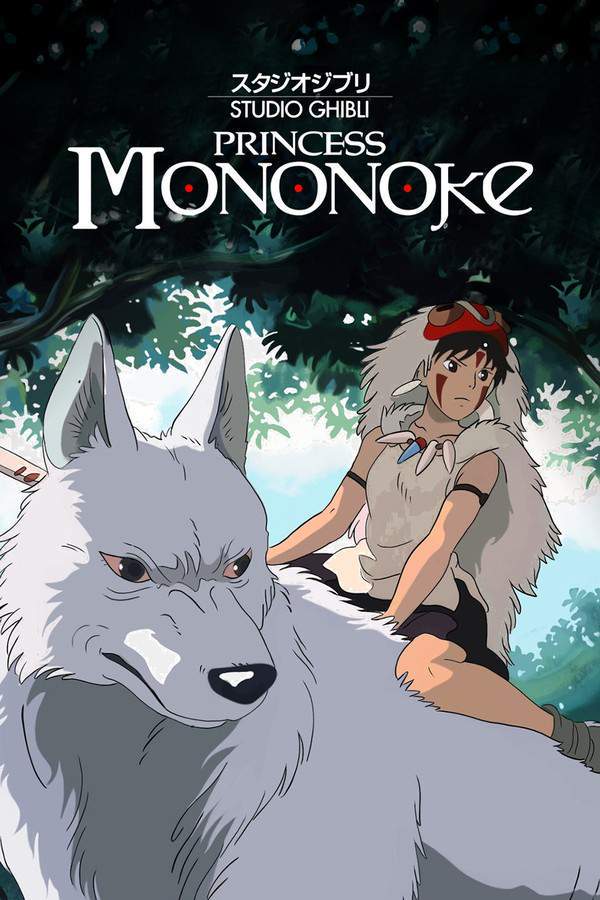
Princess Mononoke (1999) movie poster

Plot Summary

Princess Mononoke (1999) Plot Summary Explained

Release, runtime and language
1999 · 134 min · Japanese
JustWatch #7,100 144
Directed by
Hayao Miyazaki
Starring
Yôji Matsuda, Yûko Tanaka, Yuriko Ishida

A young prince, injured by a cursed attack, journeys to find a cure and becomes embroiled in a fierce struggle between the ancient forest and the ambitions of humans seeking to exploit its resources. He finds himself caught between the powerful wolf goddess Princess Mononoke and the ruthless industrialist Lady Eboshi, whose mining operations threaten the balance of the natural world and awaken its protective spirits.

On this page (6)
  1. 1 Where to watch
  2. 2 What happens: full plot
  3. 3 Plot questions answered
  4. 4 Movie threads
  5. 5 Movies like Princess Mononoke
  6. 6 Every angle

Where to watch

Where to Watch Princess Mononoke (1999)

Where can you watch Princess Mononoke? Stream, rent or buy it in the US, including on HBO Max, Amazon Video and Apple TV Store: current JustWatch availability with up-to-date prices.

Streaming availability powered by JustWatch

Full plot summary · contains spoilers

What Happens in Princess Mononoke: Full Plot Summary

The whole story of Princess Mononoke (1999) explained, from the opening scene to the final frame: every key event, every twist and what it all adds up to. Read it as a quick recap before the sequel, to check a scene you missed, or to finally understand what really happened.

The *story of Princess Mononoke** unfolds as a captivating fantasy adventure that portrays the epic battle between humanity and nature. This extraordinary narrative features a diverse cast of characters, including cursed beasts*, ambitious humans, a noble hero, and vengeful deities, all showcasing the complexity of good and evil—as each character embodies aspects of darkness and hatred.

Ashitaka (Yôji Matsuda), the courageous prince of the Emishi tribe, finds himself entangled in this struggle as he rides his magnificent red elk, Yakul, through a serene, mist-covered forest. The opening scene reveals a mystical realm where ancient gods and colossal creatures like the Forest Spirit coexist harmoniously with humans—a harmony that has been shattered as the forest faces erosion and the emergence of demons. Early on, Ashitaka learns of a demon boar, corrupted by a fatal injury inflicted by the relentless humans, leading him to make a fateful choice: to intervene and ultimately kill the beast to protect his village. The demon's curse lingers on Ashitaka's arm, marking him for death while igniting his quest to find answers and a remedy.

With his fate sealed, Ashitaka embarks on a journey westward, traversing vast landscapes and confronting a myriad of challenges. Along the way, he encounters Lady Eboshi (Yûko Tanaka), the leader of the iron town of Tatara, who serves as both a savior and an antagonist, depending on one’s perspective. As the story unfolds, Ashitaka grapples with the duality of humanity and the catastrophic impact of their actions on the environment, witnessing the destruction of nature at the hands of resource-driven aspirations.

As Ashitaka journeys deeper into the conflict, he meets San (Yuriko Ishida), also known as Princess Mononoke, a fierce girl raised by wolves, who harbors a deep-seated hatred for humans. Their initial encounter ignites a fierce rivalry, yet a soulful connection blooms as they share a mutual desire to heal the rift between their worlds. Ashitaka's resolve to see with "eyes unclouded by hate" guides him, forcing him into the crossfire of battles that challenge his ideals.

The ferocity of the ongoing conflicts reaches a crescendo when the boar god Lord Okkoto and the spirit of the forest itself come under siege. Ashitaka, now burdened with the curse that threatens to consume him, fights to protect both San and the nature they cherish from the impending annihilation driven by human greed. His capabilities are tested to their limits as he wrestles with emotions exemplified by the growing malevolence surging within him, revealing that heartache and fury are universal experiences transcending species.

In a climactic sequence, the fates of the Forest Spirit, Okkoto, Moro, and the iron town’s inhabitants converge. In moments loaded with tension, Ashitaka is called to return the severed head of the Forest Spirit to restore balance and peace, symbolizing the profound ramifications of origin, identity, and sacrifice.

Ultimately, as the narrative draws to a close, the thematic elements of rebirth and coexistence come to fruition. With the forest beginning to heal and the cycle of life continuing, Ashitaka and San are left in a delicate truce, understanding that while peace may be a tenuous goal, hope for harmony persists. Lady Eboshi, meanwhile, finds a renewed purpose amidst the ashes, envisioning a better future, all while the gentle presence of a kodama symbolizes the resilience of nature.

Thus, Princess Mononoke stands as a powerful reflection on humanity's relationship with nature, instilling the notion that one must often face darker aspects of existence to seek illumination and understanding.
Last updated: November 16, 2024 at 15:21

Was this helpful?

Plot questions answered

Princess Mononoke Plot Explained: Your Questions Answered

The questions people ask most about Princess Mononoke (1999): what happens in the confusing scenes, why the characters do what they do, the twists, hidden details and what the ending means. Each answer contains spoilers.

Q1

Why does Ashitaka get cursed after killing the demon boar?

Ashitaka is cursed when he kills the demon boar because the creature was corrupted by a deadly injury inflicted by humans. When Ashitaka kills it, the boar's dying rage and the infection from its wound transfer to him, marking his right arm with a dark curse that will eventually consume his entire body and kill him. This curse is the story's central catalyst, forcing Ashitaka to leave his village and seek a remedy.

Foreshadowing: The opening scenes establish that humans have been attacking the forest, corrupting its creatures with iron bullets that turn them into demons.

  • ashitaka curse
  • demon boar
  • forest corruption
  • iron bullets
Q2

What is the Forest Spirit and why is it so important?

The Forest Spirit is a colossal deer-like deity that represents the life force of the forest. It can give and take life, making it the source of all natural balance. When its head is severed, it becomes a deadly weapon capable of destroying everything in its vicinity. Both the forest creatures and humans seek it, the animals want to keep it alive to maintain nature, while humans want to harness its power to dominate the natural world.

Foreshadowing: The opening establishes the Forest Spirit as a god that walks among the trees and controls the boundary between life and death.

  • forest spirit
  • great spirit
  • life death
  • sacred tree
Q3

Why does San hate humans so much?

San was abandoned as a baby and raised by the wolf goddess Moro, who became her mother. She has lived her entire life in the forest, seeing humans destroy it and kill its creatures. Her wolf family was killed by humans, and she was taught from birth that humans are enemies who exist only to exploit nature. This deep-seated hatred makes her refuse to see any value in human civilization.

Foreshadowing: The film establishes early that humans are decimating the forest with their mining and logging operations.

  • san
  • princess mononoke
  • wolf goddess
  • moro
  • human hatred
Q4

What happens when the Forest Spirit is killed?

When the Forest Spirit is killed and its head is severed, the result is catastrophic. The head becomes an autonomous weapon that releases massive destructive energy, killing everything in its path, including animals, humans, and the forest itself. The death of the Forest Spirit causes the forest to wither and die, threatening all life.

Foreshadowing: Lady Eboshi's plan to destroy the Forest Spirit is shown as an existential threat to the entire natural world.

  • forest spirit death
  • severed head
  • destruction
  • forest dying
Q5

Is Lady Eboshi a villain or hero?

Lady Eboshi defies simple categorization. She is the leader of an iron town that destroys the forest to obtain resources, and she personally shoots the Forest Spirit, triggering the catastrophe. However, she is also a compassionate leader who freed her workers from leprosy, protects women from abuse, and genuinely believes humanity can improve. By the end, she represents the possibility of human progress that respects nature, making her morally grey rather than purely evil.

Foreshadowing: Ashitaka notices she cares for marginalized people in her town from the moment he arrives.

  • lady eboshi
  • morally grey
  • villain
  • iron town
  • human progress
Q6

What does 'seeing with eyes unclouded by hate' mean?

Ashitaka's philosophy of seeing with eyes unclouded by hate means refusing to view situations through the lens of rage or prejudice. Instead of choosing sides in the conflict between forest and humans, he tries to understand both perspectives without letting hatred blind him. This allows him to act diplomatically and find solutions that neither side could see while consumed by their own vendettas.

Foreshadowing: This phrase appears early as Ashitaka's guiding principle, setting up his role as a bridge between opposing forces.

  • eyes unclouded
  • hatred
  • balance
  • understanding
  • neutrality
Q7

What happens between Ashitaka and San at the end?

At the end, Ashitaka and San reach a fragile truce rather than a romantic union. After the Forest Spirit is restored and the forest begins healing, San returns to the human world occasionally to visit Ashitaka, but she cannot fully abandon the forest. They acknowledge they cannot be together in the traditional sense but share a deep bond and hope for a future where their worlds might coexist. The ending is bittersweet, they understand each other but remain divided.

Foreshadowing: Their connection was established through shared pain and a mutual desire to heal the rift between their worlds.

  • ashitaka san ending
  • relationship
  • truce
  • parting
Q8

What do the kodama represent in the movie?

The kodama are small, white tree spirits that inhabit the forest and serve as indicators of its health. They appear when the Forest Spirit is alive and the forest is healthy, and disappear when the forest dies. Their presence at the end symbolizes that nature has begun to heal and the balance is being restored, offering hope for coexistence between humans and the natural world.

Foreshadowing: The kodama appear throughout the forest, reacting to the Forest Spirit's movements and the environmental changes.

  • kodama
  • tree spirits
  • nature healing
  • forest spirits
Q9

Why does Okkoto want to merge with the Forest Spirit?

Lord Okkoto, the last surviving boar god, wants to merge with the Forest Spirit to become a new, greater deity that could restore the forest's power and destroy the humans. He believes that combining his life force with the Forest Spirit would create an unstoppable force of nature capable of ending human encroachment forever. This plan represents the forest's desperate attempt to protect itself through divine intervention.

Foreshadowing: Okkoto's desperation grows as the forest dies and the remaining animal leaders seek any solution to save their world.

  • lord okkoto
  • boar god
  • merging
  • divine power
Q10

Does the curse on Ashitaka's arm spread or get healed?

The curse does spread throughout Ashitaka's body, fueled by his hatred and anger during battles. However, he ultimately resists being consumed by it by maintaining his principle of refusing to hate. When he returns the Forest Spirit's head, the curse is not directly healed, instead, the restoration of balance seems to halt its progression. The ending implies the curse remains but is no longer fatal, allowing Ashitaka to live despite carrying its marks.

Foreshadowing: The curse visibly spreads when Ashitaka fights and feels rage, and recedes when he calms himself.

  • ashitaka curse
  • curse spread
  • healing
  • marks
Q11

Is Princess Mononoke's ending happy or sad?

The ending is bittersweet. The forest begins to heal, the kodama return, and there is hope for coexistence between humans and nature. Lady Eboshi pledges to build a new town that respects the forest, and Ashitaka and San understand each other. However, they cannot be together, the peace is fragile, and the cost of achieving it was massive destruction and loss. The hope is real but tempered by the knowledge that maintaining balance will require constant effort.

Foreshadowing: The film builds toward destruction before offering renewal, making the recovery feel earned but precarious.

  • ending
  • bittersweet
  • hope
  • coexistence
  • peace

Movie threads

More Movies Like Princess Mononoke, by Mood & Story

Curated lists built around what makes Princess Mononoke tick: the same mood, the same kind of story or the same emotional payoff. Each list explains why these movies belong together.

Epic Human vs Nature Conflicts like in Princess Mononoke

Large-scale stories where the exploitation of nature provokes a violent, mythic backlash. If you enjoyed the grand struggle between Irontown and the forest in Princess Mononoke, explore more movies where humanity's ambition triggers a massive, often spiritual, conflict with the natural world. These films share a mythic scope, high stakes, and complex moral questions about coexistence.

  • epic
  • urgent
  • somber
  • mythic
  • violent
  • contemplative
  • Tone: dark, mythic, urgent
  • Pacing: steady, building to epic confrontation
Why these movies?

The story pattern: Movies in this thread typically follow a central conflict ignited by human encroachment on a sacred or powerful natural domain. The narrative builds towards a climactic confrontation where the natural world, often embodied by ancient spirits or fierce protectors, fights back against destruction, forcing characters to confront the consequences of their actions.

Why they belong together: They are grouped by their shared focus on an epic, morally grey struggle between civilization and wilderness. They combine high-intensity action with heavy emotional weight, a dark tone, and a contemplative look at environmental themes, creating a uniquely powerful and urgent viewing experience.

Bittersweet Truces After Heavy Sacrifice like in Princess Mononoke

Stories where resolution is achieved, but the peace is fragile and born from immense loss. For viewers who appreciated the nuanced ending of Princess Mononoke, this section highlights movies where the conclusion is a fragile truce rather than a perfect victory. These films explore the heavy cost of conflict and the bittersweet nature of peace achieved through mutual sacrifice and understanding.

  • somber
  • bittersweet
  • contemplative
  • heavy
  • hopeful but scarred
  • solemn
  • Tone: somber, bittersweet, contemplative
  • Pacing: steady, character-driven
Why these movies?

The story pattern: The narrative journey in these films builds towards a climax where total victory is impossible for any side. The resolution involves a painful compromise or a newfound respect between adversaries, leading to an ending that is hopeful yet shadowed by the losses endured, leaving relationships and futures in a state of delicate balance.

Why they belong together: These movies share a specific emotional arc: they build heavy emotional weight through intense conflict and arrive at a conclusion that is profoundly bittersweet. The pacing is steady, leading to a climax that prioritizes thematic resolution over neat endings, resulting in a contemplative and somber mood.

If you liked this

Movies Like Princess Mononoke

Similar movies to Princess Mononoke: the same genre, themes or kind of story. Each one comes with its own plot summary, timeline and ending explained.

Browse all movie summaries

Every angle

Princess Mononoke (1999) Explained: Plot, Timeline & Characters

Everything about Princess Mononoke in one place: what happens in the plot summary, the timeline in chronological order, the characters and meaning and a spoiler-free summary. What's After the Movie adds the cast, box office and post-credit scenes.

Coming soon on iOS and Android

The Plot Explained Movie Summary App

Plot summaries, endings explained and timelines on your phone. Catch up on any movie in minutes, save your favorites and never miss a twist again.

Be the first to know when we launch. Your email stays private, always.

Learn more about the app