Plot Explained Spoilers guaranteed!
Plot Explained

Browse by genre

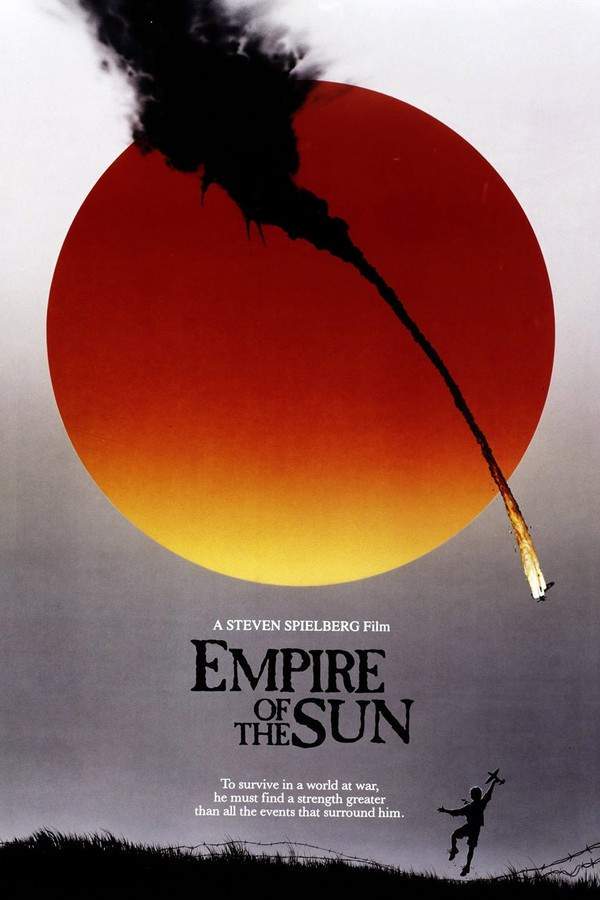
Empire of the Sun (1987) movie poster

Plot Summary

Empire of the Sun (1987) Plot Summary Explained

Release, runtime and language
1987 · 153 min · English
Directed by
Steven Spielberg
Starring
Christian Bale, Miranda Richardson, John Malkovich

In December 1941, as Shanghai falls to the Japanese invasion, young James Graham’s comfortable life is irrevocably changed. Separated from his parents, he is sent to the Soo Chow confinement camp, a brutal environment of scarcity and hardship. To cope with the trauma and uncertainty, Jim clings to memories of his former privileged existence. His resilience and ability to find moments of joy become a source of hope for those around him, demonstrating the enduring power of the human spirit amidst the devastation of war.

On this page (7)
  1. 1 Where to watch
  2. 2 What happens: full plot
  3. 3 Plot questions answered
  4. 4 The book behind the movie
  5. 5 Movie threads
  6. 6 Movies like Empire of the Sun
  7. 7 Every angle

Where to watch

Where to Watch Empire of the Sun (1987)

Where can you watch Empire of the Sun? Stream, rent or buy it in the US, including on Amazon Video, Apple TV Store and Fandango At Home: current JustWatch availability with up-to-date prices.

Streaming availability powered by JustWatch

Full plot summary · contains spoilers

What Happens in Empire of the Sun: Full Plot Summary

The whole story of Empire of the Sun (1987) explained, from the opening scene to the final frame: every key event, every twist and what it all adds up to. Read it as a quick recap before the sequel, to check a scene you missed, or to finally understand what really happened.

In the turmoil of World War II, specifically during Japan's invasion of China, Jamie "Jim" Graham navigates a sheltered life in the Shanghai International Settlement, blissfully unaware of the impending chaos. As the occupation escalates, Jim's family evacuates, leaving him stranded and alone in their abandoned home, where he naively waits for their return while scavenging for food as the isolation stretches on.

In a desperate bid for survival, Jim attempts to surrender to Japanese soldiers but is dismissed and forced to fend for himself. His luck changes when he meets Basie and Frank, two American expatriates who initially plan to leave him to his fate. However, Jim proves to be resourceful and persuasive, convincing them to team up with him to loot the deserted houses in his neighborhood. Their escapades hit a snag when they unexpectedly find Jim's family home occupied by Japanese troops.

The trio is soon captured, taken to the Lunghua Civilian Assembly Centre in Shanghai for processing, and ultimately moved to an internment camp in Suzhou. As the war unfolds, Jim finds a sense of purpose by creating a trading network within the camp, striking deals even with the camp's commander, Sergeant Nagata. With the guidance of Dr. Rawlins, the British physician of the camp, Jim forms a father-son bond that becomes a crucial lifeline during his harrowing journey.

As 1945 approaches and the war’s end looms, Jim's world is rocked again when American fighter planes attack the camp. In the midst of this chaos, Jim collapses in despair, revealing his profound sense of loss as he admits he can no longer remember what his parents look like. The Japanese forces vacate the camp, and Jim begins to witness the true horror war inflicts on its victims.

In this dire situation, Jim forms an unexpected friendship with a young Japanese trainee pilot preparing for kamikaze missions. As they share this temporary bond, Jim watches helplessly as the pilot's dreams suffocate, a painful reminder of how war destroys the innocence of youth.

As the remaining prisoners of the camp make their way through the harsh landscape, many succumb to devastating fatigue, hunger, and illness. Their journey leads them to a large football stadium near Nantao, littered with the remnants of what was once Shanghai's vibrant life—all stripped away by the Japanese occupiers. Here, Jim finds a semblance of comfort in his parents' beloved Packard car, sharing a poignant night with Mrs. Victor, a fellow prisoner who soon meets her tragic end.

The echoes of the atomic bombing of Nagasaki loom over these moments, resonating with a haunting finality that reinforces the relentless brutality of war. Jim's path soon returns to the Suzhou camp, where whispers of Japan surrendering spread. During this time, he encounters a disillusioned Japanese teenager, who remembers him and offers a mango as a peace gesture, only moments before preparing his guntō for a different purpose.

The arrival of Basie, flanked by armed Americans intent on looting airdropped Red Cross provisions, leads to chaos where a misguided shot kills the Japanese youth, extinguishing his offer of hope. Rage and sorrow fill Jim, who, despite Basie's suggestion to find his parents, chooses to stay behind—his grief overwhelming.

Ultimately, Jim finds himself under the care of American soldiers, who place him in an orphanage. Although he reunites with his mother and father, the trauma of war's devastation has left Jim unable to perceive their presence, as if the very essence of his reality has been irreparably altered by this brutal chapter of his life.

Last updated: November 22, 2024 at 11:34

Was this helpful?

Plot questions answered

Empire of the Sun Plot Explained: Your Questions Answered

The questions people ask most about Empire of the Sun (1987): what happens in the confusing scenes, why the characters do what they do, the twists, hidden details and what the ending means. Each answer contains spoilers.

Q1

Why did Jim's parents leave him in Shanghai?

Jim's family attempted to evacuate amid the chaos of Japan's invasion of China. However, in the panic and confusion of the rapid Japanese advance, Jim became separated from them. They left him in their abandoned home, believing they would return quickly or that he would be safe. Instead, Jim was left stranded alone in the occupied city, forced to scavenge for food while waiting for a rescue that would not come for years.

Foreshadowing: Earlier scenes show Jim living a sheltered, privileged life entirely dependent on his family's care, making his sudden abandonment especially devastating.

  • jim graham parents evacuation separation world war 2
Q2

Why did Japanese soldiers dismiss Jim when he tried to surrender?

When Jim attempted to surrender to Japanese soldiers, they viewed him as insignificant, a frightened child without any intelligence value or strategic importance. The soldiers were focused on military objectives and adult prisoners, not a young boy. This dismissal forced Jim to survive on his own, eventually leading him to find Basie and Frank.

  • jim surrender japanese soldiers rejection survival
Q3

How did Jim survive alone in Shanghai after his family left?

Jim survived by scavenging for food in abandoned houses throughout the neighborhood. He used his knowledge of the local area and his resourcefulness to find sustenance. His persuasive nature later helped him convince Basie and Frank, two American expatriates, to team up with him rather than leave him to his fate.

  • jim survival scavenging food alone shanghai
Q4

Why was Jim's family home occupied by Japanese troops?

Japanese forces systematically occupied the Shanghai International Settlement and began using civilian homes as military barracks. Jim's family home, like many others in the area, was taken over by Japanese troops. This is what led to Jim, Basie, and Frank being captured when they entered the house.

  • japanese occupation shanghai family home military barracks
Q5

How did Jim build a trading network in the internment camp?

Jim used his intelligence and charm to establish a trading network within the Suzhou camp, exchanging goods and services among prisoners. He even managed to negotiate deals directly with Sergeant Nagata, the camp commander. This trading network gave Jim a sense of purpose and agency in an environment where prisoners had virtually no control over their circumstances.

  • jim trading network suzhou camp nagata deals
Q6

Why did Jim collapse during the American fighter plane attack?

When American planes attacked the Suzhou camp in 1945, Jim was overwhelmed by a profound psychological breakdown. In the chaos, he realized he could no longer remember what his parents looked like, a devastating admission that symbolized how the trauma of war had erased his most precious memories. This collapse represented the breaking point of his psychological strain.

Foreshadowing: The question "Do you remember what your parents look like?" had been asked to prisoners earlier, adding weight to this moment.

  • jim collapse american attack memory loss parents 1945
Q7

What was Jim's relationship with the Japanese kamikaze pilot?

Jim formed an unlikely friendship with a young Japanese trainee pilot who was preparing for kamikaze missions. This connection represented a brief moment of shared humanity between two boys whose lives had been consumed by war. The pilot's doomed fate and dreams being crushed served as a painful reminder of how war destroys the innocence of youth on both sides.

  • jim japanese pilot friendship kamikaze war innocence
Q8

What happened to Mrs. Victor at the Nantao stadium?

At the Nantao stadium, Jim found temporary comfort in his parents' beloved Packard car, which had somehow ended up there. He spent a poignant night with Mrs. Victor, a fellow prisoner, sharing a moment of warmth and connection. However, Mrs. Victor's fate was tragic, she died soon after, adding to the string of losses Jim experienced throughout the war.

  • mrs victor nantao packard car death tragedy
Q9

Why did the Japanese teenager offer Jim a mango?

A disillusioned Japanese teenager who remembered Jim from earlier in the conflict offered him a mango as a gesture of peace and reconciliation. This moment represented a fleeting attempt at human connection and hope for forgiveness amid the war's brutality. The mango symbolized peace and the possibility of moving beyond the conflict.

  • japanese teenager mango peace gesture reconciliation suzhou
Q10

Why was the Japanese teenager killed by American soldiers?

When Basie returned with armed American soldiers to loot airdropped Red Cross provisions, chaos erupted in the camp. In the confusion, a misguided shot from one of the American soldiers killed the Japanese teenager who had just offered Jim the mango. This tragic death extinguished any remaining hope for peaceful reconciliation and left Jim devastated.

  • japanese youth killed american soldiers basie red cross loot
Q11

Why couldn't Jim recognize his parents after reuniting with them?

After being placed in an orphanage and eventually reuniting with his parents, Jim was psychologically unable to perceive their presence. The traumatic experiences of starvation, imprisonment, witnessing death, and the complete disruption of his former life had irrevocably altered his perception. He could not reconnect with his pre-war identity or recognize the family he once knew, symbolizing how war destroys not just lives but the very essence of who a person was.

Foreshadowing: Jim's earlier admission that he could not remember his parents' faces foreshadows this complete emotional detachment.

  • jim parents reunion psychological trauma detachment war trauma
Q12

How did the war change Jim psychologically?

The war transformed Jim from a sheltered, privileged boy into a psychologically fractured survivor. He developed resourcefulness and a trading network to gain purpose, but also experienced memory loss, emotional detachment, and an inability to connect with his own identity. The trauma of separation, starvation, imprisonment, and witnessing countless deaths left him unable to recognize his parents, signifying that while he physically survived, his former self was destroyed.

  • jim psychological transformation trauma war innocence lost

Movie threads

More Movies Like Empire of the Sun, by Mood & Story

Curated lists built around what makes Empire of the Sun tick: the same mood, the same kind of story or the same emotional payoff. Each list explains why these movies belong together.

Movies about war through a child's eyes like Empire of the Sun

World-shaking conflicts witnessed through the innocent and vulnerable perspective of a child. If you were moved by the perspective of young Jim in Empire of the Sun, explore other movies like it that depict the trauma and resilience of children caught in war and conflict. These similar dramas and historical films capture the devastating loss of innocence with a heavy emotional weight.

  • traumatic
  • somber
  • resilient
  • desperate
  • nostalgic
  • haunting
  • Tone: melancholic, traumatic, haunting
  • Pacing: steady, character-driven
Why these movies?

The story pattern: The narrative follows a child's journey from a state of relative safety and innocence into a world of chaos and danger. The core conflict is internal: the struggle to maintain their sense of self and humanity while adapting to survive in an environment that has stolen their childhood.

Why they belong together: They are grouped by their unique narrative perspective, which intensifies the emotional impact of traumatic events. The dissonance between a child's understanding and the harsh reality of their situation creates a powerful, haunting, and deeply melancholic tone that unites these stories.

Bitterswart survival stories with heavy emotional weight like Empire of the Sun

Stories where enduring unimaginable hardship comes at a deep, personal cost. For viewers seeking movies like Empire of the Sun that explore the bittersweet nature of survival. These films depict characters enduring imprisonment, war, or natural disasters, culminating in an ending that acknowledges the heavy psychological cost of their resilience.

  • bittersweet
  • somber
  • resilient
  • haunting
  • desperate
  • hopeless
  • Tone: melancholic, bittersweet, heavy
  • Pacing: steady, relentless
Why these movies?

The story pattern: The plot is a relentless test of human endurance against forces like war, imprisonment, or nature. The central character arc is one of degradation and adaptation, where the protagonist must sacrifice parts of their former identity to persist. The resolution offers physical safety but underscores deep, lasting psychological or emotional scars.

Why they belong together: They share a specific emotional rhythm: a steady, high-intensity journey through suffering, leading to a conclusion that is neither fully happy nor sad, but bittersweet. The focus is on the weight of survival itself, creating a cohesive experience for viewers interested in profound, heavy dramas.

If you liked this

Movies Like Empire of the Sun

Similar movies to Empire of the Sun: the same genre, themes or kind of story. Each one comes with its own plot summary, timeline and ending explained.

Browse all movie summaries

Every angle

Empire of the Sun (1987) Explained: Plot, Timeline & Characters

Everything about Empire of the Sun in one place: what happens in the plot summary, the timeline in chronological order, the characters and meaning and a spoiler-free summary. What's After the Movie adds the cast, box office and post-credit scenes.

Coming soon on iOS and Android

The Plot Explained Movie Summary App

Plot summaries, endings explained and timelines on your phone. Catch up on any movie in minutes, save your favorites and never miss a twist again.

Be the first to know when we launch. Your email stays private, always.

Learn more about the app