Year: 2015
Runtime: 129 min
Language: English
Director: James Kent
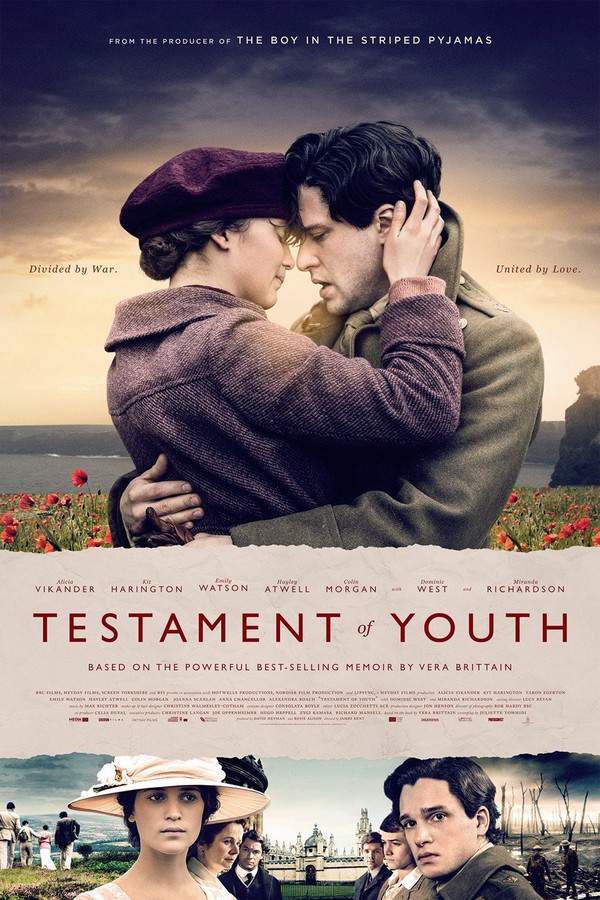
This poignant film brings to life Vera Brittain's powerful memoir, offering a searing look at love, loss, and resilience during World War I. It follows one woman's journey from youthful idealism to profound despair as she experiences the devastating consequences of war. Through her experiences, the film explores themes of love, loss, and the questioning of conflict's purpose, ultimately examining the enduring strength of the human spirit amidst unimaginable hardship.
Warning: spoilers below!
Haven’t seen Testament of Youth yet? This summary contains major spoilers. Bookmark the page, watch the movie, and come back for the full breakdown. If you're ready, scroll on and relive the story!
Read the complete plot breakdown of Testament of Youth (2015), including all key story events, major twists, and the ending explained in detail. Discover what really happened—and what it all means.
In the year 1914, Vera Brittain seeks to break free from the constraints of her traditional family in Buxton by pursuing an education at Oxford University alongside her younger brother Edward and his friends, Roland Leighton and Victor Richardson. Despite her father’s disapproval, she successfully passes the entrance exam for Somerville College. Before her journey to Oxford begins, Vera embarks on a romantic relationship with Roland, who shares her passions for writing and poetry; however, she is fully aware that Victor harbors feelings for her.
The world is turned upside down following the assassination of Archduke Franz Ferdinand, which marks the onset of World War I. Vera soon persuades her father to allow Edward to enlist in the army rather than attend university. Roland and Victor also enlist, with Roland becoming the first among them to face the brutal realities of the Western Front. As the casualty lists grow longer in the newspapers, Vera makes the brave decision to leave her studies and join the Voluntary Aid Detachment, offering her services as a nurse in an English hospital.
Though her friends perceive war as an adventurous undertaking, Roland describes to Vera the horrors faced on the battlefield. He proposes to her, and they promise to marry during his next leave. Roland ultimately returns to France, accompanied by Edward. However, while Vera eagerly awaits his arrival for the Christmas holidays, she receives devastating news from Roland’s mother that he has been killed.
The army informs Vera and Roland’s family that he passed away “a noble and painless death”, but she demands the grim truth. George Catlin, who witnessed Roland’s suffering in Louvencourt, reveals the reality of his agonizing death from a gunshot wound. Later, when Victor, now blind from his injuries, visits Vera’s hospital, she offers her hand in marriage, feeling he will need someone, and knows that Roland would have approved. Victor, however, gently declines before succumbing to his own head injuries.
By 1917, as she yearns to be closer to Edward, Vera requests a transfer to France. Ironically, her first assignment has her caring for wounded German soldiers. Initially torn, she soon recognizes that these men, too, endure suffering. fate leads her to find Edward among the injured, where she plays a pivotal role in saving his life. He shares with her a letter from his “dear friend” Geoffrey Thurlow, hinting at a relationship beyond friendship. After Edward’s recovery, she is relieved when he is dispatched to the relatively safe Italian Front. Edward encourages Vera to resume her studies at Oxford following the conclusion of the war. Meanwhile, back home, Vera faces the emotional challenge of dealing with her mother’s nervous breakdown. It is here she uncovers the heartbreaking telegram announcing Edward’s death, which she learns of through her father’s grief.
In 1918, engulfed by the loss of those dearest to her, Vera cannot find joy amidst the celebrations of the Armistice with Germany. Back at Oxford, she struggles with haunting nightmares concerning the deaths of both Roland and Edward. Winifred Holtby, a fellow student, provides the support Vera desperately needs to handle her trauma.
Attending a public meeting discussing punitive measures against Germany, Vera listens as most of the audience opposes George Catlin, who cautions against the philosophy of revenge. Burdened by feelings of guilt for encouraging her father to let Edward enlist, Vera openly shares her experience of comforting a dying German soldier—who was, in essence, no different from her brother or fiancé. She asserts that the deaths of these young men hold significance only if they collectively reject the cycle of violence: > “No” to war and revenge.
Vera emerges from this trial as a pacifist, making a solemn promise to the fallen souls that their memories will forever be honored. The film concludes with a poignant dedication to those who sacrificed their lives in the war.
While the film closely adheres to the narrative of the original book, it also diverges in key aspects. George Catlin, who joined the army in 1918, never crossed paths with Roland, who perished in 1915. Additionally, Vera did not directly assist in saving Edward’s life; rather, he was sent to the First London General Hospital where she served as a volunteer nurse. Also noteworthy is the mention of the looming Spanish flu while Roland departs for war in 1915, despite the pandemic only emerging in 1918.
Last Updated: November 08, 2024 at 03:22
Discover curated groups of movies connected by mood, themes, and story style. Browse collections built around emotion, atmosphere, and narrative focus to easily find films that match what you feel like watching right now.
Personal stories of tragic loss and enduring strength set against the backdrop of historical conflict.If you were moved by Testament of Youth, explore more movies like it that explore the personal cost of war. These similar historical dramas focus on grief, loss, and the quiet strength needed to rebuild after tragedy, offering profound and bittersweet viewing experiences.
The narrative typically follows a central character whose life is shattered by a historical conflict, often involving the loss of loved ones. The journey is one of trauma and despair, but ultimately leads to a form of resilience or purpose born from the ashes of tragedy, resulting in a bittersweet ending.
Movies are grouped here for their shared focus on the human cost of war, their melancholic and reflective tone, and their balanced pacing that builds emotional weight steadily. They resonate through their heavy emotional core and their exploration of finding hope amidst immense sorrow.
Young protagonists whose idealism is shattered, forcing a painful but profound maturation.For viewers who appreciated the journey of maturation in Testament of Youth, this collection features similar films about coming of age through trauma. These stories follow young characters whose lives are irrevocably changed by loss, leading to a heartbreaking yet powerful awakening.
The narrative pattern begins with a character full of youthful idealism and plans for the future. A devastating external event—often war, loss, or tragedy—shatters this worldview, forcing the character to confront harsh realities. The arc is defined by the loss of innocence and a painful, reluctant transformation into a more mature, and often sadder, adult.
These films are connected by their central theme of a traumatic coming-of-age arc. They share a heavy emotional weight, high sadness, and a focus on how profound suffering catalyzes a permanent character change, moving from hope to disillusionment to a new, harder-won understanding of the world.
Don't stop at just watching — explore Testament of Youth in full detail. From the complete plot summary and scene-by-scene timeline to character breakdowns, thematic analysis, and a deep dive into the ending — every page helps you truly understand what Testament of Youth is all about. Plus, discover what's next after the movie.
Track the full timeline of Testament of Youth with every major event arranged chronologically. Perfect for decoding non-linear storytelling, flashbacks, or parallel narratives with a clear scene-by-scene breakdown.
Discover the characters, locations, and core themes that shape Testament of Youth. Get insights into symbolic elements, setting significance, and deeper narrative meaning — ideal for thematic analysis and movie breakdowns.
Get a quick, spoiler-free overview of Testament of Youth that covers the main plot points and key details without revealing any major twists or spoilers. Perfect for those who want to know what to expect before diving in.
Visit What's After the Movie to explore more about Testament of Youth: box office results, cast and crew info, production details, post-credit scenes, and external links — all in one place for movie fans and researchers.
Discover movies like Testament of Youth that share similar genres, themes, and storytelling elements. Whether you’re drawn to the atmosphere, character arcs, or plot structure, these curated recommendations will help you explore more films you’ll love.
Testament of Youth (2015) Scene-by-Scene Movie Timeline
Testament of Youth (2015) Movie Characters, Themes & Settings
Testament of Youth (2015) Spoiler-Free Summary & Key Flow
Movies Like Testament of Youth – Similar Titles You’ll Enjoy
They Shall Not Grow Old (2018) Movie Recap & Themes
1917 (2019) Movie Recap & Themes
Benediction (2022) Ending Explained & Film Insights
The Trench (2000) Film Overview & Timeline
Private Peaceful (2014) Movie Recap & Themes
25 April (2016) Detailed Story Recap
All Quiet on the Western Front (1930) Plot Summary & Ending Explained
Hearts of the World (1918) Complete Plot Breakdown
Hearts of the World (1918) Detailed Story Recap
Tell England (1931) Complete Plot Breakdown
Once There Was a War (1966) Plot Summary & Ending Explained
War Nurse (1930) Detailed Story Recap
Carve Her Name with Pride (1958) Complete Plot Breakdown
She Goes to War (1929) Film Overview & Timeline
The Gentle Sex (1943) Spoiler-Packed Plot Recap