Plot Explained Spoilers guaranteed!
Plot Explained

Browse by genre

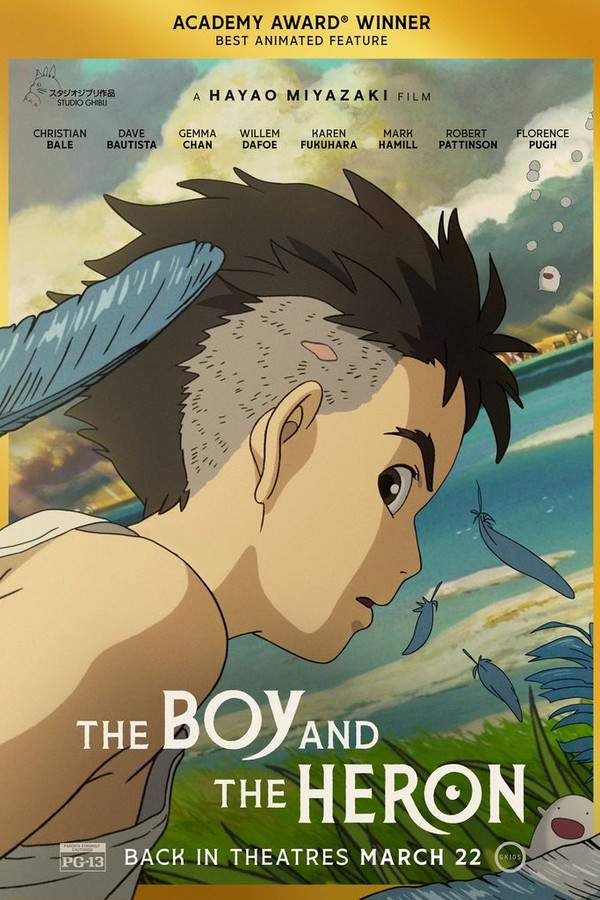
The Boy and the Heron (2023) movie poster

Plot Summary

The Boy and the Heron (2023) Plot Summary & Ending Explained

Release, runtime and language
2023 · 2 h 4 m · Japanese
Echo score 84
Loading streaming availability…
Directed by
Hayao Miyazaki
Starring
Dave Bautista, Gemma Chan, Mamoudou Athie, Willem Dafoe, Christian Bale, Takuya Kimura
Budget
$50M

Following the passing of his mother, young Mahito journeys into a magical realm, guided by a talking heron. He finds himself in a world where the boundary between the living and the deceased blurs, and where he must confront his grief and search for a path forward. Through this extraordinary adventure, he encounters unforgettable characters and discovers profound truths about life, loss, and the enduring power of family.

On this page (7)
  1. 1 Where to watch
  2. 2 What happens: full plot
  3. 3 Plot questions answered
  4. 4 How it ends
  5. 5 Movie threads
  6. 6 Movies like The Boy and the Heron
  7. 7 Every angle
Loading streaming availability…

Full plot summary · contains spoilers

What Happens in The Boy and the Heron: Full Plot Summary

The whole story of The Boy and the Heron (2023) explained, from the opening scene to the final frame: every key event, every twist and what it all adds up to. Read it as a quick recap before the sequel, to check a scene you missed, or to finally understand what really happened.

As the war-torn skies of 1943 Tokyo reverberate with the distressing sound of sirens, a desperate Mahito Maki emerges from his home, racing toward the inferno consuming the hospital where his mother, Hisako, is trapped. His anguished cries of “Mother!” pierce the desolate streets as panic twists his features.

In the aftermath of Hisako's tragic loss, a grief-stricken Mahito begins a new chapter in life alongside his father, Shoichi Maki, at their countryside arsenal, where they attempt to rebuild amidst the chaos of wartime. It is here that Shoichi wedlocks with Natsuko, who harbors a secret of her own: she is with child.

Settling into Natsuko's sprawling estate, Mahito finds himself surrounded by seven enigmatic maids, drawing his attention to the elusive Grey Heron that flutters about the grounds. His intrigue leads him to a mysterious tower constructed by Natsuko's grandfather before her birth, which conceals secrets and hidden mysteries.

As the cruel realities of war unfold, Mahito encounters bullying at school, driving him into a desperate state. He resorts to self-harm to assert his strength but is rescued from his anguish by his father. During his recovery, he discovers a treasured book from his mother titled "How Do You Live?"—a poignant reminder of her love and wisdom that now comforts him.

Yet, the shadows of Hisako's fiery demise linger, haunting Mahito with vivid nightmares. It is in this tumultuous time that he again meets the mystical Grey Heron, which taunts him with cryptic messages and invites him into a mysterious realm. Following its call, Mahito finds himself amidst an eerie assembly of frogs, which serves as a forewarning of more trials ahead.

Sensing the looming specter of doom, the estate's maids scramble toward the tower, leaving behind an unsettling atmosphere. In horror, Mahito witnesses Natsuko vanish into the depths of the mysterious structure, urging him to pursue her. As Mahito's journey continues, a curious maid joins his quest towards the tower, led by the Heron's ethereal guidance, only to uncover unsettling illusions—a vision of Hisako, who materializes only to dissipate at Mahito's touch.

Frustrated and confused, Mahito scolds the Heron, which then conjures a diminutive, bald figure. In a bizarre turn, the Heron's beak, pierced by an arrow made of its own feather, transforms it into a short, pudgy man, drawing Mahito and the maid into the floor below, where they navigate a mystical world.

Suddenly, Mahito finds himself on an unfamiliar island, threatened by a ravenous flock of pelicans. Thankfully, Kiriko, a resourceful sailor, rescues him from the attacking birds while chastising him for his reckless actions. As they journey back to her home, Kiriko shares chilling tales of phantoms that haunt her mystical world.

Once at her abode, Kiriko looks after the Warawara—tiny, marshmallow-like spirits dependent on her nourishment to transcend into the spirit world. As they prepare a feast together, Mahito begins unraveling the truth about Kiriko’s identity, realizing she is none other than the maid that accompanied him into the spirit realm, surrounded by figurines of the other elderly maids from her past.

When night descends, Mahito and Kiriko witness the ascension of the Warawara, interrupted by a sudden attack from more pelicans. Amid the chaos, Lady Himi, a girl with fiery abilities, appears just in time. Mahito's next encounter is with the lead Noble Pelican, Willem Dafoe, whose dying whisper reveals that the pelicans' actions against the Warawara were borne out of sheer desperation.

Still battling his inner turmoil, Mahito shares a meal with the Heron for what may be the last time, as Himi’s assistance becomes crucial in repairing the Heron's beak, freeing it from its natural constraints. However, their reunion proves fleeting, as Mahito soon finds himself amidst gigantic parakeets claiming to lead him to Natsuko—though their true motives are far from innocent. Fortunately, Himi intervenes, utilizing her fiery powers to scatter the aggressive creatures and reveal their deception.

Enlightened by Himi, Mahito learns she is Natsuko’s sister and that the Tower Master—the figure entwined with the celestial mysteries—created this realm along with its portals. Himi is determined to help Mahito reach a portal that could return him to his world. Yet, as they move forward, they are relentlessly pursued by the parakeets, and Mahito’s father, along with the maids, frantically search for both him and Natsuko.

Resolute not to abandon his quest, Mahito chooses to remain in the mystical realm to reunite with Natsuko. However, he ultimately succumbs to unconsciousness. During his slumber, a maid divulges the tower’s haunted history, establishing it was crafted from a meteorite—an event preceding Hisako's unexplained disappearance a year before her return.

Mahito is summoned by the enigmatic Granduncle, who perceives potential in him as a successor. The elder seeks to draw upon Mahito's lineage and pure intentions to liberate this world from its encumbering horrors. Mahito acknowledges his scar, a physical testament to the darkness he confronts.

Upon awakening, Mahito finds himself ensnared by the parakeets once more. The vigilant Heron infiltrates their territory, dispatching foes to rescue Mahito. Together, they converge at the chamber where Natsuko is imprisoned. However, when Mahito attempts to liberate her, a mystical energy encircles them, rendering her cold and indifferent towards him. His declaration that she will be his mother ignites a flicker of recognition that allows her animosity to fade and her true self to resurface.

As Mahito and the Heron embark on a bold mission to rescue Himi from the clutches of the Parakeet King (Dave Bautista), they stumble into a convoluted plot. The Parakeet King, in covert partnership with Granduncle, works to maintain dominion over his forces and the precarious balance of this whimsical world. Once liberated, Mahito is faced with a heart-wrenching decision: to continue under Granduncle's guidance or carve his path, preserving the friendships nurtured amidst turmoil. Enraged by Mahito's reluctance to submit, the Parakeet King topples Granduncle's towering creation, sending shockwaves that threaten to fracture reality itself.

As the world spirals into chaos, Granduncle disappears, delivering a heartfelt farewell to his descendants. Himi bids Mahito and Natsuko goodbye, unveiling her identity as a younger Hisako—a twist that significantly alters the trajectory of their lives.

In the wake of the world-ending catastrophe, Mahito and his companions embark on a desperate flight through the collapsing landscape, narrowly escaping as reality crumbles. In the aftermath, Mahito reunites with Shoichi and Natsuko, alongside Kiriko, who, bearing the wisdom of their shared past, shows Mahito the importance of their connection. The Heron, in its unwavering guidance, imparts its final words of wisdom, reminding Mahito that eventually, he may forget the world they leave behind—a poignant reflection on the profound bonds created through their adventures.

Two years later, Mahito returns to a transformed Tokyo with Shoichi, Natsuko, and his younger brother—his journey now a tangible testament to the enduring strength of friendship and the resilience of the human spirit in the face of overwhelming adversity.

Last updated: November 22, 2024 at 19:23

Was this helpful?

Plot questions answered

The Boy and the Heron Plot Explained: Your Questions Answered

The questions people ask most about The Boy and the Heron (2023): what happens in the confusing scenes, why the characters do what they do, the twists, hidden details and what the ending means. Each answer contains spoilers.

Q1

Why does Mahito hurt himself at school?

Mahito resorts to self-harm after experiencing relentless bullying at school during wartime. The cruelty of the war has seeped into every aspect of his life, and he feels powerless and desperate to assert some form of strength or control over his circumstances. His father Shoichi intervenes and helps him through this difficult period.

  • mahito self harm
  • bullying
  • war trauma
  • school
Q2

Why does the Grey Heron appear to Mahito?

The Grey Heron is sent by the Granduncle (Natsuko's grandfather) to guide Mahito into the mystical realm. The Heron serves as a messenger and guide throughout Mahito's journey, leading him to the tower and eventually into the other world where the Granduncle awaits him.

Foreshadowing: The Heron appears to Mahito multiple times before he enters the tower, whispering cryptic messages that invite him into the mysterious realm.

  • grey heron
  • granduncle
  • guide
  • mystical realm
Q3

Who is the Granduncle in the tower?

The Granduncle is Natsuko's grandfather, who built the mysterious tower before Natsuko was born. He created the mystical realm, a world that exists between life and death, and has been maintaining its delicate balance. He summons Mahito because he sees potential in the boy to become his successor and help restore order to the realm.

Foreshadowing: The tower was constructed from a meteorite, hinting at the Granduncle's connection to otherworldly forces.

  • granduncle
  • tower
  • natsuko grandfather
  • creator
  • mystical realm
Q4

Who is Lady Himi?

Lady Himi is revealed to be a younger version of Mahito's mother, Hisako. She appears in the mystical realm with fiery abilities and assists Mahito throughout his journey. This twist explains why Himi feels a natural connection to Mahito and why she helps him find his way.

Foreshadowing: Himi's connection to Mahito becomes apparent early on, with her instinctive保护和 guidance.

  • lady himi
  • hisako
  • younger mother
  • fire powers
Q5

Who is Kiriko in the spirit world?

Kiriko is one of the seven elderly maids who work at Natsuko's estate. In the mystical realm, she appears as a sailor living on an island, caring for the Warawara (tiny spirit creatures). She accompanies Mahito on part of his journey and helps him understand the realm's workings.

Foreshadowing: Mahito notices the seven maids at the estate before entering the mystical realm, with Kiriko being particularly observant.

  • kiriko
  • maid
  • spirit world
  • warawara
Q6

Why do the pelicans attack the Warawara?

The pelicans attack the Warawara out of sheer desperation. In the mystical realm, the Warawara are tiny, marshmallow-like spirits that must ascend to the spirit world. The pelicans, starving and struggling to survive, view the Warawara as their only food source. The lead Noble Pelican reveals this truth to Mahito before dying.

Foreshadowing: The pelicans' aggression is shown early when they attack Mahito upon his arrival in the realm.

  • pelicans
  • warawara
  • attack
  • desperation
  • starvation
Q7

Why does Natsuko go into the tower?

Natsuko disappears into the mysterious tower, which draws Mahito to pursue her. She becomes trapped in the realm and imprisoned by the parakeets. Her pregnancy and her connection to the Granduncle (as his descendant) make her significant to the mystical realm's balance.

Foreshadowing: The maids scramble toward the tower when they sense danger, and Natsuko vanishes into its depths.

  • natsuko
  • tower
  • imprisoned
  • parakeets
Q8

Why does Mahito choose to return to the real world?

Mahito ultimately chooses to leave the mystical realm because he wants to live a real life with his family. Although the Granduncle offers him power and a role in maintaining the realm, Mahito decides he would rather grow old naturally in the real world than exist eternally in a realm between life and death. His father's love, Natsuko's care, and his memories of his mother compel him to choose life.

Foreshadowing: The book 'How Do You Live?' left by his mother becomes a symbol of his choice to embrace living.

  • mahito choice
  • return
  • real world
  • family
  • life
Q9

What happens to the Granduncle at the end?

When Mahito refuses to become his successor, the Parakeet King, enraged by Mahito's defiance, topples the Granduncle's tower creation. This causes the realm to collapse. The Granduncle disappears, giving a heartfelt farewell to his descendants (Natsuko and Himi), accepting his fate and the end of his long stewardship.

Foreshadowing: The Parakeet King's partnership with Granduncle was always unstable, built on maintaining control rather than true cooperation.

  • granduncle death
  • collapse
  • parakeet king
  • farewell
Q10

What is the significance of the book 'How Do You Live?'

The book 'How Do You Live?' was left behind by Mahito's mother Hisako. It becomes a crucial source of comfort for Mahito during his grief and recovery. The book represents his mother's love and wisdom, guiding him throughout his journey. Its title becomes thematic, Mahito ultimately chooses to live rather than escape into an eternal realm.

Foreshadowing: Mahito discovers the book during his recovery, and it continues to provide him guidance throughout his journey.

  • how do you live
  • book
  • hisako
  • mother
  • grief
Q11

Why does the Parakeet King work with the Granduncle?

The Parakeet King forms a covert partnership with the Granduncle to maintain dominion over his forces and the balance of the mystical world. However, this alliance is ultimately unstable and self-serving. The Parakeet King seeks power and control, and when Mahito threatens this arrangement, the King turns against the Granduncle.

Foreshadowing: The Parakeet King's deception is revealed when he claims to lead Mahito to Natsuko but has ulterior motives.

  • parakeet king
  • granduncle
  • alliance
  • power
  • control
Q12

What does the ending mean for Mahito's family?

The ending is bittersweet, Mahito returns to the real world with his father Shoichi, Natsuko, and his new baby brother (born during his time in the mystical realm). He has healed from his grief and accepted his mother's death, but he must leave behind the magical realm and the younger version of his mother (Himi). This represents acceptance of loss rather than reversing it, showing his growth and readiness to live fully in the real world.

Foreshadowing: Himi's goodbye reveals her true identity as Mahito's mother, making their separation permanent.

  • ending
  • family
  • healing
  • acceptance
  • brother

Ending explained

What Happens at the End of The Boy and the Heron?

How The Boy and the Heron (2023) ends, in short: the final scene, the last twist and what it means for the characters. The full ending explained, with every spoiler, lives on its own page.

Read the full ending explained

The ending of The Boy and the Heron reveals Mahito’s journey towards understanding and accepting loss, as well as the importance of human connections. Throughout his adventures in the mysterious realm of the dead—guided by the talking heron—Mahito confronts the complexities of grief and the fantasy of reunion. The talking heron, which embodies the cultural symbolism of a creature that can travel between worlds, initially appears as a deceitful guide but gradually becomes Mahito’s protector, helping him navigate through the surreal landscape. This journey teaches Mahito that the spirits of loved ones continue to influence and shape his life, even after death, through memories and the bonds they leave behind.

As Mahito ventures into the abandoned tower and encounters the figure of his ancestor—the granduncle—he sees a reflection of loneliness and obsessive creativity that can trap a person within their own world. The granduncle’s creation of his internal universe symbolizes the solitary nature of imagination and the loneliness that often accompanies it. Mahito’s refusal to take over this created realm underscores his decision to reconnect with reality and his loved ones, rather than retreat into a fantasy world that, while tempting, offers no true human warmth.

Continue reading the ending (2 more paragraphs)

The climax emphasizes Mahito’s emotional growth. When he is offered to rule over the fantasy realm by the granduncle, he declines, choosing instead to return to the real world where he belongs. His decision signifies his acceptance of his mother’s death and his understanding that life’s pain and happiness are intertwined. In the final moments, Mahito’s support for Himi—his mother’s younger self—allows her to choose her own destiny, staying in her world so she can eventually become his mother in a different way. The departure of Himi reaffirms that while the fantasy can provide comfort, genuine healing requires embracing the real, often difficult, relationships in life.

Ultimately, the film concludes with Mahito returning to his world, having gained a mature perspective on love, loss, and hope. The collapsing tower and the birds’ departure symbolize the end of his internal journey and his readiness to face the future with a new understanding: that true love and connection are rooted in reality, and that moving forward involves letting go of impossible fantasies. Miyazaki’s story gently champions the idea that embracing human relationships—no matter how painful—leads to genuine growth, healing, and acceptance.

The Boy and the Heron ending explained in full

Movie threads

More Movies Like The Boy and the Heron, by Mood & Story

Curated lists built around what makes The Boy and the Heron tick: the same mood, the same kind of story or the same emotional payoff. Each list explains why these movies belong together.

Movies that explore grief through fantasy like The Boy and the Heron

Characters process profound loss by entering a wondrous and symbolic fantasy realm. Discover films similar to The Boy and the Heron, where characters embark on magical journeys to cope with deep loss. If you liked the blend of melancholy and wonder in Studio Ghibli's fantasy, you'll find other movies that use imaginative worlds to explore themes of grief, healing, and the enduring power of memory.

  • melancholic
  • dreamlike
  • wistful
  • hopeful
  • magical
  • grieving
  • Tone: melancholic, wistful, hopeful
  • Pacing: steady, deliberate
Why these movies?

The story pattern: The narrative pattern begins with a tangible, real-world loss that shatters the protagonist's normal life. This trauma acts as a gateway to a fantastical realm, often guided by an enigmatic figure. Within this world, the protagonist encounters symbolic representations of their grief, memories, and unresolved feelings. The external quest—finding a person, an object, or a way home—parallels the internal journey of acceptance, culminating in a return to reality, forever changed but carrying the lessons of the magical world.

Why they belong together: These films are grouped together because they share a unique emotional recipe: the heavy weight of real-world sorrow is balanced by the awe and whimsy of a fantasy adventure. They resonate with viewers seeking stories that don't shy away from pain but offer a cathartic, imaginative path toward healing, blending deep emotionality with visual and narrative wonder.

Quiet coming-of-age stories set in wartime like The Boy and the Heron

Young protagonists mature against a backdrop of societal collapse and personal tragedy. Find movies like The Boy and the Heron that focus on a young person's emotional journey during wartime. If you appreciated the film's portrayal of grief and growth against a backdrop of conflict, these similar stories explore the quiet, reflective side of coming of age when the world is falling apart.

  • reflective
  • grieving
  • solemn
  • wistful
  • historical
  • introspective
  • Tone: melancholic, reflective, bittersweet
  • Pacing: steady, introspective
Why these movies?

The story pattern: The protagonist is typically a child or adolescent whose life is upended by war, often through the loss of a parent or home. The external conflict of the war serves as a constant, oppressive background to their internal journey. The narrative follows their attempts to navigate this new, dangerous reality, forming tentative connections while grappling with themes of survivor's guilt, the loss of innocence, and the struggle to hold onto hope. The resolution is rarely a victory over the war itself, but a personal reconciliation with loss and a step toward a forever-changed future.

Why they belong together: These films share a specific mood: a solemn, contemplative atmosphere where the loudest battles are fought within the protagonist's heart. They are united by a steady, character-driven pacing that prioritizes emotional depth over action, and a tone that balances the bleakness of war with moments of human resilience and bittersweet hope.

If you liked this

Movies Like The Boy and the Heron

Similar movies to The Boy and the Heron: the same genre, themes or kind of story. Each one comes with its own plot summary, timeline and ending explained.

Browse all movie summaries

Every angle

The Boy and the Heron (2023) Explained: Plot, Ending, Timeline & Characters

Everything about The Boy and the Heron in one place: what happens in the plot summary, the timeline in chronological order, the characters and meaning, the ending explained and a spoiler-free summary. What's After the Movie adds the cast, box office and post-credit scenes.

Coming soon on iOS and Android

The Plot Explained Movie Summary App

Plot summaries, endings explained and timelines on your phone. Catch up on any movie in minutes, save your favorites and never miss a twist again.

Be the first to know when we launch. Your email stays private, always.

Learn more about the app