Plot Explained Spoilers guaranteed!
Plot Explained

Browse by genre

The Architecture of Doom (1989) movie poster

Timeline

The Architecture of Doom (1989) Timeline Explained – Every Event in Order

Release, runtime and language
1989 · 119 mins · Swedish
Directed by
Peter Cohen
Starring
Jeanne Moreau, Bruno Ganz, Sam Gray, Rolf Arsenius

The film uses never‑before‑seen footage of Hitler and the Nazi regime to reveal how the Third Reich crafted an aesthetic that fused art, architecture and propaganda. It follows Hitler’s rise from rejected artist to a dictator focused on monuments and rallies, while exposing bans on art, forced euthanasia and the persecution of Jews and homosexuals.

On this page (5)
  1. 1 Events in order (12)
  2. 2 Timeline questions answered
  3. 3 Movie threads
  4. 4 Movies like The Architecture of Doom
  5. 5 Every angle

12 events in order · contains spoilers

The Architecture of Doom Timeline: Events in Chronological Order

Every key event of The Architecture of Doom (1989) in order, scene by scene, with when and where it takes place. Use it to untangle flashbacks, time jumps and parallel storylines, to refresh your memory before the sequel or to find the exact scene you are thinking of.

  1. Hitler's obsession with aesthetic purity

    The film opens by showing Hitler's fixation on a pure aesthetic that would govern art and national life. It links this obsession to decisions that would later shape Nazi policy. The idea of beauty becomes a political criterion for what could exist in society.

    When
    1930s
    Where
    Berlin, Germany
  2. Sponsoring 'degenerate' art exhibitions

    The regime sponsors exhibitions that vilify modernist works as signs of mental illness and depravity. State propaganda labels 'degenerate art' as a threat to public virtue. By controlling exhibition spaces, the regime defines taste as a political tool.

    When
    1930s
    Where
    Germany (various cities)
  3. Looting classical art from occupied Europe

    Classical sculptures and paintings are looted from across Nazi-occupied territories to populate German collections. The film highlights how art is scavenged to reflect Hitler's personal taste rather than historical value. This removal of cultural heritage serves as propaganda that the regime determines what is worthy.

    When
    1939-1945
    Where
    Occupied Europe
  4. Hitler as amateur architect planning new buildings

    Hitler is depicted as an amateur architect who sketches plans for monumental structures that express a Nordic empire. The designs fuse classical grandeur with modernist order, shaping a future cityscape for Nazi Germany. Architecture becomes a means to project power and racial ideology.

    When
    1930s-1940s
    Where
    Berlin, Germany
  5. Grand opera houses and European architectural knowledge

    He is shown as intimately familiar with Europe's grand opera houses, seeing in them a model for mass cultural mobilization. The film suggests that operatic spaces influence the aesthetics of a totalizing state project. This cultural literacy informs his later decisions about public spaces and performances.

    When
    1930s-1940s
    Where
    Europe (grand opera houses)
  6. Visit to Paris to plan Berlin's reconstruction

    In Paris, he travels with architects and artists who will be tasked with rebuilding Berlin to fit the Nazi aesthetic. They imagine new structures, including depictions of the ruins they intend to create for future generations. The visit marks a turning point in linking art, architecture, and geopolitical ambition.

    When
    1937-1938
    Where
    Paris, France
  7. Designs for future ruins as monuments

    Designs for new structures feature depictions of ruins that will stand for generations to come. The plans treat destruction and reconstruction as a single aesthetic narrative. This forward-looking ruinography signals how architecture can encode a regime's memory.

    When
    1930s-1940s
    Where
    Berlin, Germany
  8. Affinity for Greek and Roman antiquity

    The film emphasizes Hitler's attraction to Greek and Roman antiquity as models of order and strength. This fascination informs both architectural forms and the regime's symbolic language. Antiquity becomes a template for legitimizing conquest and public life.

    When
    1930s-1940s
    Where
    Greece and Italy
  9. Totalizing war strategy inspired by Sparta and Rome

    It is suggested that Hitler envisioned a total war aligned with Spartan discipline and Roman imperial grandeur. War is framed as an instrument to annihilate enemies and erase their histories. The narrative links military aims directly to the aesthetic vision that surrounds it.

    When
    1939-1945
    Where
    Europe
  10. Enforcing cultural control through art policy

    The regime's art policy suppresses nonconforming works, replacing them with a curated national style. This control extends to education, media, and public spaces, shaping citizens' senses of beauty. The film ties these cultural campaigns to the broader machinery of state violence.

    When
    1930s-1945
    Where
    Germany
  11. Propaganda architecture and cultural ritual

    Public spaces are designed to host propaganda events that celebrate the regime's aesthetic ideals. Monuments, commands, and rituals turn architecture into performance. The film shows how space itself enforces ideological obedience.

    When
    1930s-1945
    Where
    Germany and occupied Europe
  12. Legacy: art, war, and memory

    The closing arc suggests that Hitler's aesthetic program binds art, architecture, and war into a single project. By controlling what is seen and built, the regime attempts to rewrite history. The film implies that the aesthetic project is inseparable from the political and military destruction of its era.

    When
    1930s-1945
    Where
    Europe

Last updated: January 28, 2026 at 12:46

Was this helpful?

Timeline questions answered

The Architecture of Doom Timeline Explained: Your Questions Answered

When does it happen, and why in that order? The questions people ask about the chronology of The Architecture of Doom (1989): time jumps, flashbacks, cause and effect between scenes and the correct order of events, each answered with spoilers.

Q1

Why did the Nazis label certain modern art as 'degenerate'?

The Nazis labeled modern art as 'degenerate' because Hitler personally rejected modernist movements that he associated with Jewish and Soviet artists. The regime used these exhibitions as propaganda tools to sway public opinion, claiming that abstract and experimental works represented mental illness and moral decay. This campaign allowed the Nazis to consolidate cultural control while justifying their broader suppression of artistic freedom.

Foreshadowing: Earlier scenes establish Hitler's personal resentment toward art institutions that had rejected his own work.

  • degenerate art
  • Nazi propaganda
  • modernism
  • art exhibitions
Q2

How did Hitler's experience as a rejected artist influence his cultural policies?

Hitler's rejection by Vienna's Academy of Fine Arts and art establishments fueled his vendetta against modernist art. His personal artistic failures transformed into a political weapon, leading him to systematically dismantle the art world that had dismissed him. This personal grievance directly shaped the regime's cultural legislation and persecution of artists.

Foreshadowing: The film opens with his aesthetic obsession framing decisions that would later become Nazi policy.

  • Hitler artist
  • rejected artist
  • Vienna Academy
  • cultural persecution
Q3

Why did Hitler want to rebuild Berlin?

Hitler envisioned transforming Berlin into 'Germania,' a monumental capital that would surpass Paris and embody his Nordic imperial vision. He traveled to Paris with architects in 1937-1938 to study European grandeur, planning structures that would last for generations. The reconstruction was meant to physically manifest Nazi ideology and serve as a backdrop for propaganda rituals.

Foreshadowing: The timeline shows his amateur architectural sketches predating the Paris visit.

  • Germania
  • Berlin reconstruction
  • Nazi architecture
  • monumental planning
Q4

What was the concept of 'designs for future ruins'?

The Nazi architects designed new monumental structures with explicit depictions of how they would appear as ruins in the distant future. This 'ruinography' treated destruction and reconstruction as a single aesthetic narrative, deliberately encoding the regime's memory into architecture. The concept reflected an understanding that ruins carry cultural meaning across generations.

Foreshadowing: This concept appears late in the timeline, building on earlier discussions of classical antiquity.

  • future ruins
  • ruinography
  • Nazi architecture
  • architectural design
Q5

How did Hitler connect aesthetics to total war?

Hitler drew explicit parallels between ancient empires like Sparta and Rome, seeing their aesthetic grandeur as inseparable from their military conquests. The film presents war as a comprehensive project to annihilate enemies, subjugate populations, and erase histories deemed undesirable. In this view, the pursuit of beauty and the drive for domination were two facets of the same ideological project.

Foreshadowing: The timeline traces his affinity for classical antiquity as a template for both architecture and conquest.

  • total war
  • Sparta
  • Rome
  • aesthetic conquest
  • Nazi ideology
Q6

Why was Greek and Roman antiquity important to Nazi ideology?

Hitler used Greek and Roman antiquity as models of order, strength, and racial hierarchy that he sought to emulate. The regime's preference for classical forms in architecture, sculpture, and public spaces was meant to invoke associations with imperial grandeur. This aesthetic framework legitimized both the regime's cultural policies and its imperial ambitions across Europe.

Foreshadowing: Early timeline entries establish his aesthetic obsession with purity modeled on ancient ideals.

  • Greek antiquity
  • Roman antiquity
  • classical architecture
  • Nazi aesthetics
Q7

Why did the Nazis loot classical art from occupied Europe?

The Nazis systematically looted sculptures and paintings from across occupied territories to build grand German collections reflecting Hitler's personal taste. This wasn't about historical preservation but about claiming cultural heritage as Nazi property. The looting served as propaganda, demonstrating which cultures the regime deemed worthy of preservation.

Foreshadowing: This operation intensifies as the timeline moves toward full-scale war.

  • art looting
  • Nazi plunder
  • occupied Europe
  • cultural theft
Q8

Why does the film use four different narrators?

The film employs French, German, English, and Swedish narrators to demonstrate the pan-European scope of Nazi cultural manipulation. Each voice represents a different national perspective on how aesthetics and power became intertwined. This multilingual approach underscores that the Nazi aesthetic program affected cultures across the continent.

Foreshadowing: The narrative structure is established from the opening frames.

  • narrators
  • multilingual
  • European perspective
  • documentary structure
Q10

What role did grand opera houses play in Nazi aesthetic planning?

Hitler was intimately familiar with Europe's grand opera houses, viewing them as models for mass cultural mobilization. The regime saw operatic spaces as templates for public gatherings that could synchronize crowds with ideological spectacle. This cultural literacy directly informed decisions about propaganda venues and public performances.

Foreshadowing: This knowledge appears early in the timeline as foundational to his aesthetic vision.

  • opera houses
  • mass mobilization
  • Nazi culture
  • propaganda venues

Movie threads

More Movies Like The Architecture of Doom, by Mood & Story

Curated lists built around what makes The Architecture of Doom tick: the same mood, the same kind of story or the same emotional payoff. Each list explains why these movies belong together.

Analytical Documentaries on Systemic Horror like The Architecture of Doom

Documentaries that dissect the chilling, bureaucratic machinery of historical atrocities. If you were captivated by The Architecture of Doom's methodical dissection of Nazi ideology, you'll find similar films here. These documentaries explore the historical, political, and psychological mechanics of atrocities, focusing on how evil becomes systematized and normalized.

  • analytical
  • sobering
  • grim
  • disturbing
  • critical
  • historical
  • Tone: dark, sobering, critical
  • Pacing: steady, methodical
Why these movies?

The story pattern: These narratives typically unfold as investigations, building a case by presenting historical evidence, expert commentary, and archival footage. They follow a logical progression to reveal how abstract ideas were transformed into concrete policies of oppression and genocide.

Why they belong together: They are grouped by their shared commitment to understanding, rather than just depicting, horror. They share a dark tone, a steady analytical pace, and a focus on the intellectual and aesthetic underpinnings of catastrophic historical events.
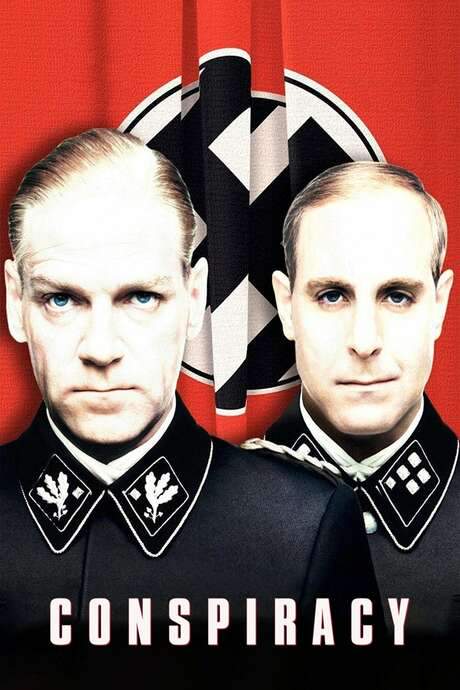
Movies about Propaganda and Aesthetic Control like The Architecture of Doom

Stories exploring how art, media, and imagery are used to shape and control societies. For viewers who appreciated The Architecture of Doom's focus on Nazi art and propaganda, this section features films with similar themes. Discover stories, both documentary and fictional, that examine the use of media, symbols, and aesthetics to manipulate masses and enforce ideology.

  • critical
  • thought-provoking
  • dystopian
  • chilling
  • political
  • manipulative
  • Tone: dark, critical, oppressive
  • Pacing: steady
Why these movies?

The story pattern: The narrative often traces the rise of a powerful entity—a state, a corporation, a cult—and meticulously shows how it constructs a compelling visual and ideological world to seduce followers and crush dissent. The focus is on the process of building a controlling narrative.

Why they belong together: These films share a critical perspective on the manipulation of perception. They are united by themes of totalitarianism, media control, and the weaponization of culture, often resulting in a grim, heavy, and intellectually stimulating experience.

If you liked this

Movies Like The Architecture of Doom

Similar movies to The Architecture of Doom: the same genre, themes or kind of story. Each one comes with its own plot summary, timeline and ending explained.

Browse all movie summaries

Every angle

The Architecture of Doom (1989) Explained: Plot, Timeline & Characters

Everything about The Architecture of Doom in one place: what happens in the plot summary, the timeline in chronological order, the characters and meaning and a spoiler-free summary. What's After the Movie adds the cast, box office and post-credit scenes.

Coming soon on iOS and Android

The Plot Explained Movie Summary App

Plot summaries, endings explained and timelines on your phone. Catch up on any movie in minutes, save your favorites and never miss a twist again.

Be the first to know when we launch. Your email stays private, always.

Learn more about the app