Plot Explained Spoilers guaranteed!
Plot Explained

Browse by genre

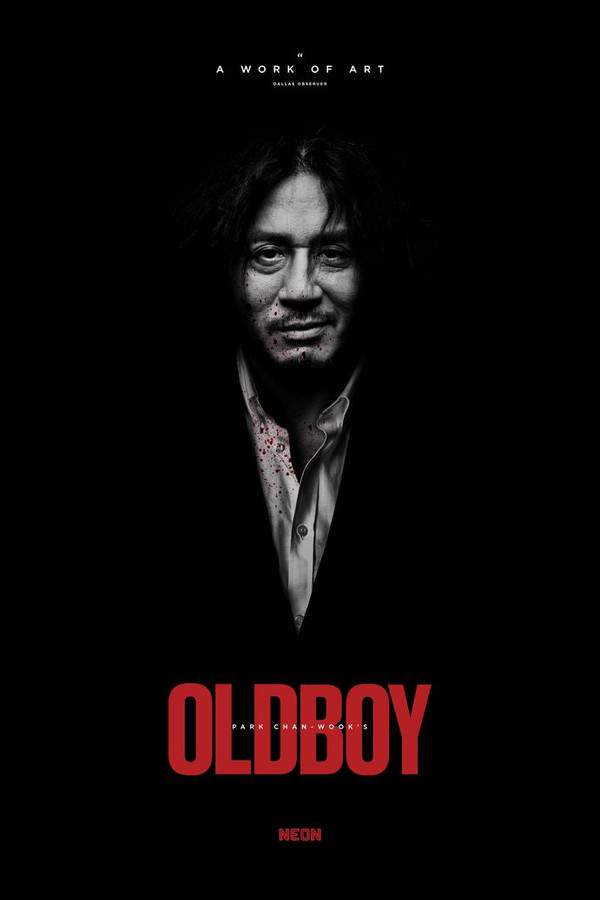
Oldboy (2005) movie poster

Plot Summary

Oldboy (2005) Plot Summary Explained

Release, runtime and language
2005 · 120 min · English
Directed by
Chan-wook Park
Starring
Ji-tae Yu, Min-sik Choi, Hye-jeong Kang

Oh Dae-su, a successful businessman, is abruptly kidnapped and held captive for fifteen years without explanation. Upon his sudden release, he finds his life irrevocably changed and is driven by a fierce desire to uncover the reason for his imprisonment and to seek retribution. His dangerous pursuit of the truth leads him down a twisting path filled with unexpected revelations and shocking encounters.

On this page (5)
  1. 1 What happens: full plot
  2. 2 Plot questions answered
  3. 3 Movie threads
  4. 4 Movies like Oldboy
  5. 5 Every angle

Full plot summary · contains spoilers

What Happens in Oldboy: Full Plot Summary

The whole story of Oldboy (2005) explained, from the opening scene to the final frame: every key event, every twist and what it all adds up to. Read it as a quick recap before the sequel, to check a scene you missed, or to finally understand what really happened.

The film opens with a gripping scene where Oh Dae-su (portrayed by Min-sik Choi) is holding another man suspended by a necktie over the edge of a building, insisting that the man must listen to his tale. The story then takes a compelling turn, transporting us back to 1988, where Dae-su lives a seemingly typical life as a businessman, accompanied by his wife, Kim Ja-Hyun (played by an unidentified actress), and his beloved daughter, Yeun-Hee.

On his daughter's fourth birthday, Dae-su finds himself in a drunken stupor, leading to an incorrigible disturbance at the police station. Amidst this chaos, he showcases angel wings he purchased for his daughter, only to be bailed out by his loyal friend, Joo-Hwan. Meanwhile, as Joo-Hwan converses with Dae-su's family, danger looms as Dae-su is unexpectedly kidnapped by masked figures.

Fast forward two months, Dae-su is trapped in a dingy makeshift prison, deprived of both freedom and knowledge about his captors. He receives mysterious meals and is frequently gassed into unconsciousness. The stark reality of his situation hits him when he learns via the television news that his wife has been brutally murdered, his daughter is gone, and he himself is the prime suspect. As despair wraps around him like a suffocating shroud, Dae-su descends into a state of madness, punctuated by violent hallucinations.

Determined to maintain his sanity, he begins documenting his thoughts in a series of notebooks, mapping out all the potential foes from his past. As the years roll by, he tattoos the years of his captivity on his arm and trains tirelessly through shadowboxing, while quietly engineering an escape route. After a decade of agonizing isolation, he discovers a chopstick in a food delivery that becomes his tool for digging out.

In a twist of fate, Dae-su is suddenly set free one day, finding himself on the rooftop of a newly constructed building. Not accustomed to the freedom, he encounters a suicidal man who shares a poignant sentiment: > "Even though I'm no better than a beast, don't I have the right to live?" Dae-su, deeply affected, offers the man a glimmer of hope, asking him to hold off on his demise so he can unravel his own dark tale.

As he navigates through the city streets, burdened with his newfound liberty and the weight of false accusations against him, Dae-su encounters a gang, where his years of training come to fruition, allowing him to fend them off effortlessly. Later, he meets Mi-do, a sushi bar employee who bears a striking resemblance to someone from his memories. A mysterious call soon introduces Dae-su to his captor, who brazenly discloses that the imprisonment was part of a chilling experiment, leading Dae-su down a dark rabbit hole of secrets to uncover.

In his pursuit of the truth, Dae-su learns that the clues left for him intertwine with the tragic fate of his past and others, including his connection to Mi-do. The narrative spirals into a frenetic race against time, involving old grudges and the re-emergence of figures from his past, culminating in shocking revelations about Dae-su's past actions toward Woo-jin (played by Yu Ji-tae) and his sister.

This harrowing journey of vengeance and revelations extends beyond comprehension, as Dae-su confronts the haunting consequences of memory, regret, and desire. Dae-su's unique struggle peaks as he grapples with the notion of familial ties in the most horrific sense, all while trying to protect Mi-do. Dae-su’s descent into madness, interspersed with visceral moments, reflects his battle within, only to be met with a heartbreaking climax that beckons existential questions about love and suffering.

In the end, Dae-su seeks help to erase the memories that torment him, echoing the haunting lines first heard from the despondent man he saved. Torn between love and monstrosity, he is left to grapple with the shadows of his choices as he faces an uncertain future with Mi-do, culminating in a complex embrace charged with agony and hope.


Last updated: November 08, 2024 at 00:24

Was this helpful?

Plot questions answered

Oldboy Plot Explained: Your Questions Answered

The questions people ask most about Oldboy (2005): what happens in the confusing scenes, why the characters do what they do, the twists, hidden details and what the ending means. Each answer contains spoilers.

Q1

Why did Woo-jin kidnap and imprison Dae-su for 15 years?

Woo-jin kidnapped Dae-su as revenge for a traumatic event from their youth. Years before, Dae-su had witnessed Woo-jin's sister being sexually assaulted and had told others about it, leading to her suicide. Woo-jin spent decades planning his elaborate revenge, framing Dae-su for his wife's murder and having him imprisoned to destroy his life just as his own was ruined.

Foreshadowing: Early scenes hint at Dae-su's troubled past when he documents potential enemies from his past in notebooks while in captivity.

  • woo-jin
  • revenge
  • kidnapping
  • imprisonment
  • Dae-su past
Q2

What happened to Dae-su's wife after his abduction?

While Dae-su was held captive, his wife Kim Ja-Hyun was murdered. The police found her body and incorrectly believed Dae-su was the killer, especially since he had mysteriously vanished after the abduction, leaving him as the prime suspect in her death.

Foreshadowing: The news of his wife's murder arrives via television while Dae-su is in captivity, devastating him.

  • wife
  • murder
  • kim ja-hyun
  • frame
  • false accusation
Q3

How did Dae-su escape after 15 years of captivity?

After a decade in captivity, Dae-su found a chopstick in his food delivery. Using it, he slowly dug through the wall of his makeshift prison over time, eventually creating an escape route. This escape occurs just as his captor mysteriously releases him, leading to his sudden freedom on a rooftop.

Foreshadowing: Dae-su spends years training through shadowboxing while documenting enemies and tattooing years on his arm, showing his determination to survive and escape.

  • escape
  • chopstick
  • prison
  • captivity
  • freedom
Q4

Why does Dae-su seek to have his memories erased at the end?

Dae-su learns the full truth about his past, he was responsible for the chain of events that destroyed Woo-jin's sister, leading to her suicide. This revelation, combined with the horrors he experienced and his own violent actions during his quest for revenge, becomes unbearable. He seeks memory erasure to escape the psychological torment of knowing what he did and who he truly is.

Foreshadowing: The film hints at Dae-su's dark past through his hallucinations and the notebooks he writes while mad in captivity, suggesting he knows somewhere deep down that he did something terrible.

  • memory
  • erase
  • trauma
  • guilt
  • confession
  • truth
Q5

What is the connection between Mi-do and Dae-su's past?

Mi-do bears a striking resemblance to Woo-jin's sister, which is why Dae-su is drawn to her. The resemblance is not coincidental, Woo-jin specifically orchestrated this, having arranged for Mi-do to work at the sushi bar where Dae-su would find her. This connection is part of Woo-jin's psychological manipulation, using Mi-do as a living reminder of the tragedy he blames Dae-su for causing.

Foreshadowing: When Dae-su first meets Mi-do, the film emphasizes her resemblance to someone from his memories, suggesting a deeper significance.

  • mi-do
  • resemblance
  • woo-jin sister
  • manipulation
  • sushi bar
Q6

Why was Dae-su framed for his wife's murder?

Woo-jin framed Dae-su for the murder as part of his elaborate revenge scheme. By making Dae-su believe he was suspected of killing his own wife while he was actually imprisoned, Woo-jin ensured Dae-su would suffer the deepest emotional torture, knowing his wife was dead and believing he was to blame, without being able to do anything about it.

Foreshadowing: The framed murder is revealed when Dae-su watches news coverage in captivity, learning his wife is dead and he is the prime suspect.

  • frame
  • murder
  • wife
  • suspect
  • evidence
Q7

What was the 'experiment' that Dae-su's captor mentioned?

Woo-jin referred to Dae-su's imprisonment as an 'experiment' because he wanted to test whether an innocent person could maintain sanity through 15 years of isolation and psychological torture. Woo-jin was obsessed with Dae-su's past mistake and wanted to prove something about human nature through his elaborate revenge, though the true motivation was personal vengeance masked as scientific curiosity.

Foreshadowing: The mysterious call from the captor reveals this experiment angle, adding a psychological dimension to the captivity.

  • experiment
  • captor
  • isolation
  • torture
  • psychology
Q8

What happened to Dae-su's daughter Yeun-Hee?

After Dae-su was kidnapped and his wife was murdered, their daughter Yeun-Hee disappeared. The film suggests she was taken by someone, likely as part of Woo-jin's larger scheme to completely destroy Dae-su's life. The fate of his daughter remains tragically unclear, adding to the devastating impact of Dae-su's loss.

Foreshadowing: The abduction scene shows the family being targeted, and the note about his daughter being gone reinforces the complete destruction of his life.

  • daughter
  • yeun-hee
  • missing
  • disappeared
  • family
Q9

Why does Dae-su experience violent hallucinations during captivity?

After learning his wife was murdered and he was framed, Dae-su descends into madness while in captivity. The combination of isolation, gas-induced unconsciousness, the shock of his wife's death, and being falsely accused shatters his sanity. His violent hallucinations represent his psychological breakdown and the trauma of his situation, forcing him to find coping mechanisms like writing in notebooks.

Foreshadowing: The news of his wife's murder is the catalyst for his descent into madness, shown immediately after he sees the television coverage.

  • hallucination
  • madness
  • trauma
  • isolation
  • wife death
Q10

What is the significance of the suicidal man Dae-su meets on the rooftop?

When Dae-su is released, he encounters a man about to jump off a building. The man says 'Even though I'm no better than a beast, don't I have the right to live?' This echoes Dae-su's own existential crisis and mirrors his internal struggle. Dae-su asks the man to wait so he can tell his story first, which becomes the framing device for the entire film. The man's question about a beast's right to live directly parallels Dae-su's own identity as both victim and perpetrator of violence.

Foreshadowing: This opening scene is the film's frame, and later Dae-su seeks to erase his memories, echoing the beast conversation.

  • suicide
  • rooftop
  • beast
  • existence
  • freedom
  • meaning

Movie threads

More Movies Like Oldboy, by Mood & Story

Curated lists built around what makes Oldboy tick: the same mood, the same kind of story or the same emotional payoff. Each list explains why these movies belong together.

Revenge labyrinths with brutal revelations like in Oldboy

Stories where the pursuit of vengeance leads down a dark and shocking path. If you liked the shocking twists and morally complex vengeance in Oldboy, explore more movies like it. This section features similar stories where a quest for payback spirals into a psychological labyrinth, filled with unexpected reveals and a dark, uncompromising tone.

  • vengeful
  • unsettling
  • paranoid
  • brutal
  • grim
  • obsessive
  • Tone: dark, tense, bleak
  • Pacing: variable, building to a frantic pace
Why these movies?

The story pattern: The narrative typically begins with a profound injustice that sets the protagonist on a path of vengeance. However, the quest is a trap or a puzzle designed by a cunning antagonist, forcing the protagonist to confront horrifying truths about themselves and their past. The story structure is often complex, with reveals that re-contextualize earlier events, leading to a climax that is more about survival of the soul than victory.

Why they belong together: These films are grouped by their shared focus on revenge as a destructive, transformative force. They possess a dark tone, high intensity, and complex plotting that keeps viewers off-balance. The emotional journey is heavy, centered on obsession and the devastating cost of uncovering buried secrets.

Psychological confinement thrillers similar to Oldboy

Characters trapped physically or mentally, fighting for their sanity and freedom. For viewers who appreciated the themes of imprisonment and psychological torment in Oldboy, this collection highlights movies with a similar feel. Discover films like Oldboy that explore the gripping and harrowing journey of characters escaping profound physical or mental captivity.

  • claustrophobic
  • desperate
  • unsettling
  • paranoid
  • grim
  • traumatic
  • Tone: dark, claustrophobic, desperate
  • Pacing: variable, with slow-burn tension
Why these movies?

The story pattern: The narrative follows a character who is suddenly and inexplicably stripped of their freedom. A significant portion of the story is dedicated to their endurance and attempts to understand their captivity. Upon release or escape, they find the world outside is just another prison, and the real struggle is internal—to overcome the trauma and reclaim a sense of self, often with bleak results.

Why they belong together: These movies are connected by their intense exploration of confinement and its psychological aftermath. They share a claustrophobic and desperate mood, a dark tone, and a heavy emotional weight. The pacing often mirrors the experience: a sudden shock, a period of slow-burn suffering, and a frantic, variable-paced race for liberation.

If you liked this

Movies Like Oldboy

Similar movies to Oldboy: the same genre, themes or kind of story. Each one comes with its own plot summary, timeline and ending explained.

Browse all movie summaries

Every angle

Oldboy (2005) Explained: Plot, Timeline & Characters

Everything about Oldboy in one place: what happens in the plot summary, the timeline in chronological order, the characters and meaning and a spoiler-free summary. What's After the Movie adds the cast, box office and post-credit scenes.

Coming soon on iOS and Android

The Plot Explained Movie Summary App

Plot summaries, endings explained and timelines on your phone. Catch up on any movie in minutes, save your favorites and never miss a twist again.

Be the first to know when we launch. Your email stays private, always.

Learn more about the app