Plot Explained Spoilers guaranteed!
Plot Explained

Browse by genre

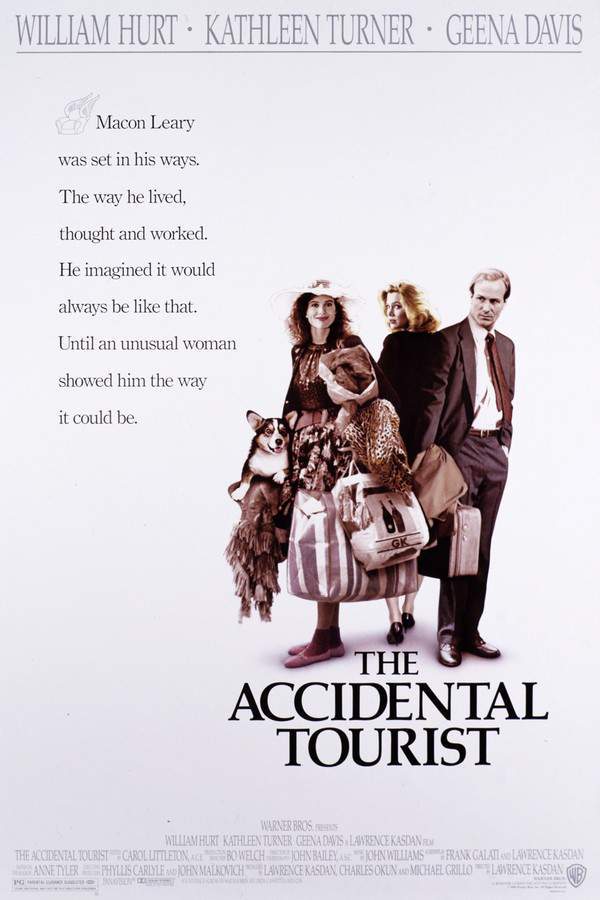
The Accidental Tourist (1988) movie poster

Plot Summary

The Accidental Tourist (1988) Plot Summary Explained

Release, runtime and language
1988 · 121 min · English
Directed by
Lawrence Kasdan
Starring
Geena Davis, William Hurt, Kathleen Turner

Following a devastating loss that fractures his marriage, architect Macon Milner finds himself adrift, struggling with profound grief and physical limitations. He unexpectedly connects with Muriel, an unconventional dog trainer, forging an unusual bond that disrupts his isolated life. Meanwhile, his estranged wife Sarah reappears, forcing Macon to examine his past and consider a future filled with both familiar pain and the possibility of renewed hope.

On this page (7)
  1. 1 Where to watch
  2. 2 What happens: full plot
  3. 3 Plot questions answered
  4. 4 The book behind the movie
  5. 5 Movie threads
  6. 6 Movies like The Accidental Tourist
  7. 7 Every angle

Where to watch

Where to Watch The Accidental Tourist (1988)

Where can you watch The Accidental Tourist? Stream, rent or buy it in the US, including on Kanopy, Plex and Tubi TV: current JustWatch availability with up-to-date prices.

Streaming availability powered by JustWatch

Full plot summary · contains spoilers

What Happens in The Accidental Tourist: Full Plot Summary

The whole story of The Accidental Tourist (1988) explained, from the opening scene to the final frame: every key event, every twist and what it all adds up to. Read it as a quick recap before the sequel, to check a scene you missed, or to finally understand what really happened.

Macon Leary, a dedicated travel guide author known for his practical advice aimed at anxious business travelers, is deeply grappling with the profound loss of his 12-year-old son, Ethan. In his attempts to navigate the complicated landscape of grief, Macon tries to impose control over his emotions and life by strictly adhering to the routines and plans outlined in his guides. This rigid structure, however, is increasingly stifling him.

His once idyllic marriage to Sarah is now fragile, with her having taken the step to move out into an apartment. Left with only their devoted dog, Edward, Macon finds himself enveloped in solitude, haunted by memories and the heavy burden of responsibility.

In this bleak emotional state, he encounters Muriel Pritchett, a quirky dog trainer and animal hospital worker who is also wrestling with her own challenges, including caring for her ailing son, Alexander. As Macon employs Muriel to continue training Edward, he becomes drawn to her refreshing perspective on life, which offers him a semblance of peace. As their relationship deepens, Macon assumes a fatherly role for Alexander, creating an unexpected bond.

Yet, their budding connection faces obstacles. With Muriel developing deeper feelings for Macon, she seeks greater emotional involvement from him, a request he finds challenging to embrace. Just as Sarah's lease comes to an end and she returns home to propose a fresh start for them, Macon is left in a dilemma. Despite lingering emotions for Sarah, he must confront whether to rekindle that relationship and risk losing the connection he has built with Muriel.

While traveling to Paris for a research trip, Macon is taken aback when he discovers that Muriel is on the same flight and staying at the hotel he recommended in his guide. She suggests a spontaneous weekend getaway, creating a false sense of leisure amidst Macon’s professional obligations. Although he insists his trip is for work, his concern for Alexander's health remains ever-present. He grapples with his feelings, struggling to reconcile his past with his future amidst the budding relationship with Muriel.

As Macon’s time in Paris approaches its conclusion, Muriel surprises him by asking to join him for one last night, leaving the decision open-ended. Later that evening, while dealing with an unexpected phone issue, he injures himself, prompting him to rest. Muriel arrives shortly after, believing he has already left, leaving her unaware of his situation.

On the following day, as Macon contemplates his next steps, he converses with his publisher about his issues, leading Sarah to arrive with medication. In this moment, Sarah suggests they make the most of their trip, even hinting at a second honeymoon, but it soon becomes clear to Macon that their relationship lacks vitality without their son.

As the sun rises the next morning, Macon prepares quietly without disturbing Sarah, sharing his intent to reconnect with Muriel. He acknowledges the need for someone who can support him in overcoming his grief. In his hurry, he leaves behind his iconic bag, a token of his previous life.

While navigating the bustling streets, a young boy resembling Ethan comes to his aid, representing a powerful image of Macon's journey towards moving forward. As the child opens the taxi door for him, wishes him well, and vanishes into the crowd, Macon takes a significant step towards a new chapter.

Meanwhile, oblivious to his arrival, Muriel eventually notices Macon as he signals for a taxi. A beaming smile lights up her face, reflecting the promise of a new journey together.

Last updated: November 19, 2024 at 17:24

Was this helpful?

Plot questions answered

The Accidental Tourist Plot Explained: Your Questions Answered

The questions people ask most about The Accidental Tourist (1988): what happens in the confusing scenes, why the characters do what they do, the twists, hidden details and what the ending means. Each answer contains spoilers.

Q1

Why does Macon choose Muriel over Sarah?

Macon ultimately chooses Muriel because their relationship represents a path forward in his healing, while his marriage to Sarah is bound to the memory of their deceased son Ethan. In Paris, Sarah hints at a second honeymoon, but Macon realizes their relationship lacks vitality without their child. Muriel, despite being unconventional, offers him the support he needs to actually confront his grief, not retreat from it.

Foreshadowing: Earlier, Macon's rigid routines and guides are shown as an attempt to control his grief rather than process it.

  • muriel
  • sarah
  • marriage
  • grief
  • healing
  • choice
Q2

Why can't Macon and Sarah reconcile their marriage?

Macon and Sarah cannot reconcile because their marriage became intertwined solely with their identity as parents to Ethan. When Sarah suggests they make the most of their trip in Paris and hints at a second honeymoon, Macon understands their relationship has no life or purpose without their son. The grief has fundamentally altered who they are as a couple.

Foreshadowing: Sarah moving out to her own apartment early in the film signals the irreparable fracture in their marriage.

  • sarah
  • marriage
  • grief
  • divorce
  • reconciliation
Q3

What does the boy who resembles Ethan in Paris represent?

The boy in Paris who resembles Ethan is a symbolic moment representing Macon's first step toward healing. As Macon navigates the bustling streets preparing to reconnect with Muriel, this child opening the taxi door for him signifies Macon letting go of the past and moving forward. It is a visual representation of his son giving him permission to continue living.

Foreshadowing: Macon has been haunted by memories of Ethan throughout the film, and his inability to accept Ethan's death has kept him trapped in grief.

  • ethan
  • paris
  • boy
  • symbolism
  • healing
  • symbol
Q4

Why does Macon leave his iconic bag behind in Paris?

Macon leaves his bag behind as a symbolic gesture of releasing his old identity. The bag represents his previous life as a travel guide author who offered practical advice to anxious travelers, a version of himself that existed before Ethan's death. By leaving it, he signals he is ready to embrace a new chapter with Muriel.

Foreshadowing: Throughout the film, Macon's guides are shown as a coping mechanism, a way to maintain control over a chaotic world.

  • bag
  • paris
  • symbolism
  • old life
  • new chapter
Q5

How does bonding with Alexander help Macon with his grief?

Alexander, Muriel's sick son, helps Macon address his grief by giving him a paternal role to fill. After losing Ethan, Macon needed to be a father again, and Alexander provided that opportunity. This unexpected bond allows Macon to channel his paternal instincts into caring for someone, rather than being consumed by the absence of his own child.

Foreshadowing: Macon's initial meeting with Muriel is framed around training his dog Edward, but the deeper connection to Alexander emerges gradually.

  • alexander
  • father
  • son
  • grief
  • parenting
  • healing
Q6

Why does Muriel come to Paris?

Muriel comes to Paris because she has developed deeper feelings for Macon and wants more emotional involvement from him. When she discovers he's on a research trip, she books the same flight and hotel, suggesting a spontaneous weekend together. Her presence forces Macon to confront his feelings while still dealing with the unexpected return of Sarah.

Foreshadowing: Earlier, Muriel explicitly asks Macon for more emotional involvement, which he struggles to provide.

  • muriel
  • paris
  • flight
  • relationship
  • pursuit
Q7

What happens when Macon gets injured in Paris?

While dealing with a phone issue in his hotel room, Macon injures himself and must rest. Muriel arrives shortly after, but she mistakenly believes he has already left for the airport. This miscommunication highlights the emotional distance between them at that moment, she leaves unaware he's injured and in need of support.

Foreshadowing: Macon's struggle to communicate throughout the film reflects his emotional walls.

  • injury
  • phone
  • paris
  • miscommunication
  • muriel
Q8

Why does Sarah come to Paris with medication?

Sarah comes to Paris with medication after Macon speaks with his publisher about his personal issues. This shows Sarah still cares for him despite their separation, but the gesture also underscores how their relationship has become about managing Macon's problems rather than genuine connection. The medication scene precedes their intimate moment that ultimately convinces Macon he cannot stay.

Foreshadowing: Sarah's return to propose a fresh start establishes her willingness to help, but also her misunderstanding of what Macon needs.

  • sarah
  • paris
  • medication
  • care
  • support
Q9

What is Macon's relationship with his dog Edward about?

Edward is the dog Macon shares with Sarah, and after Sarah moves out, Edward becomes Macon's sole companion in his isolated life. Hiring Muriel to train Edward creates the initial connection between Macon and Muriel. The dog represents the last remnant of their family unit and serves as Macon's anchor to his former life.

Foreshadowing: Macon is shown with only Edward for company in his bleak emotional state after Sarah leaves.

  • edward
  • dog
  • companion
  • isolation
  • family
Q10

Why does Macon rely so heavily on his travel guides and routines?

Macon uses his travel guides and rigid routines as a coping mechanism to impose control over his emotions after Ethan's death. His guides offer practical advice for anxious travelers, but Macon himself cannot follow his own advice. The rigid structure stifles him because it is an attempt to escape grief rather than process it.

Foreshadowing: The film opens with Macon grappling with grief while his guides emphasize planning and control.

  • guides
  • routines
  • control
  • grief
  • coping
  • escape
Q11

What does the ending scene with Muriel's smile mean?

The ending scene shows Muriel noticing Macon as he signals for a taxi, and her breaking into a beaming smile. This moment symbolizes hope and the promise of a new beginning for both characters. Macon has chosen to pursue a future with Muriel rather than return to a lifeless marriage with Sarah, and Muriel's smile confirms their connection is mutual.

Foreshadowing: Muriel asking to join Macon for one last night in Paris establishes her continued hope for their relationship.

  • ending
  • smile
  • hope
  • new beginning
  • muriel

Movie threads

More Movies Like The Accidental Tourist, by Mood & Story

Curated lists built around what makes The Accidental Tourist tick: the same mood, the same kind of story or the same emotional payoff. Each list explains why these movies belong together.

Movies about grief and healing like The Accidental Tourist

Slow, introspective stories about finding hope after profound personal loss. If you appreciated the quiet, melancholic exploration of loss in The Accidental Tourist, you'll find similar stories here. These movies focus on characters navigating profound grief, often featuring a slow pace, heavy emotional weight, and a bittersweet or hopeful emergence from sorrow.

  • melancholic
  • introspective
  • sobering
  • quiet
  • gentle
  • lonely
  • Tone: melancholic, introspective, hopeful
  • Pacing: slow, deliberate
Why these movies?

The story pattern: These narratives typically begin with a character immobilized by a significant loss. The plot is less about external events and more about the internal, reluctant journey towards accepting a new reality. Healing is not a dramatic turnaround but a series of small, quiet steps, often catalyzed by an unconventional relationship or a reevaluation of the past.

Why they belong together: They are grouped by their shared focus on the emotional realism of grieving, a melancholic yet gentle tone, and a narrative structure that prioritizes character introspection over fast-paced plot. The experience is consistently sobering, introspective, and ultimately centered on the possibility of renewal.

Movies with unconventional romances like The Accidental Tourist

Stories where an eccentric new love challenges a character's isolated existence. For viewers who enjoyed the dynamic between Macon and Muriel in The Accidental Tourist, this thread features movies where a quirky, unconventional partner disrupts a lonely protagonist's life. These stories explore how unexpected love can force a reevaluation of the past and inspire personal change.

  • quirky
  • heartfelt
  • bittersweet
  • transformative
  • lonely
  • hopeful
  • Tone: bittersweet, melancholic, uplifting
  • Pacing: steady, character-driven
Why these movies?

The story pattern: The narrative pattern involves a withdrawn or grieving character whose life is defined by routine and control. The entry of a vibrant, unpredictable love interest creates friction and discomfort, forcing the protagonist to choose between the safety of their isolation and the messy, challenging possibility of connection and change.

Why they belong together: They share a core dynamic where romance serves as a catalyst for personal growth rather than simple escapism. The tone is often bittersweet or melancholic, as the romance directly confronts the protagonist's pain. The pacing is typically character-driven, allowing the relationship to develop gradually and with emotional authenticity.

If you liked this

Movies Like The Accidental Tourist

Similar movies to The Accidental Tourist: the same genre, themes or kind of story. Each one comes with its own plot summary, timeline and ending explained.

Browse all movie summaries

Every angle

The Accidental Tourist (1988) Explained: Plot, Timeline & Characters

Everything about The Accidental Tourist in one place: what happens in the plot summary, the timeline in chronological order, the characters and meaning and a spoiler-free summary. What's After the Movie adds the cast, box office and post-credit scenes.

Coming soon on iOS and Android

The Plot Explained Movie Summary App

Plot summaries, endings explained and timelines on your phone. Catch up on any movie in minutes, save your favorites and never miss a twist again.

Be the first to know when we launch. Your email stays private, always.

Learn more about the app