







Plot Explained Spoilers guaranteed!
Plot Explained

Browse by genre

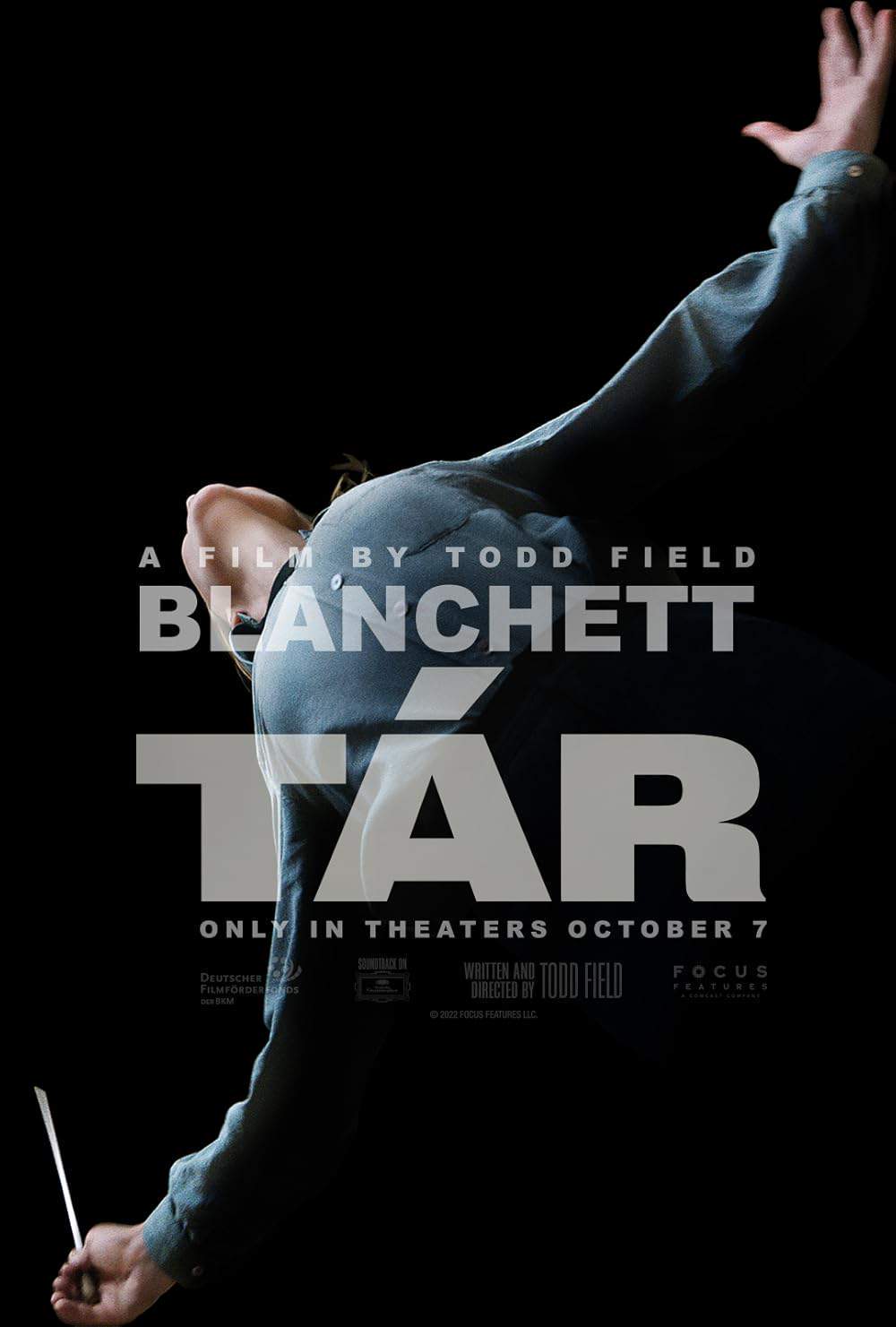
TÁR (2022) movie poster

Ending Explained

TÁR (2022) Ending Explained – Final Scene & Meaning

Release, runtime and language
2022 · 158 min
Echo score 75
JustWatch #3,212 9
Directed by
Todd Field
Starring
Vincent Riotta, Cate Blanchett, Mark Strong, Nina Hoss, Noémie Merlant, Allan Corduner
Budget
$25M

Cate Blanchett portrays Lydia Tár, a renowned and influential conductor preparing for a significant book launch and symphony performance. As she navigates her career at the pinnacle of success, unexpected events trigger a dramatic downfall. The film delves into the intricacies of power, ambition, and the potential for corruption within even the most respected figures, revealing a compelling portrait of a woman facing a crisis.

On this page (7)
  1. 1 Where to watch
  2. 2 What happens at the end
  3. 3 Final events in order
  4. 4 Ending questions answered
  5. 5 Movie threads
  6. 6 Movies like TÁR
  7. 7 Every angle

Where to watch

Where to Watch TÁR (2022)

Where can you watch TÁR? Stream, rent or buy it in the US, including on Netflix, Netflix Standard and Amazon Video: current JustWatch availability with up-to-date prices.

Streaming availability powered by JustWatch

Ending explained · contains spoilers

What Happens at the End of TÁR?

How TÁR (2022) ends, what the final scene means, which earlier moments set it up and how to read the ending if the film leaves it open. The full ending explained, with every spoiler.

The ending of "Tár" is layered with ambiguity and open to interpretation. As Lydia Tár's professional and personal worlds collapse—she loses her prestigious positions, faces protests, and becomes isolated—she seems to spiral into a state of mental disintegration. Some argue that the scenes showing her attacking her replacement conductor and the disturbing images at the brothel might be hallucinations or symbols of her guilt and psychological torment. The film subtly suggests that Lydia is haunted by her past actions, especially regarding her abusive relationships with students and the tragic suicide of Krista, her former protégée. These echoes of her guilt and shame are reinforced by the final scene, where Lydia conducts a performance of the video game Monster Hunter, a strange and almost surreal choice. This scene, with its heightened realism and bizarre context, can be seen as a hallucination or a symbolic reflection of her inner state—highlighting her mental unraveling rather than a literal continuation of her life. Within this interpretation, Lydia’s conduct of Monster Hunter, a game about a hunt or a monster, cleverly symbolizes her own perception as a monster—haunted by her past and constantly in pursuit of some form of redemption or escape. The film's choice to end with her performing in front of cosplayers, conducting a score from a video game, underscores her downfall from revered artist to a humbling figure who is still driven by her obsession with music, despite everything. Ultimately, "Tár" invites viewers to consider whether Lydia's final moments are real or a manifestation of her fractured mind—leaving her fate open-ended—while highlighting the film's themes of guilt, abuse, and the destructive pattern of power and violence. The movie’s ending, complex and unsettling, leaves much to ponder about Lydia’s true state of mind and whether she might still be capable of revival or if she is doomed to remain haunted by her past.

Last updated: June 25, 2025 at 08:44

Was this helpful?

The last 4 events

How TÁR Ends: The Final Events in Order

The last events of TÁR (2022) in chronological order, the run-up to the ending explained above. The complete timeline has all 15 events, scene by scene.

Open the full timeline
  1. Confrontation with Eliot onstage

    In an impulsive moment during a live performance, Lydia confronts Eliot onstage, revealing the extent of her unraveling. This public outburst is emblematic of her loss of composure in both personal and professional spheres.

  2. Return to Staten Island

    Seeking refuge from the chaos, Lydia flees to her childhood home on Staten Island. Here, she confronts her true identity, realizing her real name is Linda Tarr, and grapples with family tensions, leading to a moment of personal reckoning.

    Where
    Staten Island
  3. Conducting in the Philippines

    Months later, Lydia finds herself conducting an orchestra in the Philippines, where her perception of reality begins to blur. The experience evokes both nostalgia and discomfort as she faces familiar yet unsettling scenarios from her past.

    Where
    Philippines
  4. Final Performance

    The film culminates with Lydia conducting a new orchestra, embodying mixed emotions as she navigates her complex journey. While surrounded by devoted cos-players for a film adaptation score, echoes of her tumultuous past continue to resonate in her present.

Ending questions answered

TÁR Ending: Your Questions Answered

The questions people ask most about the ending of TÁR (2022): what the final scene means, how the twist works, what happens to each character and how to read the ending. Each answer contains spoilers.

Q1

Is Lydia's final scene real or a hallucination?

The film leaves this deliberately ambiguous. The final scene showing Lydia conducting a Monster Hunter video game symphony could be interpreted as a literal event depicting her further professional decline, or as a psychological hallucination representing her mental unraveling. The shift to heightened realism and surreal context suggests the latter interpretation, that viewers are witnessing her fractured mental state rather than objective reality.

Foreshadowing: Earlier scenes already show Lydia experiencing disorienting moments as her career collapses, laying groundwork for psychological distortion.

  • lydia tár hallucination
  • ending interpretation
  • psychological breakdown
  • ambiguous ending
Q2

What does the Monster Hunter symphony mean in the ending?

The Monster Hunter performance serves as symbolic punishment and self-recognition. In the video game, players hunt monsters, Lydia conducting this score positions her as both the hunter and the hunted monster. Conducting a video game score, once considered beneath her elite classical stature, underscores her complete downfall from revered maestro to a diminished figure still clinging to music, now in a humbling context among cosplayers.

Foreshadowing: Lydia's earlier dismissal of pop culture and her insistence on classical music's superiority establishes the irony of her ending.

  • monster hunter symphony
  • video game music
  • symbolism
  • downfall
  • classical music
Q3

Does Lydia Tár face consequences for her actions?

Yes, Lydia loses her prestigious position as chief conductor, faces public protests, becomes isolated from her spouse, and watching her career implode. However, the consequences remain incomplete: she doesn't face legal repercussions or explicit moral reckoning. Her punishment manifests as psychological disintegration rather than external justice, leaving her hauntingly diminished rather than definitively punished or redeemed.

Foreshadowing: Earlier scenes show her manipulative relationships with students and the tragic suicide of Krista, which clearly foreshadow devastating consequences.

  • lydia tár consequences
  • abuse victims
  • career downfall
  • power abuse
Q4

Why does Lydia conduct a video game score at the end?

Conducting the Monster Hunter score represents her obsession with music overriding her former pretensions. Despite losing everything, the Berlin Philharmonic, her marriage, her reputation, she still needs to conduct. The video game choice signals she's no longer in the elite classical world, yet she persists in her compulsion, now performing in a low-status context that would have horrified her earlier self.

Foreshadowing: Lydia's identity was entirely built around being a conductor; her continued conducting despite everything reveals this as addiction rather than artistry.

  • video game score
  • conducting
  • obsession
  • identity loss
Q5

Is the ending of Tár a dream or reality?

The ending operates in a space between dream and reality. While not explicitly labeled as a dream sequence, the sudden shift to a strange venue with cosplayers, combined with the film's earlier suggestions of psychological instability, strongly implies this could be Lydia's subjective experience of her own collapse. The ambiguity is central to the film's exploration of guilt and self-perception.

Foreshadowing: The film gradually blurs reality as Lydia's power diminishes, with earlier moments becoming increasingly uncertain.

  • dream sequence
  • ambiguous ending
  • reality vs perception
Q6

What happens to Lydia Tár at the end of the movie?

Lydia ends in a diminished, surreal state, conducting a video game symphony in front of an audience of cosplayers after losing her prestigious positions. Whether this is her literal fate or a manifestation of her guilt-ridden mind remains unclear. She's isolated, haunted by past actions, and trapped in her obsession with conducting, but the film doesn't confirm whether she experiences any genuine reckoning or transformation.

Foreshadowing: Her collapse accelerates throughout the film as damning revelations about her past behavior surface.

  • lydia tár fate
  • character ending
  • outcome
Q7

Why is Lydia performing in front of cosplayers at the end?

The cosplayers represent the cultural territory Lydia always dismissed as inferior to classical music. Her conducting of Monster Hunter, a game she would have scorned, before this audience symbolizes her complete fall from the elite classical world. The scene is both humiliating and revealing: she's reduced to performing for the very audience she once deemed unworthy, yet she still commands the podium, showing her inability to escape her core identity as a conductor.

Foreshadowing: Earlier scenes show Lydia's snobbery toward anything outside classical music, making this ending a stark reversal.

  • cosplayers
  • video game
  • cultural fall
  • humiliation
Q8

Does Lydia feel guilt for Krista's suicide?

The film strongly suggests Lydia is haunted by guilt over Krista's suicide, her former protégée whom she manipulated and abused. The ending imagery, monsters, being hunted, psychological torment, reflects this guilt manifesting as psychological punishment. However, Lydia never explicitly acknowledges responsibility; the guilt appears as internal haunting rather than conscious remorse, reinforcing the film's portrait of a character unable to face her own actions.

Foreshadowing: Krista appears in Lydia's thoughts and flashbacks throughout, and the suicide is repeatedly referenced as a pivotal trauma.

  • krista
  • guilt
  • suicide
  • victim
  • abuse
Q9

What is the symbolism of the monster in Tár's ending?

The Monster Hunter theme literally positions Lydia as the monster. Having been revealed as an abuser who drove Krista to suicide, Lydia conducting music about hunting monsters becomes darkly ironic self-portraiture. She sees herself as both the monster being hunted and the hunter, trapped in a cycle of guilt, seeking redemption or escape but unable to escape her own nature. The monster is her own reflection.

Foreshadowing: The film's title itself and earlier references to predatory behavior establish Lydia's identification with predatory power dynamics.

  • monster symbolism
  • guilt
  • self-perception
  • predator
Q10

Is Lydia Tár redeemable after the ending?

The film offers no clear answer. Lydia ends unchanged in her compulsion to conduct but diminished in every other way. She shows no explicit remorse or transformation, only the persistence of her musical obsession. Whether redemption is possible remains the film's central unresolved question, reflecting its broader meditation on whether those who abuse power can ever truly atone or merely continue their patterns in diminished forms.

Foreshadowing: Throughout the film, Lydia shows no capacity for genuine self-reflection, making redemption unlikely within the narrative.

  • redemption
  • character arc
  • change
  • morality

Movie threads

More Movies Like TÁR, by Mood & Story

Curated lists built around what makes TÁR tick: the same mood, the same kind of story or the same emotional payoff. Each list explains why these movies belong together.

Slow burn psychological unraveling like in TÁR

Meticulous character studies where a life of power crumbles under psychological pressure. Explore movies like TÁR, featuring meticulous character studies where powerful figures face a slow, psychologically intense downfall. If you liked the tense, steady pace and complex portrait of a life unraveling, these films deliver a similar experience of haunting self-confrontation.

  • psychological
  • unraveling
  • claustrophobic
  • anxious
  • haunting
  • oppressive
  • Tone: tense, melancholic
  • Pacing: steady, methodical
Why these movies?

The story pattern: These narratives follow a character, often in a position of authority or talent, as their carefully constructed world is dismantled. The story unfolds not through explosive action, but through a steady accumulation of pressures, revelations, and internal crises, leading to a loss of identity and power.

Why they belong together: They are grouped by their shared focus on internal collapse, a tense and steady pacing that maximizes psychological dread, and a heavy emotional weight stemming from themes of corruption, narcissism, and the consequences of one's actions.
Movies about a fall from grace in elite worlds like TÁR

Stories of influential figures brought down by their own ambition in elite settings. Find movies similar to TÁR that explore the downfall of powerful, ambitious figures in high-stakes environments like the classical music world. These stories delve into themes of power, corruption, and cancel culture, offering a heavy, tense viewing experience.

  • unraveling
  • oppressive
  • melancholic
  • anxious
  • dissociative
  • power dynamics
  • Tone: tense, bleak
  • Pacing: steady, character driven
Why these movies?

The story pattern: The narrative pattern involves a protagonist at the peak of their career in a rarefied world. Their moral compromises, hubris, or hidden past triggers a chain of events that leads to public disgrace and a complete loss of status, exploring the intricate power dynamics of their specific milieu.

Why they belong together: These films share a central theme of a 'fall from grace,' set within specific, often insulated, professional worlds. They possess a high emotional weight, a tense tone, and a complex examination of how ambition and power can lead to self-destruction.

If you liked this

Movies Like TÁR

Similar movies to TÁR: the same genre, themes or kind of story. Each one comes with its own plot summary, timeline and ending explained.

Browse all movie summaries

Every angle

TÁR (2022) Explained: Plot, Ending, Timeline & Characters

Everything about TÁR in one place: what happens in the plot summary, the timeline in chronological order, the characters and meaning, the ending explained and a spoiler-free summary. What's After the Movie adds the cast, box office and post-credit scenes.

Coming soon on iOS and Android

The Plot Explained Movie Summary App

Plot summaries, endings explained and timelines on your phone. Catch up on any movie in minutes, save your favorites and never miss a twist again.

Be the first to know when we launch. Your email stays private, always.

Learn more about the app