Plot Explained Spoilers guaranteed!
Plot Explained

Browse by genre

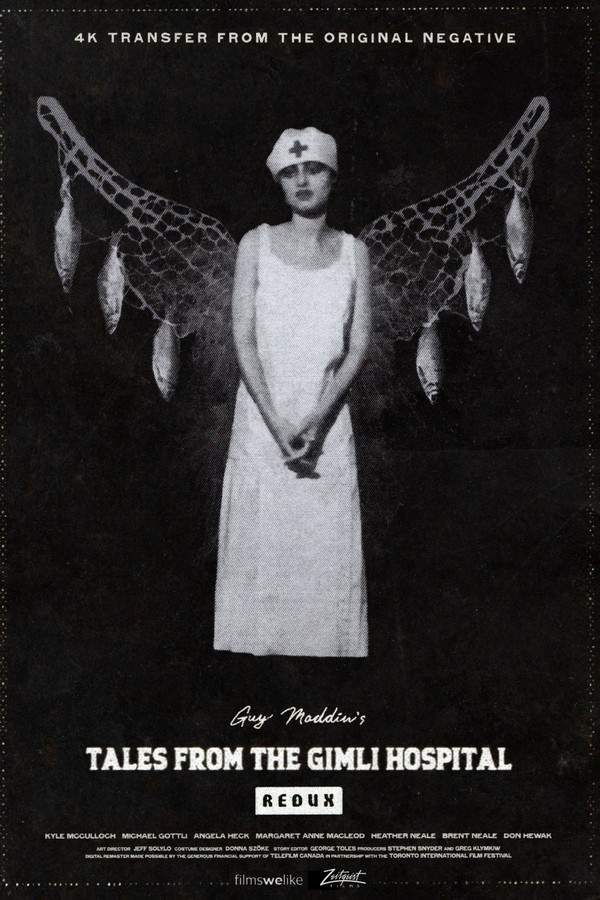
Tales from the Gimli Hospital (1988) movie poster

Plot Summary

Tales from the Gimli Hospital (1988) Plot Summary Explained

Release, runtime and language
1988 · 72 min · English
Loading streaming availability…
Directed by
Guy Maddin
Starring
Kyle McCulloch, Margaret Anne MacLeod, Michael Gottli, Angela Heck, Chris Johnson, David Neale

During a 19th-century smallpox pandemic, Kyle McCulloch and Michael Gottli find themselves sharing a small hospital room, forcing them to face their own mortality. As fear and chaos grip the outside world, an unexpected bond of friendship develops between the two strangers within the confines of the hospital.

On this page (6)
  1. 1 Where to watch
  2. 2 What happens: full plot
  3. 3 Plot questions answered
  4. 4 Movie threads
  5. 5 Movies like Tales from the Gimli Hospital
  6. 6 Every angle
Loading streaming availability…

Full plot summary · contains spoilers

What Happens in Tales from the Gimli Hospital: Full Plot Summary

The whole story of Tales from the Gimli Hospital (1988) explained, from the opening scene to the final frame: every key event, every twist and what it all adds up to. Read it as a quick recap before the sequel, to check a scene you missed, or to finally understand what really happened.

In the present day, a dreary atmosphere envelops Gimli's hospital, starkly contrasting with the rich storytelling legacy of Iceland. Here, a dying mother shares an ancient tale with her two young children, weaving a narrative as intricate as a time-worn tapestry, connecting them to Gimli's historical fabric. As they listen with rapt attention, they are transported back in time, to a poignant era where Einar, played by Kyle McCulloch, battles the harsh realities of a smallpox outbreak, finding himself in makeshift hospital wards situated over an animal stable.

Einar's journey is fraught with silent despair, marked by his attempts to forge connections with fellow patients and the lovely young nurses who care for them. His neighbor, Gunnar, portrayed by Michael Gottli, stands out as a more skilled storyteller and artisan, charming their caregivers with his exquisite birch bark carvings. Meanwhile, director Maddin makes a brief appearance as a surgeon, performing procedures with precision while distracted patients watch a poorly executed puppet show.

As Einar's narrative unfolds, so too does Gunnar's intricate background, shadowed by grief and heartache. The unearthing of Einar's fish-carving shears triggers a torrent of memories for Gunnar, compelling him to confront the painful legacy left by his wife, Snjófridur, played by Angela Heck. Through poignant flashbacks, we witness the tender moments of their courtship, tragically cut short by her premature death due to smallpox. This heart-wrenching recollection is underscored by Gunnar's aboriginal friend's traditional rites for Snjófridur, who honors her memory by placing tokens and gifts on an elevated platform.

Einar, too, harbors a troubled past that surfaces as he narrates the circumstances of acquiring Gunnar's shears: a chance encounter with a lovely woman's corpse on a similar platform, where he absconded with her tokens and experienced a morbid intimacy. The lines between life and death begin to blur, intertwining Einar's story with the mystical elements that haunt Gimli's hospital and its patients.

As Gunnar's rage brews, he finds himself unable to unleash his vengeance upon Einar immediately. A sudden fire breaks out on the hospital roof, prompting the Icelanders to extinguish the flames by dousing them in milk. This odd solution only serves to blind Gunnar with a milky haze. Meanwhile, a recently deceased minstrel is laid to rest, and his memory seems to ignite Einar's dark intentions. He considers using the very shears he stole from Gunnar’s wife to disfigure him.

In a fevered state, both men exit the hospital only to encounter Lord Dufferin delivering an address. Einar's hallucinations transform the noble lord into the mythical Fish Princess, intensifying his malevolent plans against Gunnar. The two adversaries then find themselves in a verdant field, where they partake in a primal Glima Wrestling match – a traditional display of strength that culminates in them grappling for dominance and ultimately exhausting themselves.

In a later scene, Einar retreats to his modest dwelling, which doubles as a fish smokehouse, where he is unexpectedly visited by a healed Gunnar, now accompanied by his newly engaged partner. As they stroll along the picturesque shores of Lake Winnipeg, Einar's envy simmers, underscoring his solitude as the emblematic Einar the Lonely.

The film's tale then leaps back to the present day in Gimli, where the children learn of their mother's passing. They implore Amma, the elder storyteller, to fulfill the maternal role, but she gently declines, offering to visit only if their father agrees. Curious about the afterlife, the children listen attentively as Amma prepares to share another enchanting story, leading the film to conclude on a reflective and poignant note.

Last updated: November 18, 2024 at 20:50

Was this helpful?

Plot questions answered

Tales from the Gimli Hospital Plot Explained: Your Questions Answered

The questions people ask most about Tales from the Gimli Hospital (1988): what happens in the confusing scenes, why the characters do what they do, the twists, hidden details and what the ending means. Each answer contains spoilers.

Q1

Why does Einar steal from the woman's corpse on the platform?

Einar steals tokens and items from the woman's corpse because he is consumed by loneliness and morbid fascination during the smallpox epidemic. The encounter represents his desperate attempt at connection, even with the dead. He is drawn to the elevated platform where the deceased are placed, and his action reveals his psychological state, blurring the lines between life and death as the disease spreads throughout Gimli.

Foreshadowing: Earlier, Einar's silent attempts to connect with other patients foreshadow his extreme longing for human contact.

  • einar
  • corpse
  • stealing
  • smallpox
  • platform
  • tokens
Q2

What is the significance of Gunnar's fish-carving shears?

The fish-carving shears are a treasured possession that connect Gunnar to his deceased wife Snjófridur. When Einar discovers and takes these shears, it triggers Gunnar's painful memories of his wife who died from smallpox. The shears represent their relationship and Gunnar's artistic legacy, making their theft a deeply personal violation that fuels Gunnar's rage toward Einar.

Foreshadowing: Gunnar's skill as a birch bark carver established earlier makes the shears' connection to his identity clear.

  • gunnar
  • einar
  • shears
  • fish-carving
  • snjófridur
  • memories
Q3

Why does Gunnar become so angry at Einar?

Gunnar's rage stems from Einar stealing the fish-carving shears that belonged to Snjófridur. Additionally, Einar's past action of taking tokens from a woman's corpse, another elevated platform, mirrors the sacred way Gunnar honors his own wife. This parallel deeply offends Gunnar, as Einar has desecrated something similar to how Gunnar cherishes Snjófridur's memory.

Foreshadowing: The film established both men sharing a hospital room, creating proximity for this conflict to develop.

  • gunnar
  • einar
  • rage
  • shears
  • smallpox
  • honor
Q4

Why do the Icelanders put out the fire with milk?

The milk-extinguishing scene is one of the film's absurdist moments. When a fire breaks out on the hospital roof, the Icelanders douse it with milk, a strange remedy that actually blinds Gunnar with a milky haze. This bizarre solution reflects the film's surreal tone and the desperate, unconventional methods people resort to during crisis. It also serves to physically incapacitate Gunnar, preventing immediate violence against Einar.

Foreshadowing: The earlier puppet show distraction established the hospital's absurd atmosphere.

  • fire
  • milk
  • icelanders
  • hospital
  • absurd
  • haze
Q5

What does Einar's hallucination of the Fish Princess represent?

Einar's hallucination transforms Lord Dufferin into the mythical Fish Princess, representing his deteriorating mental state and deepening malicious intentions toward Gunnar. The hallucination occurs as Einar exits the hospital in a fevered condition, blurring reality with fantasy. The Fish Princess embodies the film's mystical elements and Einar's dark, distorted perception as he plots violence against his rival.

Foreshadowing: Einar's earlier consideration of using the stolen shears to disfigure Gunnar set up this sinister mindset.

  • einar
  • fish-princess
  • hallucination
  • lord-dufferin
  • delirium
Q6

What is the purpose of the Glima wrestling match between Einar and Gunnar?

The Glima wrestling match in the verdant field represents the primal, physical manifestation of the tension and rivalry between Einar and Gunnar. As two men grappling for dominance, it symbolizes their struggle for power, identity, and significance during the smallpox epidemic. The exhausting match ends without a clear winner, reflecting their equal footing and the futility of their conflict, both are isolated, dying men in a hospital ward.

Foreshadowing: The rivalry established through the shears theft builds directly to this confrontation.

  • glima
  • wrestling
  • einar
  • gunnar
  • field
  • struggle
  • dominance
Q7

How are the present day and historical stories connected?

The present-day story features a dying mother telling her children an ancient tale in Gimli's hospital, which becomes the historical story about Einar and Gunnar. The children listen intently, representing the transmission of cultural memory across generations. This frame narrative connects Iceland's storytelling heritage to the historical events, with the mother's tale serving as a bridge between past and present.

Foreshadowing: The opening establishes the dying mother's storytelling as the frame for all subsequent events.

  • present
  • historical
  • frame-story
  • children
  • ammm
  • storytelling
Q8

What is the significance of the elevated platform in the film?

The elevated platform is where the dead are placed during the smallpox epidemic, a location of both death and memory. Gunnar places tokens and gifts for his deceased wife Snjófridur on such a platform, honoring her memory through traditional rites. Einar's disturbing encounter with another woman's corpse on a similar platform connects these two men through their relationship with death and their desperate attempts to hold onto something meaningful.

Foreshadowing: Gunnar's rituals with his aboriginal friend establish the platform's sacred significance.

  • platform
  • dead
  • smallpox
  • tokens
  • snjófridur
  • ritual
Q9

What happens to the mother at the end of the film?

The mother dies, and her children learn of her passing while in the hospital. This tragedy drives them to seek comfort from Amma, the elder storyteller, asking her to take their mother's place. Amma gently declines but promises to visit if their father agrees. The ending is bittersweet, the children's curiosity about the afterlife suggests hope continues despite their loss.

Foreshadowing: The opening established the mother as dying, making her death the emotional climax of the framing story.

  • mother
  • death
  • children
  • ammm
  • ending
  • afterlife
Q10

What is the relationship between Einar and Gunnar?

Einar and Gunnar are fellow patients sharing a hospital room during the smallpox epidemic, but their relationship evolves from mere coexistence to rivalry and potential violence. Initially strangers, tension builds when Einar steals Gunnar's cherished shears. Despite this conflict, there are moments of connection, their Glima wrestling match suggests a complex bond of mutual struggle. The ending shows Gunnar healed and engaged, while Einar remains alone, reinforcing their divergent paths.

Foreshadowing: Their initial positioning as neighbors in the hospital ward sets up this complicated dynamic.

  • einar
  • gunnar
  • relationship
  • roommates
  • rivalry
  • conflict

Movie threads

More Movies Like Tales from the Gimli Hospital, by Mood & Story

Curated lists built around what makes Tales from the Gimli Hospital tick: the same mood, the same kind of story or the same emotional payoff. Each list explains why these movies belong together.

Surreal Historical Movies like Tales from the Gimli Hospital

Grim historical events reimagined through a dreamlike, absurdist lens. Discover movies like Tales from the Gimli Hospital that blend historical settings with surreal and dreamlike storytelling. This collection features films where grim realities are filtered through an absurdist and melancholic lens, creating a unique, thought-provoking viewing experience for fans of art-house horror and drama.

  • dreamlike
  • surreal
  • melancholic
  • historical
  • absurd
  • dreary
  • Tone: melancholic, surreal, reflective
  • Pacing: slow, atmospheric
Why these movies?

The story pattern: Stories in this thread often unfold in a non-linear or fragmented way, weaving together past and present, reality and hallucination. The historical context provides a foundation of genuine tragedy, but the narrative structure bends and warps this reality, using surrealism to explore the psychological impact of events like plagues or wars on the human mind.

Why they belong together: These films are grouped by their unique tonal blend: the heavy emotional weight of historical tragedy combined with a stylized, often whimsical or absurd, execution. They share a melancholic, reflective mood and a slow, deliberate pacing that allows the surreal atmosphere to envelop the viewer.

Movies about Isolation and Friendship like Tales from the Gimli Hospital

Strangers forced together by catastrophe form unexpected, bittersweet connections. If you liked the theme of forced companionship in Tales from the Gimli Hospital, explore these movies about isolation and friendship. This thread gathers films where characters form complex, often bittersweet bonds while trapped together by an external crisis, focusing on themes of mortality, memory, and shared survival.

  • claustrophobic
  • isolated
  • reflective
  • obsessive
  • dreary
  • psychological
  • Tone: bittersweet, melancholic, tense
  • Pacing: slow, character-driven
Why these movies?

The story pattern: The narrative pattern focuses on character dynamics over plot. Two or more individuals, often strangers, are confined together by a crisis. The story charts the evolution of their relationship—from tension and rivalry to a grudging respect or deep bond—against a backdrop of shared fear and the contemplation of their own mortality.

Why they belong together: These movies share a core focus on the intense, complex interpersonal relationships that develop under duress. They are united by a claustrophobic mood, a heavy emotional weight dealing with themes like mortality and isolation, and a bittersweet or reflective tone regarding the fragility of human connection.

If you liked this

Movies Like Tales from the Gimli Hospital

Similar movies to Tales from the Gimli Hospital: the same genre, themes or kind of story. Each one comes with its own plot summary, timeline and ending explained.

Browse all movie summaries

Every angle

Tales from the Gimli Hospital (1988) Explained: Plot, Timeline & Characters

Everything about Tales from the Gimli Hospital in one place: what happens in the plot summary, the timeline in chronological order, the characters and meaning and a spoiler-free summary. What's After the Movie adds the cast, box office and post-credit scenes.

Coming soon on iOS and Android

The Plot Explained Movie Summary App

Plot summaries, endings explained and timelines on your phone. Catch up on any movie in minutes, save your favorites and never miss a twist again.

Be the first to know when we launch. Your email stays private, always.

Learn more about the app