Plot Explained Spoilers guaranteed!
Plot Explained

Browse by genre

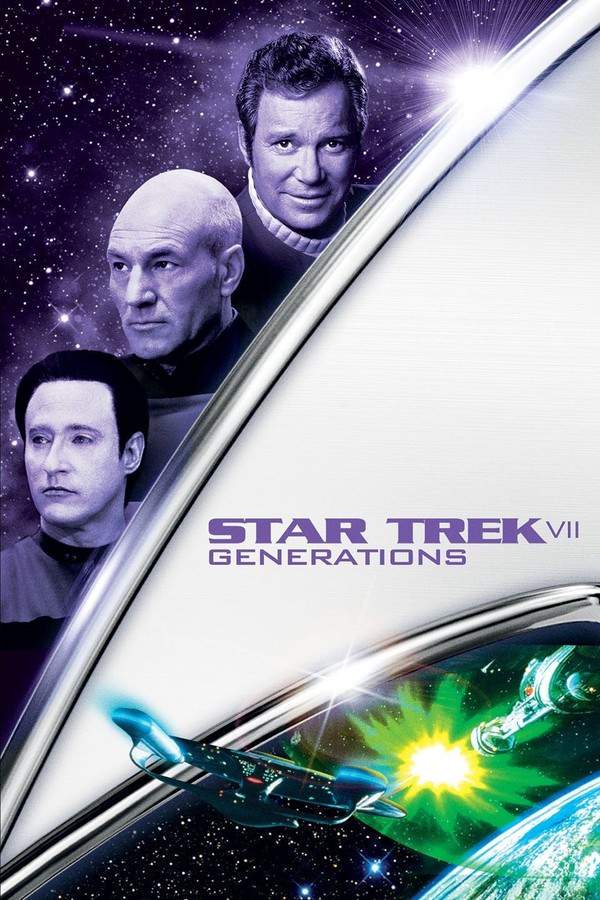
Star Trek: Generations (1994) movie poster

Characters & Themes

Star Trek: Generations (1994) Characters, Setting & Themes Explained

Release, runtime and language
1994 · 118 min · English
Loading streaming availability…
Directed by
David Carson
Starring
Patrick Stewart, Malcolm McDowell, LeVar Burton, William Shatner, Brent Spiner, Gates McFadden
Budget
$35M

During the 23rd century, Captain James T. Kirk heroically confronts a dangerous energy field, ultimately giving his life. Decades later, Captain Jean-Luc Picard leads the Enterprise when a mysterious event connects the present with the past, revealing a link to Kirk’s sacrifice and a looming threat that could jeopardize the future.

On this page (10)
  1. 1 Where to watch
  2. 2 Characters explained (4)
  3. 3 Character relationship map
  4. 4 Where & when it takes place
  5. 5 Themes & meaning (3)
  6. 6 Character & meaning questions
  7. 7 Dreams & reality explained
  8. 8 Movie threads
  9. 9 Movies like Star Trek: Generations
  10. 10 Every angle
Loading streaming availability…

4 main characters · contains spoilers

Star Trek: Generations Characters Explained: Who Is Who

The main characters of Star Trek: Generations (1994), heroes and villains: what drives them, how they change over the course of the story and what each of them reveals about the film's bigger ideas.

  • Captain Jean-Luc Picard

    played by Patrick Stewart

    Captain Jean-Luc Picard is a resolute leader known for his diplomatic acumen and moral integrity. He embodies the best of Starfleet ideals, often facing dilemmas that test his resolve and principles, particularly after the loss of his family.

    • 👨‍✈️ Leadership
    • 🧠 Intelligence
    • 🎖️ Honor
  • Captain James T. Kirk

    played by William Shatner

    Captain James T. Kirk is a legendary figure in Starfleet history, characterized by his bravery and strategic mind. Although retired, he demonstrates a willingness to sacrifice for the greater good, proving that heroism persists beyond service.

    • 🚀 Pioneer
    • 🏆 Legacy
    • ⚡ Courage
  • Dr. Tolian Soran

    played by Malcolm McDowell

    Dr. Tolian Soran is a complex antagonist driven by a desire to return to the enigmatic Nexus. His obsession with the surreal realm fuels his destructive actions, showcasing the dark side of longing for power and eternity.

    • 😈 Antagonist
    • 🧪 Science
    • 🌀 Obsession
  • Worf

    played by Michael Dorn

    Worf is a Klingon officer serving aboard the USS Enterprise-D, marked by his strong sense of honor and loyalty. His journey of dealing with personal losses and embracing leadership roles adds depth to his character.

    • 🛡️ Honor
    • 🏅 Discipline
    • 🐉 Warrior

Last updated: October 31, 2026 at 13:01

Was this helpful?

5 characters · 5 connections · contains spoilers

Star Trek: Generations Character Relationship Map

Who is connected to whom in Star Trek: Generations: family, love, friendships, rivalries and hidden ties, colour-coded. Pick a character to see their side of the story, or a connection to see what brings two characters together.

How much of the story to show
CJCaptainJean-Luc PicardPatrick StewartCJCaptain JamesT. KirkWilliam ShatnerGGuinanLLursaBB'Etor

Last updated: October 31, 2026 at 13:01

Was this helpful?

Setting

Where and When Does Star Trek: Generations Take Place?

The setting of Star Trek: Generations (1994): the year and time period, the places and locations, and how they shape the characters, the mood and the tension of the story.

Time period

2293, 2371

The events span from the year 2293, during which the inaugural voyage of the USS Enterprise-B takes place, to 2371, when the crew of the USS Enterprise-D celebrates achievements and confronts new threats. This period marks a significant evolution in Starfleet's exploration efforts and the political dynamics of the galaxy.

Location

USS Enterprise-B, USS Enterprise-D, Veridian III, Amargosa

The movie takes place aboard the starships USS Enterprise-B and USS Enterprise-D, both key vessels of the Federation known for their exploration missions and significant historical events in the Star Trek universe. Veridian III is a notable planet where critical confrontations occur, and Amargosa is an observatory orbited by a star, serving as a backdrop for the unfolding drama.

  • 🚀 Space
  • 🌌 Sci-Fi
  • 🌠 Exploration

Last updated: October 31, 2026 at 13:01

Was this helpful?

3 major themes

Star Trek: Generations Meaning: Themes & Message Explained

What is Star Trek: Generations (1994) really about? The emotional, social and philosophical themes the film keeps returning to, its symbolism and the message beneath the surface.

  • Heroism

    Heroism is a central theme in the movie, highlighting the bravery of characters like Kirk and Picard as they confront seemingly insurmountable challenges. The sacrifices made during dangerous missions underscore the importance of duty and the cost of leadership in dire circumstances.

  • Time

    The manipulation of time, represented by the Nexus, creates a profound context for the characters' actions and motivations. Characters grapple with their past and the desire to reclaim lost opportunities, illustrating how time can shape destinies and influence choices.

  • Loss

    Loss permeates the narrative, as characters mourn the deaths of loved ones and grapple with the consequences of their missions. The emotional weight of Kirk's presumed death and Picard's familial losses serves as a poignant reminder of the sacrifices inherent in their duties.

Last updated: October 31, 2026 at 13:01

Was this helpful?

Character & theme questions

Star Trek: Generations Characters & Meaning: Your Questions Answered

The questions people ask about Star Trek: Generations (1994): who the characters really are, their relationships, what the symbols mean, where it takes place and what the movie is really about. Each answer contains spoilers.

Q1

When does the story take place?

The narrative spans two distinct eras, beginning in 2293 during the inaugural voyage of the USS Enterprise-B and jumping to 2371 with the crew of the USS Enterprise-D. This period marks a significant evolution in Starfleet's exploration efforts and the political dynamics of the galaxy. The timeline connects the original series era with the next generation in Star Trek: Generations.

  • time period
  • 2293
  • 2371
  • starfleet era
Q2

Where does the movie primarily take place?

Most of the action occurs aboard the starships USS Enterprise-B and USS Enterprise-D, both key vessels of the Federation known for their exploration missions. Critical confrontations also happen on the planet Veridian III and near the Amargosa observatory. These locations serve as a backdrop for the unfolding drama in space.

  • uss enterprise
  • veridian iii
  • amargosa
  • space setting
Q3

Who are the two main captains featured?

Captain James T. Kirk and Captain Jean-Luc Picard serve as the central leadership figures bridging the two Star Trek eras. Kirk is a legendary figure characterized by bravery, while Picard is a resolute leader known for diplomatic acumen and moral integrity. Their shared screen time defines the core dynamic of Star Trek: Generations.

  • captain kirk
  • captain picard
  • main characters
  • starfleet captains
Q4

What motivates the antagonist Dr. Soran?

Dr. Tolian Soran is driven by an obsession to return to the enigmatic Nexus, a surreal realm that offers eternal joy. His desire to reclaim lost opportunities fuels his destructive actions throughout the story. This longing for power and eternity showcases the dark side of his character.

  • dr soran
  • villain motivation
  • the nexus
  • antagonist goal
Q5

What is the Nexus in this story?

The Nexus represents a manipulation of time and creates a profound context for the characters' actions and motivations. It is a ribbon-like energy field where characters grapple with their past and the desire to reclaim lost opportunities. This concept illustrates how time can shape destinies and influence choices.

  • the nexus
  • time manipulation
  • energy field
  • plot device
Q6

How does the movie explore the theme of loss?

Loss permeates the narrative as characters mourn the deaths of loved ones and grapple with the consequences of their missions. The emotional weight of Kirk's presumed death and Picard's familial losses serves as a poignant reminder of the sacrifices inherent in their duties. This theme underscores the personal cost of heroism.

  • theme of loss
  • grief
  • sacrifice
  • emotional weight
Q7

What is Picard's personal situation at the start?

Captain Jean-Luc Picard is dealing with significant personal grief following the loss of his family. This background informs his moral integrity and the dilemmas that test his resolve and principles. His leadership is often framed by this underlying emotional context.

  • picard background
  • family loss
  • character motivation
  • personal grief
Q8

What is the significance of the Enterprise ships?

The USS Enterprise-B and USS Enterprise-D represent key vessels of the Federation known for their exploration missions and significant historical events. They anchor the story in the Star Trek universe and symbolize the legacy of exploration. The ships facilitate the connection between the two different timelines.

  • uss enterprise-b
  • uss enterprise-d
  • starfleet vessels
  • ship legacy
Q9

Is the tone of the movie hopeful or dark?

The overall tone is bittersweet, weaving together heroic action with profound personal loss. While there are high-stakes threats and fast pacing, the emotional weight remains medium within a classic action-adventure structure. Victory is often tinged with significant sacrifice.

  • movie tone
  • bittersweet
  • mood
  • emotional atmosphere
Q10

What role does Worf play in the narrative?

Worf is a Klingon officer serving aboard the USS Enterprise-D marked by his strong sense of honor and loyalty. His journey of dealing with personal losses and embracing leadership roles adds depth to his character. He represents the bridge between Klingon culture and Starfleet duty.

  • worf
  • klingon officer
  • character role
  • honor
Q11

How does the timeline connect the two eras?

A mysterious event connects the present with the past, revealing a link to Kirk's sacrifice and a looming threat. This dual-timeline narrative structure allows the legacy of the original crew to influence the next generation. The connection drives the core conflict of the story.

  • timeline connection
  • dual narrative
  • past and present
  • story structure
Q12

What defines heroism in this film?

Heroism is a central theme highlighting the bravery of characters like Kirk and Picard as they confront seemingly insurmountable challenges. The sacrifices made during dangerous missions underscore the importance of duty and the cost of leadership in dire circumstances. This definition frames the moral core of Star Trek: Generations.

  • heroism theme
  • bravery
  • duty
  • leadership cost

2 realities · 4 crossings · contains spoilers

Star Trek: Generations Reality Map: Dreams & Worlds Explained

The story spans one physical reality across two eras (2293 and 2371) and the Nexus, a surreal realm outside normal time where personal dreams manifest. An energy ribbon sweeping through physical space carries people into the Nexus; Soran destroys stars to redirect the ribbon's path, and entrants can choose to leave the Nexus back into physical reality.

Top levelRealLevel 11Level 1Real worldPhysical Reality (2293–2371)Normal space-time spanning the maiden voyage of the USS Enterprise-Bin 2293 and the USS Enterprise-D's era in 2371, including the Amargos…Captain James T. KirkCJCaptain Jean-Luc PicardCJDr. Tolian SoranDTFantasy worldThe NexusA surreal realm existing outside normal time, reached via an energyribbon, where time is irrelevant and personal dreams can manifest as…Captain James T. KirkCJCaptain Jean-Luc PicardCJ
Who
Read the realities and crossings as text
  • Real world

    Physical Reality (2293–2371)

    Normal space-time spanning the maiden voyage of the USS Enterprise-B in 2293 and the USS Enterprise-D's era in 2371, including the Amargosa observatory and the planet Veridian III.

  • Fantasy world

    The Nexus

    A surreal realm existing outside normal time, reached via an energy ribbon, where time is irrelevant and personal dreams can manifest as illusions.

How the realities connect

  • Way in: Physical Reality (2293–2371) → The Nexus, Kirk pulled into the Nexus at his presumed death

    During the Enterprise-B's 2293 encounter with the energy ribbon, Kirk is exposed to space and presumed dead, but is actually pulled into the Nexus, which exists outside normal time.

  • Way in: Physical Reality (2293–2371) → The Nexus, Picard enters the Nexus at Veridian III

    Picard is carried into the Nexus, where it confronts him with illusory visions of a family life he never had and a specter of Guinan tells him he is free to leave.

    When: During the confrontation with Soran on Veridian III

  • Way out: The Nexus → Physical Reality (2293–2371), Picard and Kirk leave the Nexus for Veridian III

    After learning he can leave whenever he pleases, Picard persuades Kirk to return with him, and together they descend back to Veridian III moments before Soran's missile launch, where Kirk sustains fatal injuries.

    When: After Picard encounters Kirk in the Nexus

  • Affects: Physical Reality (2293–2371) → The Nexus, Star implosions shift the Nexus ribbon's path

    Soran's Trilithium probes cause stars in physical space to implode, and the resulting shockwaves shift the Nexus energy ribbon's trajectory so it passes through his chosen location.

Movie threads

More Movies Like Star Trek: Generations, by Mood & Story

Curated lists built around what makes Star Trek: Generations tick: the same mood, the same kind of story or the same emotional payoff. Each list explains why these movies belong together.

Movies with Legacy Heroes Facing New Threats like Star Trek: Generations

Where legendary heroes are pulled back to confront a final, galaxy-threatening crisis. If you enjoyed seeing Captain Kirk and Picard team up in Star Trek: Generations, these movies feature similar tales of legendary heroes returning to action. They often involve high-stakes adventures, thematic explorations of legacy, and bittersweet outcomes, perfect for fans of epic sci-fi and action stories.

  • heroic
  • nostalgic
  • tense
  • reflective
  • tragic
  • hopeful
  • Tone: bittersweet, heroic, reflective
  • Pacing: fast, with reflective pauses
Why these movies?

The story pattern: Stories in this thread often begin by establishing or reminding the audience of a hero's legendary status. A new, significant threat emerges that has a direct connection to the hero's past or requires their unique expertise, pulling them out of retirement or a different timeline. The central conflict involves the hero grappling with their legacy while applying their old-school methods to a new problem, culminating in a final act of sacrifice or profound impact that solidifies their legend, often with a bittersweet tone.

Why they belong together: These movies are grouped together because they share a core focus on the weight of heroism across time. They combine fast-paced, high-intensity action with a reflective, sometimes melancholic, tone as characters confront their own mortality and the enduring impact of their choices. The pacing is typically brisk, driven by the urgent threat, but pauses for moments of significant emotional weight focused on legacy and sacrifice.


Movies with High-Stakes Time Crises like Star Trek: Generations

Stories where tampering with time creates catastrophic, immediate danger. For viewers who liked the time-ribbon threat in Star Trek: Generations, this list features similar films where time manipulation creates immediate, large-scale danger. These stories typically involve fast pacing, intense action sequences, a mix of heroic and tragic elements, and a focus on saving the future from temporal collapse.

  • tense
  • heroic
  • tragic
  • hopeful
  • race against time
  • catastrophic
  • Tone: tense, bittersweet, dramatic
  • Pacing: fast, urgent
Why these movies?

The story pattern: The narrative pattern involves a villain or phenomenon with the power to distort time for destructive purposes, such as causing stars to explode or erasing timelines. The heroes must quickly understand the rules of this temporal threat and find a way to confront it directly, often within the anomaly itself. The journey is fraught with peril and sacrifice, as saving the timeline frequently comes at a great personal cost, leading to endings that are victorious yet somber.

Why they belong together: These films are united by their use of time as a source of tangible, high-intensity conflict rather than purely philosophical exploration. They share a fast pace driven by the need to prevent imminent catastrophe, a high level of intensity due to the scale of the threat, and a bittersweet emotional undercurrent stemming from the sacrifices made to preserve the flow of history. The complexity is often moderate, making the action and emotion the central focus.

If you liked this

Movies Like Star Trek: Generations

Similar movies to Star Trek: Generations: the same genre, themes or kind of story. Each one comes with its own plot summary, timeline and ending explained.

Browse all movie summaries

Every angle

Star Trek: Generations (1994) Explained: Plot, Timeline & Characters

Everything about Star Trek: Generations in one place: what happens in the plot summary, the timeline in chronological order, the characters and meaning and a spoiler-free summary. What's After the Movie adds the cast, box office and post-credit scenes.

Coming soon on iOS and Android

The Plot Explained Movie Summary App

Plot summaries, endings explained and timelines on your phone. Catch up on any movie in minutes, save your favorites and never miss a twist again.

Be the first to know when we launch. Your email stays private, always.

Learn more about the app