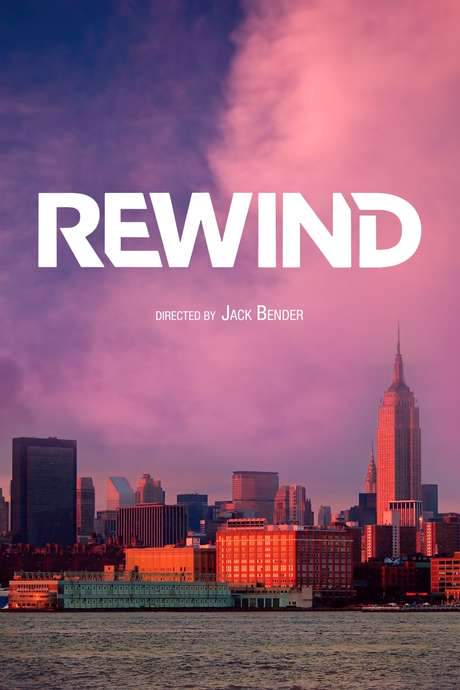
In Midtown, New York, a tense countdown unfolds around a white van concealing a nuclear threat that could trigger catastrophic fallout for millions. At the heart of the crisis is Shaun Knox [Shane McRae], a determined figure whose every move seems shadowed by the possibility that a Nobel Prize–winning scientist might be somehow involved. A roomful of questions, redacted information, and a stubborn silence puts Shaun face-to-face with a man who refuses to reveal the needed code, leaving the authorities to wonder what leverage can break the stalemate.
As the investigation threads through the city, the narrative pivots around a series of intimate, high-stakes interactions. A key moment occurs when a man who has carried a hidden weight for decades reveals a mysterious connection to Shaun Knox [Shane McRae], prompting a deeper inquiry into memory, time, and responsibility. The thread of personal history is never far from the surface; a marriage ring seen in a faded photograph hints at decades of unspoken loss, and the question of whether there is a Mrs. Knox somewhere hangs in the air, adding a human layer to the procedural tension.
Within the scene is the President of the United States [Kenneth Welsh], who is acutely aware of the gravity of the situation. A local news anchor [Kristi Angus] reports that information is tightly controlled, underscoring the atmosphere of uncertainty that grips the public. Meanwhile, Danny Gates [Robbie Jones] answers a call from Shaun’s partner, urging Jess to evacuate the city. Danny’s practical concern contrasts with the paralysis of hundreds of people who continue with their daily routines, unaware of how close they might be to disaster.
A critical refrain in the story is the idea that creation and destruction are two sides of the same coin. The scientist involved—Dr. Benjamin Rourke [David Cronenberg]—appears in and out of focus, his presence driving the tension even as others scramble to interpret the clues. In a tense interrogation, the scientist’s fate becomes a volatile hinge of the plot, and a moment of self-destruction in the line of duty deepens the mystery surrounding the bomb and its intent.
From there, the plot broadens to a high-stakes clockwork of attempts to reach Rourke and unlock the necessary knowledge. Ellis [Jeff Fahey], a security-minded figure, pushes to keep Shaun on track, presenting a clear sense of urgency as a top-secret furlough allows a chance for action. The team assembles in a secure setting (Sector 2) to piece together an improbable plan: a time-and-space mechanism that could open a window into another era, with a thread that travels back to England in 1934. Dr. Lyndsay Bryce [Jennifer Ferrin] contributes as a scientific adviser, emphasizing the delicate balance of risk and possibility in handling a device that could alter history.
The operation expands to include a broader coalition: John Malcolm [Matthew Bennett], a seasoned military specialist, and General Randell Webb [Paulino Nunes], who recognizes that civilian involvement is essential to addressing the threat. A robo-insect named Miles is introduced as part of a rough, experimental interface with the window’s changing physics, and the team discovers that the timeline may be fragile enough to create dangerous ripple effects if mishandled.
Priya [Keisha Castle-Hughes], a planner who maps historical eras, helps orient the team to the fragile nature of their mission—each participant bears the burden of potential self-sacrifice as they move through different periods. As the window shifts, the stakes rise: the weight of their presence in past moments could reshape the future, and the clock’s countdown accelerates toward a decisive choice.
The plan hinges on a controversial proposition: to save New York, they may have to alter events surrounding the scientist’s family and his legacy. Charlie [Keon Alexander] develops a program to model the consequences of altering Rourke’s past, and the team realizes that a small change in one era could cascade into wide-ranging consequences for the present. The military leadership grinds toward a grim, but potentially necessary, decision: save the city by targeting the danger at its source, even if that means sacrificing a path that could preserve broader stability.
As the mission unfolds, Shaun contemplates a deeper, more personal redemption arc involving the scientist’s wife and the possibility of a different outcome for the people who populate New York. Priya and Alex push to keep Bryc on board as the scientific adviser, while the others prepare to enter the timeline together. The team faces a brutal test: time, space, and human limits collide, and a race against the clock culminates in a tense, high-stakes entry into the past.
The three travelers—Shaun Knox [Shane McRae], Jessica Knox [Melanie Scrofano], and Danny Gates [Robbie Jones]—step into the machine, taking pills that grant temporary passage through time. They emerge in a past era, navigating unfamiliar landscapes and perilous situations with the goal of altering the sequence of events enough to spare millions of lives. A car chase, a tense ambush, and a dangerous encounter with a bootleg driver test their adaptability and resolve as they attempt to work within a drastically altered history to recalibrate the present.
Back in the present, the clock continues to tick down. Marsden [Chris Ratz] keeps a wary watch, while the sisters and younger relatives of those involved—Jenny Marsden [Skyler Wexler] in particular—become a poignant reminder of the human stakes at play. The plan hinges on a difficult choice: to sacrifice parts of the past in order to protect the future, all while managing the fear and uncertainty that comes with changing time itself.
As the countdown nears its final moments, the trio confronts the possibility that their mission may not only avert catastrophe but also fracture the continuum in irreversible ways. The group returns to the present, with the hope that their actions have secured a safer New York. Yet the final act hints at residual tension: the future feels unstable, and the team questions whether their interventions have truly secured lasting safety or merely postponed a deeper reckoning.
In the end, the ensemble faces a moment of relief: New York is saved, and the immediate crisis recedes. Yet the undertone remains: the machine’s potential for future use raises questions about how far humanity should dare to go in reshaping time. As Shaun and Jess reconnect, the supporting cast contemplates what lies ahead in a world that still carries the echo of the near-disaster. The final scenes balance relief with a cautious optimism, acknowledging both the bravery of those who acted and the enduring uncertainty about what their choices may mean for tomorrow.