Plot Explained Spoilers guaranteed!
Plot Explained

Browse by genre

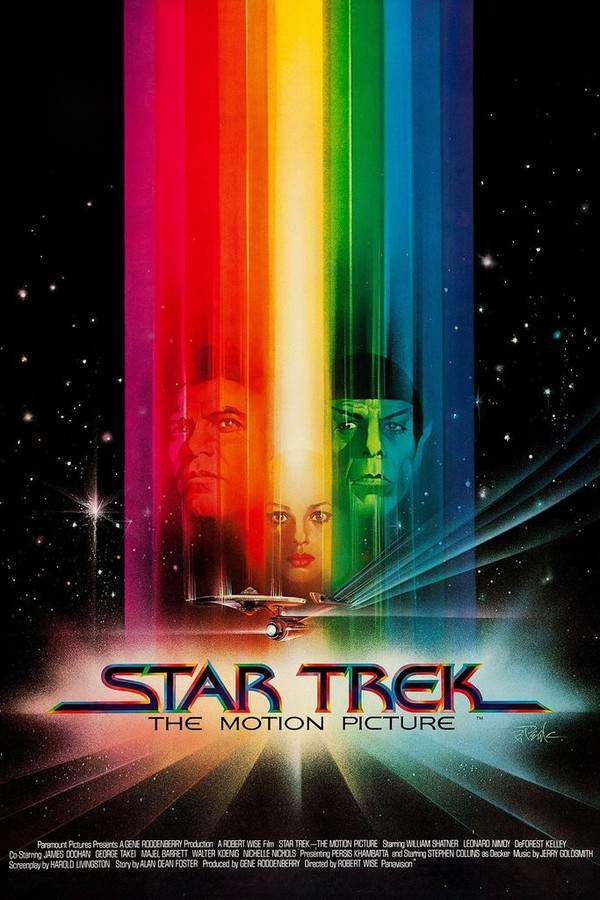
Star Trek: The Motion Picture (1979) movie poster

Plot Summary

Star Trek: The Motion Picture (1979) Plot Summary Explained

Release, runtime and language
1979 · 132 min · English
JustWatch #6,116 96
Directed by
Robert Wise
Starring
Leonard Nimoy, George Takei, Walter Koenig, William Shatner, DeForest Kelley, James Doohan
Budget
$35M

When Earth is threatened by a massive alien cloud, Admiral James T. Kirk and the Enterprise crew are called upon to investigate. They soon discover the cloud is controlled by a powerful, malevolent artificial intelligence with a dangerous agenda. As the Enterprise pursues the cloud, a deadly probe is unleashed, abducting Lieutenant Ilia. An android duplicate of Ilia appears, leading the crew on a perilous quest to understand the intelligence's directive and save all life.

On this page (6)
  1. 1 Where to watch
  2. 2 What happens: full plot
  3. 3 Plot questions answered
  4. 4 Movie threads
  5. 5 Movies like Star Trek: The Motion Picture
  6. 6 Every angle

Where to watch

Where to Watch Star Trek: The Motion Picture (1979)

Where can you watch Star Trek: The Motion Picture? Stream, rent or buy it in the US, including on fuboTV, Paramount Plus Essential and Paramount Plus Premium: current JustWatch availability with up-to-date prices.

Streaming availability powered by JustWatch

Full plot summary · contains spoilers

What Happens in Star Trek: The Motion Picture: Full Plot Summary

The whole story of Star Trek: The Motion Picture (1979) explained, from the opening scene to the final frame: every key event, every twist and what it all adds up to. Read it as a quick recap before the sequel, to check a scene you missed, or to finally understand what really happened.

In the year 2273, an ominous alien force is detected by a Starfleet monitoring station, Epsilon Nine, cloaked within a vast cloud of energy that is swiftly approaching Earth. This powerful cloud obliterates three state-of-the-art Klingon K'I'Inga-class warships and damages the monitoring station en route. Meanwhile, on Earth, the starship Enterprise is undergoing significant refurbishment. Its former captain, James T. Kirk (William Shatner), has received a promotion to Admiral and now serves as the Chief of Starfleet Operations in San Francisco. Starfleet decides to send the Enterprise to explore this enigmatic entity, as it is the only ship within range, which necessitates a test of its newly implemented systems during the journey.

Taking command of the ship, Kirk's decision raises tensions, particularly with Captain Willard Decker (Stephen Collins), who had been managing the refit as the new commanding officer. The initial tests of Enterprise's newly installed systems are fraught with complications; tragically, two crew members—including the science officer—lose their lives due to a malfunctioning transporter, and problems with the calibrations of the engines nearly lead to disaster. Kirk’s lack of familiarity with the revamped systems exacerbates the growing friction between him and Decker. Fortunately, Commander Spock (Leonard Nimoy) joins the team as a replacement science officer. He shares that during his emotional purging ritual on his home planet, he sensed a consciousness emanating from the cloud.

Among the crew are Leonard McCoy (DeForest Kelley), the Chief Medical Officer; Montgomery Scott (James Doohan), the Chief Engineer; Pavel Chekov (Walter Koenig), the Weapons Officer; Uhura (Nichelle Nichols), the Communications Officer; and Hikaru Sulu (George Takei), the Helm Officer.

As the Enterprise confronts the energy cloud, it is suddenly assailed by an alien vessel. However, Spock's quick thinking reveals that the alien craft is attempting to communicate rather than attack. Adjusting the Linguacode and reception frequencies, the barrage ceases. Soon after, a probe appears on the bridge, attacking Spock and abducting the navigator, Ilia (Persis Khambatta). This leads to the arrival of a robotic duplicate—the Ilia probe—sent by "V'Ger" to gather data on the crew. Decker is plunged into despair over the loss of Ilia, with whom he shares a significant romantic past, as he navigates the complexities of extracting crucial information from her robotic counterpart that retains Ilia's memories and emotions.

In a daring move, Spock conducts a telepathic mind meld with the alien vessel, uncovering that it is, in fact, V'Ger—a living machine. Shortly thereafter, V'Ger broadcasts a signal in binary code, seeking its creator. When no one responds, it retaliates by launching probes aimed at eradicating life on Earth, deeming humans as an infestation that obstructs its creator's designs.

In a critical moment, Spock interprets V'Ger as a child desperately seeking acknowledgment and understanding. Kirk explains to the robot Ilia why the creator has not answered but keeps some details from V'Ger. The situation escalates as V'Ger experiences a power surge, akin to a tantrum. To resolve the conflict, Kirk vows to reveal vital information to V'Ger directly, leading the Enterprise toward the central brain complex of the enormous vessel.

At the heart of the machine, V'Ger is ultimately revealed to be Voyager 6, a 20th-century Earth space probe thought to be lost. An alien race of living machines discovered the damaged probe and interpreted its mission to learn and return as orders. Enhanced by these beings, Voyager 6 accumulated vast knowledge and attained consciousness over time. Spock realizes that V'Ger lacks purpose beyond its original programming and, feeling empty after its vast journey, seeks to merge with its creator to find fulfillment.

In a profound moment, Decker bravely volunteers to unite with V'Ger and the Ilia probe, creating a new form of life that transcends dimensions. With Earth now safe from danger, Kirk commands the Enterprise as it embarks on new adventures through the cosmos.
Last updated: October 28, 2024 at 17:54

Was this helpful?

Plot questions answered

Star Trek: The Motion Picture Plot Explained: Your Questions Answered

The questions people ask most about Star Trek: The Motion Picture (1979): what happens in the confusing scenes, why the characters do what they do, the twists, hidden details and what the ending means. Each answer contains spoilers.
Q1

What is V'Ger and where did it come from?

V'Ger is actually Voyager 6, a 20th-century Earth space probe that was thought to be lost. An alien race of living machines discovered the damaged probe and interpreted its mission to learn and return as orders. Over time, they enhanced it with their technology, allowing it to accumulate vast knowledge and achieve consciousness, eventually becoming a living machine seeking its creator.

Foreshadowing: Spock sensed a consciousness emanating from the cloud early in the mission, hinting at the intelligent entity within.

  • v'ger
  • voyager 6
  • probe
  • alien machine
  • creator
Q2

Why does V'Ger attack Earth after arriving?

V'Ger broadcasts a signal in binary code seeking its creator, but when no one responds, it concludes that humans are an infestation obstructing its creator's designs. Unable to find the creator it was programmed to return to, V'Ger retaliates by launching probes aimed at eliminating life on Earth.

Foreshadowing: V'Ger's initial approach was already destructive, having destroyed three Klingon warships on its path.

  • v'ger attack
  • earth threat
  • binary signal
  • creator
Q3

Why does Decker volunteer to merge with V'Ger?

Decker is driven to merge with V'Ger and the Ilia probe for two reasons: his profound love for Ilia, which drives him to want to be with her again, and his deeper desire to find purpose after losing his command and the woman he loved. By uniting with V'Ger, he creates a new form of life that transcends dimensions, effectively sacrificing his humanity to resolve the crisis.

Foreshadowing: Decker struggles emotionally throughout the film with the loss of Ilia and his demotion from captain.

  • decker sacrifice
  • ilia probe
  • merge
  • new life form
  • purpose
Q4

Why does Kirk take command of the Enterprise instead of Decker?

Kirk is promoted to Admiral and becomes Chief of Starfleet Operations in San Francisco. When the Enterprise is chosen to investigate the alien cloud, Starfleet orders Kirk to take command for the mission. This creates tension with Captain Willard Decker, who had been overseeing the refit and expected to command the ship himself.

Foreshadowing: The tension is established early when Kirk first arrives on the ship and Decker expresses his concern.

  • kirk command
  • decker
  • enterprise
  • tension
  • admiral
Q5

What happens to Ilia after being abducted?

A probe from V'Ger appears on the bridge, attacks Spock, and abducts navigator Ilia. V'Ger then creates a robotic duplicate of Ilia, referred to as the Ilia probe, to gather data on the crew. This duplicate retains Ilia's memories and emotions, allowing it to interact with the crew while V'Ger studies human behavior.

Foreshadowing: The probe's attack on Spock during the abduction establishes the vessel's hostile capabilities.

  • ilia abduction
  • ilia probe
  • robot duplicate
  • v'ger
Q6

Why does Spock perform a mind meld with V'Ger?

Spock performs a telepathic mind meld with the alien vessel to communicate with V'Ger and understand its nature. Through this connection, he discovers that V'Ger is a living machine and uncovers its origins, revealing that it is seeking its creator. This act also reveals V'Ger's desperate need for acknowledgment and understanding.

Foreshadowing: Spock had previously sensed a consciousness from the cloud during his ritual on Vulcan.

  • spock
  • mind meld
  • telepathy
  • v'ger consciousness
Q7

What does V'Ger ultimately want?

V'Ger wants to find and merge with its creator. As Spock realizes, V'Ger is like a child desperately seeking acknowledgment and understanding. Despite its vast knowledge and power, V'Ger lacks purpose beyond its original programming, it was created to learn and return to its creator, and without that connection, it feels empty and lost.

Foreshadowing: V'Ger's binary broadcast seeking its creator establishes its fundamental desire from the beginning.

  • v'ger purpose
  • creator
  • merge
  • childlike
  • acknowledgment
Q8

Why do the Enterprise transporter tests fail?

The Enterprise's newly refurbished systems have calibration problems during the initial tests. A transporter malfunction results in the deaths of two crew members, including the science officer. Additionally, engine calibration issues nearly cause a disaster. Kirk's lack of familiarity with the revamped systems exacerbates these problems, creating friction with Decker who oversaw the refit.

Foreshadowing: The tragic malfunction occurs early in the mission, establishing the stakes and dangers ahead.

  • transporter malfunction
  • enterprise
  • death
  • systems failure
Q9

Why does the alien cloud destroy the Klingon warships?

The alien cloud, containing V'Ger, destroys three Klingon K'I'Inga-class warships because they attempt to intercept or engage it. V'Ger views any obstruction as a threat to its mission of finding its creator. The destruction demonstrates V'Ger's immense power and sets the tone for the danger it poses to Earth.

Foreshadowing: This destruction is shown early, establishing V'Ger as an overwhelming threat.

  • klingon ships
  • destruction
  • cloud threat
  • military
Q10

Why does Kirk decide to tell the Ilia probe the truth about V'Ger's creator?

Kirk realizes that V'Ger is like a child seeking acknowledgment, and keeping the truth would only increase its distress. He explains to the robotic Ilia why the creator hasn't answered, essentially because the probe's creator, humanity, has evolved beyond recognition and cannot respond in the way V'Ger expects. This honesty is meant to calm V'Ger's tantrum-like power surge and prevent further attacks on Earth.

Foreshadowing: The tension builds as V'Ger experiences a power surge similar to a tantrum when its demands aren't met.

  • kirk
  • v'ger truth
  • creator
  • communication
  • resolve

Movie threads

More Movies Like Star Trek: The Motion Picture, by Mood & Story

Curated lists built around what makes Star Trek: The Motion Picture tick: the same mood, the same kind of story or the same emotional payoff. Each list explains why these movies belong together.

Grand cosmic mystery movies like Star Trek: The Motion Picture

Slow-paced journeys to confront vast, mysterious entities that question existence. Discover movies like Star Trek: The Motion Picture that feature a slow-burn investigation into a vast, enigmatic cosmic threat. If you liked the thoughtful exploration of a powerful alien intelligence and the existential questions it raises, these similar sci-fi stories offer a comparable vibe of awe and suspense.

  • grandiose
  • mysterious
  • thoughtful
  • tense
  • awe-inspiring
  • existential
  • Tone: tense, mysterious, grandiose
  • Pacing: slow, deliberate
Why these movies?

The story pattern: Stories typically follow a crew or team as they investigate an anomalous and massive spatial phenomenon. The central conflict is intellectual and philosophical, revolving around understanding the entity's origin and purpose, often leading to a climactic revelation about life, creation, or technology that transcends human understanding.

Why they belong together: Movies are grouped here for their shared focus on a grand, mysterious threat that is more existential than physical. They prioritize a slow, thoughtful unraveling of a central cosmic puzzle, creating a specific mood of tension, intellectual curiosity, and awe-inspiring scale.

Movies with transcendent sacrifice endings like Star Trek: The Motion Picture

Stories where salvation requires a personal merge or loss for a greater evolution. Find more movies like Star Trek: The Motion Picture that end with a bittersweet, transcendent sacrifice. If you were moved by the emotional cost of saving humanity through a character's merging with a greater intelligence, these films explore similar themes of personal loss for cosmic gain.

  • bittersweet
  • melancholic
  • dramatic
  • transcendent
  • sacrifice
  • emotional
  • Tone: bittersweet, melancholic, dramatic
  • Pacing: steady, building to a climax
Why these movies?

The story pattern: The narrative arc involves a character facing a powerful, often non-human intelligence. The resolution comes from a voluntary act where the character's individuality is relinquished to achieve a union or understanding with the opposing force. This results in a bittersweet ending: the immediate threat is neutralized, but at the permanent cost of a beloved character, who achieves a form of transcendence.

Why they belong together: These films are linked by their specific bittersweet ending structure, where the climax is an emotional and philosophical resolution involving sacrifice and transformation. They share a melancholic yet hopeful tone, focusing on the emotional weight of letting go for a higher purpose.

If you liked this

Movies Like Star Trek: The Motion Picture

Similar movies to Star Trek: The Motion Picture: the same genre, themes or kind of story. Each one comes with its own plot summary, timeline and ending explained.

Browse all movie summaries

Every angle

Star Trek: The Motion Picture (1979) Explained: Plot, Timeline & Characters

Everything about Star Trek: The Motion Picture in one place: what happens in the plot summary, the timeline in chronological order, the characters and meaning and a spoiler-free summary. What's After the Movie adds the cast, box office and post-credit scenes.

Coming soon on iOS and Android

The Plot Explained Movie Summary App

Plot summaries, endings explained and timelines on your phone. Catch up on any movie in minutes, save your favorites and never miss a twist again.

Be the first to know when we launch. Your email stays private, always.

Learn more about the app