





Plot Explained Spoilers guaranteed!
Plot Explained

Browse by genre

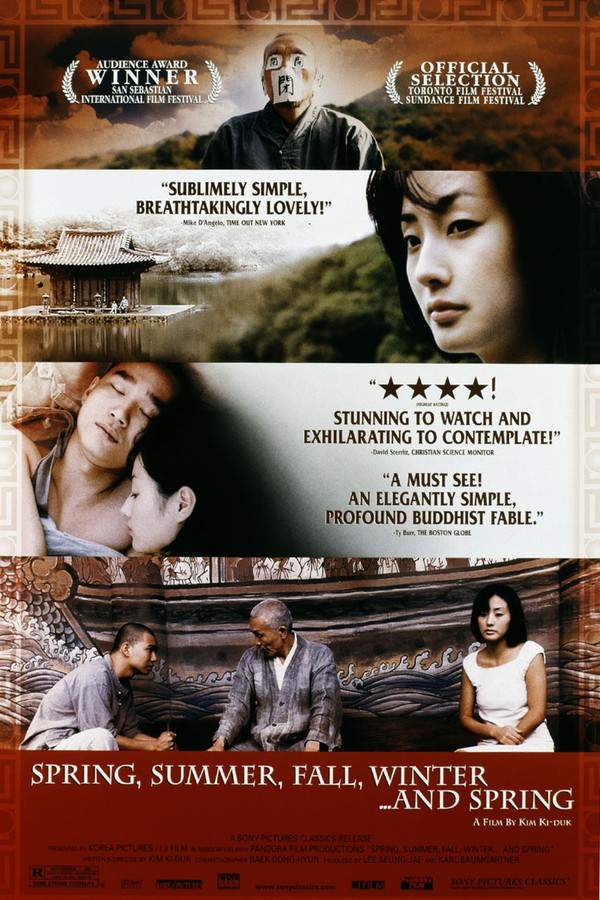
Spring, Summer, Fall, Winter... and Spring (2004) movie poster

Timeline

Spring, Summer, Fall, Winter... and Spring (2004) Timeline Explained – Every Event in Order

Release, runtime and language
2004 · 103 min · Korean
Starring
Jong-ho Kim, Ki-duk Kim, Yeong-su Oh

In the Korean wilderness, a young Buddhist apprentice enjoys a peaceful life at a remote monastery until he meets a girl seeking refuge. Drawn to her, he experiences a brief romance that leads him away from his spiritual training and into a journey of self-discovery. The encounter challenges his innocence and forces him to confront the complexities of the world beyond the monastery walls, ultimately leading him on a path of growth and reflection.

On this page (6)
  1. 1 Where to watch
  2. 2 Events in order (15)
  3. 3 Timeline questions answered
  4. 4 Movie threads
  5. 5 Movies like Spring, Summer, Fall, Winter... and Spring
  6. 6 Every angle

Where to watch

Where to Watch Spring, Summer, Fall, Winter... and Spring (2004)

Where can you watch Spring, Summer, Fall, Winter... and Spring? Stream, rent or buy it in the US, including on Amazon Video, Apple TV Store and Fandango At Home: current JustWatch availability with up-to-date prices.

Streaming availability powered by JustWatch

15 events in order · contains spoilers

Spring, Summer, Fall, Winter... and Spring Timeline: Events in Chronological Order

Every key event of Spring, Summer, Fall, Winter... and Spring (2004) in order, scene by scene, with when and where it takes place. Use it to untangle flashbacks, time jumps and parallel storylines, to refresh your memory before the sequel or to find the exact scene you are thinking of.

  1. Introduction of the Young Apprentice

    The film opens with a very young Buddhist apprentice living with his master in a small floating monastery on a serene lake in the mountains of Korea. Their days are filled with prayer, meditation, and occasional trips to the bank of the lake for exercise and herb gathering.

    When
    Spring
    Where
    Floating Monastery
  2. Tormenting of Creatures

    The young apprentice begins to demonstrate cruel behavior by tormenting various creatures in the creek, initially targeting a fish, then a frog, and finally a snake. His master silently observes these actions, which culminate in a harsh lesson for the boy later that night.

    When
    Spring
    Where
    Creek
  3. Confronting Guilt

    The apprentice wakes up the next morning with a large rock tied to his back, a punishment from his master. He is forced to find and untie the creatures he tormented, confronting the reality of his actions as he discovers the fish dead, the frog alive but struggling, and the snake bloodied.

    When
    Spring
    Where
    Forest
  4. Meeting the Mother and Daughter

    In the summer, the now teenage apprentice encounters a modern-dressed mother and daughter searching for the lake monastery. They arrive at the monastery, where it becomes clear that the daughter is suffering from an illness, prompting her mother to seek help from the master.

    When
    Summer
    Where
    Floating Monastery
  5. Emerging Feelings

    As the teenage girl stays at the monastery, the apprentice begins to feel a strong sexual attraction towards her. However, his initial advances lead to a moment of panic when he gropes her while she sleeps, resulting in a slap and a fervent return to prayer.

    When
    Summer
    Where
    Floating Monastery
  6. Secret Relationship

    The apprentice and the girl begin a secret sexual relationship, hiding it from his master. Their escapades culminate in them being discovered by the master in a compromising situation on a rowboat, leading to a warning about the consequences of lust and desire.

    When
    Summer
    Where
    Lake
  7. Runaway

    Emotionally distressed over the master's warning and the thought of losing the girl, the apprentice steals the monastery's Buddha statue and a rooster and runs away into the night. This impulsive act marks a significant turning point in his life.

    When
    Summer
    Where
    Forest
  8. Return of the Master

    In the fall, the aging master returns from the village with a cat and comes across a newspaper article revealing the arrest warrant for his former apprentice, now a murderer. Anticipating the apprentice's return, he begins making preparations.

    When
    Fall
    Where
    Village
  9. Apprentice's Appearance

    The adult apprentice appears at the lake's edge, filled with anger and bloodstained from the murder of his wife. He attempts to end his life in a ritualistic manner, but the master intervenes, demonstrating a blend of tough love and desperate compassion.

    When
    Fall
    Where
    Lake
  10. Repentance and Arrest

    Under the master's guidance, the apprentice begins his path of repentance, carving characters into wood as the master paints. Their yoga is interrupted when detectives arrive to arrest the apprentice, but the master gains them a delay until the carving is complete.

    When
    Fall
    Where
    Floating Monastery
  11. Master's Final Ritual

    After the apprentice is taken away by the detectives, the master prepares for his own end by building a pyre in the rowboat. He performs a similar suicide ritual as the apprentice but meditates as he suffocates, tears visible on the paper covers sealing his features.

    When
    Fall
    Where
    Lake
  12. Apprentice's Return and Reflection

    Years later, the now middle-aged apprentice is paroled and returns to the frozen lake and the abandoned monastery. He unearthed the remains of his master and begins to reflect on his past misdeeds while paying homage to the teachings he once ignored.

    When
    Winter
    Where
    Floating Monastery
  13. Discovery of the Woman

    While at the monastery, the apprentice encounters a woman who leaves her infant son there before fleeing across the frozen lake. Tragically, she falls into a hole and drowns, which the apprentice discovers the next day, stirring up complex emotions about loss and responsibility.

    When
    Winter
    Where
    Frozen Lake
  14. Climbing the Mountain

    He reflects on his past transgressions while climbing a mountain with a heavy stone tied around his body as a form of penance. Once at the summit, he leaves behind a statue as a gesture of farewell and a promise to his master.

    When
    Winter
    Where
    Mountain Summit
  15. Cycle Repeats

    The film concludes back where it began in Spring, with the new master now living in the monastery alongside an abandoned baby who becomes his apprentice. The cycle of torment and learning begins anew as the boy echoes the misdeeds of his predecessor.

    When
    Spring
    Where
    Floating Monastery

Last updated: May 21, 2025 at 07:30

Was this helpful?

Timeline questions answered

Spring, Summer, Fall, Winter... and Spring Timeline Explained: Your Questions Answered

When does it happen, and why in that order? The questions people ask about the chronology of Spring, Summer, Fall, Winter... and Spring (2004): time jumps, flashbacks, cause and effect between scenes and the correct order of events, each answered with spoilers.

Q1

Why does the master tie a rock to the boy after he tortures the animals?

The master uses the rock as a direct lesson about consequence and empathy. Just as the boy attached stones to the fish, frog, and snake, the master ties a heavy rock to the boy's back so he experiences the burden he placed on innocent creatures. The boy must find the injured animals and face the reality of what he did, one fish is dead, the frog is struggling, and the snake is bloodied. This physical punishment is meant to cultivate genuine compassion rather than just rule-following.

Foreshadowing: Earlier scenes show the master silently observing the boy's cruel actions, suggesting he was planning this lesson all along.

  • master
  • apprentice
  • rock
  • punishment
  • animals
  • lesson
  • compassion
Q2

Why does the teenage apprentice run away from the monastery?

The apprentice runs away after the master discovers his secret sexual relationship with the ill girl staying at the monastery. The master warns him about the dangers of desire and lust, telling him that attachment leads to suffering. Overwhelmed by the fear of losing the girl and feeling guilty about breaking his vows, the apprentice steals the Buddha statue and a rooster and escapes into the night. His departure represents a rejection of spiritual discipline in favor of worldly passion.

Foreshadowing: The apprentice's earlier groping incident and return to frantic prayer showed his struggle with sexual attraction.

  • apprentice
  • run away
  • monastery
  • desire
  • lust
  • buddha statue
Q3

Why does the adult apprentice become a murderer?

The film does not show the specific events that lead to murder, but the master reads about the apprentice in a newspaper which states he is wanted for murdering his wife. When the apprentice returns in Fall, he is bloodstained and consumed by guilt, immediately attempting suicide. The implication is that his journey into the outside world, from stealing the statue to living a civilian life, resulted in a tragic outcome that he cannot live with, suggesting that abandoning his spiritual training led to catastrophic consequences.

Foreshadowing: The master's warning about desire foreshadows that the apprentice's choice to leave would have serious, life-altering consequences.

  • apprentice
  • murder
  • wife
  • guilt
  • wanted
  • arrest
Q4

Why does the master set himself on fire at the end of Fall?

The master builds a pyre in his rowboat and performs the same suicide ritual the apprentice attempted. He does this to sacrifice himself and take on the apprentice's negative karma, giving the apprentice time to complete his carving of Buddhist characters as a path to repentance. The master weeps as he suffocates under the paper covers, showing that his act is one of compassionate self-sacrifice rather than despair. He believes this offering will help free the apprentice from his suffering.

Foreshadowing: The master's earlier statement about being willing to die for his student hints at his ultimate sacrifice.

  • master
  • suicide
  • ritual
  • pyre
  • sacrifice
  • repentance
  • karma
Q5

What happens to the woman who leaves her baby at the monastery in Winter?

The woman arrives at the abandoned monastery and leaves her infant son with the middle-aged apprentice before fleeing across the frozen lake. She falls through a hole in the ice and drowns. The apprentice discovers her body the next day, which triggers deep reflection on loss, mortality, and his own past transgressions. This tragic event reinforces the film's themes of suffering, impermanence, and the consequences of running from one's responsibilities.

Foreshadowing: Earlier events show characters crossing the lake repeatedly, establishing it as both a passage and a danger.

  • woman
  • baby
  • drowns
  • frozen lake
  • death
  • loss
Q6

Why does the film end with the same pattern repeating?

The ending returns to Spring, where a new master and a new young apprentice now live at the monastery. The boy immediately begins tormenting creatures in the creek, mirroring the first apprentice's behavior. This cyclical structure emphasizes that the journey of spiritual growth and the lessons about compassion, desire, and redemption are eternal. The film suggests that while individual souls learn and evolve, the fundamental human struggles with impulses and guilt persist across generations, a perpetual process of learning and suffering.

Foreshadowing: The master's line about life being a continuous cycle foreshadows this repetition.

  • cycle
  • repetition
  • spring
  • apprentice
  • new generation
  • continuity
Q7

What is the significance of the apprentice climbing the mountain with a rock?

The middle-aged apprentice ties a large stone to his body and climbs a mountain in Winter as an act of penance and spiritual purification. This mirrors his master's earlier lesson in Spring where he was tied to a rock for tormenting animals. By voluntarily taking on this burden and ascending the snowy mountain, he demonstrates genuine transformation, he has internalized the lesson about consequence and suffering. At the summit, he leaves a statue as an offering to his master, symbolizing his acceptance of the past and commitment to his spiritual path.

Foreshadowing: The rock punishment in Spring directly sets up this mirror image of self-imposed penance.

  • mountain
  • rock
  • penance
  • statue
  • snow
  • winter
  • atonement
Q8

What happens to the ill girl after the summer romance?

The ill girl and her mother leave the monastery after the master discovers the secret relationship and warns the apprentice about desire. The film does not show what becomes of her specifically, she simply departs with her mother. The master tells the apprentice that the girl has returned home, effectively ending their relationship. This represents the fleeting nature of the apprentice's first love and how his冲动 decision to run away prevents any possibility of reunion, as he leaves before she can return.

Foreshadowing: The master's warning that desire leads to suffering establishes their separation as inevitable.

  • girl
  • ill
  • leaves
  • mother
  • romance
  • desire
  • separation
Q9

Why does the master let the detectives wait while the apprentice finishes carving?

The master insists the detectives wait until the apprentice completes carving Buddhist characters into wood, which represents his path to repentance. The master understands that spiritual redemption requires closure, the apprentice must face his past and make amends through meaningful work before surrendering to justice. This delay shows the master's belief that inner transformation matters more than immediate punishment, and that the apprentice needs this final act of spiritual completion to have any chance of genuine redemption later.

Foreshadowing: The master's earlier insistence on the apprentice facing his actions in Spring establishes his pedagogical approach.

  • detectives
  • carving
  • repentance
  • arrest
  • master
  • waiting
  • wood
Q10

What does the apprentice hope to achieve by stealing the Buddha statue?

The apprentice steals the Buddha statue during his midnight escape as a symbolic act of rebellion and a desperate attempt to hold onto something sacred from his former life. He takes it alongside a rooster, which represents awakening, a Buddhist symbol. However, this theft symbolizes his fundamental misunderstanding: he takes the external symbol of Buddhism while abandoning its internal teachings. The statue becomes a burden he carries into the corrupted world outside, representing how he takes the form of spirituality without its substance.

Foreshadowing: The apprentice's earlier return to prayer after his failed advance shows his conflicted relationship with faith.

  • buddha statue
  • steal
  • rooster
  • escape
  • symbol
  • rebellion

Movie threads

More Movies Like Spring, Summer, Fall, Winter... and Spring, by Mood & Story

Curated lists built around what makes Spring, Summer, Fall, Winter... and Spring tick: the same mood, the same kind of story or the same emotional payoff. Each list explains why these movies belong together.

Cycle of Life Parables like Spring, Summer, Fall, Winter... and Spring

Meditative films that use the passage of time to explore recurring human lessons. Discover movies like Spring, Summer, Fall, Winter... and Spring that use cyclical storytelling to explore life's profound themes. If you enjoyed the meditative, seasonal structure of this Korean drama, you'll find similar reflective journeys here.

  • meditative
  • contemplative
  • cyclic
  • solemn
  • spiritual
  • tranquil
  • Tone: melancholic, contemplative
  • Pacing: slow, deliberate
Why these movies?

The story pattern: These stories unfold in a deliberate, often circular pattern, mirroring natural cycles. Characters typically undergo a journey of learning and consequence across a significant span of time, where endings often echo beginnings, suggesting the perpetual nature of life's core lessons.

Why they belong together: This thread groups films that share a deep thematic focus on life's cyclical nature, a meditative and often melancholic tone, and a narrative structure that emphasizes reflection and spiritual or moral growth over conventional plot.

Movies about Redemption in Solitude like Spring, Summer, Fall, Winter... and Spring

Quiet journeys of characters confronting past mistakes in isolated settings. If you liked the theme of spiritual atonement in Spring, Summer, Fall, Winter... and Spring, explore these films about characters seeking forgiveness and peace in isolation. Find similar heavy dramas with bittersweet endings.

  • isolated
  • solemn
  • melancholic
  • redemptive
  • contemplative
  • heavy
  • Tone: melancholic, solemn
  • Pacing: slow, introspective
Why these movies?

The story pattern: The narrative follows a character who has committed a moral transgression and withdraws into a simple, often harsh environment. Their journey is internal, involving facing consequences, enduring suffering, and ultimately finding a path toward personal peace or acceptance, though the resolution is often bittersweet.

Why they belong together: These films are connected by their central theme of redemption achieved through isolation and introspection. They share a heavy emotional weight, a slow, deliberate pacing that allows for deep character study, and a tone that balances melancholy with spiritual searching.

If you liked this

Movies Like Spring, Summer, Fall, Winter... and Spring

Similar movies to Spring, Summer, Fall, Winter... and Spring: the same genre, themes or kind of story. Each one comes with its own plot summary, timeline and ending explained.

Browse all movie summaries

Every angle

Spring, Summer, Fall, Winter... and Spring (2004) Explained: Plot, Timeline & Characters

Everything about Spring, Summer, Fall, Winter... and Spring in one place: what happens in the plot summary, the timeline in chronological order, the characters and meaning and a spoiler-free summary. What's After the Movie adds the cast, box office and post-credit scenes.

Coming soon on iOS and Android

The Plot Explained Movie Summary App

Plot summaries, endings explained and timelines on your phone. Catch up on any movie in minutes, save your favorites and never miss a twist again.

Be the first to know when we launch. Your email stays private, always.

Learn more about the app