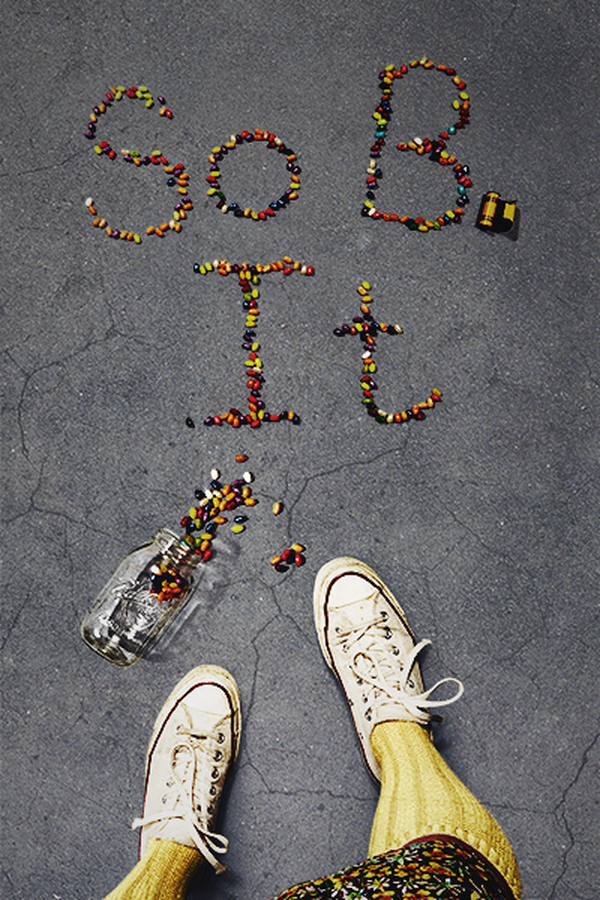
Griffith, Dan Montgomery, Jr., has lived his entire life in the fictional town of Pine Apple, Mississippi. He spends most of his days barefoot on the red dirt and quietly measures the days by tracing epitaphs on headstones. Orphaned as a child when his parents drowned in the river under mysterious circumstances, he was raised by his eccentric aunt Summer and the memory of his uncle Charlie. The town feels small enough to swallow him, yet wide enough to dream about leaving, especially as he grows older and more aware of the limits of the life that stretches before him.
Aunt Summer, Karen Black, is mentally unstable and agoraphobic, a shadow cast by the trauma of Griffith’s childhood. She and her sister Lynn Thomas, Peg O'Keef, have avoided each other for years for reasons that aren’t fully explained on the surface. Charlie, who died of cancer when Griffith was fourteen, once sent Summer to a mental asylum, a move that fractured the family’s dynamics. Since Charlie’s passing, Summer has remained in the house, cared for by Griffith and Lily Mae, the family matriarch who anchors the household with a stubborn love.
Griffith’s world is also bound to Emily Whaley, his cousin and the daughter of Lynn. Emily, Aleksa Palladino, is deeply loyal to Pine Apple, resistant to the idea of leaving, and she and Griffith share a complicated, intimate connection that hints at something more lasting than mere proximity. For Griffith, Emily’s presence is both a tether to his past and a beacon toward a different future, even as he wrestles with a growing sense of restlessness that makes the idea of departure increasingly appealing.
The story shifts when a stranger arrives from Louisiana, Lee Todd, Walton Goggins. Griffith agrees to let Lee stay in the Lily Mae cottage for free, in exchange for helping finish painting the place. The arrangement smooths over the initial tensions with Summer and Emily, and the two men quickly form a bond. They bond over work—grinding through peeling paint and weathered wood—and they craft a shared project: a giant replica of a pincushion set in a field to honor Lily Mae. They also inscribe Emily’s name and phone number on a barn roof, a small emblem of connection between two generations and two worlds.
Lee’s presence dredges up questions in Pine Apple, and Emily senses a closeness forming between Griffith and Lee. She becomes more involved with Summer, and the two women strike up an unlikely friendship as Summer begins to open up, aided by Emily’s encouragement to reclaim her life from fear and isolation. Summer recognizes strands of her own past in Emily’s doubts and unresolved desires to leave Pine Apple, and she urges Emily to carve her own path, even as Emily warns her that Griffith’s happiness depends on making hard choices about where to belong.
A pivotal moment comes when Summer accompanies Emily on a drive, and they stumble upon the freshly completed pincushion in the field. The sight triggers Summer’s healing, a tangible sign that she might move beyond the walls she built around herself. That afternoon, Lee and Griffith talk about leaving Pine Apple for good; Griffith asks for one more week to prepare, while Summer encourages him to follow his instincts, even as she harbors a quiet guilt about the past she shares with him.
In the weeks that follow, Emily confronts Griffith about her love for him, and Griffith confronts the fear that he might be misread or misled. A tense encounter with Lee ends with a painful truth: Lee believes Griffith has deeper feelings for him than friendship. The night dissolves into rain as Griffith lashes out and punches Lee when confronted about his feelings, a burst of anger that leaves him shaken and alone in his room.
The next day, Lee says goodbye to Emily, who plans to move to New Orleans. She and Griffin finally admit they both care for Griffith, and she tells Lee that Griffith truly loves him. After Lee leaves, Summer finally reveals a truth that changes everything: she is Griffith’s real mother. The revelation shocks Griffith at first, but the moment of truth begins to reframe his sense of belonging. He learns that the death of his parents was not a simple accident; Summer had an affair with her sister’s husband, Lynn’s father, and Griffith is the child Summer gave up to her sister. After years of guilt and secrecy, the truth releases a surge of emotion in Griffith. He accepts Pine Apple as his home, and in a symbolic act, he sets fire to the giant pincushion—an embodiment of his longing to leave.
Griffith’s relationship with Emily deepens even as the truth reshapes his loyalties. He reconciles with Emily, who leaves Pine Apple for New Orleans, after sharing a tearful goodbye with Summer. Then Lee returns unexpectedly, and the two men avert the lingering tensions of their earlier clash. As Lee turns to leave for the final time, Griffith finds the courage to confess that he loves him back, and they share a kiss before Lee drives him back to Summer’s house.
In the end, Griffith chooses to remain in Pine Apple with Summer, embracing a new sense of family and belonging. The two read a poem inscribed on Lily Mae’s headstone to each other, an intimate moment that hints at keeping in touch. The film closes on a quiet note: a hopeful, if unresolved, connection between Griffith and Lee, now rooted in a choice to stay and build a life in Pine Apple rather than run from it.