Plot Explained Spoilers guaranteed!
Plot Explained

Browse by genre

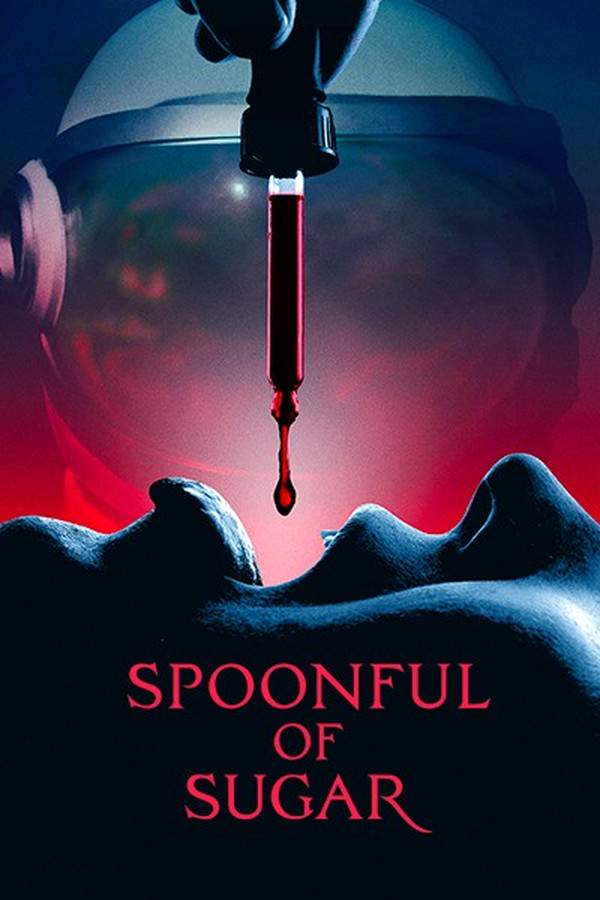
Spoonful of Sugar (2023) movie poster

Ending Explained

Spoonful of Sugar (2023) Ending Explained – Final Scene & Meaning

Release, runtime and language
2023 · 94 min · English
Echo score 65
Directed by
Mercedes Bryce Morgan
Starring
Christiana Montoya, Morgan Saylor, Laura Coover, Keith Powell, Danilo Crovetti, David Yow

A babysitter's evening takes a disturbing turn after she ingests LSD, leading to a terrifying confrontation with a family’s dark secret. As her perception of reality distorts, she struggles to distinguish between her own desires and a descent into nightmare, threatening to engulf everyone involved.

On this page (5)
  1. 1 What happens at the end
  2. 2 Final events in order
  3. 3 Ending questions answered
  4. 4 Movie threads
  5. 5 Every angle

Ending explained · contains spoilers

What Happens at the End of Spoonful of Sugar?

How Spoonful of Sugar (2023) ends, what the final scene means, which earlier moments set it up and how to read the ending if the film leaves it open. The full ending explained, with every spoiler.

The ending of "Spoonful of Sugar" reveals that Johnny, the strange and disturbing child, is actually a dangerous serial killer with a deep-seated Oedipus complex, rather than a victim of allergies or a fragile child. Throughout the film, Johnny’s violent tendencies and his obsession with Millicent, the babysitter, become increasingly clear. His fascination with Millicent morphs into a deadly attachment, culminating in him stabbing her at the end, even as Jacob and Rebecca watch helplessly. The film suggests that Johnny isn’t merely a troubled child — he’s a full-blown psychopath capable of murder. His violence is exacerbated by the fact that he may not even have allergies at all, but instead is a deeply disturbed individual who likes to kill and see others suffer. The parents, tired of their own relationship issues and Johnny’s destructive behavior, resort to burying the bodies of Millicent and his previous foster fathers in their backyard, hinting at their own complicity or at least their inability to manage the chaos Johnny creates. The movie’s final twist emphasizes that Johnny’s obsession with Millicent was the true source of the cycle of babysitters being mysteriously killed off, not Johnny’s allergies. Overall, the film underscores a dark message about the dangers of drug dependency, toxic therapy, and the hidden abyss inside seemingly innocent children. Johnny’s real nature as a serial killer turns the story into a disturbing commentary about appearances and underlying monstrousness lurking beneath the surface of a seemingly normal family.

Last updated: June 25, 2025 at 08:44

Was this helpful?

The last 4 events

How Spoonful of Sugar Ends: The Final Events in Order

The last events of Spoonful of Sugar (2023) in chronological order, the run-up to the ending explained above. The complete timeline has all 12 events, scene by scene.

Open the full timeline
  1. Millicent finds Jacob and pleads for him to leave Rebecca

    Millicent locates Jacob and pleads for him to end his marriage, arguing that she would be a better partner for him and for Johnny. Jacob refuses, choosing to stay with Rebecca. The moment deepens Millicent's desperation and resistance.

    When
    Shortly after
    Where
    Jacob's home
  2. Johnny attacks Rebecca while Millicent is away

    While Millicent is away, Johnny acts on Millicent's earlier instructions and attacks his mother. The assault escalates the household's violence and shows how far Johnny has been drawn into Millicent's plans. The event demonstrates the dangerous consequences of Millicent's manipulation.

    When
    Later that day
    Where
    Rebecca's home
  3. Millicent returns; Johnny and Rebecca attack Millicent; Millicent dies

    Millicent returns to find Rebecca and Johnny turning on her, and Johnny fatally stabs Millicent. The violence completes the collapse of Millicent's scheme and seals her fate within the house. The scene underscores the deadly power dynamics at play.

    When
    Night
    Where
    Rebecca's home
  4. Ending twist: the murders were not isolated; the parents cover up

    The film ends with a chilling reveal that Johnny's murders were not isolated and that his parents have concealed prior deaths to protect him. They intend to continue the cover-up, implying a cycle of violence enabled by parental complicity. The revelation reframes the entire story as a critique of the adults' complicity.

    When
    Final scene
    Where
    Family home

Ending questions answered

Spoonful of Sugar Ending: Your Questions Answered

The questions people ask most about the ending of Spoonful of Sugar (2023): what the final scene means, how the twist works, what happens to each character and how to read the ending. Each answer contains spoilers.

Q1

Why does Johnny kill Millicent at the end?

Johnny kills Millicent because his obsession with her has developed into a deadly attachment. Rather than being a fragile child with allergies, Johnny is revealed to be a psychopath whose fascination with his babysitters culminates in violence. His Oedipus complex drives him to eliminate Millicent, treating her as an object of obsession rather than a person.

Foreshadowing: Earlier scenes show Johnny's intense fixation on Millicent and his violent reactions when she tries to leave, hinting at his possessive nature.

  • johnny
  • millicent
  • murder
  • ending
  • psychopathy
Q2

icent at the end?

Millicent is stabbed to death by Johnny inWhat happens to Mill the final confrontation. Jacob and Rebecca, the parents, watch helplessly as Johnny kills her. After her death, the parents bury her body in the backyard alongside the previous foster fathers, completing the cycle of concealment that has characterized their family's dark secret.

Foreshadowing: The film hints at previous babysitter disappearances through subtle references to Johnny's 'allergies' and the parents' nervous behavior.

  • millicent
  • death
  • ending
  • killed
  • stabbed
Q3

Are Johnny's allergies real or fake?

The ending reveals that Johnny's allergies are likely not real at all. The film suggests that Johnny is a deeply disturbed child who uses the allergy excuse as a manipulation tactic. His supposed medical condition is actually a cover for his violent tendencies, allowing him to isolate babysitters and create a narrative that obscures his true nature as a killer.

Foreshadowing: Throughout the film, Johnny's violent outbursts occur regardless of any allergic triggers, and the parents seem more concerned with maintaining Johnny's story than addressing genuine health issues.

  • allergies
  • fake
  • deception
  • johnny
  • manipulation
Q4

Why do the parents bury Millicent's body in the backyard?

Jacob and Rebecca bury Millicent's body in the backyard because they are complicit in concealing Johnny's crimes. The ending reveals they have done this before with previous foster fathers who Johnny killed. The parents are either unable or unwilling to stop Johnny, choosing instead to bury the evidence and maintain the appearance of a normal family. Their exhaustion from dealing with Johnny's behavior has led them to normalize his homicidal actions.

Foreshadowing: Earlier scenes show the parents' strained relationship and their desperate attempts to manage Johnny's 'behavioral issues,' hinting at their willingness to go to extreme lengths to keep the family together.

  • parents
  • burial
  • backyard
  • complicity
  • bodies
Q5

Is Johnny a serial killer in Spoonful of Sugar?

Yes, the ending confirms Johnny is a serial killer. He has killed multiple babysitters and foster fathers, with the parents burying each body in the backyard. Johnny is portrayed not as a troubled child but as a full-blown psychopath capable of premeditated murder. His violence is deliberate andEnjoyed rather than impulsive, making him one of the most disturbing child characters in recent horror.

Foreshadowing: Johnny displays violent tendencies throughout the film, including harming animals and displaying disturbing emotional responses that go beyond typical childhood behavior.

  • johnny
  • serial killer
  • psychopath
  • murderer
  • ending
Q6

How many babysitters has Johnny killed?

The exact number is not specified, but the film implies Johnny has killed multiple babysitters over time. The parents' routine of burying bodies in the backyard suggests this cycle has repeated several times. Millicent is at least the second or third babysitter to be killed, as the parents are already experienced in concealing Johnny's crimes.

Foreshadowing: References to previous babysitters who 'quit suddenly' or 'moved away' hint at the pattern of disappearances that precedes Millicent's arrival.

  • babysitters
  • kills
  • count
  • victims
  • previous
Q7

What is Johnny's Oedipus complex in the movie?

Johnny's Oedipus complex manifests as an inappropriate and obsessive attachment to his mother figure, in this case the babysitter Millicent. This psychological term describes a child's unconscious sexual desire for the opposite-sex parent, and Johnny exhibits this through his intense fixation on female caregivers. His obsession crosses into violent territory, as he kills Millicent not out of anger but out of a twisted possessive drive.

Foreshadowing: Johnny's behavior shows clear signs of inappropriate attachment, with his obsession intensifying whenever a new babysitter arrives and becomes the focus of his attention.

  • oedius complex
  • psychology
  • obsession
  • millicent
  • attachment
Q8

Why do the parents enable Johnny's behavior?

The parents enable Johnny's behavior due to a combination of exhaustion, denial, and possibly genuine inability to control him. The ending reveals they are worn down by years of managing Johnny's destructive tendencies. Rather than seeking proper help or intervention, they have chosen to bury the evidence of his crimes, effectively normalizing and enabling his serial killing. Their complicity represents a complete moral collapse.

Foreshadowing: The parents' reluctance to discipline Johnny and their nervous covering for his 'allergies' throughout the film establish their pattern of avoidance and enablement.

  • parents
  • enable
  • complicity
  • moral collapse
  • denial
Q9

What is the message or theme of the ending?

The ending conveys a dark message about the dangers lurking beneath innocent appearances. The film uses Johnny's revelation as a serial killer to comment on how evil can hide within seemingly normal families and children. It also critiques toxic therapy and drug dependency, as Millicent's LSD-induced state makes her unable to distinguish reality from nightmare. The bleak ending suggests that some darkness cannot be therapy away or reasoned with, and that appearances, especially of children, can be profoundly deceiving.

Foreshadowing: The film's consistent focus on deception, unreliable perception through drug use, and the gap between Johnny's angelic appearance and his true nature builds toward this cynical thematic conclusion.

  • theme
  • message
  • ending
  • evil
  • appearance
  • deception
Q10

Does Millicent survive in Spoonful of Sugar?

No, Millicent does not survive. She is killed by Johnny in the film's climax, making her another victim in the string of babysitters Johnny has murdered. Her death is particularly tragic given that her LSD-induced state prevents her from effectively defending herself or distinguishing between real threats and her distorted perception.

Foreshadowing: Millicent's decision to take LSD despite planning to babysit sets up her vulnerability, as the drug renders her unable to properly respond to Johnny's attack.

  • millicent
  • survive
  • death
  • ending
  • killed

Movie threads

More Movies Like Spoonful of Sugar, by Mood & Story

Curated lists built around what makes Spoonful of Sugar tick: the same mood, the same kind of story or the same emotional payoff. Each list explains why these movies belong together.

Drug-fueled horror movies like Spoonful of Sugar

Stories where altered perception unlocks a terrifying and deceptive reality. If you liked the LSD-fueled psychological unraveling in Spoonful of Sugar, explore more movies where drug use distorts reality and reveals hidden horrors. These films use altered states to plunge characters and viewers into paranoid, nightmarish experiences.

  • paranoid
  • unreliable narrator
  • nightmarish
  • anxious
  • trippy
  • claustrophobic
  • Tone: dark, paranoid, unsettling
  • Pacing: steady, escalating dread
Why these movies?

The story pattern: These narratives typically begin with a character consuming a substance, expecting escape or enlightenment, only to have their perception violently distorted. The plot unfolds as they struggle to separate drug-induced fantasies from a genuinely threatening situation, often leading to a climactic revelation that questions everything they thought was real.

Why they belong together: Movies are grouped here for their shared core premise: using a psychoactive drug as the primary catalyst for horror. They share a mood of intense paranoia, a theme of unreliable perception, and a descent into a claustrophobic, personal hell that may or may not be real.

Claustrophobic family horror like Spoonful of Sugar

Tales where the home is a prison and the family harbors a dark truth. Fans of the domestic terror and dark family secrets in Spoonful of Sugar will find more chilling stories here. These movies explore the horror that unfolds behind closed doors, where trust is broken and the home becomes a dangerous, inescapable place.

  • claustrophobic
  • disturbing
  • family secrets
  • psychological abuse
  • unsettling
  • child endangerment
  • Tone: dark, disturbing, claustrophobic
  • Pacing: steady, slow burn reveal
Why these movies?

The story pattern: A protagonist, often an outsider like a babysitter or new partner, enters a household that appears normal. As they spend more time there, cracks begin to show, revealing patterns of psychological abuse, manipulation, or a violent secret. The narrative builds tension through a growing sense of entrapment and the dawning realization that the family unit is profoundly broken and dangerous.

Why they belong together: These films are connected by their setting—the confined space of a home—and their central theme of a corrupted family dynamic. They share a mood of creeping dread and claustrophobia, driven by the horror of betrayal by those who should be protectors, often involving child endangerment.

Every angle

Spoonful of Sugar (2023) Explained: Plot, Ending, Timeline & Characters

Everything about Spoonful of Sugar in one place: what happens in the plot summary, the timeline in chronological order, the characters and meaning, the ending explained and a spoiler-free summary. What's After the Movie adds the cast, box office and post-credit scenes.

Coming soon on iOS and Android

The Plot Explained Movie Summary App

Plot summaries, endings explained and timelines on your phone. Catch up on any movie in minutes, save your favorites and never miss a twist again.

Be the first to know when we launch. Your email stays private, always.

Learn more about the app