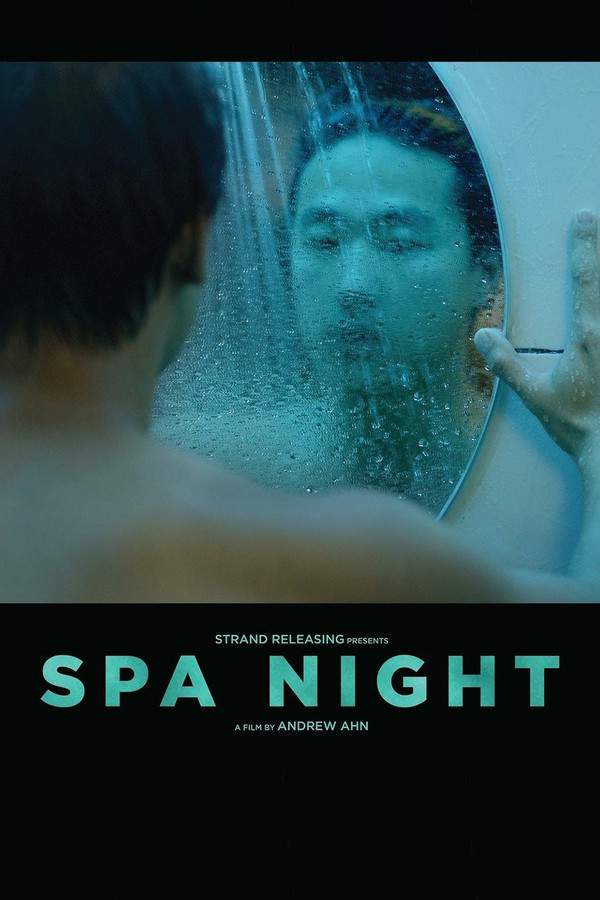
David Cho is an eighteen-year-old who keeps his sexuality tightly hidden as he navigates life in Koreatown, Los Angeles. He lives with his immigrant parents, Jin and Soyoung, who run a family business that feels precariously balanced. One day, the family that has always supported him faces change when Jin and Soyoung decide to sell their restaurant. In a bid to help him secure a place in college, they enroll David in expensive, intensive classes and also arrange for him to shadow his old friend Eddie at the University of Southern California (USC) for two days, at Eddie’s mother’s request. This setup places David at a crossroads between traditional expectations and a growing awareness of his own desires.
Amid these pressures, David’s hidden curiosities surface in small, troubling ways. He secretly stares at Eddie naked during a visit to a Korean all-male spa and sauna, a moment he then tries to minimize by telling Eddie and his male friend that he was looking at “nothing.” The incident lingers as a quiet tension between appearance and reality. The next day brings more instability: Jin does not show up as expected, and David chooses to ride a bus home rather than let Eddie drive him back. When he returns, he finds Jin asleep with empty beer bottles nearby, a sign of the family’s mounting worries and Jin’s struggles with employment and alcohol.
Soyoung continues to work as a full-time waitress to keep the family afloat, while Jin remains unable to secure steady work. David faces academic difficulties, especially with the SATs, further narrowing his chances of admission to reputable colleges like USC. In an attempt to support his parents financially, David starts working at the same Korean all-male spa he had briefly visited, a fact he keeps hidden from his parents. He secretly hands over his earnings to them and tells them that his academic performance is strong, even though the truth is more complicated.
As work at the spa deepens his conflicted feelings, David experiences a charged moment when he discovers an illicit gay sex act during a post-work rest break and becomes aroused. He retreats to a stall to masturbate, only to be interrupted by a patron who knocks, flushes the toilet, and exits. On another occasion, while cleaning, he foresees another illicit act and posts a “closed for cleaning” sign at the door to deter it, even as other activities unfold elsewhere. In yet another encounter, David and an older man share a stare, but David firmly tells him, “No touching.”
When one incident is reported to the police, David reluctantly posts a notice warning others involved in illicit acts, though he does so without interrupting in a room where another activity is taking place. In a later moment, he interrupts two men’s sexual activity and forcibly ejects them by pulling back a towel from a wall light, asserting some control over the situation in the facility.
A turning point comes one night when Soyoung confronts Jin about his increasing drunkenness and ongoing unemployment. David takes his intoxicated father to the spa where he still works, hoping to keep things together. Inside the dim, tense atmosphere, Jin sleeps while David’s emotions erupt. David ends up having sex with a patron, and the spa manager confronts him with anger and disappointment. The confrontation culminates in David sobbing, a vulnerable outburst that he tries to mask with a quiet apology in Korean: “I’m sorry.” He then places a locker key on the counter, a small, heavy gesture that signals a rift between him and the life he is trying to maintain.
The closing moments strip away the quiet of the spa and the pressure of the family’s expectations to reveal a more solitary, unsettled future for David. He appears on screen standing in the church during a congregational song, but his silence speaks louder than the voices around him. In a sudden shift, he runs along a street instead of continuing a familiar jog, signaling a break from the routine that once seemed to promise a straightforward path to college and happiness. The film leaves him in a liminal space—caught between tradition and self-discovery—asking what it means to belong, to heal, and to be true to oneself in a world that often prefers quiet conformity over honest confession.