Year: 2015
Runtime: 124 min
Language: English
Director: Paolo Sorrentino
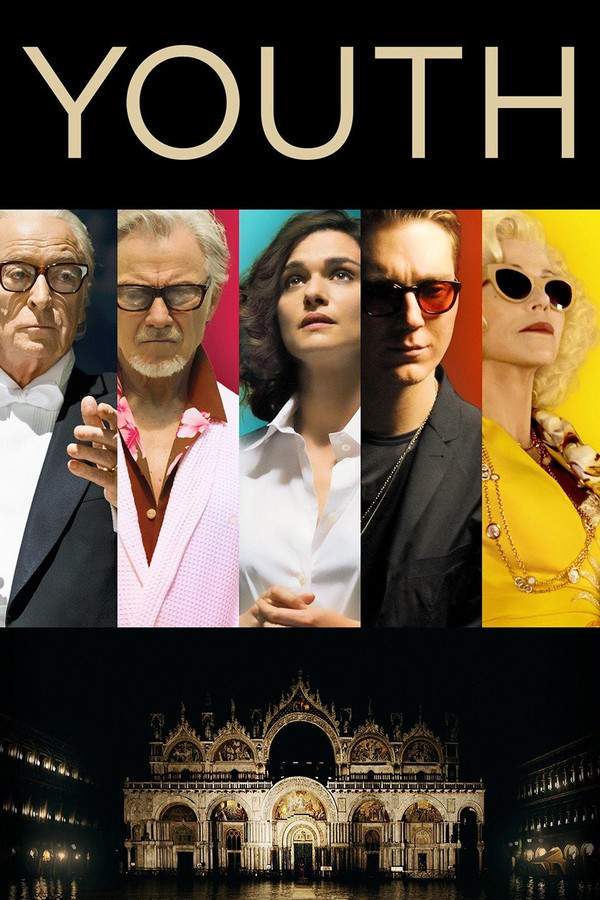
Set against the stunning backdrop of the Swiss Alps, two longtime friends, Fred and Mick, find themselves reconnecting and contemplating their lives as they approach retirement. Fred, a composer, sees his musical past reignited by his daughter Lena, while Mick works on his final screenplay with the help of his muse, Brenda. A young actor named Jimmy also seeks inspiration in the beautiful surroundings, questioning whether meaningful experiences are limited by age. The film explores themes of friendship, legacy, and the search for purpose in later years.
Warning: spoilers below!
Haven’t seen Youth yet? This summary contains major spoilers. Bookmark the page, watch the movie, and come back for the full breakdown. If you're ready, scroll on and relive the story!
Read the complete plot breakdown of Youth (2015), including all key story events, major twists, and the ending explained in detail. Discover what really happened—and what it all means.
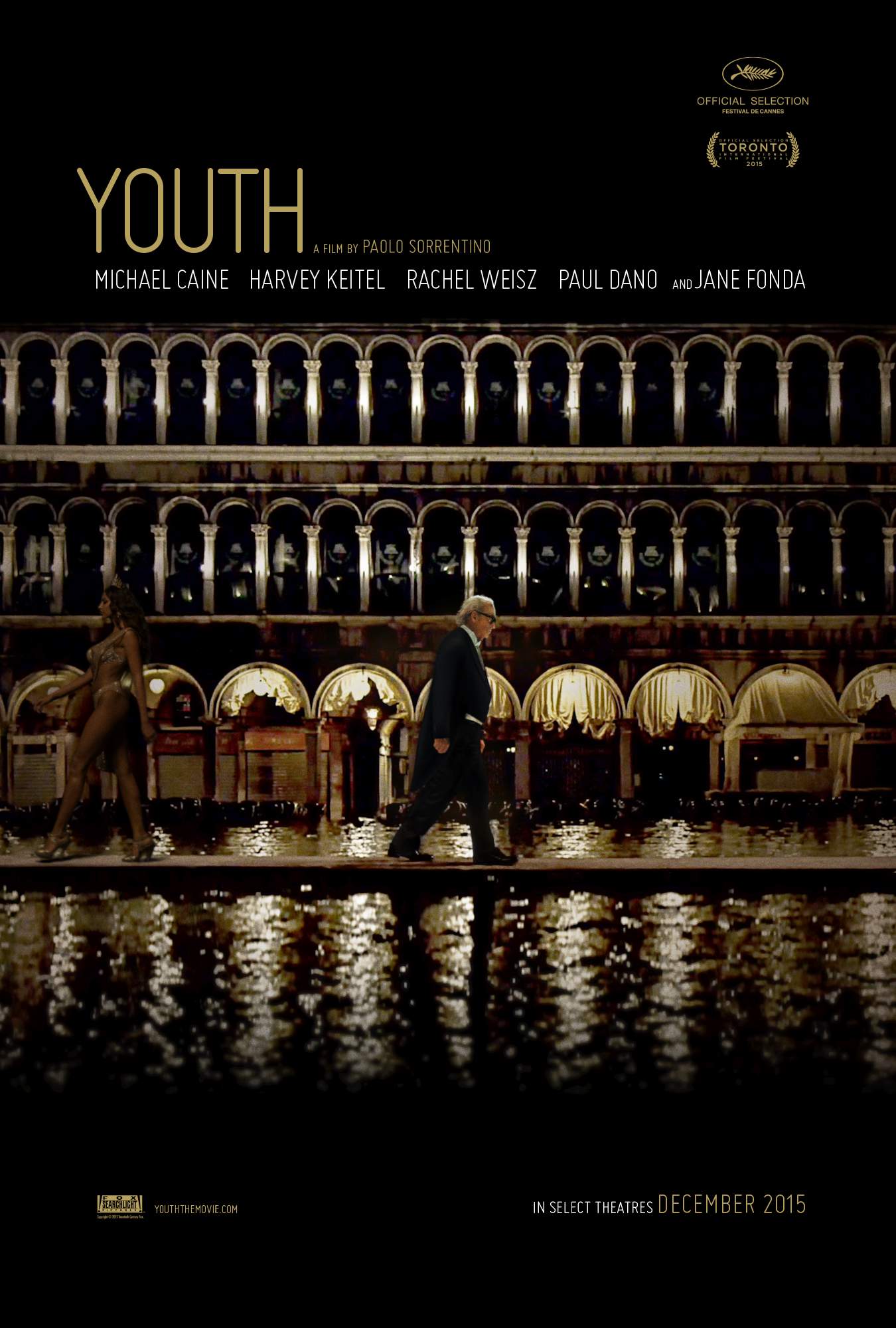
On a serene Swiss spa retreat in Flims, two septuagenarian friends — Michael Caine as Fred Ballinger and Harvey Keitel as Mick Boyle — drift through a vacation that feels more like a meditation on aging than a holiday. Fred, a celebrated retired composer of classical music, receives an emissary from Queen Elizabeth II bearing a knighthood offer and a request to perform his popular piece, “Simple Song #3,” at Prince Philip’s upcoming birthday concert. Fred declines with quiet resolve, insisting he is no longer drawn to the stage, even though the melodies still echo in his mind when he’s alone with his thoughts.
Nearby, Mick Boyle, a seasoned film director, furiously works with a circle of writers to shape the screenplay for his latest project, which he calls his “testament.” He pursues cinema as a craft even as time gnaws at his optimism, and his pursuit is tempered by a sense of watching the world move beyond the kind of movies he once made. Also present is Jimmy Tree, an actor researching for a new role and growing frustrated that his most enduring memory is that of a robot.
The hotel itself is a mosaic of peculiar personalities: a young masseuse moving with practiced ease, an oversized Diego Maradona who seems to enjoy the hotel’s oddities, and a Miss Universe contestant who radiates charm amid the resort’s reflective mood. The setting becomes a stage for introspection as Fred and Mick confront the erosion of memory and the uncertain road ahead.
Lena, Fred’s daughter and assistant — Rachel Weisz — remains at the resort, channeling her frustration toward a father who was emotionally distant as she grew up. She is married to Mick’s son, but their marriage is strained when he leaves her for pop star Paloma Faith. Lena’s presence stirs old resentments, and she uses the moment to articulate the pain of a life shaped by lines drawn in childhood and the weight of unresolved affection. Her experiences at the spa heighten the film’s quiet drama as the emissary returns with news that deepen the tensions among the group.
The emotional center thickens when Fred explains once again why he won’t sing the soprano part: it belongs to his wife, who can no longer sing, a detail that fractures the moment and underscores the unsentimental truth of time’s passage. Mick, meanwhile, finishes his screenplay and faces a blunt disappointment in the realization that the era he loved may have receded into history. The moment of truth arrives when Brenda Morel, an aging diva who has starred in many of his films, unexpectedly appears at the resort. She reveals a preference for a television role over cinema, telling Mick that the medium has changed and that his career hasn’t produced a truly great film in years. The confrontation rocks him, and tragedy follows as Mick ends his life by leaping from a balcony before Fred’s eyes.
Moved by the events and the weight of a life lived in the glare of memory, Fred makes a choice: he decides to visit his wife in a Venice care home for the first time in years. The trip softens his resolve and reframes what remains meaningful to him as he prepares to return to the United Kingdom to conduct “Simple Song #3” in front of the Queen and Prince, a gesture that blends personal memory with public ceremony.
Throughout the narrative, the film treads between the tangible and the unreal, weaving in surreal moments that tilt the ordinary into the fantastical: a levitating monk drifting above the spa grounds, an imagined Paloma Faith music video that interrupts the peace, Jimmy appearing in a provocative costume reminiscent of a long-ago era, Fred conducting a field of cowbells in a ceremonial, almost ritualistic procession, and Mick envisioning all his former leading ladies gathered on a mountaintop. The sequence even frames Brenda in a new light, recalling her presence in the past while placing her within the strange, almost dreamlike theater of the film’s final vision. These moments underscore the film’s meditation on legacy, fame, love, and the inexorable flow of time.
Last Updated: October 09, 2025 at 16:23
Still wondering what the ending of Youth (2015) really means? Here’s a spoiler-heavy breakdown of the final scene, major twists, and the deeper themes that shape the film’s conclusion.
At the film’s climax, Luke confronts the mysterious Fountain of Youth and has a vision of Charlotte and her son Thomas in a frail, sickly state. This vision reveals to him that the Fountain’s power is beyond human comprehension and that drinking from it would drain the vitality of his loved ones to grant him immortality. Recognizing this, Luke chooses not to partake, understanding that the true treasure is his family and the connection he shares with them. Instead, Owen Carver, who initially appeared to seek the Fountain for selfish reasons, drinks from it and suffers a rapid life drain — a consequence of his greed and self-love. His fate remains ambiguous, as Esme uses a key to shut down the Fountain and stop him from gaining more power.
The ending also hints that the characters have found a new balance. Charlotte and Luke, having resolved their past differences, decide to continue their adventures together, searching for what is “lost” in the world and in themselves. This signifies that the journey and the relationships they cherish matter more than any mythological or eternal life. The story ultimately suggests that the greatest treasure isn’t a fountain’s mystical liquid but the love, family, and meaning found in everyday life. The Fountain of Youth symbolizes that true happiness and fulfillment come from within—by recognizing what truly matters and appreciating the life and loved ones we already have.
Last Updated: June 25, 2025 at 08:59
Discover curated groups of movies connected by mood, themes, and story style. Browse collections built around emotion, atmosphere, and narrative focus to easily find films that match what you feel like watching right now.
Characters in serene settings confront their past and find meaning in stillness.If you liked the reflective setting of Youth, explore more movies like it. These films feature characters in serene environments—like scenic hotels, remote cabins, or tranquil spas—who use the quiet to confront their past and search for meaning.
Stories in this thread often begin with a character arriving at a peaceful location, seeking escape or healing. The plot is driven by conversations, memories, and personal revelations rather than external action. Characters confront long-held regrets, reassess their life's work, and form unexpected connections, leading to a gradual and often bittersweet resolution.
These films are grouped by their shared atmosphere of serene introspection. They prioritize mood and character development over fast-paced plots, using their tranquil settings to amplify themes of aging, legacy, and personal reconciliation.
Elderly artists and creators grapple with their legacy and fading relevance.For viewers who enjoyed Youth's exploration of an artist's later years, this thread collects similar movies. Discover films where elderly creators contemplate their life's work, face mortality, and seek a final sense of purpose and redemption.
The narrative follows an accomplished but aging artist facing a personal or professional crisis. They are forced to re-evaluate their life's work, often through the lens of a strained relationship or a tragic event. The story explores themes of mortality, the fleeting nature of fame, and the search for meaning beyond one's art, leading to a conclusion that is both sad and cathartic.
These films are connected by their deep focus on the emotional turmoil of aging artists. They share a melancholic tone, heavy emotional weight, and a bittersweet conclusion that balances the pain of loss with a glimmer of acceptance or redemption.
Don't stop at just watching — explore Youth in full detail. From the complete plot summary and scene-by-scene timeline to character breakdowns, thematic analysis, and a deep dive into the ending — every page helps you truly understand what Youth is all about. Plus, discover what's next after the movie.
Track the full timeline of Youth with every major event arranged chronologically. Perfect for decoding non-linear storytelling, flashbacks, or parallel narratives with a clear scene-by-scene breakdown.
Discover the characters, locations, and core themes that shape Youth. Get insights into symbolic elements, setting significance, and deeper narrative meaning — ideal for thematic analysis and movie breakdowns.
What really happened at the end of Youth? This detailed ending explained page breaks down final scenes, hidden clues, and alternate interpretations with expert analysis and viewer theories.
Get a quick, spoiler-free overview of Youth that covers the main plot points and key details without revealing any major twists or spoilers. Perfect for those who want to know what to expect before diving in.
Visit What's After the Movie to explore more about Youth: box office results, cast and crew info, production details, post-credit scenes, and external links — all in one place for movie fans and researchers.
Discover movies like Youth that share similar genres, themes, and storytelling elements. Whether you’re drawn to the atmosphere, character arcs, or plot structure, these curated recommendations will help you explore more films you’ll love.
Youth (2015) Scene-by-Scene Movie Timeline
Youth (2015) Movie Characters, Themes & Settings
Youth (2015) Ending Explained & Theories
Youth (2015) Spoiler-Free Summary & Key Flow
Movies Like Youth – Similar Titles You’ll Enjoy
Youth (2015) Spoiler-Packed Plot Recap
Youth Without Youth (2007) Spoiler-Packed Plot Recap
The Best of Youth (2005) Story Summary & Characters
Young & Beautiful (2014) Complete Plot Breakdown
Youth (2017) Detailed Story Recap
Youth in Oregon (2017) Film Overview & Timeline
Golden Youth (2019) Spoiler-Packed Plot Recap
Wasted Youth (2003) Spoiler-Packed Plot Recap
Youth Topia (2021) Full Movie Breakdown
The Young Lovers (2021) Ending Explained & Film Insights
Youth of the Son (1952) Full Movie Breakdown
Youth in Revolt (2009) Full Summary & Key Details
Youth Runs Wild (1944) Story Summary & Characters
Age of Consent (1969) Plot Summary & Ending Explained
Forever Young (2022) Ending Explained & Film Insights