Plot Explained Spoilers guaranteed!
Plot Explained

Browse by genre

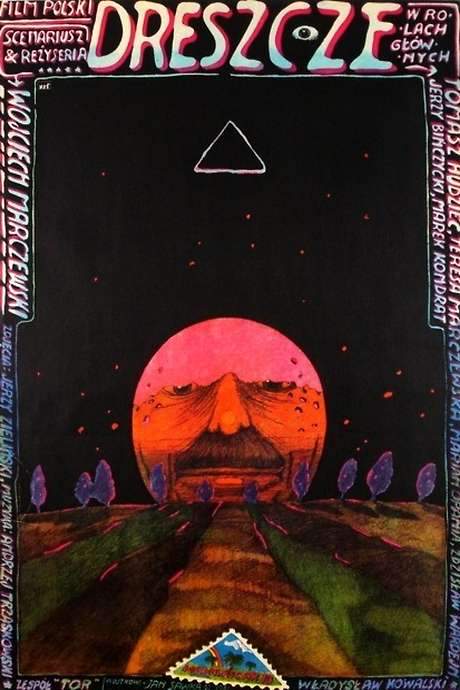
Shivers (1981) movie poster

Timeline

Shivers (1981) Timeline Explained – Every Event in Order

Release, runtime and language
1981 · 106 mins · Polish
Loading streaming availability…
Directed by
Wojciech Marczewski
Starring
Marek Kondrat, Krzysztof Kozłowski, Bogusław Linda, Władysław Kowalski, Marian Opania, Ryszard Kotys

A boy comes of age under an oppressive, cruel socialist government and watches as it slowly but surely distorts his family, his school and even his own thoughts.

On this page (6)
  1. 1 Where to watch
  2. 2 Events in order (13)
  3. 3 Timeline questions answered
  4. 4 Movie threads
  5. 5 Movies like Shivers
  6. 6 Every angle
Loading streaming availability…

13 events in order · contains spoilers

Shivers Timeline: Events in Chronological Order

Every key event of Shivers (1981) in order, scene by scene, with when and where it takes place. Use it to untangle flashbacks, time jumps and parallel storylines, to refresh your memory before the sequel or to find the exact scene you are thinking of.

  1. Tom finds a Madagascar stamp in his father's books

    Tom, a boy living in Poland in 1955, discovers a small Madagascar stamp hidden in his father's library. The discovery sits alongside his mundane, tiresome home life and hints at a wider world beyond his daily routine. The stamp becomes a subtle motif that foreshadows his later entanglement with political ideology.

    When
    1955
    Where
    Tom's family home, Poland
  2. A tragedy in the classroom: a hat, a window, a fall

    During a poetry lesson, bullies throw a boy's hat out of the window. When the boy climbs out to retrieve it, the teacher closes the window on his fingers, causing him to fall several floors and sustain serious injuries. The incident exposes the volatile climate of the school under an oppressive regime.

    When
    1955
    Where
    School classroom
  3. A new Stalinist teacher arrives and tightens control

    A new teacher arrives, teaching strict Stalinist theory and struggling to control the unruly class. He still pushes mandatory extracurriculars, like agricultural work in a communist youth program. The class is forced to march in line, even walking against a crowd of churchgoers during a demonstration of state loyalty.

    When
    1955
    Where
    School
  4. Secret police raid; Tom's father is imprisoned

    The next day, Tom wakes to a raid by the secret police. His father is beaten and taken away to prison, and Tom witnesses the confiscation of his father's stamp book. The event marks a blunt entry into a world of state repression for the family.

    When
    1955
    Where
    Tom's home
  5. Pioneer camp is introduced; Tom is chosen by a Guide

    Representatives from a pioneer camp visit the school, and Tom is chosen by a female Guide to join. Life in the camp is strict, militarized, and heavily surveilled, signaling the shift from family to collective identity under the regime.

    When
    1955-1956
    Where
    Pioneer camp
  6. The first camp dinner: a riot and a duty

    At the first dinner, a window is smashed by a rock from outside, and the pioneers are ordered to apprehend the provocateur. Most of the group floods outside, and the Guide is later reprimanded yet urges the pupils to see catching the provocateur as their duty.

    When
    1955-1956
    Where
    Pioneer camp dining hall
  7. Dominik is bullied; Jerzy and Kazimierz set the tone

    Dominik is bullied by Jerzy and Kazimierz, framed as an interrogation of pro-communist lines. Tom watches as the older boys exercise control through intimidation, establishing a climate of fear within the camp.

    When
    1955-1956
    Where
    Pioneer camp
  8. Tom discovers a 'secret base' and Western radio

    Jerzy and Kazimierz take Tom to their secret base, where they drink and listen to a Western radio. Tom learns of the Poznań protests, broadening his exposure to dissent and shaping his growing ideological ambitions.

    When
    1956
    Where
    Secret base
  9. Indoctrination intensifies; reports and fear

    Pioneer education tightens as Tom is urged to read theory and report on classmates. He is told to monitor and report back, and he overhears the headmaster arguing with the Guide about the Poznań protests, who then comforts him as the regime tightens its grip.

    When
    1956
    Where
    Guide's office/corridor
  10. Dominik's tragedy and Tom's confession

    Days later, Dominik commits suicide after the mounting pressure in the camp. Tom exposes Jerzy and Kazimierz to the authorities in a bid to distance himself from their actions, attempting to separate himself from their influence.

    When
    1956
    Where
    Pioneer camp
  11. A turn to ideology; promotion and family pressure

    Despite fears of expulsion, Tom is rewarded with a promotion to the executive council for his role in rooting out perceived 'dangerous enemies'. His father is freed from prison, but Tom refuses to return home, choosing to embrace the party line and the Guide's influence. A disturbing dream sequence hints at his deepening indoctrination.

    When
    1956
    Where
    Camp and home
  12. Dissolution and the long walk home

    The pioneer organization is abruptly dissolved, and the children are loaded onto trucks to be driven home. Tom loses a portrait of Marx amid the chaos, and a counselor discards it as the old symbols fade under a new reality.

    When
    1956
    Where
    Town streets; trucks
  13. Final image: Madagascar stamp on the train window

    In the film's final moment, Tom pastes his Madagascar stamp to the window of a train, a small but stubborn link to the past as the future looms. The act closes the loop on the stamp that started his journey and marks the end of his childhood under a changed political world.

    When
    Ending
    Where
    Train

Last updated: October 09, 2025 at 14:57

Was this helpful?

Timeline questions answered

Shivers Timeline Explained: Your Questions Answered

When does it happen, and why in that order? The questions people ask about the chronology of Shivers (1981): time jumps, flashbacks, cause and effect between scenes and the correct order of events, each answered with spoilers.

Q1

Why does Tom report Jerzy and Kazimierz to the authorities?

Tom betrays his older friends to distance himself from the bullying and potential expulsion after Dominik's suicide. When authorities investigate Dominik's death, Tom sees an opportunity to secure his own position within the pioneer hierarchy by exposing Jerzy and Kazimierz as the true culprits behind the bullying. This act represents his complete transformation into a loyal party informant, prioritizing his own survival and advancement over personal loyalty.

  • tom
  • jerzy
  • kazimierz
  • betrayal
  • dominik
  • suicide
  • pioneer camp
Q2

Why does Tom refuse to go home when his father returns?

When Tom's father returns from prison and pleads with him to come back to ordinary life, Tom refuses and instead repeats party slogans. By this point, Tom has been fully indoctrinated into the system. The Guide has become his primary emotional attachment, and his identity is now tied to the pioneer organization. His father's release actually threatens Tom's new-found position and ideology, making rejection the only choice that preserves his transformed self.

  • tom
  • father
  • prison
  • return
  • rejection
  • indoctrination
  • guide
Q3

What happens to Dominik in the pioneer camp?

Dominik is systematically bullied by Jerzy and Kazimierz, who subject him to harsh interrogation about his family's pro-communist stance. The relentless pressure and humiliation become unbearable, and Dominik commits suicide. His death marks a turning point that triggers Tom's decision to betray his friends to authorities, seeking personal safety amid the fallout.

Foreshadowing: Earlier, Jerzy and Kazimierz frame Dominik in their interrogations, establishing the cruelty that escalates to tragedy.

  • dominik
  • suicide
  • bullying
  • jerzy
  • kazimierz
  • pioneer camp
Q4

Why is the Madagascar stamp significant to Tom?

The Madagascar stamp represents Tom's personal curiosity and connection to a world beyond Soviet-controlled Poland. Hidden in his father's books, it symbolizes private memory and individual thought. The stamp follows Tom throughout the film, and in the final scene, he presses it onto the train window, a defiant act of preserving personal identity against the collective conformity of the regime. It closes the loop from his innocent discovery to his complicit acceptance.

Foreshadowing: Tom first discovers the stamp in his father's books at the beginning, establishing it as a motif of personal memory.

  • madagascar stamp
  • tom
  • memory
  • identity
  • train
  • symbol
Q5

Why does the Guide have so much influence over Tom?

The Guide becomes Tom's primary emotional figure after his father's arrest removes that stability from his life. She provides emotional support during his vulnerability while simultaneously demanding ideological loyalty. This creates a powerful bond, her care feels genuine even as it's weaponized for indoctrination. Tom transfers his need for parental attachment onto her, making him willing to spy on classmates and embrace the ideology she represents.

Foreshadowing: The Guide recruits Tom immediately after his father's imprisonment, arriving as a new authority figure to fill the void.

  • guide
  • tom
  • influence
  • indoctrination
  • emotional bond
  • pioneer
Q6

Why does Tom start reporting on his classmates?

Tom is ordered to spy on his classmates as part of the intensified indoctrination program. The education system demands that students monitor each other and file reports on their families. When another student uses the stamp to accuse Tom of colonialist views, the Guide instructs him to read theory and prove his loyalty, creating a cycle where reporting on others becomes necessary for his own survival within the system.

  • snitching
  • reporting
  • classmates
  • indoctrination
  • surveillance
  • pioneer camp
Q7

What are the Poznań protests and why do they matter?

The Poznań protests of 1956 were a real historical event, a workers' uprising in Poland against Soviet-controlled communist rule. In the film, Tom learns about them from Western radio broadcasts at the secret base. The protests represent genuine resistance to the system, and when the headmaster and Guide argue about them, it reveals cracks in the regime's narrative. Tom's knowledge of these protests fuels his ideological ambitions and marks his transition from passive victim to active participant.

  • poznan protests
  • radio
  • western broadcasts
  • ideology
  • dissent
Q8

Why is the pioneer organization suddenly dissolved?

The pioneer organization dissolves abruptly, symbolizing the shifting political landscape following Stalin's death in 1953. By 1956, the Polish communist regime was beginning to relax some of the harshest Stalinist controls. The children are quickly loaded onto trucks to return home, and symbols like the Marx portrait are discarded. This sudden end marks the transition from the most oppressive period to a slightly more moderate phase, though Tom's indoctrination remains.

  • pioneer organization
  • dissolution
  • stalinism
  • political change
  • trucks
Q9

What does the classroom window accident represent?

The incident where a teacher's window closes on a boy's fingers, causing him to fall, symbolizes the violent, unpredictable nature of the regime压迫. What begins as a prank escalates into real harm when authority figures react with cruelty rather than compassion. This early event foreshadows the harsh world Tom will navigate, where innocence leads to punishment and the system operates through fear and pain.

  • window accident
  • school
  • violence
  • foreshadowing
  • regime
Q10

Why does Tom try to save the Marx portrait during the evacuation?

During the chaotic dissolution of the pioneer organization, Tom loses a portrait of Marx while scrambling onto trucks. He frantically attempts to recover it, but a counselor simply casts it aside. This moment shows how thoroughly Tom has internalized the ideology, he clings to its symbols even as the regime itself is changing. The counselor's casual dismissal contrasts sharply with Tom's desperation, highlighting his complete absorption into the system.

  • marx portrait
  • evacuation
  • indoctrination
  • ideology
  • pioneer dissolution
Q11

Why does Tom pray before Bierut's portrait?

Tom engages in a disturbing ritual where he prays before a portrait of Bolesław Bierut, Poland's communist leader, while a cross that once hung nearby now sits empty. This moment signifies the complete replacement of traditional faith and family loyalty with devotion to the state. The regime has colonized Tom's spiritual space, making his prayer to a political figure the new normal in his warped inner life.

  • bierut
  • prayer
  • portrait
  • cross
  • faith
  • indoctrination
  • religion

Movie threads

More Movies Like Shivers, by Mood & Story

Curated lists built around what makes Shivers tick: the same mood, the same kind of story or the same emotional payoff. Each list explains why these movies belong together.

Stories of lost innocence like Shivers

Stories where political or social systems systematically dismantle personal freedom and morality. Movies like Shivers explore the devastating impact of oppressive regimes on personal lives. If you were intrigued by the boy's indoctrination and the destruction of his family, this section groups similar dramas about political control, ideological conflict, and the heavy price of conformity.

  • oppressive
  • grim
  • melancholic
  • unsettling
  • claustrophobic
  • anxious
  • Tone: dark, bleak, unsettling
  • Pacing: steady, methodical
Why these movies?

The story pattern: Narratives in this thread typically follow a protagonist, often a child or young adult, as they are gradually indoctrinated or broken down by a powerful, impersonal system. The journey is one of irreversible loss, marked by key moments of betrayal, forced compliance, and the internalization of a new, darker reality that supplants their original values.

Why they belong together: These films are grouped by their shared thematic focus on the conflict between the individual and the state, a consistently bleak tone, and a strong emotional weight derived from witnessing the destruction of innocence and autonomy.


Slow burn psychological dramas like Shivers

A steady accumulation of dread and psychological tension without overt horror. If you liked the methodical, unsettling atmosphere of Shivers, this section features movies with a similar steady pacing and high psychological intensity. These films prioritize a creeping sense of dread and moral anxiety over sudden shocks, creating a heavy, claustrophobic mood.

  • unsettling
  • anxious
  • claustrophobic
  • somber
  • grim
  • psychological
  • Tone: dark, tense, somber
  • Pacing: steady, slow burn
Why these movies?

The story pattern: The narrative pattern involves a steady, often linear, progression where tension is derived from atmosphere and psychological manipulation rather than action. The focus is on the internal state of characters as they confront an inescapable, oppressive situation, with the pacing allowing the full weight of their circumstances to sink in for both the character and the viewer.

Why they belong together: Movies in this thread share a specific combination of a dark tone, steady pacing, and high intensity that manifests as psychological tension. They deliver a similar feeling of being trapped in a grim reality that unfolds with deliberate, devastating inevitability.

If you liked this

Movies Like Shivers

Similar movies to Shivers: the same genre, themes or kind of story. Each one comes with its own plot summary, timeline and ending explained.

Browse all movie summaries

Every angle

Shivers (1981) Explained: Plot, Timeline & Characters

Everything about Shivers in one place: what happens in the plot summary, the timeline in chronological order, the characters and meaning and a spoiler-free summary. What's After the Movie adds the cast, box office and post-credit scenes.

Coming soon on iOS and Android

The Plot Explained Movie Summary App

Plot summaries, endings explained and timelines on your phone. Catch up on any movie in minutes, save your favorites and never miss a twist again.

Be the first to know when we launch. Your email stays private, always.

Learn more about the app