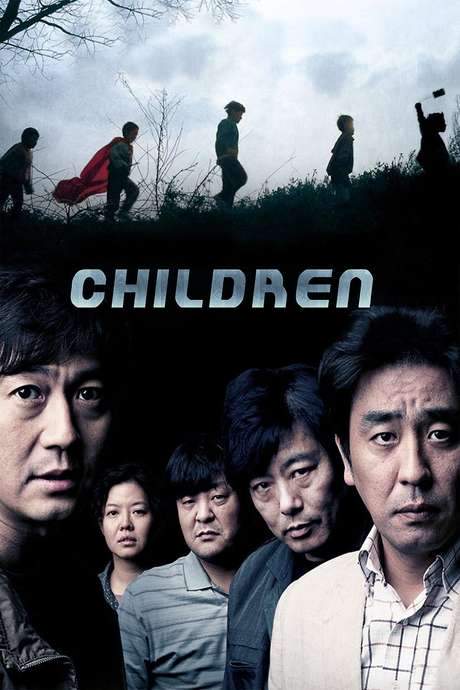
Kang Ho-chang is a diligent lawyer who answers a chilling summons to Haneum International School after receiving a call from the school’s teacher, Song Jung-wook. There, he encounters a tight circle of parents standing at the center of a troubling crisis: the math teacher Ko Chang-seok, the retired police officer Park Mu-Taek and his wife, and the family doctor Do Ji-yeol. The principal keeps a wary eye on the mounting damage to the school’s reputation as rumors simmer and fear spreads among staff and families alike. The tone is calm yet steadily ominous, as if a single letter could topple an entire world built on appearances and reputation.
A damning letter from Gon-woo’s teacher reveals a troubling claim: Gon-woo, now in a coma after he was rescued from a lake, had previously warned that he was being bullied by the four boys—among them the son of Ho-chang, Han-gyeol. The disclosure lands with a heavy hush in the principal’s office, and the adults sense the stakes in their hands go far beyond a single incident. The four parents instinctively rally to protect their children, each choosing their own path to “mitigate” the situation. Jung leans on the letter as leverage to force the administration to act; Mu-Taek calls in favors from his old police precinct, hoping to keep the matter quiet; Ho-chang wrestles with the urge to uncover the truth and repair the harm, and Ji-yeol quietly uses his influence to move Gon-woo to a hospital where he can be monitored. The atmosphere shifts from concern to calculation as they weigh what truth might cost them all.
As curiosity and fear pull them toward Gon-woo’s private space, Ho-chang and Ji-yeol work in uneasy tandem, making a quiet but bold move: they steal Gon-woo’s phone to examine its contents. The device unveils a hidden barrage of footage showing the bullying in action, a revelation that reframes the entire crisis. The four parents reconvene with a new, brutal clarity: the public face of concern has become a private war over control, truth, and consequences. The phone is hidden away, and the group begins to navigate the murky lines between guardianship and complicity. Ho-chang checks in with a neighbor, Nam Ji-Ho, who witnessed aspects of the incident, and the two men exchange a tense exchange that results in a hush-worthy bribe for silence. The ethical ground beneath them begins to crack.
Gon-woo’s condition worsens, and he dies despite Ji-yeol’s desperate attempts to resuscitate him. The funeral becomes a crucible where the adults confront the consequences of their choices. Jeong-wook reveals in a public confrontation that she received the letter, signaling a shift from private grievance to public record. Gon-woo’s mother, seeking accountability, reports the incident to the police, but the initial response is a dismissal that underscores a broader sense of institutional inertia. The sense of injustice deepens as Ho-chang confronts Han-gyeol, who maintains that the other three boys were responsible and that his own role was minimal. The tension mounts as Jeong-wook pushes back against a corrupted system, refusing to let the story fade into quiet complicity.
In a bold, uncompromising move, Jeong-wook posts a video detailing the letter and the case to a wider audience, triggering fresh attention from the police and the public. The school’s quiet burden suddenly expands into a wider reckoning, and the case is reopened as a new stream of witnesses and information starts to emerge. The courtroom becomes a stage for shifting narratives: Ji-Ho testifies that Han-gyeol was the sole aggressor, but Ho-chang, who had previously recorded a conversation with Ji-Ho about another bribery by Ji-yeol, challenges that single-plot view. The courtroom drama unfolds with calculated precision, and the three boys are arrested while Han-gyeol is acquitted as a coerced participant rather than the principal aggressor. The emotional weight intensifies as Ho-chang faces a stark question and Ji-yeol confronts his own sense of guilt.
As the legal proceedings continue, Ho-chang’s resolve hardens into a painful clarity: someone else, perhaps even his own family, may have contributed to the tragedy. The trial exposes a web of coercion and cover-ups that trace back to multiple players, and the uneasy sense that truth has become a bargained commodity in a system where reputations matter more than lives. The narrative returns to the lake where the tragedy began, and new evidence surfaces—witness accounts coupled with drone footage—that reveal the startling, devastating truth: Ho-chang’s own son may be the one who killed Gon-woo. The revelation shatters the moral certainty that had sustained him and forces a stark, unflinching self-reflection. In a final, heartrending scene, Ho-chang casts the drone into the lake and confronts the chilling possibility that power and privilege can corrode even the most steadfast guardians of the law and family. He is left to grapple with a tormenting foreshadow: he may be more corrupted by the choices he made than his son ever was, a realization that lingers like mist over the water.
- > "worse than the children" and that he should be ashamed.
In this multi-layered drama, the characters oscillate between duty, loyalty, and moral accountability, painting a somber portrait of a community forced to confront the consequences of silence, complicity, and fear. The film weaves together personal grief, social pressure, and the fragility of truth, delivering a measured, thought-provoking examination of guilt, authority, and the price of pretending everything is fine when the undercurrents of bullying and abuse run deep. The ensemble cast delivers restrained, intense performances that keep the focus on the emotional and ethical complexities at play, rather than sensationalizing the tragedy. Through careful storytelling and a committed exploration of accountability, the narrative asks hard questions about who bears responsibility when a child is hurt and a community chooses to protect its own at any cost, inviting viewers to reflect on the limits of justice and the price of staying silent.












-qUim83vQGP7CmQ.jpg)