Plot Explained Spoilers guaranteed!
Plot Explained

Browse by genre

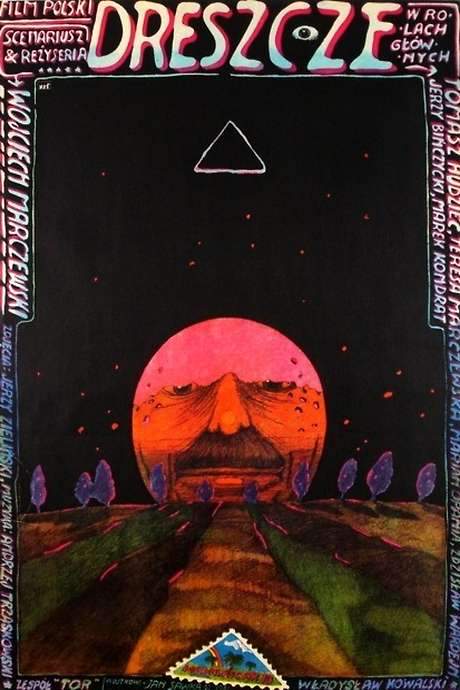
Shivers (1981) movie poster

Characters & Themes

Shivers (1981) Characters, Setting & Themes Explained

Release, runtime and language
1981 · 106 mins · Polish
Loading streaming availability…
Directed by
Wojciech Marczewski
Starring
Marek Kondrat, Krzysztof Kozłowski, Bogusław Linda, Władysław Kowalski, Marian Opania, Ryszard Kotys

A boy comes of age under an oppressive, cruel socialist government and watches as it slowly but surely distorts his family, his school and even his own thoughts.

On this page (8)
  1. 1 Where to watch
  2. 2 Characters explained (13)
  3. 3 Where & when it takes place
  4. 4 Themes & meaning (3)
  5. 5 Character & meaning questions
  6. 6 Movie threads
  7. 7 Movies like Shivers
  8. 8 Every angle
Loading streaming availability…

13 main characters · contains spoilers

Shivers Characters Explained: Who Is Who

The main characters of Shivers (1981), heroes and villains: what drives them, how they change over the course of the story and what each of them reveals about the film's bigger ideas.

  • Tomek Zukowski (Tom)

    played by Tomasz Hudziec

    A curious, bookish boy whose interest in a Madagascar stamp hints at a wider, more imaginative world. He is drawn into the school’s and camp’s rigid ideology, gradually becoming an adherent and even a zealot as he seeks approval from the Guide. His arc tracks a troubling transformation from open-mindedness to ideological fanaticism, culminating in a passion for regime slogans and a distorted sense of belonging.

    • 🧠 Curious
    • 🧭 Indoctrinated
    • 🗝️ Loyalist
  • Jerzy

    played by Jerzy Binczycki

    An older, aggressive student who bullies Dominik and aligns with Kazimierz to enforce group norms. He embodies the pressure to conform and uses intimidation to police peers and dissent. His actions escalate the climate of fear that drives Tom deeper into the Pioneer movement.

    • ⚔️ Aggressive
    • 🧭 Conformist
    • 🗡️ Coercer
  • Kazimierz Domagała

    played by Krzysztof Kozłowski

    A close ally of Jerzy, equally willing to participate in bullying and coercive behavior to maintain group control. He helps orchestrate the punitive dynamics that push Tom toward radical ideology. His presence demonstrates how peer pressure can propel collective conformity.

    • ⚔️ Bully
    • 🧭 Conformist
    • 🗣️ Influencer
  • Guide (Girl guide)

    played by Teresa Marczewska

    A camp counselor who selects Tom and becomes a central figure in his emotional and ideological development. She enforces rules and supervises the children, but also becomes a focal point of Tom’s longing for approval. Her correspondence with Tom hints at a complicated and troubling dynamic.

    • 🧭 Authority
    • 🎒 Camp leader
    • 🗣️ Gatekeeper
  • Dominik

    A fellow camper who is bullied by Jerzy and Kazimierz and becomes a tragic figure when he is beaten and ultimately commits suicide. His suffering highlights the brutal cost of the regime’s insistence on conformity and loyalty.

    • 💔 Victim
    • 🚩 Target
  • Tutor

    played by Marek Kondrat

    A figure representing the state-approved education system, he delivers strict Stalinist theory and enforces obedience among the students. His presence underscores the institutional authority behind the indoctrination arc.

    • 🏫 Authority
    • 🎓 Educator
  • Father

    played by Władysław Kowalski

    Tom’s father, who is imprisoned during the crackdown on dissent, symbolizing the regime’s reach into the private sphere and the personal costs of political loyalty.

    • 👨‍👦 Parental
    • 🗝️ Victim of crackdown
  • Mother

    played by Teresa Sawicka

    Tom’s mother, who witnesses the raid and the family’s destruction under state pressure, representing the domestic impact of political repression.

    • 👩‍👦 Family
    • 💔 Suffering
  • Director of the Training Center

    played by Zygmunt Bielawski

    The administrator who oversees the pioneer program and embodies the regime’s control over youth education and activities.

    • 🏫 Administrator
    • 🧭 Regime figure
  • Inspector

    A law-and-order figure who participates in the crackdown on perceived dissent and the enforcement of ideological conformity.

    • 👮 Authority
    • 🕵️‍♂️ Enforcement
  • UB Officer

    played by Bogusław Linda

    A member of the state security apparatus who participates in the raid and the suppression of dissent within the family and school.

    • 🕵️ Surveillance
    • 🧨 Repression
  • Tadek's mother

    played by Małgorzata Pritulak

    A minor character reflecting the civilian social environment around the school and camp, illustrating how families are caught up in the regime’s machinery.

    • 👩‍👦 Family
    • 🧭 Social pressure
  • Girl guide (Bridesmaid)

    played by Marlena Andrzejewska

    A secondary character symbolizing the social fabric that reinforces conformity within the camp culture.

    • 👫 Social role
    • 🏷️ Conformist

Last updated: October 04, 2025 at 12:45

Was this helpful?

Setting

Where and When Does Shivers Take Place?

The setting of Shivers (1981): the year and time period, the places and locations, and how they shape the characters, the mood and the tension of the story.

Time period

1955

The story unfolds in 1955 Poland, a period when the communist regime tightly restricted education and public life. Youth organizations and compulsory activities demonstrate the regime’s efforts to mold the next generation. The narrative also references the Poznań protests of 1956, signaling growing discontent and the regime’s fragility.

Location

Poland, School, Pioneer camp

Shivers is set across key spaces in 1950s Poland: a modest family home, a state-run school, and a tightly controlled pioneer camp. These places are depicted as tightly policed environments where dissent is punished and loyalty to the regime is demanded. The school and camp operate as ideological engines, blending propaganda with surveillance to shape daily life. The setting highlights the strain between private life and state doctrine in a society under strict control.

  • 🇵🇱 Poland
  • 🏫 School
  • 🕊️ Cold War era

Last updated: October 04, 2025 at 12:45

Was this helpful?

3 major themes

Shivers Meaning: Themes & Message Explained

What is Shivers (1981) really about? The emotional, social and philosophical themes the film keeps returning to, its symbolism and the message beneath the surface.

  • Indoctrination

    The Pioneer camp, teachers, and the Guide impose a rigid ideology that reshapes Tom from a curious, impressionable boy into a devoted participant. Through lessons, books, and monitored correspondence, he is steered toward unquestioning loyalty to the regime. The drive to conform is reinforced by selective punishment and rewards, narrowing his view of the world. The theme shows how institutions use education and community to manufacture ideological fidelity.

  • Surveillance

    Everyday life is surveilled: teachers monitor letters, councils interrogate, and the secret police raid the family home. The camp reinforces this scrutiny with peer reporting and public displays of loyalty. The pressure to snitch on classmates and even parents demonstrates how dissent is policed from within and without. Surveillance becomes a constant, shaping behavior as much as any explicit punishment.

  • Loss of Innocence

    Tom’s arc runs from innocent curiosity to troubling ideological fervor, reflecting the erosion of childhood autonomy under totalitarian pedagogy. The bullying of Dominik, his friends’ coercion, and a forced climate of fear strip away innocence as the group prioritizes conformity over individuality. The dissolution of the Pioneer movement and Tom’s fixation on ideological icons mark a painful, disillusioning transformation. The narrative culminates in a youth corrupted by propaganda and family estrangement.

Last updated: October 04, 2025 at 12:45

Was this helpful?

Character & theme questions

Shivers Characters & Meaning: Your Questions Answered

The questions people ask about Shivers (1981): who the characters really are, their relationships, what the symbols mean, where it takes place and what the movie is really about. Each answer contains spoilers.

Q1

Where is Shivers set?

Shivers is set in 1950s Poland, primarily in three locations: a modest family home, a state-run school, and a pioneer camp. These settings represent tightly controlled environments where the regime monitors and shapes daily life, blurring the line between public institutions and private spaces.

  • poland setting
  • pioneer camp
  • 1950s poland
  • family home
  • state school
Q2

What time period does Shivers take place?

The movie takes place in 1955 Poland, during the height of Stalinist control. The story references the Poznań protests of 1956, which signaled growing discontent against the communist regime.

  • 1955
  • poland 1950s
  • communist era
  • stalinism
  • poznan protests
Q3

What is a pioneer camp in the context of the film?

A pioneer camp was a state-run youth organization in communist Poland where children were sent for ideological training. The film depicts it as an ideological engine that combines propaganda with surveillance to mold young people into loyal supporters of the regime, using peer pressure and rewards to enforce conformity.

  • pioneer camp
  • youth organization
  • communist poland
  • ideological training
Q4

What is the main theme of Shivers?

The main theme of Shivers is the loss of innocence through ideological indoctrination. The film shows how state institutions, schools, youth camps, and surveillance systems, systematically transform a curious, open-minded boy into a zealous participant in his own oppression, ultimately destroying his family relationships and individual thought.

  • indoctrination
  • loss of innocence
  • totalitarianism
  • propaganda
  • conformity
Q5

How does Shivers portray indoctrination?

Shivers portrays indoctrination through Tom's transformation at school and the pioneer camp, where lessons, books, and monitored correspondence push him toward unquestioning loyalty to the regime. The Guide and teachers use selective punishment and rewards to reshape his worldview, narrowing his perspective until he embraces ideological slogans over personal connections.

  • indoctrination
  • pioneer camp
  • guide
  • propaganda
  • ideological loyalty
Q6

How does the film depict surveillance?

The film depicts surveillance as omnipresent: teachers monitor letters, school councils interrogate students, and secret police raid the family home. At the camp, peer reporting and public displays of loyalty create an environment where children are pressured to snitch on classmates and even family members, making surveillance a constant shaping force on behavior.

  • surveillance
  • secret police
  • monitoring
  • peer reporting
  • repression
Q7

Who is the main character Tom?

Tom (Tomek Zukowski, born Tomasz Hudziec) is a curious, bookish boy whose early interest in a Madagascar stamp represents his imagination and curiosity about the wider world. Over the course of the film, he transforms from an open-minded child into a zealous adherent of the regime, seeking approval from the Guide and ultimately prioritizing ideological loyalty over family bonds.

  • tomek
  • tom
  • protagonist
  • ideological transformation
  • curious boy
Q8

Who is the Guide in Shivers?

The Guide (Teresa Marczewska) is a camp counselor who becomes central to Tom's emotional and ideological development. She enforces camp rules and supervises the children, but her correspondence with Tom hints at a complicated dynamic where she represents both authority and the object of his longing for approval, making her a pivotal figure in his transformation.

  • guide
  • teresa marczewska
  • camp counselor
  • authority figure
Q9

Who is Dominik and what happens to him?

Dominik is a fellow camper who is bullied by Jerzy and Kazimierz. He becomes a tragic symbol of the regime's brutality, being beaten and ultimately driven to suicide. His suffering highlights the brutal cost of the regime's insistence on conformity and loyalty, demonstrating how ideological pressure destroys those who cannot or will not conform.

  • dominik
  • bullying
  • victim
  • tragic character
  • suicide
Q10

What happens to Tom's father in Shivers?

Tom's father (Władysław Kowalski) is imprisoned during a crackdown on dissent, symbolizing the regime's reach into the private sphere. His arrest represents the personal cost of political loyalty under an oppressive system and serves as a catalyst for Tom's deepening entanglement with the Pioneer movement.

  • father
  • imprisonment
  • arrest
  • political repression
  • family destruction
Q11

What does Shivers say about life under communist Poland?

Shivers depicts life under communist Poland as a constant tension between private existence and state doctrine. Every aspect of daily life is politicized, education, youth organizations, even family correspondence. The regime uses surveillance, ideological training, and fear to maintain control, destroying individual thought and familial bonds in the process.

  • communism
  • oppression
  • polish regime
  • surveillance state
  • totalitarianism
Q12

Why is the ending of Shivers so bleak?

The ending is bleak because Tom places his treasured Madagascar stamp, the symbol of his childhood curiosity and imagination, on the train window, resigning himself to the system that consumed him. His transformation is complete: he has lost his innocence, abandoned his family, and embraced ideological conformity, marking a tragic loss of individual identity to state control.

  • ending
  • stamp
  • resignation
  • lost innocence
  • ideological conformity

Movie threads

More Movies Like Shivers, by Mood & Story

Curated lists built around what makes Shivers tick: the same mood, the same kind of story or the same emotional payoff. Each list explains why these movies belong together.

Stories of lost innocence like Shivers

Stories where political or social systems systematically dismantle personal freedom and morality. Movies like Shivers explore the devastating impact of oppressive regimes on personal lives. If you were intrigued by the boy's indoctrination and the destruction of his family, this section groups similar dramas about political control, ideological conflict, and the heavy price of conformity.

  • oppressive
  • grim
  • melancholic
  • unsettling
  • claustrophobic
  • anxious
  • Tone: dark, bleak, unsettling
  • Pacing: steady, methodical
Why these movies?

The story pattern: Narratives in this thread typically follow a protagonist, often a child or young adult, as they are gradually indoctrinated or broken down by a powerful, impersonal system. The journey is one of irreversible loss, marked by key moments of betrayal, forced compliance, and the internalization of a new, darker reality that supplants their original values.

Why they belong together: These films are grouped by their shared thematic focus on the conflict between the individual and the state, a consistently bleak tone, and a strong emotional weight derived from witnessing the destruction of innocence and autonomy.


Slow burn psychological dramas like Shivers

A steady accumulation of dread and psychological tension without overt horror. If you liked the methodical, unsettling atmosphere of Shivers, this section features movies with a similar steady pacing and high psychological intensity. These films prioritize a creeping sense of dread and moral anxiety over sudden shocks, creating a heavy, claustrophobic mood.

  • unsettling
  • anxious
  • claustrophobic
  • somber
  • grim
  • psychological
  • Tone: dark, tense, somber
  • Pacing: steady, slow burn
Why these movies?

The story pattern: The narrative pattern involves a steady, often linear, progression where tension is derived from atmosphere and psychological manipulation rather than action. The focus is on the internal state of characters as they confront an inescapable, oppressive situation, with the pacing allowing the full weight of their circumstances to sink in for both the character and the viewer.

Why they belong together: Movies in this thread share a specific combination of a dark tone, steady pacing, and high intensity that manifests as psychological tension. They deliver a similar feeling of being trapped in a grim reality that unfolds with deliberate, devastating inevitability.

If you liked this

Movies Like Shivers

Similar movies to Shivers: the same genre, themes or kind of story. Each one comes with its own plot summary, timeline and ending explained.

Browse all movie summaries

Every angle

Shivers (1981) Explained: Plot, Timeline & Characters

Everything about Shivers in one place: what happens in the plot summary, the timeline in chronological order, the characters and meaning and a spoiler-free summary. What's After the Movie adds the cast, box office and post-credit scenes.

Coming soon on iOS and Android

The Plot Explained Movie Summary App

Plot summaries, endings explained and timelines on your phone. Catch up on any movie in minutes, save your favorites and never miss a twist again.

Be the first to know when we launch. Your email stays private, always.

Learn more about the app