Plot Explained Spoilers guaranteed!
Plot Explained

Browse by genre

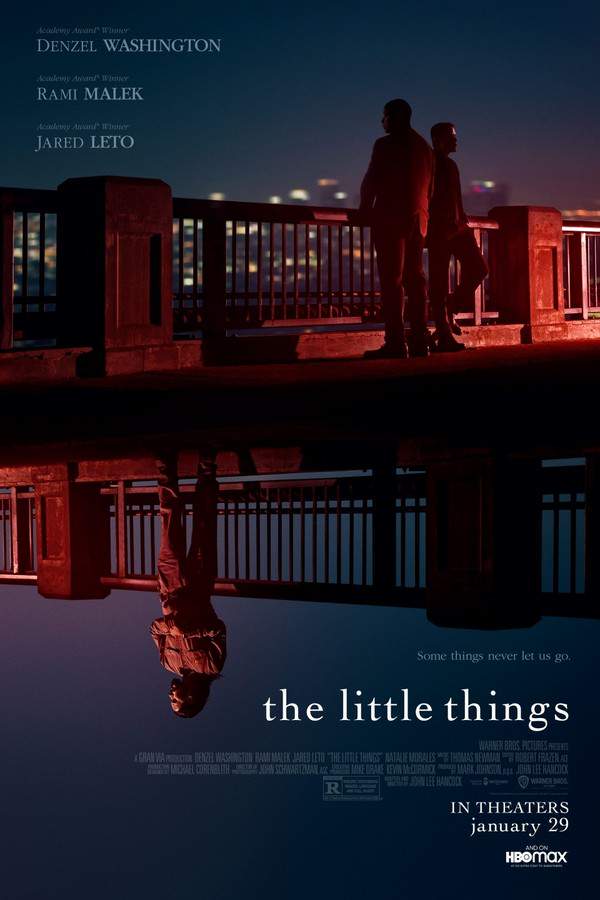
The Little Things (2021) movie poster

Plot Summary

The Little Things (2021) Plot Summary & Ending Explained

Release, runtime and language
2021 · 127 min · English
Echo score 58
JustWatch #1,462 178
Directed by
John Lee Hancock
Starring
Jared Leto, Rami Malek, Natalie Morales, Denzel Washington, Chris Bauer, Terry Kinney
Budget
$30M

In the gritty thriller, Kern County Deputy Sheriff Joe "Deke" Deacon, played by Denzel Washington, is pulled into a Los Angeles murder investigation that forces him to confront painful memories. Partnering with L.A. Sheriff Department Sergeant Jim Baxter (Rami Malek), Deke’s experience clashes with Baxter's eagerness as they navigate a complex case. The investigation stirs up long-buried secrets and tests both men’s determination, blurring the lines between right and wrong.

On this page (7)
  1. 1 Where to watch
  2. 2 What happens: full plot
  3. 3 Plot questions answered
  4. 4 How it ends
  5. 5 Movie threads
  6. 6 Movies like The Little Things
  7. 7 Every angle

Where to watch

Where to Watch The Little Things (2021)

Where can you watch The Little Things? Stream, rent or buy it in the US, including on YouTube TV, Amazon Video and Apple TV Store: current JustWatch availability with up-to-date prices.

Streaming availability powered by JustWatch

Full plot summary · contains spoilers

What Happens in The Little Things: Full Plot Summary

The whole story of The Little Things (2021) explained, from the opening scene to the final frame: every key event, every twist and what it all adds up to. Read it as a quick recap before the sequel, to check a scene you missed, or to finally understand what really happened.

One fateful night in 1990, a young girl named Tina Salvatore (Sofia Vassilieva) finds herself driving along a desolate highway, being closely pursued by an ominous motorist. In a moment of quick thinking, she stops at an abandoned gas station, where she attracts the attention of a passing truck driver who helps her evade her relentless stalker.

Fast forward to Bakersfield, where Deputy Sheriff Joe "Deke" Deacon (Denzel Washington) is summoned to the Los Angeles County Sheriff's Department for evidence collection related to a recent murder case. As he prepares to leave, he’s told he needs homicide authorization to release the evidence, which ultimately prolongs his stay at the precinct. Deacon, who was once a respected detective in L.A., returns only to find his presence unwelcome among colleagues, particularly from the newly appointed lead detective, Jim Baxter (Rami Malek). Faced with pressure from superiors to solve the case of the murdered Julie Brock (Tiffany Gonzalez), Baxter reluctantly takes Deacon along, despite his clear disdain for the older detective.

Through intense investigation, Baxter identifies a suspect named Stan Peters (Frederick Koehler), who had been seen frequently peering into Julie's apartment. However, Deacon starts connecting the victim's murder to old unresolved cases from his past, marked by haunting flashbacks in his dreams. This compels him to take a deeper look, especially after the disappearance of another woman, Ronda Rathbun (Maya Kazan), after she is followed during her evening jog. It's revealed that Deacon has been deeply affected by obsession, leading to his divorce and a heart attack – facts that his colleague, Captain Carl Farris (Terry Kinney), reluctantly shares with Baxter.

As tension mounts, the case spirals further when they discover a body, consistent with a pattern of murders targeting sex workers. This drives Deacon to suspect a local repairman, Albert Sparma (Jared Leto), whose peculiar behavior and timeline seem too coincidental to ignore. Deacon grows increasingly convinced that Sparma holds the key to solving these grisly crimes, especially as he learns unsettling details about the murderer’s methods.

In a shocking twist, Sparma manages to outsmart the detectives, managing to taunt them during interrogation and securing his release even after triggering Deacon's temper. Their investigation is compromised when Tina, who is critical to identifying Sparma’s presence on the night of the attack, spots him at the police station. As the FBI steps in to take control of the investigation, Deacon and Baxter are under immense pressure, but they remain adamant about proving Sparma’s guilt.

Despite an illegal search yielding no incriminating evidence against Sparma, a chilling confrontation leaves Baxter questioning the very nature of justice. What unfolds is a harrowing journey through moral dilemmas and the shadows of a tormented past, leading to a tragic encounter between Baxter and Sparma in the desert, where frustration meets fatal consequence.

As unresolved tensions culminate, Deacon tries to guide Baxter away from the haunting chase for answers that could consume him. A poignant moment arrives when Baxter receives a strange envelope from Deacon, containing a red barrette—identical to that worn by Ronda when she vanished. This is a final act of closure from Deacon, who desperately tries to confront his own past missteps while still seeking redemption in the lives they both failed to protect. Ultimately, the mysterious connection between Deacon and Baxter underscores a haunting exploration of guilt, loss, and the quest for truth amidst darkness.
Last updated: October 27, 2024 at 18:43

Was this helpful?

Plot questions answered

The Little Things Plot Explained: Your Questions Answered

The questions people ask most about The Little Things (2021): what happens in the confusing scenes, why the characters do what they do, the twists, hidden details and what the ending means. Each answer contains spoilers.

Q1

Why does Deputy Sheriff Joe Deacon return to Los Angeles in the film?

Deacon is summoned from Bakersfield to the Los Angeles County Sheriff's Department to collect evidence for a murder case. Though he once worked as a respected detective in L.A., his return is unwelcome because his previous investigation methods caused controversy. He needs homicide authorization to release the evidence, which prolongs his stay and forces him to work with the current lead detective.

Foreshadowing: The summary hints that his past investigations left unresolved cases that haunt him throughout the film.

  • joe deacon
  • los angeles
  • return
  • evidence
  • past detective
Q2

Why does Detective Jim Baxter distrust Joe Deacon?

Baxter views Deacon with disdain because Deacon's reputation as a detective has become tarnished. His colleagues don't welcome him back, and Baxter is pressured by superiors to work with him despite his objections. The tension stems from Deacon's controversial past methods and the fact that his obsession with solving cases led to personal downfall.

Foreshadowing: Baxter's initial hostility foreshadows the moral conflict that develops between them as the investigation progresses.

  • jim baxter
  • joe deacon
  • distrust
  • tension
  • detective
Q3

Who is Albert Sparma and why does Deacon suspect him?

Albert Sparma is a local repairman who becomes the primary suspect in the murder investigation. Deacon grows suspicious of Sparma because his behavior is peculiar, his timeline seems suspicious, and he fits the profile of the killer targeting sex workers. Deacon's instinct, shaped by years of experience with similar cases, convinces him Sparma holds the key to solving the crimes.

Foreshadowing: Sparma's initial introduction as a repairman with odd behavior sets up his later role as the suspected serial killer.

  • albert sparma
  • repairman
  • suspect
  • serial killer
  • evidence
Q4

What is the significance of Tina recognizing Sparma at the police station?

Tina Salvatore is the young girl from the 1990 flashback who was pursued by a stalker on a desolate highway. When she sees Sparma at the police station, she identifies him as the motorist who chased her years ago, linking him definitively to the current murders and providing crucial confirmation of his guilt.

Foreshadowing: The 1990 opening scene with Tina being pursued establishes the killer's pattern and provides the eventual connection to Sparma.

  • tina salvatore
  • albert sparma
  • identification
  • 1990
  • flashback
Q5

Why is Albert Sparma released despite strong suspicion?

Sparma is released because there is insufficient concrete evidence to hold him. During interrogation, he cleverly taunts the detectives without providing incriminating statements. Despite Deacon's conviction that Sparma is guilty, the lack of admissible evidence forces the police to let him go, frustrating the investigation.

Foreshadowing: Sparma's ability to manipulate the interrogation reflects his cunning nature established earlier in the film.

  • albert sparma
  • released
  • interrogation
  • evidence
  • no charges
Q6

What happens in the desert confrontation between Baxter and Sparma?

In the desert, Baxter confronts Sparma in a tense encounter that ends with fatal consequences. The meeting represents the culmination of Baxter's frustration and moral deterioration throughout the investigation. This tragic encounter reveals the psychological toll the case has taken on Baxter and marks a turning point in the story.

Foreshadowing: The buildup of pressure on Baxter throughout the investigation foreshadows his breakdown in the desert.

  • desert
  • baxter
  • sparma
  • confrontation
  • fatal
  • climax
Q7

What does the red barrette symbolize at the end of the film?

The red barrette is identical to the one worn by Ronda Rathbun when she vanished. Deacon sends it to Baxter in an envelope as a final act of closure, attempting to confront his own past failures while providing some resolution to Baxter. It represents the lives they failed to protect and serves as a symbol of Deacon's attempt at redemption.

Foreshadowing: Ronda's earlier disappearance and her description as wearing a red barrette foreshadow this final revelation.

  • red barrette
  • ronda rathbun
  • ending
  • closure
  • symbolism
  • redemption
Q8

Why is there no arrest or conviction at the end of The Little Things?

Despite strong suspicion, the police cannot arrest Sparma because they lack definitive evidence linking him to the murders. An illegal search conducted by Deacon and Baxter yields nothing incriminating. The film ends without closure, reflecting the dark theme that obsession and persistence don't always lead to justice.

Foreshadowing: The mounting evidence against Sparma without sufficient proof establishes the frustrating lack of resolution.

  • no arrest
  • ending
  • justice
  • evidence
  • sparrma not convicted
Q9

What was Joe Deacon's past mistake that haunts him?

Deacon's past mistake relates to his obsession with unsolved cases during his time as an L.A. detective. His colleague Captain Farris reveals that Deacon's fixation led to his divorce and a heart attack. The film suggests his past investigations were incomplete, leaving cases unsolved and victims unavenged, which is why he connects the current murders to his unresolved past.

Foreshadowing: Deacon's flashbacks and emotional reactions to the case hints at his troubled history with similar investigations.

  • joe deacon
  • past mistake
  • obsession
  • divorce
  • heart attack
  • unsolved cases
Q10

Why does the murder investigation involve sex workers?

The investigation involves sex workers because the pattern of murders targets this specific group. The discovery of a body that fits this profile leads Deacon to realize the killer is systematically targeting vulnerable women. This detail connects the cases and helps establish the profile of the suspect they are seeking.

Foreshadowing: The discovery of the body matching earlier unsolved cases provides the crucial link to the serial killer theory.

  • sex workers
  • murders
  • serial killer
  • victims
  • pattern

Ending explained

What Happens at the End of The Little Things?

How The Little Things (2021) ends, in short: the final scene, the last twist and what it means for the characters. The full ending explained, with every spoiler, lives on its own page.

Read the full ending explained

In the end, The Little Things leaves viewers contemplating whether the killer they’ve been following was truly caught or if the cycle of violence might still continue. After Jimmy murders Sparma in a moment of intense frustration and doubt, Joe Deacon intervenes by helping him cover his tracks. Joe erases Sparma’s entire existence—burning evidence and giving Jimmy a false sense of closure. He then sends Jimmy a seemingly relevant but ultimately fabricated piece of evidence, a red barrette, to convince him that he didn't kill an innocent man. This act is Joe’s way of protecting Jimmy from the guilt and the cycle of obsession that plagued him, much like what happened to Joe himself.

Throughout the film, it's never fully clear if Sparma was actually the killer. The fact that the murders stop after Sparma’s death suggests he might have been, but there's also a possibility he was just a copycat or a psychologically disturbed individual who mimicked the killer’s lifestyle. The ending leaves this question hanging, emphasizing that sometimes the most compelling killers are the ones we never truly catch, and the obsession with finding them can be a destructive cycle itself. Ultimately, the film suggests that in the pursuit of justice, the "little things"—tiny details and moral compromises—can be what tear us apart, and sometimes, the truth is less important than the peace we’re willing to accept. Joe’s final act of deception allows Jimmy to live a life free from the guilt that nearly consumed him, illustrating that sometimes, letting go and choosing ignorance can be a form of salvation. The story ends on this ambiguous note, leaving viewers questioning whether justice was truly served or merely concealed under layers of moral ambiguity."The past becomes the future, becomes the past," indeed—that cycle of guilt, obsession, and the desire for peace continues unresolved.

The Little Things ending explained in full

Movie threads

More Movies Like The Little Things, by Mood & Story

Curated lists built around what makes The Little Things tick: the same mood, the same kind of story or the same emotional payoff. Each list explains why these movies belong together.

Gritty detective stories with moral collapse like in The Little Things

Cases where the hunt for a killer consumes the hunter. For viewers who liked the dark, character-driven police work in The Little Things, this section features movies about obsessive detectives. These similar thrillers explore the psychological cost of the job, where the pursuit of a killer forces the protagonist to confront their own demons and ambiguous morality.

  • obsessive
  • grim
  • morally ambiguous
  • unsettling
  • melancholic
  • tense
  • Tone: dark, morally ambiguous
  • Pacing: steady, methodical
Why these movies?

The story pattern: The narrative follows a seasoned detective, often haunted by a past failure, as they become consumed by a new, eerily familiar case. Their obsessive methods clash with procedure, straining partnerships and leading them down a dark path where their identity and ethics are compromised by the hunt.

Why they belong together: Movies are grouped here for their shared focus on the detective protagonist's psychological unraveling. They share a dark tone, heavy emotional weight, and a central theme of obsession that overrides the procedural elements, resulting in a morally complex and often bittersweet conclusion.

Slow burn thrillers with bleak endings like The Little Things

Stories where a steady dread builds to a somber, ambiguous end. If you appreciated the steady, grim pacing and morally complex conclusion of The Little Things, this collection features similar movies. These slow burn thrillers and dramas prioritize a building sense of unease over action, culminating in endings that are emotionally heavy and philosophically ambiguous.

  • slow burn
  • unsettling
  • anxious
  • melancholic
  • grim
  • morally ambiguous
  • Tone: dark, unsettling, melancholic
  • Pacing: steady, slow burn
Why these movies?

The story pattern: The story unfolds methodically, prioritizing atmosphere and character psychology over plot twists. The central conflict simmers, creating a profound sense of impending doom or moral quandary. The climax is typically subdued, focusing on the emotional or philosophical consequences for the characters rather than a clear-cut victory.

Why they belong together: This thread unites films based on their shared atmospheric pacing and emotional payoff. They are connected by a steady, deliberate build-up of tension, a consistently dark or anxious mood, and conclusions that resonate with a feeling of melancholy and unresolved complexity.

If you liked this

Movies Like The Little Things

Similar movies to The Little Things: the same genre, themes or kind of story. Each one comes with its own plot summary, timeline and ending explained.

Browse all movie summaries

Every angle

The Little Things (2021) Explained: Plot, Ending, Timeline & Characters

Everything about The Little Things in one place: what happens in the plot summary, the timeline in chronological order, the characters and meaning, the ending explained and a spoiler-free summary. What's After the Movie adds the cast, box office and post-credit scenes.

Coming soon on iOS and Android

The Plot Explained Movie Summary App

Plot summaries, endings explained and timelines on your phone. Catch up on any movie in minutes, save your favorites and never miss a twist again.

Be the first to know when we launch. Your email stays private, always.

Learn more about the app