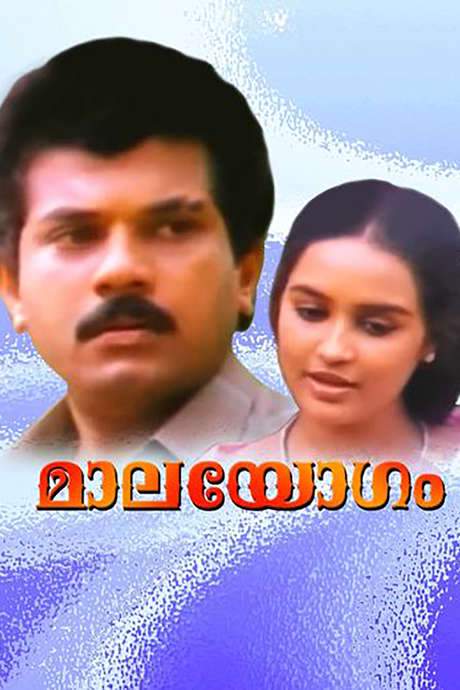
Year: 2008
Runtime: 137 mins
Language: Malayalam
Directors: Shaji, Shyju
Pavithran (Jayasurya) is a playwright for Jayabharathy Theaters, nicknamed “Shakespeare” for his skill. Owner Kottayam Gopalan (Kalabhavan Mani) values his consistently award‑winning scripts. Gopalan assigns Pavithran to a remote village to craft a drama about its people, where he encounters Alli, a young, impoverished country girl whose struggles capture his imagination and become the heart of his new work.
Warning: spoilers below!
Haven’t seen Shakespeare M.A. Malayalam yet? This summary contains major spoilers. Bookmark the page, watch the movie, and come back for the full breakdown. If you're ready, scroll on and relive the story!
Read the complete plot breakdown of Shakespeare M.A. Malayalam (2008), including all key story events, major twists, and the ending explained in detail. Discover what really happened—and what it all means.
Pavithran, Jayasurya, is a gifted story writer for Jayabharathy Theaters, known around the troupe as the witty and perceptive “Shakespeare” for his knack of shaping life into compelling drama. He earns the warm regard of Kottayam Gopalan, Kalabhavan Mani, who runs Jayabharathy Theaters and cherishes Pavithran’s string of super hits that repeatedly earn him awards and bring the troupe into the spotlight.
To craft a new production, Gopalan sends Pavithran to a remote village to write a play based on the villagers’ own lives. In this quiet place, Pavithran encounters Alli, Roma Asrani, a young countryside girl entangled in debt and hardship. Alli’s resilience and unguarded humanity draw Pavithran in, and he becomes determined to understand her story more deeply, treating it as a living source for his dramatic work.
Pavithran’s dramatic vision drives him to push Alli toward a romance with the doctor’s son, a plot thread he hopes will lend his play emotional weight. Alli works as a domestic helper for the doctor, and the idea of romance becomes a tool in Pavithran’s storytelling—as if life could be rewritten to fit his stagecraft. But Alli’s world is fragile. Her family’s troubles multiply because Alli’s brother once vanished with villagers’ money, leaving the entire family under suspicion and pressure. The villagers’ animosity bleeds into their daily lives, and the family bears the brunt of the community’s scorn.
Soon the bank threatens to mortgage Alli’s home, tightening the vise around her family. In a turn that shifts the ground beneath her, the doctor offers Alli a job in Bangalore, a lifeline she accepts, and she asks her sister to inform Pavithran, who has already fallen in love with her. The move to Bangalore signals a crossroads—the life she has known and the story Pavithran has imagined begin to collide.
Back in Bangalore, Pavithran learns unexpected truths. Alli’s father has managed to repay some debts with the money she sent, and the family begins to thrive. Alli’s brother returns, and the household briefly enjoys a semblance of security and prosperity. Yet the narrative grows darker when the doctor’s revelation arrives: Alli’s role in Bangalore was not merely employment, but a surrogate arrangement for a childless couple. The weight of this truth shatters the illusion of a simple, improving life.
Hearing the news, Alli faints, but she eventually agrees to the arrangement. Her family, having learned of her choices, storms the hospital, cursing and ultimately disowning her for the path she has taken. The emotional toll is immense, and a nurse’s quiet warning of labor signals a turning point: Alli gives birth, and the couple present replace the infant with a suitcase full of money. Pavithran waits, hoping to hear good news, but Alli’s consciousness returns to a different truth than the one Pavithran envisioned. Instead of rejoicing over wealth, she confronts Pavithran, and in a sudden reaction, she hurls the suitcase back at him. Pavithran quietly leaves, his dream of shaping a life through his writing unsettled by the reality he has witnessed.
Despair gives way to a darker impulse, and Alli, overwhelmed by the collision of love, ambition, and exploitation, fights to keep hold of herself and her future, even as she contemplates a desperate ending. The narrative then shifts back to the stage, where the life of Alli unfolds as the drama Pavithran has been crafting. Alli’s fate turns toward relief and renewal: she is saved, and she and Pavithran begin a new life together, away from the cramped shadows of the village and its pressures. The final act culminates in thundering applause from the audience as Pavithran and Alli share a quiet, joined look, signifying a fragile but real second chance.
The film’s sense of place lingers as the visuals drift between the village’s green fields and woodlands. The scenes were filmed in a lush, sacred landscape around Vettikkadavu, a village nestled in Kerala’s Thrissur district, known for its verdant scenery that adds a timeless, almost folkloric atmosphere to the story’s arc. The gentle cadence of the countryside, the glow of Bangalore’s streets, and the stark, intimate moments inside hospital rooms all contribute to a tale that examines love, ambition, sacrifice, and the price of storytelling itself.
Last Updated: October 09, 2025 at 10:52
Discover curated groups of movies connected by mood, themes, and story style. Browse collections built around emotion, atmosphere, and narrative focus to easily find films that match what you feel like watching right now.
Stories where creative inspiration comes at a painful human cost.Explore movies like Shakespeare M.A. Malayalam that feature an artist whose creative inspiration is drawn from a person's real-life struggles, raising ethical questions. These films often share a bittersweet tone, exploring the cost of storytelling and the blurred lines between artistic ambition and human exploitation.
Films in this thread typically follow an artist—a writer, painter, or musician—who finds profound inspiration in a person from a different world or circumstance. The central conflict arises as the artist's ambition clashes with the wellbeing of their muse, creating a narrative of moral questioning where the creation of art is intrinsically linked to personal tragedy or sacrifice.
These movies are grouped by their shared focus on the ethical dimension of artistic creation. They possess a reflective, dramatic mood and a bittersweet tone, as the joy of creation is undercut by the sorrow of its source. The pacing is often steady, allowing for deep character exploration of both the artist and the muse.
Romantic dramas where love blossoms against a backdrop of rural poverty and sacrifice.Find movies similar to Shakespeare M.A. Malayalam that are set in villages and explore romantic relationships complicated by poverty and duty. If you liked the blend of rural life, love, and difficult sacrifices in Shakespeare M.A. Malayalam, you'll find more poignant dramas here.
These stories typically unfold in a rustic setting that is almost a character itself. A protagonist, often an outsider or someone with ambition, enters this world and forms a deep connection with a local. Their relationship is shaped and challenged by the harsh economic realities and traditional expectations of village life, leading to a climax that involves profound sacrifice.
They share a specific atmosphere created by the village setting, which informs the characters' choices and limitations. The tone is consistently bittersweet, blending romantic hope with the somber weight of real-world struggles like poverty and debt. The pacing is steady, allowing the audience to soak in the environment and the gradual development of the central relationship.
Don't stop at just watching — explore Shakespeare M.A. Malayalam in full detail. From the complete plot summary and scene-by-scene timeline to character breakdowns, thematic analysis, and a deep dive into the ending — every page helps you truly understand what Shakespeare M.A. Malayalam is all about. Plus, discover what's next after the movie.
Track the full timeline of Shakespeare M.A. Malayalam with every major event arranged chronologically. Perfect for decoding non-linear storytelling, flashbacks, or parallel narratives with a clear scene-by-scene breakdown.
Discover the characters, locations, and core themes that shape Shakespeare M.A. Malayalam. Get insights into symbolic elements, setting significance, and deeper narrative meaning — ideal for thematic analysis and movie breakdowns.
Get a quick, spoiler-free overview of Shakespeare M.A. Malayalam that covers the main plot points and key details without revealing any major twists or spoilers. Perfect for those who want to know what to expect before diving in.
Visit What's After the Movie to explore more about Shakespeare M.A. Malayalam: box office results, cast and crew info, production details, post-credit scenes, and external links — all in one place for movie fans and researchers.
Discover movies like Shakespeare M.A. Malayalam that share similar genres, themes, and storytelling elements. Whether you’re drawn to the atmosphere, character arcs, or plot structure, these curated recommendations will help you explore more films you’ll love.
Shakespeare M.A. Malayalam (2008) Scene-by-Scene Movie Timeline
Shakespeare M.A. Malayalam (2008) Movie Characters, Themes & Settings
Shakespeare M.A. Malayalam (2008) Spoiler-Free Summary & Key Flow
Movies Like Shakespeare M.A. Malayalam – Similar Titles You’ll Enjoy
Shakespeare in Love (1998) Film Overview & Timeline
Shakespeare Wallah (1966) Story Summary & Characters
Shibu (2019) Movie Recap & Themes
Malaal (2019) Ending Explained & Film Insights
Malayogam (1990) Complete Plot Breakdown
Paavam Paavam Rajakumaran (1990) Detailed Story Recap
Kallan Pavithran (1981) Full Summary & Key Details
Pradeshika Vaarthakal (1989) Movie Recap & Themes
Paavam Paavam Rajakumaran (1990) Full Movie Breakdown
Ghazal (1993) Film Overview & Timeline
Malabar Wedding (2008) Full Movie Breakdown
Manthramothiram (1997) Spoiler-Packed Plot Recap
Manathe Kottaram (1994) Full Summary & Key Details
Aakasha Gopuram (2008) Full Movie Breakdown
Malayankunju (2022) Ending Explained & Film Insights