Plot Explained Spoilers guaranteed!
Plot Explained

Browse by genre

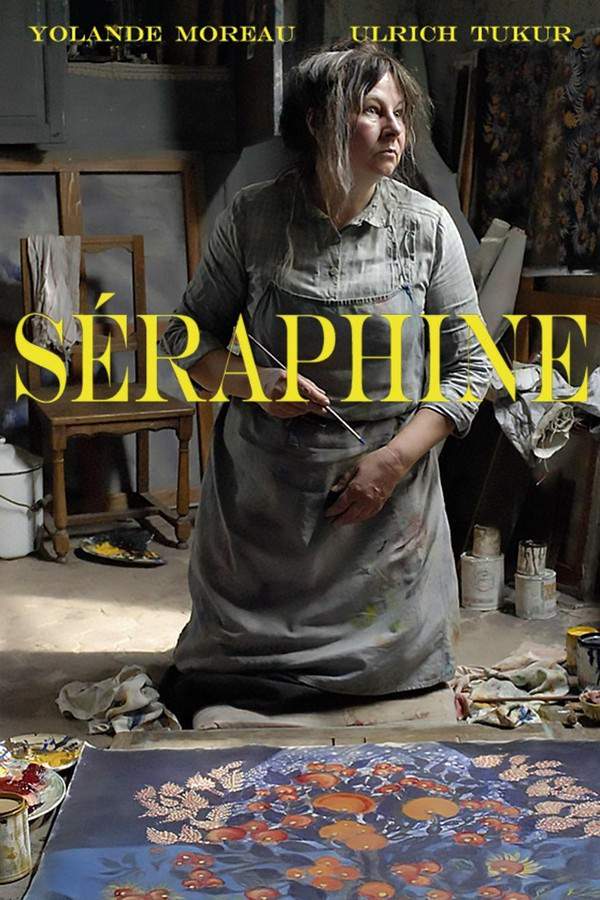
Séraphine (2009) movie poster

Timeline

Séraphine (2009) Timeline Explained – Every Event in Order

Release, runtime and language
2009 · 125 min · French
Loading streaming availability…
Directed by
Martin Provost

This poignant biopic portrays Séraphine Louis, a gifted but initially unrecognized servant, who discovers her artistic talent through a series of striking, naive paintings. Her work gains increasing attention between the World Wars, leading to a period of fame alongside Henri Rousseau. However, her life takes a tragic turn as she descends into mental illness, ultimately fading into obscurity amidst the turmoil of the Great Depression and World War II.

On this page (5)
  1. 1 Where to watch
  2. 2 Events in order (12)
  3. 3 Timeline questions answered
  4. 4 Movie threads
  5. 5 Every angle
Loading streaming availability…

12 events in order · contains spoilers

Séraphine Timeline: Events in Chronological Order

Every key event of Séraphine (2009) in order, scene by scene, with when and where it takes place. Use it to untangle flashbacks, time jumps and parallel storylines, to refresh your memory before the sequel or to find the exact scene you are thinking of.

  1. Humble beginnings and religious-inspired painting

    Séraphine Louis is a middle-aged housekeeper who paints in a candle-lit home, guided by what she believes is religious inspiration. She frequently stops during her daily walks to admire trees and the beauty of nature. She even collects soil from plants and blood from a dead pig, using these elements in her artwork.

    Where
    France
  2. Uhde discovers talent and promises support

    Uhde, a respected art critic, encounters Séraphine while she works as a housekeeper and recognizes genuine promise in her paintings. He assures her that her talent is real and that he will look after her career. He urges her to follow her gift and to trust in his help.

    Where
    France
  3. Mystery of her crimson tones

    As her work gains attention, critics notice the unusual red tones in her paintings. Séraphine is asked how she achieves this effect, but she insists that keeping the secret is part of her process. The aura of mystery adds to the impression of divine inspiration around her art.

    Where
    France
  4. World War I divides artist and patron

    With the outbreak of World War I, Uhde, who is German, must flee France, leaving Séraphine behind. She continues painting in her modest home, undeterred by the separation. The loss of her patron creates a quiet pressure on her work as she persists alone.

    When
    1914
    Where
    France
  5. 1927 reunion and patronage

    In 1927 Uhde returns and is impressed by how much her art has improved. He begins buying her paintings and encourages her to focus solely on painting, providing a generous monthly stipend. The relationship transforms a hidden talent into a supported, professional practice.

    When
    1927
    Where
    France
  6. Prosperity brings vanity and the bridal gown

    Prosperity unsettles Séraphine; she buys an expensive bridal gown despite not having a suitor. She claims to have received an important message from the angels, heightening her sense of special status. Her confidence in the divine resonance of her work grows as others begin to take notice.

    When
    late 1920s
    Where
    France
  7. Depression-era setback and dwindling sales

    As the Great Depression unfolds, Uhde can no longer sell her paintings and cannot sustain the stipend. Séraphine discovers herself as a woman of means, a status that unsettles her balance and distorts her sense of reality. The financial blow triggers mental strain, altering the course of her career.

    When
    1930s
    Where
    France
  8. Public stir: rousing the town in bridal dress

    After she publicly wears the bridal gown, she stirs the town and attracts scrutiny from the community. The episode deepens concerns about her wellbeing and distracts from her artistic reputation. Those around her begin to fear for her grasp on reality.

    When
    early 1930s
    Where
    France
  9. Confinement to a lunatic asylum

    Séraphine is put into a lunatic asylum, and her painting career ends for a time. The isolation marks a stark turn from acclaimed artist to patient under care. Yet the memory of her devotion to nature and color remains in her story.

    When
    1930s
    Where
    France
  10. Uhde's discreet care and securing her a room

    Uhde visits her but is advised not to contact, to avoid upsetting her. He prioritizes her well-being and secures her a room in the institution that allows her some outdoor exposure. His quiet intervention emphasizes his role as guardian rather than agent.

    When
    1930s
    Where
    France
  11. Return to nature and renewed freedom within the asylum

    Within the institution, Séraphine begins to enjoy the beauties of nature again by going outside into the grounds. The experience rekindles the appreciation that once fueled her art and offered solace amid hardship.

    When
    1930s
    Where
    France
  12. Death in 1942 and posthumous fame

    She dies in 1942, ending a life marked by poverty and resilience. Her paintings later gain fame and critical respect, ensuring Séraphine Louis's place in art history. The legacy of her spiritual approach to color continues to inspire.

    When
    1942
    Where
    France

Last updated: October 09, 2025 at 15:46

Was this helpful?

Timeline questions answered

Séraphine Timeline Explained: Your Questions Answered

When does it happen, and why in that order? The questions people ask about the chronology of Séraphine (2009): time jumps, flashbacks, cause and effect between scenes and the correct order of events, each answered with spoilers.

Q1

Why did Séraphine use blood and soil in her paintings?

Séraphine believed her artistic gift came from divine guidance. She used humble, natural materials from her surroundings, soil from plants and even blood from a dead pig, to create her paints. These unusual ingredients became part of her personal alchemy, and she guarded the secret of her crimson tones fiercely, treating it as a sacred part of her process that others could not easily decipher.

Foreshadowing: The film establishes early on that Séraphine sees her art as a spiritual practice, collecting unusual materials during her daily walks.

  • seraphine louis
  • paintings
  • blood
  • soil
  • red paint
  • art materials
  • technique
Q2

What was the secret behind Séraphine's red paint?

Séraphine never revealed how she achieved the striking red tones in her paintings. When critics asked her about it, she insisted that keeping the secret was part of her process. This mystery contributed to the perception of divine or mystical inspiration surrounding her work, reinforcing her image as an artist connected to something beyond ordinary human understanding.

Foreshadowing: Critics begin noticing her unusual red tones as her work gains attention, creating curiosity about her methods.

  • red paint
  • secret technique
  • crimson
  • seraphine louis art
  • mystery
Q3

Why did Uhde help Séraphine?

Uhde, a German art critic, recognized genuine talent in Séraphine's paintings when he encountered her working as a housekeeper. He saw real potential in her untaught, naive style and believed her work deserved recognition. He promised to advocate for her and help develop her career, providing both emotional encouragement and financial support when he could.

Foreshadowing: Uhde's first encounter with Séraphine occurs when he notices her paintings while she works as a housekeeper.

  • uhde
  • art critic
  • patronage
  • support
  • seraphine louis
  • patron
Q4

What caused Séraphine's mental breakdown?

Séraphine's decline was triggered by multiple factors. The Great Depression eliminated the market for her paintings, ending Uhde's ability to provide his monthly stipend. She had briefly experienced prosperity and believed she was destined for greatness, even buying an expensive bridal gown and claiming messages from angels. When this reality collapsed suddenly, the psychological shift proved too much, leading to her public episode in the bridal gown and subsequent institutionalization.

Foreshadowing: The film shows her prosperity bringing vanity and an inflated sense of divine purpose before the Depression reverses her fortune.

  • mental illness
  • breakdown
  • depression
  • asylum
  • lunatic asylum
  • collapse
Q5

Why did Séraphine buy an expensive bridal gown?

When Uhde began providing her with a regular stipend, Séraphine experienced sudden financial stability for the first time in her life. This prosperity unsettled her sense of self. She bought an expensive bridal gown despite having no suitor, driven by a growing sense of special status. She claimed to have received important messages from angels, which amplified her belief that she had a grand, cosmic purpose tied to her art.

Foreshadowing: The timeline notes that prosperity brought vanity and an inflated sense of divine destiny.

  • bridal gown
  • wedding dress
  • vanity
  • prosperity
  • angels
  • messages
Q6

What happened to Séraphine's paintings while she was in the asylum?

When Séraphine was placed in the lunatic asylum, her painting career effectively ended. Uhde visited her but was advised not to press contact. Despite this, he learned that some of her artworks had found buyers. In a compassionate act, he arranged for her to have a room in the institution that allowed her to go outside and reconnect with nature, the same natural beauty that had inspired her art.

Foreshadowing: Uhde's continued care for her well-being demonstrates his commitment extends beyond her artistic career.

  • paintings
  • asylum
  • sales
  • uhde
  • art buyers
  • seraphine louis work
Q7

Why was Séraphine committed to a lunatic asylum?

After experiencing prosperity and believing herself destined for greatness, Séraphine suffered a psychological break when the Great Depression ended her financial support. She created a public disturbance by walking through town wearing her expensive bridal gown, stirring the community and raising concerns about her mental state. The authorities intervened, and she was placed in a lunatic asylum where she could no longer sustain her painting practice.

Foreshadowing: The public episode in the bridal gown directly precedes her institutionalization.

  • institutionalization
  • asylum
  • authorities
  • mental health
  • public disturbance
Q8

How did Séraphine die?

Séraphine Louis died in 1942 in the asylum, ending a life marked by poverty, brief recognition, and mental illness. However, her legacy endured, her paintings later gained significant fame and critical respect, ensuring her place in art history as a servant who became a lasting voice in the gallery of naive art.

Foreshadowing: The film traces her decline from acclaimed artist to patient, making her death a tragic but expected conclusion.

  • death
  • 1942
  • posthumous fame
  • legacy
  • seraphine louis art history
Q9

Why did Uhde return to Séraphine in 1927?

Uhde returned to France after World War I ended and reconnected with Séraphine in 1927. He was impressed by how much her technique had matured during his absence. Recognizing her continued growth as an artist, he began purchasing her works again and provided a generous monthly stipend, encouraging her to dedicate herself fully to painting.

Foreshadowing: The timeline marks 1927 as a pivotal reunion after years of separation during the war.

  • 1927
  • return
  • patronage
  • uhde
  • war
  • seraphine louis
Q10

What was the connection between nature and Séraphine's art?

Séraphine's art was deeply connected to nature. During her daily walks to work as a housekeeper, she would pause to admire trees and absorb the beauty of the natural world. These moments were like small pilgrimages that fed directly into her painting. Even in the asylum, her ability to step outside and reconnect with nature became a lifeline and source of solace, recalling the same appreciation that had fueled her creative practice.

Foreshadowing: The film opens by emphasizing her daily walks and reverence for nature as foundational to her artistic vision.

  • nature
  • trees
  • inspiration
  • art
  • walks
  • beauty
  • outdoors
Q11

Why did World War I separate Séraphine and Uhde?

World War I created a dire situation for Uhde because he was German. As the war began in 1914, he was forced to flee France due to his nationality, leaving Séraphine behind. Despite this separation, she continued painting in her modest home, maintaining her creative discipline as a form of quiet resilience until he could return.

Foreshadowing: The film establishes Uhde as German, making his forced departure during wartime a logical narrative consequence.

  • world war 1
  • 1914
  • uhde
  • german
  • flee france
  • separation
Q12

How did the Great Depression affect Séraphine's career?

The Great Depression devastated Séraphine's career by eliminating the market for her paintings. Uhde could no longer sell her work or sustain the monthly stipend he had been providing. This sudden loss of financial support and recognition triggered her mental decline, as she had briefly believed herself to be a woman of means and destined for greatness.

Foreshadowing: The timeline shows prosperity preceding the Depression, making the reversal particularly impactful.

  • great depression
  • 1930s
  • economic collapse
  • sales
  • financial support
  • career end

Movie threads

More Movies Like Séraphine, by Mood & Story

Curated lists built around what makes Séraphine tick: the same mood, the same kind of story or the same emotional payoff. Each list explains why these movies belong together.

Movies about tormented artists like Séraphine

Films about visionary creators plagued by mental illness and isolation. If you were moved by Séraphine's story, explore other films about outsider artists whose visionary work is shadowed by personal struggle. These movies, like biopics and character studies, focus on the bittersweet intersection of genius, mental illness, and the search for beauty.

  • somber
  • tragic
  • contemplative
  • isolated
  • reverent
  • obsessive
  • Tone: melancholic, tragic, reverent
  • Pacing: slow, contemplative
Why these movies?

The story pattern: This thread follows a recurring narrative pattern: an individual with an unconventional artistic vision emerges from obscurity, often facing misunderstanding and poverty. A period of discovery or fame is often eclipsed by a descent into mental instability, leading to a poignant or tragic end that contrasts with the enduring legacy of their art.

Why they belong together: These films are grouped together because they share a deep focus on the creative process as an isolating and often painful force. They possess a melancholic tone, a contemplative pace, and explore themes of obsession, the nature of beauty, and the high price of genius.
Movies with a quiet melancholic vibe like Séraphine

Slow, reverent films that find profound beauty in tragic lives. For viewers who appreciated the quiet, reverent mood of Séraphine, this collection features films with a similar slow pace and melancholic tone. These stories often focus on isolated characters, finding moments of profound beauty amidst themes of struggle, loss, or obscurity.

  • quiet
  • somber
  • contemplative
  • reverent
  • bittersweet
  • resilient
  • Tone: melancholic, bittersweet, contemplative
  • Pacing: slow, deliberate
Why these movies?

The story pattern: The narrative journey in these films is often internal and character-driven. The plot unfolds gradually, prioritizing atmosphere and emotional depth over dramatic events. The central conflict is frequently between the character's inner world or artistic vision and the harsh realities of their external life, resulting in a deeply felt, bittersweet resolution.

Why they belong together: This thread connects films based on a specific mood blend: a slow, deliberate pacing combined with a melancholic tone and a meditative quality. They share a focus on resilience in the face of sadness and an ability to find splendor in the mundane or the tragic.

Every angle

Séraphine (2009) Explained: Plot, Timeline & Characters

Everything about Séraphine in one place: what happens in the plot summary, the timeline in chronological order, the characters and meaning and a spoiler-free summary. What's After the Movie adds the cast, box office and post-credit scenes.

Coming soon on iOS and Android

The Plot Explained Movie Summary App

Plot summaries, endings explained and timelines on your phone. Catch up on any movie in minutes, save your favorites and never miss a twist again.

Be the first to know when we launch. Your email stays private, always.

Learn more about the app