Plot Explained Spoilers guaranteed!
Plot Explained

Browse by genre

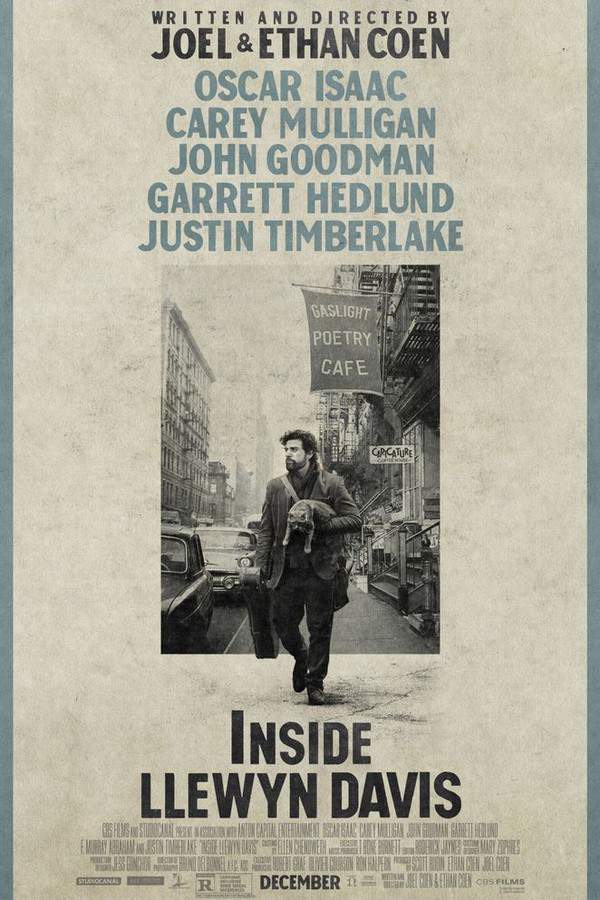
Inside Llewyn Davis (2013) movie poster

Plot Summary

Inside Llewyn Davis (2013) Plot Summary Explained

Release, runtime and language
2013 · 104 min · English
Directed by
Ethan Coen, Joel Coen
Starring
Oscar Isaac, John Goodman, Garrett Hedlund, Carey Mulligan, Justin Timberlake

In 1961, folk musician Llewyn Davis finds himself adrift in New York City’s burgeoning folk scene, facing both artistic and financial struggles. Armed with his guitar, he encounters a cast of eccentric personalities and experiences unexpected turns of events. This journey takes him from Greenwich Village to Chicago, where he hopes to find a breakthrough opportunity and perhaps a bit of stability along the way, all while grappling with the uncertainties of life and his craft.

On this page (6)
  1. 1 Where to watch
  2. 2 What happens: full plot
  3. 3 Plot questions answered
  4. 4 Movie threads
  5. 5 Movies like Inside Llewyn Davis
  6. 6 Every angle

Where to watch

Where to Watch Inside Llewyn Davis (2013)

Where can you watch Inside Llewyn Davis? Stream, rent or buy it in the US, including on Hoopla, Kanopy and Apple TV Store: current JustWatch availability with up-to-date prices.

Streaming availability powered by JustWatch

Full plot summary · contains spoilers

What Happens in Inside Llewyn Davis: Full Plot Summary

The whole story of Inside Llewyn Davis (2013) explained, from the opening scene to the final frame: every key event, every twist and what it all adds up to. Read it as a quick recap before the sequel, to check a scene you missed, or to finally understand what really happened.

In February 1961, we meet Llewyn Davis, portrayed by Oscar Isaac, a struggling folk singer navigating the vibrant yet harsh reality of New York City's Greenwich Village. Once a merchant marine, Llewyn's life has turned upside down after the tragic suicide of his musical partner, Mike. His recent solo album, Inside Llewyn Davis, fails to gain traction, leaving him broke and couch-surfing at the homes of friends and acquaintances.

At the Gaslight Cafe, Llewyn performs an emotional rendition of "Hang Me, Oh Hang Me". After his set, the club owner Pappi (played by Max Casella) informs him that someone is waiting outside. Unfortunately, Llewyn finds himself confronted by a shadowy figure in a suit who brutally attacks him, retribution for heckling a previous performance.

Seeking shelter, Llewyn stays at the apartment of his older friends, the Gorfeins. The following morning, he listens to a track from his and Mike's album called "Dink's Song", before encountering the Gorfeins' orange tabby cat, which ends up locked out. Llewyn takes the cat to his friends Jim and Jean (the latter played by Carey Mulligan), where complications arise when Jean reveals she is pregnant, compelling Llewyn into an uncomfortable conversation about financial support for an abortion.

The trio attend the Gaslight Cafe once more, but Llewyn's financial struggles lead him to ask Jim (Justin Timberlake) for assistance, which goes unsuccessfully. Later, Llewyn’s visit to his sister in Woodside proves similarly disappointing, and he ends up impulsively recording a novelty song titled "Please Mr. Kennedy" as part of a group called the John Glenn Singers with Jim and another musician, Al Cody (played by Adam Driver).

Llewyn attempts to set up Jean's appointment at the gynecologist but learns of a past dilemma he faced concerning another woman. Tension rises between Llewyn and Jean as their lives become increasingly intertwined through their unforeseen circumstances. As he continues searching for money and direction, Llewyn has yet another encounter with the Gorfeins' cat that leaves him frustrated.

As the story progresses, Llewyn embarks on a road trip to Chicago with two musicians: the quiet Johnny Five (portrayed by Garrett Hedlund) and the abrasive Roland Turner (John Goodman). Roland's rude remarks only add to Llewyn's woes. Tragedy strikes when Roland collapses due to a heroin overdose, forcing Llewyn into a precarious situation that leads him to abandon the car with both Roland and the cat inside.

In Chicago, Llewyn seeks out Bud Grossman (played by F. Murray Abraham), only to find his dreams dashed when Grossman claims he received no record from him but agrees to an audition where Llewyn performs "The Death of Queen Jane". After a lackluster reception, Llewyn hitchhikes back to New York, unintentionally hitting what seems to be the same orange cat.

Returning to New York, he tries to reconnect with his ailing father and wonders about life choices as he prepares for a final goodbye to Jean. Yet, the pressures of his past and the allure of performing again bind him in a cycle of frustration and hope.

At the Gaslight once again, Llewyn confronts disturbing revelations about Pappi's interactions with female performers, leading him to lash out during someone else's performance. After being thrown out, he finds refuge one last time at the Gorfeins', relieved to see the familiar orange cat back home.

The film closes with Llewyn's poignant reflection as he sings "Hang Me, Oh Hang Me", followed by a raw performance of "If I Had Wings". As his journey seemingly comes to an end, a young Bob Dylan debuts on stage, marking the passage of time and the bittersweet nature of Llewyn's artistic struggles. With a final confrontation outside with the man he previously angered, Llewyn mutters, "Au revoir", leaving viewers to ponder the cyclical nature of dreams, despair, and the pursuit of artistry.

Last updated: November 07, 2024 at 23:32

Was this helpful?

Plot questions answered

Inside Llewyn Davis Plot Explained: Your Questions Answered

The questions people ask most about Inside Llewyn Davis (2013): what happens in the confusing scenes, why the characters do what they do, the twists, hidden details and what the ending means. Each answer contains spoilers.

Q1

Why does Jean ask Llewyn for money for her abortion?

Jean asks Llewyn for money because she believes he is the father of her unborn child. The pregnancy creates an uncomfortable situation where Llewyn feels obligated to help, though the timeline and exact nature of their relationship remains ambiguous. Jean's request forces Llewyn to confront both his financial desperation and his complicated history with her.

Foreshadowing: Earlier conversations hint tension between Llewyn at ongoing and Jean, suggesting their relationship extends beyond casual acquaintance.

  • jean
  • abortion
  • pregnancy
  • money
  • llewyn relationship
Q2

Why does Llewyn abandon Roland after his heroin overdose?

When Roland collapses from a heroin overdose in the car, Llewyn faces a split-second decision. He chooses to leave Roland in the vehicle because he is panicked, desperate to reach Chicago for his audition, and overwhelmed by the situation. This moment reveals Llewyn's self-serving nature and his inability to handle crisis, prioritizing his own ambitions over helping someone in need.

Foreshadowing: Roland's abrasive personality and history of drug use have been established throughout the road trip, making this outcome somewhat foreseeable.

  • roland
  • overdose
  • heroin
  • car
  • chicago
  • road trip
Q3

Why does Llewyn's audition with Bud Grossman fail?

Llewyn's audition fails because Bud Grossman never received his demo record, so he has no prior knowledge of Llewyn's work. More importantly, Grossman's reaction to Llewyn's performance of "The Death of Queen Jane" is lukewarm at best. Despite Llewyn's genuine talent, Grossman sees nothing commercially viable or distinctive enough to offer him a recording contract, dashing his hopes for a breakthrough.

Foreshadowing: The film establishes early on that Llewyn's solo album has already failed to gain traction, setting up this later rejection.

  • bud grossman
  • audition
  • chicago
  • recording contract
  • queen jane
Q4

Why does the orange cat keep appearing throughout the film?

The orange cat serves as a symbolic parallel to Llewyn's own journey. Like Llewyn, the cat is repeatedly lost, displaced, and taken in by different people without ever finding a true home. The cat's repeated appearances create a cyclical structure that mirrors Llewyn's own pattern of returning to the same places and people, emphasizing his stagnation and lack of forward progress in life.

Foreshadowing: The cat first appears at the Gorfeins' apartment early in the film, establishing its role as a recurring motif from the start.

  • orange cat
  • gorfeins
  • symbolism
  • cycle
  • return
Q5

Why does the shadowy attacker assault Llewyn at the Gaslight?

The attacker beats Llewyn as retribution for heckling a previous performance at the Gaslight Cafe. Llewyn's habit of verbally criticizing other musicians during their sets apparently angered someone enough to seek violent retaliation. This attack highlights the harsh, competitive environment of the folk scene and adds to Llewyn's string of misfortunes.

Foreshadowing: Llewyn's critical and often dismissive attitude toward other performers has been shown throughout his interactions at the cafe.

  • attack
  • gaslight
  • heckling
  • violence
  • pappi
Q6

Why does Llewyn agree to record "Please Mr. Kennedy"?

Llewyn records the novelty song "Please Mr. Kennedy" purely for the quick money it offers. Desperate for cash and facing mounting financial pressures, he sets aside his artistic pride to participate in what he clearly considers a commercial, unserious project. This decision illustrates the ongoing tension between Llewyn's artistic integrity and his desperate financial situation.

Foreshadowing: Earlier scenes establish Llewyn's growing desperation for money, including his failed attempt to borrow from Jim.

  • please mr kennedy
  • novelty song
  • john glenn singers
  • money
  • recording
Q7

What is the significance of Bob Dylan appearing at the end?

Bob Dylan's debut on stage at the Gaslight Cafe marks a historical passing of the torch in folk music. While Llewyn struggles and fails, Dylan represents the next generation who will actually succeed and revolutionize the genre. This poignant moment contextualizes Llewyn's failure not as personal inadequacy but as historical timing, he arrived too early, before the folk explosion that would define the era.

Foreshadowing: The film is set in early 1961, just before Dylan's rise to fame later that year.

  • bob dylan
  • folk music
  • gaslight
  • historical
  • passing torch
Q8

Why does Llewyn keep returning to New York despite constant rejection?

Llewyn returns to New York because it is the center of the folk music world in 1961, and despite his failures, he cannot imagine pursuing his art anywhere else. His entire identity is wrapped up in being a folk musician in Greenwich Village, even though that scene offers him nothing but rejection and hardship. The city represents both his dream and his trap.

Foreshadowing: The film opens in New York and follows Llewyn through multiple cycles of leaving and returning.

  • new york
  • greenwich village
  • folk scene
  • rejection
  • persistence
Q9

Why does Llewyn confront Pappi and get thrown out of the Gaslight?

Llewyn confronts Pappi after learning disturbing information about how the club owner treats female performers. When he publicly exposes this during someone else's performance, Pappi throws him out. This moment represents one of the few times Llewyn acts selflessly, standing up for others even as his own life remains in chaos.

Foreshadowing: Earlier interactions with Pappi hint at the club's questionable atmosphere and power dynamics.

  • pappi
  • gaslight
  • confrontation
  • female performers
  • thrown out
Q10

What does Llewyn mean when he says "Au revoir" at the end?

When Llewyn mutters "Au revoir" to his attacker outside the Gaslight, he is using French for "goodbye", but the word literally means "until we see each other again." This suggests a cyclical nature to his struggles and suggests he expects this pattern of conflict and hardship to continue. It underscores the film's theme of endless repetition in Llewyn's life.

Foreshadowing: The entire film has循环 structure, with Llewyn repeatedly returning to the same situations and places.

  • au revoir
  • french
  • goodbye
  • cycle
  • ending
Q11

Why does Llewyn accidentally hit the same cat with his car?

Llewyn unintentionally hits the same orange cat he has been repeatedly encountering throughout his journey when he hitches a ride back to New York. This ironic moment reinforces the film's circular themes, the cat, like Llewyn himself, keeps getting caught in the same unfortunate cycles. The cat's survival despite being hit adds another layer of resilience to this recurring symbol.

Foreshadowing: The cat has been a persistent presence since the Gorfeins' apartment, creating expectations of its continued appearances.

  • cat
  • car accident
  • return to new york
  • irony
  • symbolism
Q12

Why is Llewyn so emotionally detached from everyone around him?

Llewyn's emotional detachment stems largely from the unresolved grief over his musical partner Mike's suicide. Rather than processing this trauma, Llewyn has buried himself in his music and pushed away meaningful connections. His coldness toward Jean, the Gorfeins, and even his own father is a defense mechanism that prevents him from experiencing further loss.

Foreshadowing: The film opens with the weight of Mike's death hanging over Llewyn, and he consistently avoids discussing his feelings.

  • llewyn
  • emotional detachment
  • grief
  • mike
  • trauma

Movie threads

More Movies Like Inside Llewyn Davis, by Mood & Story

Curated lists built around what makes Inside Llewyn Davis tick: the same mood, the same kind of story or the same emotional payoff. Each list explains why these movies belong together.

Movies about struggling artists like Inside Llewyn Davis

Character studies of creators facing poverty, obscurity, and personal demons. Explore films like Inside Llewyn Davis that delve into the lives of artists battling poverty, obscurity, and personal demons. If you liked the raw portrayal of the 1960s folk scene, you'll find similar stories of musicians, painters, and writers clinging to their craft in the face of hardship.

  • struggling artist
  • gritty
  • melancholic
  • poverty
  • existential
  • nostalgic
  • Tone: melancholic, gritty, reflective
  • Pacing: slow, character-driven
Why these movies?

The story pattern: The narrative often follows a linear, episodic structure as the protagonist endures a series of professional rejections and personal setbacks. There is rarely a triumphant climax; instead, the story charts a journey of persistence in the face of failure, focusing on the character's resilience or eventual resignation.

Why they belong together: These movies are grouped by their shared focus on the unglamorous side of creativity. They possess a melancholic tone, a slow, observational pace, and a deep empathy for characters whose artistic ambitions clash with harsh economic and social realities.

Movies with a melancholic atmosphere like Inside Llewyn Davis

Films steeped in a somber, reflective mood where sadness is a constant companion. Find films that share the melancholic, lonely atmosphere of Inside Llewyn Davis. If you appreciated its somber, reflective mood and themes of grief and failure, this collection features similar stories dominated by a pervasive sense of sadness and existential contemplation.

  • melancholic
  • dreamlike
  • lonely
  • pessimistic
  • reflective
  • somber
  • Tone: melancholic, nostalgic, bleak
  • Pacing: slow, atmospheric
Why these movies?

The story pattern: Stories in this thread are often character-centric and introspective. The plot is secondary to the exploration of emotional states, frequently revolving around themes of loss, regret, and existential questioning. The journey is internal, with a circular or unresolved structure that reinforces the feeling of stasis or gentle decline.

Why they belong together: They are united by a dominant melancholic tone and a slow, deliberate pace that allows the mood to settle. The films prioritize atmosphere and emotional texture over complex plotting, resulting in a cohesive experience of reflective sadness and poetic realism.

If you liked this

Movies Like Inside Llewyn Davis

Similar movies to Inside Llewyn Davis: the same genre, themes or kind of story. Each one comes with its own plot summary, timeline and ending explained.

Browse all movie summaries

Every angle

Inside Llewyn Davis (2013) Explained: Plot, Timeline & Characters

Everything about Inside Llewyn Davis in one place: what happens in the plot summary, the timeline in chronological order, the characters and meaning and a spoiler-free summary. What's After the Movie adds the cast, box office and post-credit scenes.

Coming soon on iOS and Android

The Plot Explained Movie Summary App

Plot summaries, endings explained and timelines on your phone. Catch up on any movie in minutes, save your favorites and never miss a twist again.

Be the first to know when we launch. Your email stays private, always.

Learn more about the app