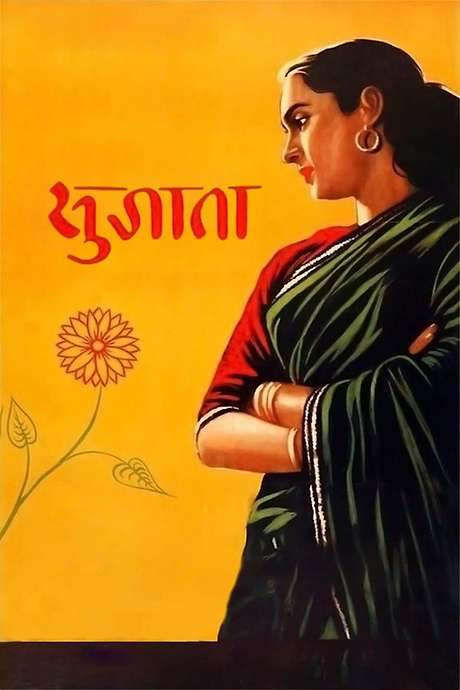
After the death of her parents, teenager Gauri goes to live with her paternal uncle, Kashinath and his wife Putli. She faces a harsh, restrictive home life where she is ill-treated and forced to do all the housework, enduring verbal abuse from her aunt. Her circumstances widen her exploitation when she is made to work as a servant in another household, and the little money she earns is taken away by her aunt, leaving her with little to call her own.
One day, [Kashinath] is summoned to the Police Station and told that Gauri has been convicted of stealing a necklace from her employer, and she is placed under his care for 12 months. He undertakes to protect and guide her, hoping to steer her away from trouble, but the situation quickly escalates. Gauri manages to escape and, in a moment of desperation, strikes the accuser, Banke Lal. The act sets off a tense confrontation with the authorities and rekindles questions about who is telling the truth.
The Police are called again, and this time Gauri is placed with Shree Satyanand Anathalaya, an orphanage run by a compassionate Manager, Ashok. The orphanage is overseen by Superintendent didi, and its routine rules clash with Gauri’s stubborn independence. She resists the regimented life, pushing back against the strict discipline and the pawing at boundaries that define her new surroundings. Her defiance leads to a solitary confinement, where she vents her anger and sadness by haunting the windows and furniture with damage, marking a cycle of punishment that seems almost inescapable.
Yet the struggle does not end there. On another volatile day, she escapes again and returns to confront Banke Lal, inflicting a heavy beating. The cycle of punishment continues as she is placed back in solitary. It is only after Ashok and his associate Murlidhar uncover the truth behind the accusations that the weight of the court reveals Banke Lal’s manipulation. They expose the falsity of the case, Banke Lal’s confession follows, and Gauri earns a pardon. Despite being cleared, she is told to leave the orphanage, but she refuses to go, choosing to stay while vowing to abide by Ashok’s guidance.
As the tenuous alliance between caretaker and ward deepens, a genuine bond forms. When Ashok suffers a heart attack, Gauri offers to stay and look after him, a testament to her growth and the protective instinct he helped foster. Yet Ashok, knowing the fragility of her path forward, asks her to leave and pursue a future with Murlidhar, challenging Gauri to decide between loyalty and a new life. The film closes on this unresolved tension, inviting the audience to consider whether Gauri will disobey or honor her promise, and what it means to find a place to belong after a life of hardship.
Themes of resilience, misjudgment, and the complicated dynamics between guardians and those under their care run through the narrative, inviting viewers to reflect on justice, mercy, and the possibility of true reform within an imperfect system. The story tracks Gauri’s painful journey from vulnerability to budding agency, set against the backdrop of family, authority, and the systems meant to protect and sometimes punish those most in need. Will she chart a path that honors the kindness she’s found, or will she be drawn toward a future shaped by the pressures and promises of those who have helped her along the way?