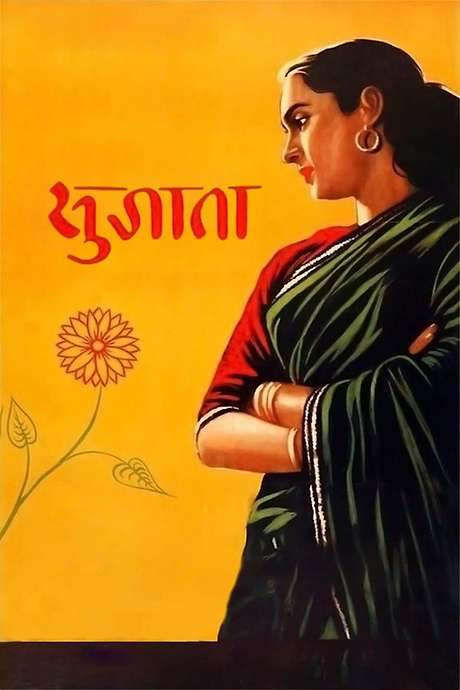
In Sujata, a Brahmin youth Adhir falls in love with an untouchable woman Sujata, and their romance unfolds against the stubborn edge of caste codes. The film uses their gentle connection to explore a society that still treats birth as destiny, while it also follows a deeper emotional current: a mother's struggle to fully welcome an adopted daughter. Through its characters and symbols, the story threads in Mahatma Gandhi’s fight against untouchability and the Hindu myth of Chandalika as subtexts, inviting viewers to question the social norms that divide people who share the same humanity.
A Brahmin couple, Upen and Charu, raise an orphaned child and name her Sujata. From the outset, Charu and the Aunt (Adhir’s mother) find it hard to fully accept Sujata because she was born into an untouchable family, constantly hinting that she may not truly belong among Brahmins. As the romance blossoms, [Adhir] forms a sincere bond with Sujata, yet she grapples with the weight of her birth and the fear of rejection by those she loves. The family’s expectations run counter to the trajectory of their hearts, and a painful choice emerges when Charu’s real daughter Rama becomes the focal point of a proposed match for Adhir, underscoring the social pressure that accompanies love across barriers.
A pivotal moment arrives when Charu suffers a dangerous fall, and the doctors reveal that saving her life requires a rare blood type that only Sujata possesses. With quiet resolve, Sujata donates blood to save Charu, a selfless act that exposes the depth of her devotion and reshapes the family’s view of her. The act transforms perception: Charu, who had doubted Sujata’s place in their home, recognizes the courage and humanity in her adopted daughter. The revelation shifts the family’s dynamic, replacing suspicion with a growing understanding of Sujata’s loyalty and worth.
With Charu’s renewed acceptance, the path forward becomes clearer. The bond between Sujata and Adhir is affirmed not merely by affection but by the consent and support of the people around them. The family’s approval marks a turning point: a formal recognition that love grounded in sincerity can transcend caste boundaries when compassion and generosity lead the way. The couple’s decision to marry becomes a shared triumph, celebrated by everyone who has learned to value their happiness over inherited prejudice.
Beyond the romance, the film remains a meditation on social reform. By weaving Gandhi’s critique of untouchability and the myth of Chandalika into the fabric of the story, Sujata presents a hopeful argument: that systems built on birth and blood can be reimagined through acts of courage, empathy, and community acceptance. The emotional arc—ranging from doubt and exclusion to belonging and union—resonates as a timeless reminder that love, when guided by integrity, can rewrite a family’s future and quietly challenge a society’s most entrenched beliefs.
In the end, Sujata and Adhir secure a life together with the blessing of those around them, illustrating that true belonging is earned through kindness and mutual respect. The film’s careful balance of intimate storytelling and social commentary invites viewers to reflect on the cost of caste-based divisions and to celebrate the possibility of a more inclusive future, where families are built on care rather than caste, and where adopted love can become the heart of a new lineage.