Plot Explained Spoilers guaranteed!
Plot Explained

Browse by genre

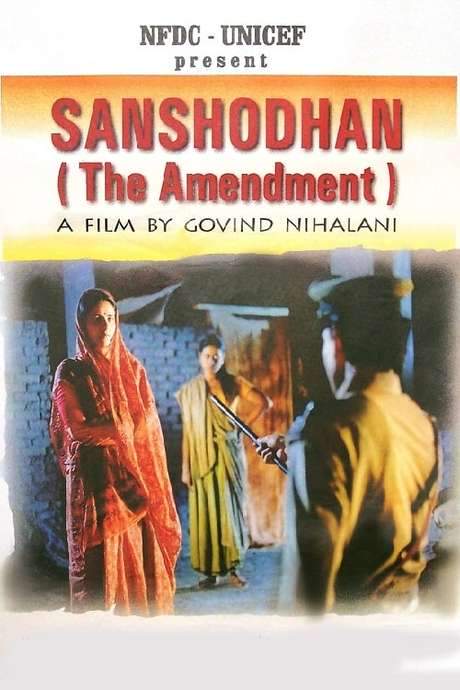
Sanshodhan (1996) movie poster

Timeline

Sanshodhan (1996) Timeline Explained – Every Event in Order

Release, runtime and language
1996 · 165 mins · Hindi
Loading streaming availability…
Directed by
Govind Nihalani
Starring
Lalit Parimoo, Aditya Srivastava, Harish Khanna, Ashutosh Rana, Kishore Kadam, Vineet Kumar

The new law mandating one‑third of Gram Panchayat seats for women meets resistance from sarpanch Thakur Ratan Singh, who pretends support but, with his son Inder, fields wives of allies he can control. Vidya, an educated wife of indebted Bhanwar Singh, wins a seat, sees the tokenism, and decides to fight the entrenched power to bring real change.

On this page (5)
  1. 1 Where to watch
  2. 2 Events in order (12)
  3. 3 Timeline questions answered
  4. 4 Movie threads
  5. 5 Every angle
Loading streaming availability…

12 events in order · contains spoilers

Sanshodhan Timeline: Events in Chronological Order

Every key event of Sanshodhan (1996) in order, scene by scene, with when and where it takes place. Use it to untangle flashbacks, time jumps and parallel storylines, to refresh your memory before the sequel or to find the exact scene you are thinking of.

  1. Amendment announced reserving one-third seats for women

    The government reveals an amendment that reserves one-third of village panchayat seats for women. In Parmino, the news sparks surprise and curiosity, with villagers pondering how this change will reshape local power dynamics and governance.

    When
    Day of amendment announcement
    Where
    Parmino Village
  2. Male council decides to manipulate the plan

    The all-male village committee contemplates the new rule but chooses a strategy aimed at preserving influence. They decide to let women in their families contest the seats so they can guide decisions from behind the scenes. The men hope to maintain control while outwardly complying with the amendment.

    When
    Weeks after announcement
    Where
    Parmino Village Council
  3. Ratan assigns Inder to recruit Manju

    Ratan asks his son Inder to secure Manju, his wife, as a candidate. This move is framed as supporting women’s participation, yet it clearly serves to keep leadership within familiar hands. The plan blends appearances of empowerment with a desire for continued authority.

    When
    Shortly after decision
    Where
    Ratan's residence, Parmino
  4. Other members organize their wives

    The rest of the council members arrange for their wives to contest as well. This coordinated effort creates a multi-front challenge to the status quo while masking the underlying motive of sustaining male dominance. Campaigns begin to take shape across the village.

    When
    Following initial plan
    Where
    Parmino Village
  5. Vidya enters the race

    Vidya, newly married to Bhanwar, signs up as a candidate. Her entry represents a direct challenge to traditional expectations and signals a shift toward female participation in local power structures. She becomes a focal point of the election narrative.

    When
    During candidacy phase
    Where
    Parmino
  6. Vidya challenges fund distribution

    Vidya raises questions about the funds allocated for the partially built school. She insists on transparent accounting and accountability from those handling the money. Her stance puts pressure on the leaders and questions the legitimacy of the project.

    When
    Campaign period
    Where
    Parmino
  7. Intermediaries skim government funds

    As the campaign unfolds, it becomes evident that intermediaries siphon much of the development money. Vidya’s scrutiny threatens the entrenched scheme and prompts calls for reform. The village witnesses a clash between corruption and newly empowered voices.

    When
    Campaign period
    Where
    Parmino
  8. Campaign dynamics intensify

    Tensions rise as women push back against male resistance and traditional norms. The men attempt to undermine the female candidates, while Vidya remains persistent and vocal about accountability. Public meetings become arenas for contested power.

    When
    Election campaign period
    Where
    Parmino
  9. Election votes cast

    Voters in Parmino head to the polls to decide the race, with female candidates challenging long-standing norms. The atmosphere is charged as people weigh representation, accountability, and the prospect of real change. The result hinges on both persuasion and skepticism toward reform.

    When
    Election day
    Where
    Parmino
  10. Women win reserved seats

    The results show women securing the reserved seats, marking a turning point in Parmino’s governance. The new female councilors begin to shape discussions and set expectations for transparency and responsiveness. This victory reframes how the village approaches development.

    When
    Post-election
    Where
    Parmino
  11. Power dynamics shift in the council

    With women in office, the balance of power begins to shift and male leaders are compelled to engage more openly. They must answer questions and justify decisions, signaling a move toward shared responsibility. The council starts to function with greater scrutiny and accountability.

    When
    Post-election
    Where
    Parmino Council Chamber
  12. Vidya’s accountability stance sets a precedent

    Vidya’s insistence on transparent accounting becomes a model for future governance and anti-corruption efforts. The village learns that representation alone is not enough without oversight and public scrutiny. The episode leaves a lasting impact on how Parmino handles funds and projects.

    When
    Post-election
    Where
    Parmino

Last updated: February 17, 2026 at 19:58

Was this helpful?

Timeline questions answered

Sanshodhan Timeline Explained: Your Questions Answered

When does it happen, and why in that order? The questions people ask about the chronology of Sanshodhan (1996): time jumps, flashbacks, cause and effect between scenes and the correct order of events, each answered with spoilers.

Q1

Why does Ratan Singh pretend to support the women's reservation amendment?

Ratan Singh and the male council members pretend to support the amendment because they are legally required to implement it. However, their actual strategy is to manipulate the system by fielding women they can control, wives and family members, while maintaining influence from behind the scenes. This allows them to appear compliant with the law while preserving their real power over village decisions.

Foreshadowing: Early in the film, Ratan's careful calculations as he discusses the amendment with other council members hint at his intention to preserve control.

  • ratan singh
  • reservation law
  • manipulation
  • village politics
  • political strategy
Q2

Why does Vidya decide to contest the election despite her husband being in debt to Ratan Singh?

Vidya enters the election after recognizing that the reserved seats are being filled with women who are controlled by the male council members. Though her husband Bhanwar owes money to Ratan, Vidya sees an opportunity to bring real change rather than accept token representation. Her education and awareness of corruption motivate her to challenge the system from within.

Foreshadowing: Vidya's background as an educated woman and her connection to Bhanwar's financial vulnerability establish her as someone who understands both the oppression and the stakes.

  • vidya
  • election
  • courage
  • debt
  • empowerment
Q3

What is the school fund scam that Vidya exposes?

Vidya discovers that intermediaries (those handling development projects) have siphoned off most of the government funds allocated for the partially built school. The money meant for construction has been diverted, leaving the project incomplete while officials line their pockets. Vidya's demand for transparent accounting exposes this corruption during her campaign.

Foreshadowing: The timeline mentions intermediaries skimming funds during the campaign period, directly connecting Vidya's scrutiny to uncovering the scam.

  • school funds
  • corruption
  • intermediaries
  • accountability
  • development money
Q4

How do the women ultimately win the reserved seats despite the men's manipulation?

The women win because despite being controlled by their husbands, the reserved seats still give them a legitimate platform. When Vidya challenges the corruption and demands accountability, she gains popular support. The combined effect of legitimate representation and public backing for anti-corruption measures shifts enough votes in their favor, allowing women to secure the reserved seats.

Foreshadowing: The campaign dynamics show women pushing back against male resistance while Vidya remains persistent about accountability, building momentum for their victory.

  • women victory
  • reserved seats
  • election results
  • vote
  • empowerment
Q5

Why is Vidya's demand for school fund accountability significant?

Vidya's demand for accounting is significant because it threatens the established corrupt practices that benefit the male council and their intermediaries. By questioning where the government money actually went, she exposes the system designed to benefit those in power while leaving villagers with nothing. Her stance transforms the election from a tokenistic exercise into a fight for real transparency and governance reform.

Foreshadowing: Timeline events show Vidya raising questions about funds during the campaign, which directly leads to exposing the corruption scheme.

  • accountability
  • transparency
  • school
  • corruption
  • village development
Q6

What motivates Manju to participate as a candidate?

Manju participates because her husband Inder (Ratan Singh's son) recruits her to be a candidate, viewing her as someone he can control. Inder asks Manju to contest one of the reserved seats, believing her loyalty to family interests will keep her aligned with his father's political strategy. Manju becomes a pawn in the male council's plan to maintain influence through token women.

Foreshadowing: Ratan assigns Inder to recruit Manju, establishing early that family loyalty and control are central to their political maneuvering.

  • manju
  • inder
  • recruitment
  • family control
  • tokenism
Q7

How does power shift in the village council after the election?

After women win the reserved seats, the power dynamics fundamentally change. Male leaders can no longer make decisions without scrutiny. The new female councilors, especially Vidya, demand answers and hold the council accountable. This forces Ratan Singh and others to justify their decisions openly, marking a shift from closed-door control to more transparent governance.

Foreshadowing: The timeline documents the shift from male-dominated discussions to a council where women actively shape decisions and question authority.

  • power shift
  • council
  • governance
  • accountability
  • transparency
Q8

Why does Vidya's stance set a precedent for future governance?

Vidya's insistence on transparent accounting establishes a model where elected representatives are expected to justify their actions and the use of public funds. Her approach proves that questioning corruption and demanding accountability is possible even in a traditionally patriarchal system. This precedent encourages future leaders to pursue transparency rather than accept entrenched corruption.

Foreshadowing: The narrative explicitly notes that Vidya's accountability stance becomes a model for future governance and anti-corruption efforts in the village.

  • precedent
  • accountability
  • transparency
  • model
  • governance reform
Q9

What does the one-third reservation amendment mean for Parmino village?

The amendment is a national law requiring that one-third of village panchayat seats be reserved for women. In Parmino, this represents a dramatic shift from the all-male council that has historically controlled village governance. The law promises greater representation for women but also creates tension as existing power structures try to maintain influence through manipulation rather than genuine reform.

Foreshadowing: The film opens with the amendment announcement as a national moment of change, establishing its importance to the entire narrative.

  • amendment
  • reservation law
  • village council
  • representation
  • legal requirement
Q10

How do intermediaries siphon government development funds in the village?

Intermediaries, typically middlemen or officials handling government projects, divert development money intended for village projects like the partially built school. They keep a large portion for themselves while delivering little to no actual construction or services. This systematic skimming leaves projects incomplete and villagers without the benefits promised by government programs.

Foreshadowing: The timeline reveals that intermediaries skim funds during the campaign period, which becomes central to Vidya's exposes during her campaign.

  • intermediaries
  • fund skimming
  • development corruption
  • village projects
  • middlemen

Movie threads

More Movies Like Sanshodhan, by Mood & Story

Curated lists built around what makes Sanshodhan tick: the same mood, the same kind of story or the same emotional payoff. Each list explains why these movies belong together.

Political awakening movies like Sanshodhan

Quietly determined individuals challenging corrupt local power structures. Movies like Sanshodhan that explore grassroots political awakening and quiet resistance against corruption. If you enjoyed watching Vidya stand up to patriarchal power structures, you'll appreciate these similar stories of quiet determination.

  • determined
  • hopeful
  • frustrated
  • empowering
  • tense
  • oppressive
  • Tone: tense, determined
  • Pacing: steady character-driven
Why these movies?

The story pattern: The narrative follows a central character who initially operates within oppressive systems but gradually awakens to their own agency. Through education and observation, they recognize tokenism and manipulation, deciding to fight for meaningful change despite facing powerful opposition.

Why they belong together: Movies in this thread share a focus on personal political education, gradual empowerment, and confronting systemic corruption at a local level. They feature protagonists who evolve from passive acceptance to active resistance.

Tokenism resistance dramas like Sanshodhan

Fighting for real change when offered empty representation. Films similar to Sanshodhan that explore themes of token representation versus genuine empowerment. If you were inspired by Vidya's fight against false equality in Sanshodhan, these movies about demanding real change will resonate with you.

  • frustrated
  • determined
  • empowering
  • tense
  • political
  • resistance
  • Tone: tense, determined
  • Pacing: steady, methodical
Why these movies?

The story pattern: These narratives explore the gap between symbolic representation and actual power. Characters initially placed in positions to appease demands for diversity must decide whether to accept their token role or challenge the system that placed them there.

Why they belong together: Movies grouped here focus on the theme of resisting superficial inclusion that maintains existing power dynamics. They share stories of individuals who reject being controlled puppets in favor of genuine agency.

Every angle

Sanshodhan (1996) Explained: Plot, Timeline & Characters

Everything about Sanshodhan in one place: what happens in the plot summary, the timeline in chronological order, the characters and meaning and a spoiler-free summary. What's After the Movie adds the cast, box office and post-credit scenes.

Coming soon on iOS and Android

The Plot Explained Movie Summary App

Plot summaries, endings explained and timelines on your phone. Catch up on any movie in minutes, save your favorites and never miss a twist again.

Be the first to know when we launch. Your email stays private, always.

Learn more about the app