Plot Explained Spoilers guaranteed!
Plot Explained

Browse by genre

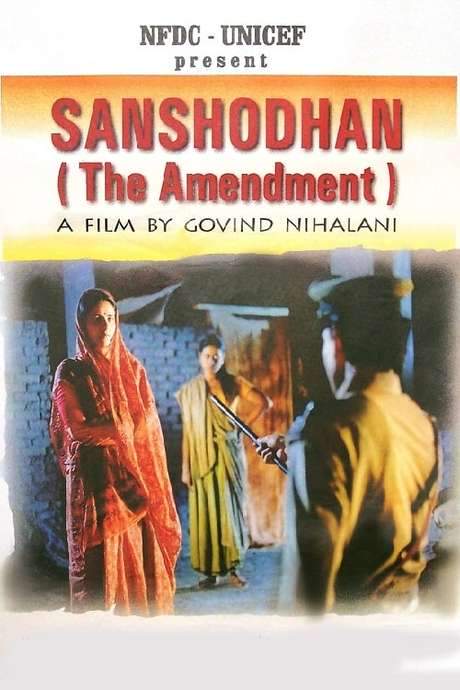
Sanshodhan (1996) movie poster

Characters & Themes

Sanshodhan (1996) Characters, Setting & Themes Explained

Release, runtime and language
1996 · 165 mins · Hindi
Loading streaming availability…
Directed by
Govind Nihalani
Starring
Lalit Parimoo, Aditya Srivastava, Harish Khanna, Ashutosh Rana, Kishore Kadam, Vineet Kumar

The new law mandating one‑third of Gram Panchayat seats for women meets resistance from sarpanch Thakur Ratan Singh, who pretends support but, with his son Inder, fields wives of allies he can control. Vidya, an educated wife of indebted Bhanwar Singh, wins a seat, sees the tokenism, and decides to fight the entrenched power to bring real change.

On this page (7)
  1. 1 Where to watch
  2. 2 Characters explained (5)
  3. 3 Where & when it takes place
  4. 4 Themes & meaning (3)
  5. 5 Character & meaning questions
  6. 6 Movie threads
  7. 7 Every angle
Loading streaming availability…

5 main characters · contains spoilers

Sanshodhan Characters Explained: Who Is Who

The main characters of Sanshodhan (1996), heroes and villains: what drives them, how they change over the course of the story and what each of them reveals about the film's bigger ideas.

  • Inder Singh (Lalit Parimoo)

    Inder Singh is the son of the village head, pulled between family loyalty and a growing sense of justice. He is told to mobilize Manju to contest the reserved seats, revealing his compliance with traditional power structures but also his internal conflict. His choices reveal a tension between preserving an inherited order and embracing reform.

    • 👪 Family Ties
    • 💪 Resolve
    • 🏛️ Politics
  • Ratan Singh (Anupam Shyam)

    Ratan Singh is the long-standing village head who guards traditional authority. He navigates a sudden constitutional shift by steering his family to contest, hoping to preserve influence under the new rules. He embodies the resistance of entrenched elites to gender-based reform.

    • 👑 Authority
    • 🕰️ Tradition
    • 🗳️ Politics
  • Vidya (Vanya Joshi)

    Vidya is the newly married wife of Bhanwar, a poor store owner deeply in debt to the village head. She sues the system by demanding accountability for government funds and uses the reserved-seat debate to push for transparency. Her actions flip the power dynamic, turning a passive beneficiary into an active challenger of corruption.

    • 👩 Representation
    • 💪 Courage
    • 💬 Voice
  • Manju (Kavita Rayirath)

    Manju is the wife of Ratan Singh who steps into the electoral arena as a contesting candidate. She navigates skepticism from male peers while leveraging her position as a woman under the new rule. Her participation tests the limits of patriarchal control and reshapes village politics.

    • 👩 Representation
    • 🎯 Ambition
    • 🏛️ Local Politics
  • Bhanwar (Manoj Bajpayee)

    Bhanwar is a poor store owner indebted to the village head, representing the vulnerability of ordinary people in the political game. His financial strain makes him a focal point for the manipulation by elites, but his wife Vidya's actions begin to alter his view of power and accountability. He embodies the human cost of governance and reform.

    • 💰 Debt
    • 🏪 Small Business
    • 💬 Family

Last updated: February 17, 2026 at 18:10

Was this helpful?

Setting

Where and When Does Sanshodhan Take Place?

The setting of Sanshodhan (1996): the year and time period, the places and locations, and how they shape the characters, the mood and the tension of the story.

Time period

Present-day India

Set in present-day India, the story unfolds as the government enacts a constitutional amendment to reserve one-third of Panchayat seats for women. The timeframe reflects contemporary political processes, public discourse, and media scrutiny around rural governance. The events demonstrate how reform collides with longstanding social hierarchies.

Location

Parmino Village

Parmino Village is a rural community where the Panchayat governs daily life and local affairs. The setting highlights a close-knit, tradition-bound society facing reform from a constitutional amendment. Intermediaries and local power brokers are central to the drama as funds from government schemes are diverted away from ordinary residents.

  • 🌾 Rural life
  • 🗳️ Politics

Last updated: February 17, 2026 at 18:10

Was this helpful?

3 major themes

Sanshodhan Meaning: Themes & Message Explained

What is Sanshodhan (1996) really about? The emotional, social and philosophical themes the film keeps returning to, its symbolism and the message beneath the surface.

  • Gender Representation

    The amendment introduces women into a space long dominated by men, challenging established authority in Parmino. Female candidates such as Manju and Vidya confront skepticism, intimidation, and traditional expectations. The theme explores how representation can shift power dynamics and expose systemic barriers. It also questions whether mere presence in leadership translates into real influence.

  • Corruption & Accountability

    Behind the scenes, intermediaries siphon government funds, weakening institutional accountability. The reserved-seat experiment becomes a test of transparency as candidates demand explanations for misused resources, such as funds for a partially built school. The story examines how corruption persists and what it takes for ordinary people to demand accountability.

  • Civic Participation

    Residents, especially women, begin to exercise their political agency by contesting seats and questioning leaders. The narrative tracks the rise of grassroots voice, from debates to election campaigns, showing how democratic participation reshapes village leadership. It highlights the power of collective action to redefine local governance and policy outcomes.

Last updated: February 17, 2026 at 18:10

Was this helpful?

Character & theme questions

Sanshodhan Characters & Meaning: Your Questions Answered

The questions people ask about Sanshodhan (1996): who the characters really are, their relationships, what the symbols mean, where it takes place and what the movie is really about. Each answer contains spoilers.

Q1

Where does the story take place?

The story is set in Parmino Village, a rural community where the Gram Panchayat governs daily life and local affairs. This close-knit, tradition-bound setting creates the backdrop for political reform and social conflict in Sanshodhan. The village environment highlights how government schemes and funds flow through local power structures.

Foreshadowing: The opening scenes establish the village's dependence on the Panchayat for resources.

  • parmino village
  • rural setting
  • gram panchayat
  • location
Q2

When is the movie set?

Sanshodhan takes place in present-day India during a period when the government enacts a constitutional amendment reserving one-third of Panchayat seats for women. The timeframe reflects contemporary political processes and public discourse around rural governance. This timing is crucial as it shows reform colliding with longstanding social hierarchies.

  • present-day india
  • time period
  • constitutional amendment
  • era
Q3

What political change drives the story?

The central catalyst is a new law mandating one-third of Gram Panchayat seats be reserved for women. This constitutional amendment forces traditional power structures in Parmino Village to adapt or resist. In Sanshodhan, this reform becomes the engine for conflict between entrenched elites and emerging voices.

Foreshadowing: Early discussions about the amendment signal the coming power struggle.

  • reservation law
  • women seats
  • political reform
  • amendment
Q4

Who is Vidya and what is her role?

Vidya is an educated woman married to Bhanwar Singh, an indebted store owner in Parmino Village. She wins a reserved Panchayat seat and transforms from a passive beneficiary into an active challenger of corruption. Her character represents the film's hopeful stance on women's political agency and accountability.

Foreshadowing: Vidya's education and awareness are hinted at before she enters politics.

  • vidya
  • protagonist
  • women leader
  • accountability
Q5

Who is Ratan Singh in the story?

Ratan Singh is the long-standing sarpanch and village head who guards traditional authority in Parmino. He navigates the constitutional shift by attempting to preserve his family's influence under the new rules through manipulation. His character embodies the resistance of entrenched elites to gender-based reform in Sanshodhan.

Foreshadowing: Ratan's controlling behavior is established early in village interactions.

  • ratan singh
  • sarpanch
  • antagonist
  • traditional power
Q6

What conflict drives Inder Singh?

Inder Singh is Ratan Singh's son, pulled between family loyalty and a growing sense of justice. He is told to mobilize women candidates to contest reserved seats, revealing his compliance with traditional power structures while feeling internal conflict. His character arc explores the tension between preserving inherited order and embracing reform.

Foreshadowing: Inder's hesitation when following his father's orders hints at his moral struggle.

  • inder singh
  • internal conflict
  • family loyalty
  • justice
Q7

What does Bhanwar's situation represent?

Bhanwar is a poor store owner deeply indebted to the village head, representing the vulnerability of ordinary people in the political game. His financial strain makes him a focal point for manipulation by elites in Parmino Village. In Sanshodhan, he embodies the human cost of governance and how reform can alter power dynamics.

Foreshadowing: Bhanwar's debt is shown before the political conflict escalates.

  • bhanwar
  • economic vulnerability
  • debt
  • ordinary citizen
Q8

What is Manju's position in the village?

Manju is the wife of Ratan Singh who steps into the electoral arena as a contesting candidate under the new reservation rules. She navigates skepticism from male peers while leveraging her position as a woman under the constitutional amendment. Her participation in Sanshodhan tests the limits of patriarchal control and reshapes village politics.

Foreshadowing: Manju's presence in political discussions signals her upcoming candidacy.

  • manju
  • women candidate
  • patriarchal control
  • election
Q9

What does the film say about gender representation?

Sanshodhan explores how the amendment introduces women into a political space long dominated by men in Parmino Village. Female candidates confront skepticism, intimidation, and traditional expectations while challenging established authority. The film questions whether mere presence in leadership translates into real influence or if systemic barriers persist.

Foreshadowing: Early scenes show women excluded from decision-making spaces.

  • gender representation
  • women leadership
  • systemic barriers
  • equality
Q10

How does corruption affect the village?

Behind the scenes in Parmino, intermediaries siphon government funds, weakening institutional accountability and diverting resources from ordinary residents. The reserved-seat experiment becomes a test of transparency as candidates demand explanations for misused resources like funds for a partially built school. Sanshodhan examines how corruption persists and what it takes to demand accountability.

Foreshadowing: Missing infrastructure projects are mentioned before corruption is exposed.

  • corruption
  • accountability
  • government funds
  • transparency
Q11

What role do ordinary citizens play?

Residents, especially women, begin to exercise their political agency by contesting seats and questioning leaders in Parmino Village. The narrative tracks the rise of grassroots voice through debates and election campaigns, showing how democratic participation reshapes village leadership. The film highlights the power of collective action to redefine local governance in Sanshodhan.

Foreshadowing: Community gatherings hint at growing civic awareness among villagers.

  • civic participation
  • grassroots
  • democratic voice
  • collective action
Q12

How is power structured in the village?

Power in Parmino Village flows through the Gram Panchayat and local power brokers who control access to government schemes and resources. Traditional authority rests with figures like Ratan Singh, while the constitutional amendment disrupts this hierarchy by mandating women's representation. Sanshodhan shows how entrenched elites attempt to maintain control despite reform.

Foreshadowing: Early interactions show who holds decision-making power in the village.

  • power structure
  • panchayat
  • local brokers
  • hierarchy
Q13

What tension drives the narrative?

The core tension revolves around challenging a powerful, manipulative system that resists women's political inclusion in Parmino Village. This creates ongoing suspense about whether Vidya can succeed against entrenched opposition. The film maintains steady pacing as it follows political awakening and resistance without fast-paced action.

Foreshadowing: Initial resistance to the amendment signals the coming conflict.

  • narrative tension
  • tradition vs reform
  • conflict
  • suspense
Q14

What does the film reveal about rural governance?

Sanshodhan reveals how rural governance in India operates through local intermediaries who can divert government schemes away from ordinary residents. The film shows the gap between policy intent and implementation at the village level. It demonstrates how reform collides with longstanding social hierarchies and what accountability requires.

  • rural governance
  • policy implementation
  • village administration
  • accountability
Q15

What themes does the film explore?

The film explores gender representation, corruption and accountability, and civic participation as interconnected themes in Parmino Village. These themes examine how representation can shift power dynamics, how corruption persists, and how democratic participation reshapes leadership. Sanshodhan presents these ideas through character arcs and social conflict.

  • themes
  • gender
  • corruption
  • civic participation
  • meaning

Movie threads

More Movies Like Sanshodhan, by Mood & Story

Curated lists built around what makes Sanshodhan tick: the same mood, the same kind of story or the same emotional payoff. Each list explains why these movies belong together.

Political awakening movies like Sanshodhan

Quietly determined individuals challenging corrupt local power structures. Movies like Sanshodhan that explore grassroots political awakening and quiet resistance against corruption. If you enjoyed watching Vidya stand up to patriarchal power structures, you'll appreciate these similar stories of quiet determination.

  • determined
  • hopeful
  • frustrated
  • empowering
  • tense
  • oppressive
  • Tone: tense, determined
  • Pacing: steady character-driven
Why these movies?

The story pattern: The narrative follows a central character who initially operates within oppressive systems but gradually awakens to their own agency. Through education and observation, they recognize tokenism and manipulation, deciding to fight for meaningful change despite facing powerful opposition.

Why they belong together: Movies in this thread share a focus on personal political education, gradual empowerment, and confronting systemic corruption at a local level. They feature protagonists who evolve from passive acceptance to active resistance.

Tokenism resistance dramas like Sanshodhan

Fighting for real change when offered empty representation. Films similar to Sanshodhan that explore themes of token representation versus genuine empowerment. If you were inspired by Vidya's fight against false equality in Sanshodhan, these movies about demanding real change will resonate with you.

  • frustrated
  • determined
  • empowering
  • tense
  • political
  • resistance
  • Tone: tense, determined
  • Pacing: steady, methodical
Why these movies?

The story pattern: These narratives explore the gap between symbolic representation and actual power. Characters initially placed in positions to appease demands for diversity must decide whether to accept their token role or challenge the system that placed them there.

Why they belong together: Movies grouped here focus on the theme of resisting superficial inclusion that maintains existing power dynamics. They share stories of individuals who reject being controlled puppets in favor of genuine agency.

Every angle

Sanshodhan (1996) Explained: Plot, Timeline & Characters

Everything about Sanshodhan in one place: what happens in the plot summary, the timeline in chronological order, the characters and meaning and a spoiler-free summary. What's After the Movie adds the cast, box office and post-credit scenes.

Coming soon on iOS and Android

The Plot Explained Movie Summary App

Plot summaries, endings explained and timelines on your phone. Catch up on any movie in minutes, save your favorites and never miss a twist again.

Be the first to know when we launch. Your email stays private, always.

Learn more about the app