Plot Explained Spoilers guaranteed!
Plot Explained

Browse by genre

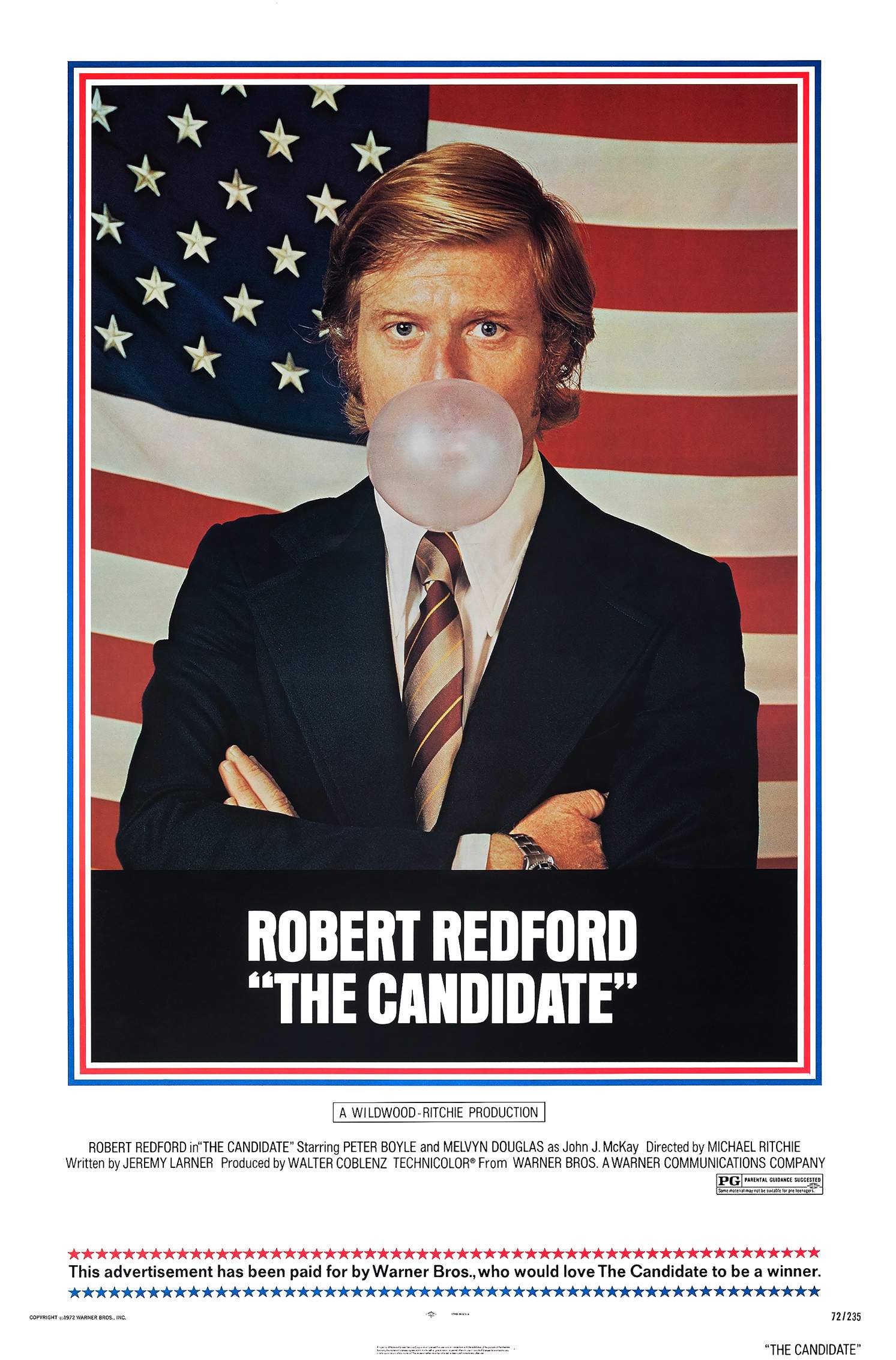
The Candidate (1972) movie poster

Plot Summary

The Candidate (1972) Plot Summary Explained

Release, runtime and language
1972 · 110 min · English
JustWatch #6,459 25
Directed by
Michael Ritchie
Starring
Robert Redford, Melvyn Douglas, Peter Boyle, Kenneth Tobey, Allen Garfield, Don Porter

To land his dream job, a desperate candidate faces an unconventional and daunting final interview challenge that pushes him to his limits.

On this page (6)
  1. 1 Where to watch
  2. 2 What happens: full plot
  3. 3 Plot questions answered
  4. 4 Movie threads
  5. 5 Movies like The Candidate
  6. 6 Every angle

Where to watch

Where to Watch The Candidate (1972)

Where can you watch The Candidate? Stream, rent or buy it in the US, including on YouTube TV, YouTube and Tubi TV: current JustWatch availability with up-to-date prices.

Streaming availability powered by JustWatch

Full plot summary · contains spoilers

What Happens in The Candidate: Full Plot Summary

The whole story of The Candidate (1972) explained, from the opening scene to the final frame: every key event, every twist and what it all adds up to. Read it as a quick recap before the sequel, to check a scene you missed, or to finally understand what really happened.

Marvin Lucas, a seasoned political consultant, faces a challenging assignment: he must find a Democratic challenger to oppose three-term California Senator Crocker Jarmon in a race that looks decided from the start. With no big-name Democrat stepping forward, Lucas identifies Bill McKay, the idealistic, handsome, and charismatic son of the popular former California governor. Bill McKay, the public interest lawyer with a rising profile, becomes the candidate Lucas hopes can carry a meaningful message to voters.

Lucas lays out a provocative deal: because the outcome seems fixed, McKay can campaign with complete freedom, speaking frankly about the issues and his convictions. McKay agrees, eager to push for his values and to test how far his ideals can travel on the campaign trail. The nomination comes easily, driven more by McKay’s name and appeal than by a hard-fought ideological battle. But Lucas soon delivers sobering news: the latest polls show McKay is on track to lose badly. The party expected defeat, but not humiliation, so Lucas asks McKay to temper his message to reach a broader slice of voters.

As McKay hits the road, his once-clear platform begins to soften into something more generic in an effort to appeal to moderates and independents alike. The shift helps his poll numbers rise, yet it creates a new tension: the media read McKay’s father’s silence as an endorsement of Jarmon, a misperception that threatens to derail the campaign. McKay reluctantly confronts his father and explains the problem, and the elder statesman explains to reporters that he is simply respecting his son’s wish to stay out of the spotlight for the moment.

With McKay narrowly trailing—nine points behind—the incumbent senator proposes a televised debate. McKay agrees to answer in a way that fits Lucas’s strategy, but the exchange takes a turn when, after the debate, he blurts out that the discussion did not address core issues like poverty and race relations. The outburst alarms Lucas, who fears it will damage the campaign. Reporters press McKay backstage, but the scene is upstaged when his father strides in to publicly praise his son, reframing the narrative around the elder McKay’s presence on the trail. The positive portrayal accelerates McKay’s comeback, and the dynamic with his father becomes a catalyst that narrows the polling gap.

As election day approaches, Lucas and McKay’s father organize a meet‑and‑greet with a labor union representative to discuss a potential endorsement. The union leader hints at a powerful partnership if both sides commit to collaboration, and McKay, through careful phrasing, signals cautious disinterest. The tension dissolves in a moment of uneasy laughter, and the public endorsement that follows further mobilizes California workers behind McKay, tipping public opinion toward a virtual tie with Jarmon.

McKay ultimately wins the election. In the finale, he escapes the victory party and draws Lucas into a secluded room as reporters flood the corridor outside. McKay asks the critical question, “What do we do now?” while the crowd’s clamor swells, and the film closes without a definitive answer, leaving the future of the new administration open to interpretation.

> What do we do now?
Last updated: October 09, 2025 at 15:42

Was this helpful?

Plot questions answered

The Candidate Plot Explained: Your Questions Answered

The questions people ask most about The Candidate (1972): what happens in the confusing scenes, why the characters do what they do, the twists, hidden details and what the ending means. Each answer contains spoilers.

Q1

Why does Bill McKay agree to run for Senate when the race seems unwinnable?

Marvin Lucas offers McKay a provocative deal: since the race appears hopeless, McKay can campaign with complete freedom, saying exactly what he believes without party pressure. McKay accepts because he sees it as an opportunity to champion his values and test how far his idealism can travel on the campaign trail.

Foreshadowing: The film establishes McKay as an idealistic public interest lawyer eager to make a meaningful political impact.

  • bill mckay
  • marvin lucas
  • senate campaign
  • idealism
  • political campaign
Q2

Why does McKay moderate his campaign message?

After early polls show McKay on track to lose badly, Lucas pushes him to soften his message to appeal to moderates and independents. The party expected defeat but not humiliation, so the shift aims to broaden his voter base despite the risk of diluting his authenticity.

Foreshadowing: Lucas initially frames the campaign as a vehicle for McKay's ideals, but the polling numbers introduce practical pressure.

  • moderation
  • poll numbers
  • campaign strategy
  • voter appeal
Q3

Why does the media misinterpret McKay's father's silence as an endorsement of Jarmon?

With the elder McKay staying out of the race, California media outlets interpret his silence as backing the incumbent senator. This creates a public perception problem that threatens to derail the campaign, as voters assume the former governor prefers Jarmon.

Foreshadowing: The campaign early on relies heavily on the McKay family name recognition, setting up the stakes of that name's political weight.

  • john mckay
  • media perception
  • silence
  • incumbent
  • crocker jarmon
Q4

Why does McKay's candid outburst after the debate actually help his campaign?

After the debate, McKay blurts out that the discussion failed to address core issues like poverty and race relations. While Lucas fears damage, the moment gets positive media attention. His father then publicly praises him backstage, reframing the narrative around family legacy and authenticity, which accelerates his comeback.

Foreshadowing: The debate setup shows McKay rehearsing moderate answers, creating tension with his true convictions.

  • debate
  • candor
  • media
  • father
  • comeback
Q5

How does McKay secure the labor union endorsement?

Lucas and McKay's father arrange a meet-and-greet with a labor union representative. McKay initially resists alignment but uses careful phrasing to signal cautious disinterest while the tension dissolves into uneasy laughter. The subsequent public endorsement mobilizes California workers behind his candidacy.

Foreshadowing: The union scene shows McKay navigating political realities, balancing principle with pragmatism.

  • labor union
  • endorsement
  • california workers
  • campaign
Q6

What causes McKay to go from guaranteed loss to winning the election?

Multiple factors converge: his father's public support reframes the race around legacy, the union endorsement brings organized labor backing, and his more populist tone resonates with voters. These elements combined with his charisma turn a sure loss into a dead heat, culminating in his victory on election night.

Foreshadowing: The film tracks each momentum shift through polling data, showing gradual progression rather than sudden reversal.

  • polls
  • momentum
  • victory
  • election
  • turnaround
Q7

What does McKay's final question "What do we do now?" mean?

The ending leaves the future of the new administration open to interpretation. The question suggests that winning the election is only the beginning, McKay now faces the existential dilemma of how to govern, having compromised his ideals to achieve victory. The triumphant victory feels hollow as he confronts what comes next.

Foreshadowing: The entire film builds tension between McKay's idealism and the pragmatic demands of winning, which the ending directly confronts.

  • ending
  • ambiguity
  • governing
  • idealism
  • power
Q8

Why does McKay's father finally publicly support his son?

After McKay confronts him about the media misreading his silence as support for Jarmon, the elder McKay explains he was simply respecting his son's wish to stay out of the spotlight. He then publicly praises McKay after the debate, shifting the narrative and lending legitimacy to the campaign through his return to the trail.

Foreshadowing: The private meeting between father and son establishes their relationship dynamics and the stakes of his involvement.

  • father
  • public support
  • john mckay
  • legacy
  • family
Q9

How does McKay actually win the Senate race?

McKay wins by successfully navigating the tension between his idealistic roots and political pragmatism. His father's public endorsement, the labor union backing, and his ability to connect with voters through a more populist message combine to overcome the initial polling deficit, culminating in a narrow victory on election night.

Foreshadowing: The timeline shows the race evolving from guaranteed loss to dead heat in the final days.

  • victory
  • senate
  • election
  • california
  • crocker jarmon

Movie threads

More Movies Like The Candidate, by Mood & Story

Curated lists built around what makes The Candidate tick: the same mood, the same kind of story or the same emotional payoff. Each list explains why these movies belong together.

Process-driven disillusionment dramas like The Candidate

Stories that methodically trace the erosion of ideals within a flawed system. If you enjoyed the methodical, tense journey of The Candidate, explore more movies like it. These films focus on characters navigating complex systems, where the procedural details reveal a sobering truth about power, compromise, and the cost of achieving a goal.

  • thought-provoking
  • cynical
  • realistic
  • observational
  • disillusioned
  • anxious
  • Tone: tense, cynical, observational
  • Pacing: steady, methodical
Why these movies?

The story pattern: Narratives in this thread follow a linear, often steady-paced progression through a system (political, corporate, legal). The central conflict is internal: a protagonist's ideals are gradually worn down by the pragmatic, and sometimes cynical, demands of the process, leading to a victory that feels ambiguous or hollow.

Why they belong together: Movies are grouped here for their shared focus on a detailed process, a tense and realistic tone, and a central theme of disillusionment. They deliver a similar experience of intellectual engagement mixed with a sense of sobering realism about how institutions function.

Movies with hollow victories like The Candidate

Stories where achieving the goal comes with a profound sense of emptiness. Fans of The Candidate's ambiguous ending will appreciate these similar stories. Discover movies where the climax is not a clean resolution but a beginning of a new, more complex dilemma, exploring what happens after you get what you thought you wanted.

  • ambiguous
  • cynical
  • disillusioned
  • thought-provoking
  • existential
  • unsatisfying
  • Tone: cynical, contemplative, tense
  • Pacing: steady build
Why these movies?

The story pattern: These stories follow a character striving for a defined goal, but the emotional arc subverts the typical victory narrative. The ending is ambiguous or bittersweet, emphasizing the sacrifices made and the unsettling reality of power or success, leaving the protagonist and viewer with more questions than answers.

Why they belong together: These movies are united by their shared narrative structure that builds to a climax which deliberately feels unsatisfying or philosophically complex. They share a mood of cynicism and disillusionment, prioritizing intellectual and emotional ambiguity over clear-cut resolutions.

If you liked this

Movies Like The Candidate

Similar movies to The Candidate: the same genre, themes or kind of story. Each one comes with its own plot summary, timeline and ending explained.

Browse all movie summaries

Every angle

The Candidate (1972) Explained: Plot, Timeline & Characters

Everything about The Candidate in one place: what happens in the plot summary, the timeline in chronological order, the characters and meaning and a spoiler-free summary. What's After the Movie adds the cast, box office and post-credit scenes.

Coming soon on iOS and Android

The Plot Explained Movie Summary App

Plot summaries, endings explained and timelines on your phone. Catch up on any movie in minutes, save your favorites and never miss a twist again.

Be the first to know when we launch. Your email stays private, always.

Learn more about the app