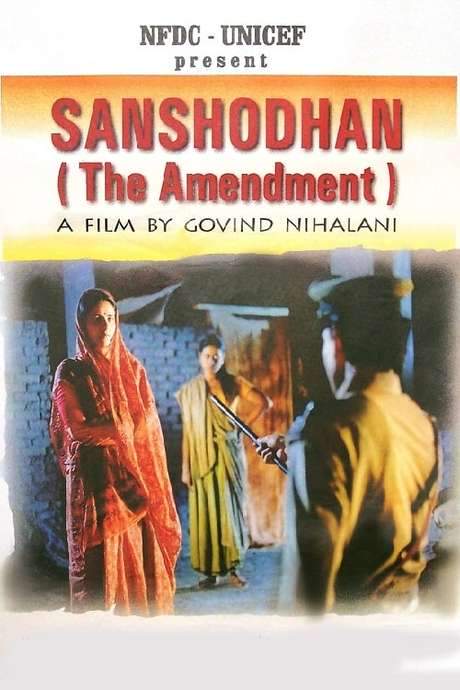
The film opens with a national moment of change: a new Amendment that reserves one-third of every Village Panchayat seat for women, a rule that promises representation but also stirs deep local tensions. In Parmino, the village council has long been an all-male enclave, where voices and votes are controlled by a tight circle. The news of the Amendment arrives like a ripple that could become a wave, especially for those waiting to test the limits of power in a small community.
Ratan Singh, the village head, Anupam Shyam, and the other council members react with careful calculations. Rather than inviting a broad debate, they decide to let women from their own families contest the reserved seats, hoping to preserve influence while giving the appearance of progress. The plan rests on a delicate balance between tradition and reform, and it puts family dynamics at the center of political strategy. Ratan Singh’s authority is underscored as he turns to his own son, Inder Singh, to help orchestrate the moves that will bring these new candidates into the fold.
Inder Singh, Lalit Parimoo, is pressed to recruit Manju, his wife, to take one of the contested spots. But the other council members push their own wives into the race as well, expanding the circle of influence and testing whether the women can challenge a system built on entrenched control. The atmosphere in the village grows charged as campaigns begin to unfold, with the men articulating strategies while the women start to articulate what governance could look like under the new rules.
Among the contenders is Vidya, Vanya Joshi, the newly married wife of Bhanwar, a poor store owner who is deeply in debt to the village head. Vidya’s entry into the race adds another layer of tension, because her background and marriage connect her to the very people shaping the political moment. Bhanwar’s stake in the outcome is not merely personal; it reflects the wider web of obligations and debts that tie villagers to the powers that be.
As the campaigns advance, Vidya challenges the process from within, demanding accountability for the funds allocated to the partially built school. Her insistence to account for the money unsettles the assumed arrangements and pushes the story toward a confrontation about transparency and fairness. The others in the village—men who once controlled the purse strings—find themselves facing a different kind of scrutiny, one that isn’t just about who wins an election but about where the government money actually ends up.
Against this backdrop, the film examines how intermediaries siphon much of the allotted funds, leaving the rightful beneficiaries with scant resources. The tension between ambition, gender representation, and real-world corrupt practices is drawn with a measured, neutral tone that invites viewers to weigh the complexities of reform in a tightly knit community. The drama unfolds with a quiet intensity, showing that progress can be messy and that accountability can emerge in surprising, hard-fought ways.
In the end, the narrative centers on the interplay between tradition and reform, the personal costs of political maneuvering, and the enduring question of who finally benefits when power is redistributed. The village of Parmino becomes a microcosm for broader debates about women’s leadership, financial transparency, and the stubborn persistence of old networks, all told through the lived experiences of its residents and the choices they make under pressure.