




Plot Explained Spoilers guaranteed!
Plot Explained

Browse by genre

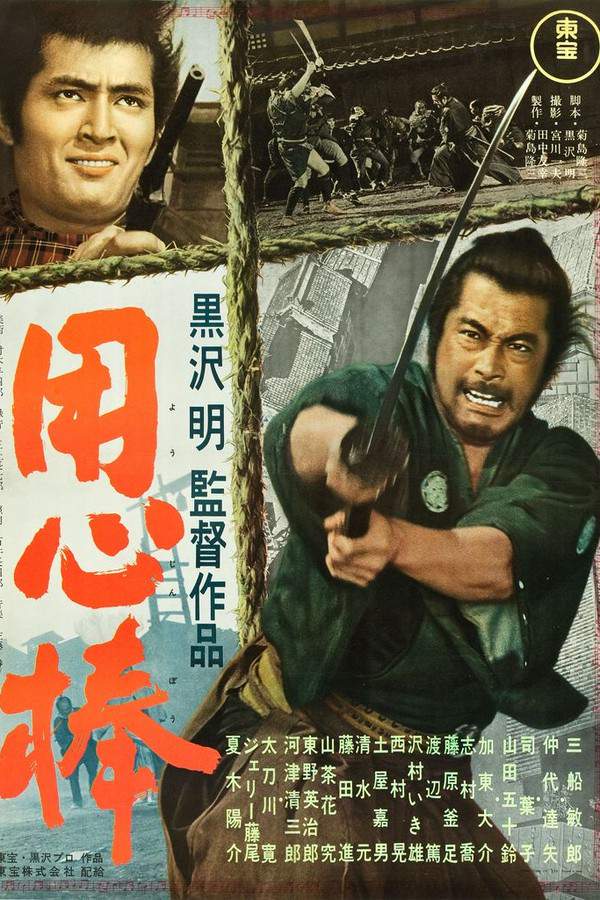
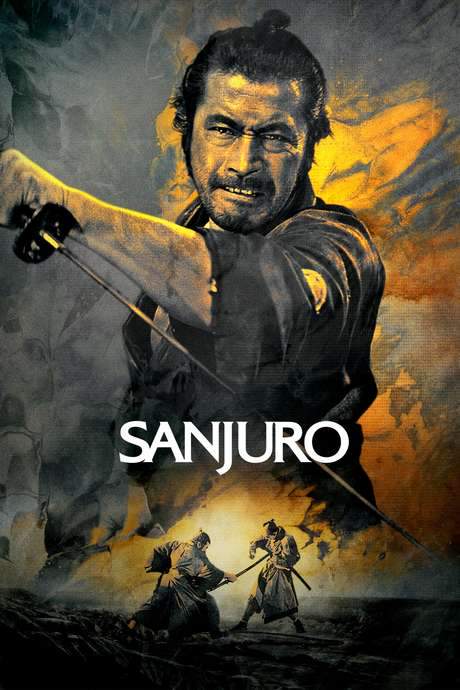
Sanjuro (1962) movie poster

Timeline

Sanjuro (1962) Timeline Explained – Every Event in Order

Release, runtime and language
1962 · 96 mins · Japanese
JustWatch #32,620 4
Directed by
Akira Kurosawa
Starring
Keiju Kobayashi, Tatsuya Nakadai, Tatsuyoshi Ehara, Toshirô Mifune, Reiko Dan, Yûzô Kayama

Toshiro Mifune delivers razor‑sharp wit and swagger as the jaded ronin Sanjuro, who, in this tightly paced sequel to Yojimbo, is hired by idealistic young warriors. He helps them purge their clan of corrupt officials, turning their naïve notion of the perfect samurai upside down with brilliant comic flair and striking composition.

On this page (6)
  1. 1 Where to watch
  2. 2 Events in order (12)
  3. 3 Timeline questions answered
  4. 4 Movie threads
  5. 5 Movies like Sanjuro
  6. 6 Every angle

Where to watch

Where to Watch Sanjuro (1962)

Where can you watch Sanjuro? Stream, rent or buy it in the US, including on Amazon Video, Apple TV Store and Fandango At Home: current JustWatch availability with up-to-date prices.

Streaming availability powered by JustWatch

12 events in order · contains spoilers

Sanjuro Timeline: Events in Chronological Order

Every key event of Sanjuro (1962) in order, scene by scene, with when and where it takes place. Use it to untangle flashbacks, time jumps and parallel storylines, to refresh your memory before the sequel or to find the exact scene you are thinking of.

  1. Nine samurai decide to challenge corruption

    After the chamberlain Mutsuta tears up their petition, nine young samurai vow to press for accountability and seek intervention from the superintendent Kikui. They meet secretly at a shrine to discuss their plan and mounting pressure. A wandering ronin overhears them and warns against trusting the corrupt officials.

    Where
    shrine
  2. Ambush at the shrine and rescue

    As the samurai leave the shrine, an ambush is sprung on them. The ronin intervenes and saves the group, cementing his role as their protector. Realizing that Mutsuta and his family could be in danger, the ronin chooses to stay and help them.

    Where
    shrine vicinity
  3. Rescue plan at Mutsuta's house

    The samurai arrive at Mutsuta's house only to find the chamberlain abducted and his wife and daughter held prisoner. A servant from the house gets the guards drunk, allowing the samurai to free the women. The group then hides in a house next door to the superintendent's compound.

    Where
    Mutsuta's house and nearby residence
  4. Revelation of Sanjuro's identity

    While in hiding, the ronin gazes at the camellia trees and reveals his name as Tsubaki Sanjūrō. The woman of the house criticizes his frequent killings and argues that the best sword is kept in its sheath, signaling a tension between prowess and restraint.

    Where
    hideout near the superintendent's compound
  5. Sanjuro infiltrates by joining Hanbei

    Sanjuro decides to get closer to the corrupt officials and joins Hanbei, who had previously offered him a job after the shrine ambush. The samurai distrust him at first, but Sanjuro senses he is being followed as they walk together, and their shadows are easily captured and bound. Hanbei leaves to request reinforcements, setting up an opportunity for Sanjuro to act.

    Where
    near the superintendent's compound
  6. Sanjuro frees the captured samurai

    Sanjuro uses Hanbei's absence to free the four samurai he had been guarding, though he must kill all their guards in the process. He tells the freed men to leave him tied, explaining that he does not wish to die for a cause in which he has no stake. The exchange showcases his pragmatic, self-directed code.

    Where
    outside the compound
  7. Torn petition reveals the stakes

    The chamberlain's whereabouts remain unclear until the next day when Mutsuta's wife and daughter discover a torn piece of the petition in the stream flowing from the superintendent's compound. With an outright assault unlikely, Sanjuro devises a plan to misdirect the officials by claiming he saw rebels at a temple.

    Where
    stream by the superintendent's compound
  8. Camellias as a signal and misdirection

    Sanjuro proposes signaling the attack by floating large numbers of camellias down the stream. He tells his group to prepare for the attack while he fabricates information about rebels at a temple to lure the officials into a trap.

    Where
    stream and surrounding temple route
  9. First phase draws the officials away; suspicion rises

    The plan initially succeeds as the superintendent's forces rush toward the temple. However, Hanbei grows suspicious after catching Sanjuro attempting to drop camellias and ties him up. The others realize Sanjuro's temple description was a ruse and balk at the deception.

    Where
    temple route
  10. Officials realize the ruse and the rescue is triggered

    Despite Hanbei's misgivings, the officials acknowledge Sanjuro's ploy only partially and rush to chase the temple-bound forces. In the confusion, Sanjuro secretly ensures the signal will bring the samurai to the rescue, catching Hanbei by surprise when he returns.

    Where
    temple route and the surrounding area
  11. Mutsuta is restored; the superintendent falls

    Mutsuta is restored to his position, and the superintendent commits hara-kiri, attempting to avert a public scandal. In the aftermath, the chamberlain's family and loyal samurai celebrate, but they discover that Sanjuro has slipped away during the final commotion.

    Where
    Mutsuta's residence and vicinity
  12. Final duel and Sanjuro's departure

    The samurai chase after Sanjuro and find Hanbei ready to duel. Sanjuro is reluctant to fight, but Hanbei, furious at his own loss of dignity, decides that peace can only be achieved through killing him. Sanjuro defeats Hanbei with speed, calls him a kindred blade until the end, and walks away as his admirers kneel in reverence.

    Where
    outside the celebratory area

Last updated: October 09, 2025 at 12:39

Was this helpful?

Timeline questions answered

Sanjuro Timeline Explained: Your Questions Answered

When does it happen, and why in that order? The questions people ask about the chronology of Sanjuro (1962): time jumps, flashbacks, cause and effect between scenes and the correct order of events, each answered with spoilers.

Q1

Why does the wandering ronin decide to help the nine young samurai?

After saving the samurai from an ambush at the shrine, the ronin realizes that Chamberlain Mutsuta and his family are in immediate danger from the same conspiracy that targeted the young warriors. Rather than simply walking away, he chooses to stay and help them, demonstrating his sense of justice despite his initially detached demeanor.

Foreshadowing: Earlier at the shrine, the ronin warns the samurai not to trust the superintendent, showing he already senses the corruption.

  • ronin
  • young samurai
  • Mutsuta
  • corruption
  • rescue
Q2

Why does Sanjuro join forces with Hanbei, one of the corrupt officials' henchmen?

Sanjuro deliberately infiltrates the corrupt officials' circle by accepting Hanbei's earlier job offer. By getting close to Hanbei, he gains valuable intelligence about the conspiracy and positioning within the superintendent's compound, allowing him to manipulate events from the inside.

Foreshadowing: Hanbei had offered the ronin a position after the shrine ambush, which Sanjuro later uses to his advantage.

  • Hanbei
  • infiltration
  • corrupt officials
  • superintendent
Q3

What is the significance of Sanjuro revealing his name near the camellia trees?

When asked for his name, Sanjuro looks at the camellia trees surrounding the compound and declares himself Sanjūrō Tsubaki, meaning "thirty-year-old camellia." This moment establishes his identity and the recurring camellia motif that will later serve as a secret signal for the rescue operation.

Foreshadowing: The camellia trees surrounding the hideout are visible throughout the early scenes, making this naming moment visually memorable.

  • camellia
  • Tsubaki
  • name reveal
  • symbolism
Q4

What does Mutsuta's wife mean when she says the best sword is kept in its sheath?

When she notes that Sanjuro's sword has not found its sheath often enough, she is criticizing his frequent killing. Her statement that "the best sword is kept in its sheath" suggests that true mastery lies in restraint rather than constantly drawing one's blade, a theme that echoes throughout the film.

Foreshadowing: This exchange occurs during the naming scene, establishing the tension between violence and restraint early on.

  • sword
  • sheath
  • restraint
  • Mutsuta's wife
  • criticism
Q5

Why does Sanjuro ask the freed samurai to leave him tied up?

After freeing the four captured samurai by killing the guards, Sanjuro tells them to keep him bound. He explains that he does not wish to die for a cause in which he has no personal stake, this reflects his pragmatic, self-directed code and his initial reluctance to fully commit to the young samurai's mission.

Foreshadowing: This moment reinforces Sanjuro's distant, transactional approach to helping others.

  • bound
  • freed samurai
  • stake
  • pragmatic code
Q6

How does the camellia signal plan work?

Sanjuro devises a plan to signal the attack on the superintendent's compound by releasing a flood of camellias down the stream that flows from the compound toward the hideout. This serves as a visual signal for the samurai to attack while the officials' forces are distracted by Sanjuro's false report of rebels at a temple.

Foreshadowing: The camellia naming scene earlier establishes the flowers' significance and Sanjuro's connection to them.

  • camellias
  • signal
  • stream
  • attack
  • temple ruse
Q7

Why does Hanbei become suspicious of Sanjuro with the camellias?

Hanbei grows suspicious when he spots Sanjuro attempting to drop more camellias into the stream, realizing this could be a secret signal. This suspicion leads Hanbei to bind Sanjuro again and nearly kill him, though the officials later realize Sanjuro's temple description was a feint designed to waste their time.

Foreshadowing: The camellia signal was Sanjuro's plan to coordinate the attack without the officials noticing.

  • Hanbei
  • suspicion
  • camellias
  • stream
  • binding
Q8

Why does Sanjuro leave after the victory is secured?

After defeating Hanbei in the final duel and seeing the young samurai celebrate their success, Sanjuro slips away. He warns his admirers that loyalty without attachment can still be dangerous and those who chase him do so at their own risk. His departure reflects his belief that true peace may require leaving others behind and rejecting the endless cycle of violence.

Foreshadowing: The recurring theme of swords and sheaths, plus the woman's earlier criticism about frequent killings, foreshadow his departure.

  • departure
  • walking away
  • cycle of violence
  • warning
Q9

Why does Hanbei insist on dueling Sanjuro despite Sanjuro's attempts to avoid conflict?

Hanbei is furious at having been repeatedly outwitted and losing his dignity. He believes peace can only be achieved by killing Sanjuro, viewing the duel as a matter of honor and personal redemption. Sanjuro reluctantly kills Hanbei, calling him a "kindred blade", recognizing that Hanbei shares his own restless, violent nature.

Foreshadowing: Throughout the film, Hanbei's increasing frustration and humiliation build toward this inevitable confrontation.

  • Hanbei
  • duel
  • honor
  • dignity
  • kindred blade
Q10

Why does the superintendent commit hara-kiri after being exposed?

When the conspiracy is uncovered and Mutsuta is reinstated, the superintendent chooses to commit hara-kiri rather than face a public scandal. Mutsuta regrets this outcome, as he had hoped to avoid public disgrace for the official, but the superintendent sees suicide as the only honorable exit.

Foreshadowing: The political stakes have been clear throughout, the officials were protecting each other from exposure.

  • superintendent
  • hara-kiri
  • scandal
  • Mutsuta
  • disgrace
Q11

What is the purpose of Sanjuro's false report about rebels at a temple?

Sanjuro deliberately misleads Hanbei by claiming he saw rebels at a temple where he was sleeping. This ruse draws the superintendent's armed forces away from their compound, creating an opening for the samurai to launch their rescue attack. The officials realize too late that the temple lead was a feint designed to split their forces.

Foreshadowing: This plan connects with the camellia signal, while officials chase the false lead, the real attack comes via the stream.

  • temple
  • rebels
  • ruse
  • misdirection
  • forces
Q12

What does Sanjuro mean when he warns that loyalty without attachment can still be dangerous?

After defeating Hanbei, Sanjuro tells his followers that blindly chasing loyalty and violence can lead to destruction. He warns that those who pursue him do so at their own risk, suggesting that the young samurai's admiration and hunger for revenge could consume them just as it consumed Hanbei.

Foreshadowing: The entire film demonstrates how the young samurai's idealistic loyalty nearly gets them killed multiple times.

  • loyalty
  • attachment
  • danger
  • warning
  • followers

Movie threads

More Movies Like Sanjuro, by Mood & Story

Curated lists built around what makes Sanjuro tick: the same mood, the same kind of story or the same emotional payoff. Each list explains why these movies belong together.

Movies with a cynical mentor like in Sanjuro

A jaded expert guides naive idealists through a world of corruption. If you enjoyed the sharp-witted dynamic between Toshiro Mifune's ronin and the young samurai in Sanjuro, you'll find similar movies here. These stories feature jaded mentors who use unorthodox methods to guide idealistic protégés through dangerous situations, often with a mix of action, wit, and a thoughtful conclusion.

  • witty
  • mentorship
  • cynical
  • strategic
  • reflective
  • tense
  • Tone: bittersweet, witty
  • Pacing: steady
Why these movies?

The story pattern: The narrative follows a seasoned, often cynical protagonist who is reluctantly drawn into a conflict by a group of inexperienced but passionate individuals. The mentor's expertise and unconventional strategies are key to overcoming the central challenge, but the victory is often tempered by a lesson about the harsh realities of their world, leaving the protégés wiser but less innocent.

Why they belong together: Movies are grouped here for their central focus on the mentorship dynamic, blending witty dialogue, tactical brilliance, and a tone that balances action with reflective moments. They share a similar emotional arc where initial idealism is tested and reshaped by pragmatic experience.


Strategic infiltration movies like Sanjuro

Clever plans and quiet tension in stories of dismantling corruption from within. Fans of the clever rescue mission and political conspiracy in Sanjuro will appreciate these films. This collection features stories where a lone wolf or small group uses intelligence and guile to outmaneuver a corrupt system, focusing on steady pacing, tactical suspense, and morally complex outcomes.

  • tense
  • strategic
  • infiltration
  • political
  • rescue
  • cautious
  • Tone: tense, bittersweet
  • Pacing: steady
Why these movies?

The story pattern: The plot is driven by a clear objective—often a rescue or exposure—within a corrupt system. The protagonist succeeds through cleverness, misdirection, and carefully executed plans, creating a sense of sustained tension. The conclusion resolves the immediate threat but often leaves a lingering sense of the systemic problems that remain.

Why they belong together: These films share a cohesive viewing experience defined by a steady, plot-focused pace, a medium level of intensity from strategic tension, and a narrative that rewards the audience's attention to the unfolding plan. The mix of tactical action and political drama creates a distinct, engaging vibe.

If you liked this

Movies Like Sanjuro

Similar movies to Sanjuro: the same genre, themes or kind of story. Each one comes with its own plot summary, timeline and ending explained.

Browse all movie summaries

Every angle

Sanjuro (1962) Explained: Plot, Timeline & Characters

Everything about Sanjuro in one place: what happens in the plot summary, the timeline in chronological order, the characters and meaning and a spoiler-free summary. What's After the Movie adds the cast, box office and post-credit scenes.

Coming soon on iOS and Android

The Plot Explained Movie Summary App

Plot summaries, endings explained and timelines on your phone. Catch up on any movie in minutes, save your favorites and never miss a twist again.

Be the first to know when we launch. Your email stays private, always.

Learn more about the app