Plot Explained Spoilers guaranteed!
Plot Explained

Browse by genre

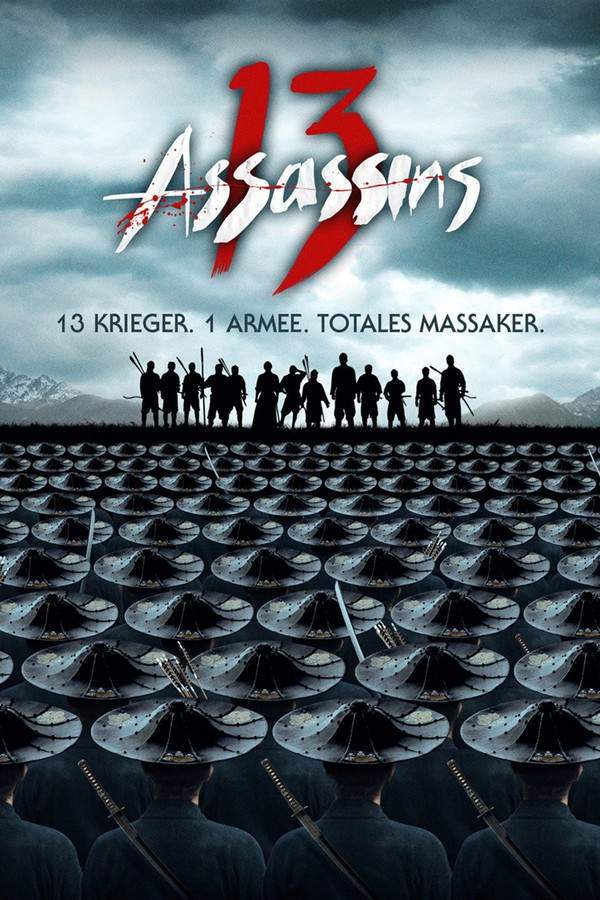
13 Assassins (2011) movie poster

Plot Summary

13 Assassins (2011) Plot Summary Explained

Release, runtime and language
2011 · 141 min · Japanese
JustWatch #2,305 9
Directed by
Takashi Miike

During feudal Japan, a skilled samurai is tasked with assembling a group of twelve assassins to eliminate a ruthless lord. This young nobleman, brother to the Shogun, has been terrorizing the populace with impunity. The film follows their meticulous planning and preparation as they confront the lord and his formidable protectors, culminating in an intense and prolonged battle sequence that pushes the boundaries of action cinema.

On this page (6)
  1. 1 Where to watch
  2. 2 What happens: full plot
  3. 3 Plot questions answered
  4. 4 Movie threads
  5. 5 Movies like 13 Assassins
  6. 6 Every angle

Where to watch

Where to Watch 13 Assassins (2011)

Where can you watch 13 Assassins? Stream, rent or buy it in the US, including on Amazon Prime Video, ARROW and Brew: current JustWatch availability with up-to-date prices.

Streaming availability powered by JustWatch

Full plot summary · contains spoilers

What Happens in 13 Assassins: Full Plot Summary

The whole story of 13 Assassins (2011) explained, from the opening scene to the final frame: every key event, every twist and what it all adds up to. Read it as a quick recap before the sequel, to check a scene you missed, or to finally understand what really happened.

The film is set in 1840s Japan, during the waning years of the Tokugawa shogunate. It follows the sadistic younger stepbrother of the reigning Shogun, Lord Matsudaira Naritsugu of Akashi, who indulges in his propensity for violence and sexual assault without consequence. Recognizing the increasing danger posed by Naritsugu's ambition, Sir Doi Toshitsura (Mikijiro Hira), the Shogun's Justice, grows alarmed at the prospect of Naritsugu attaining greater power.

The plot thickens when a member of the Mimiya family openly commits harakiri, a ritual act of defiance against their cruel overlord, Naritsugu. In the aftermath, Sir Doi seeks the expertise of Shinzaemon, a seasoned samurai loyal to the former Shogun, and covertly hires him to carry out the assassination of Naritsugu. However, the plot is soon uncovered by Naritsugu's loyal retainer Hanbei, an old friend of Shinzaemon's, who monitors Doi's clandestine meetings.

In a brutal display of his merciless nature, Naritsugu exterminates the entire Mimiya family, ignoring Hanbei's pleas for mercy. Yet, Hanbei remains bound to his duty of protecting his lord. Shinzaemon gathers a team of eleven other samurai, including his nephew, Shinroukuro, to ambush Naritsugu during his return trip from Edo to Akashi. Just before their departure, Hanbei delivers a chilling warning to Shinzaemon, threatening dire consequences should he attempt to carry out the assassination.

With Sir Doi's support, the group takes decisive measures by recruiting town Ochiai, creating an intricate trap to ensnare Naritsugu. They also gain the backing of a minor lord who bears his own grief; his daughter-in-law was assaulted and his son murdered at Naritsugu's hands. Together, they block the highway to force Naritsugu into the town where their trap awaits. However, unforeseen challenges arise when the assassination group is ambushed by ronin hired by Hanbei to eliminate the schemers.

Opting for a mountainous route, the group finds themselves lost but soon meets Kiga Koyata, a hunter who becomes their guide, ultimately joining them as the thirteenth assassin. They transform the town into a complex maze filled with booby traps and camouflaged fortifications. Yet, when Naritsugu arrives, he is accompanied by an overwhelming force—200 troops instead of the anticipated 70.

What ensues is an intense and chaotic battle, with the assassins launching a blend of arrows, explosives, and blades against Naritsugu and his men. Amidst the frenzy, the deranged lord revels in the violence, declaring that this is the most enjoyable moment of his life. He tells Hanbei of his intent to revive the wars reminiscent of the Sengoku period when he rises to the Shogun's council.

Despite the assassins suffering heavy losses, they manage to inflict significant damage on Naritsugu's forces. Eventually, the final confrontation sees Shinzaemon and Shinroukuro cornering Naritsugu and Hanbei. In an act of defiance, Shinzaemon slays Hanbei, only to be insulted by Naritsugu, who disdainfully kicks the severed head of his loyal retainer.

In a tense exchange, Naritsugu arrogantly proclaims the purpose of people and samurai is to serve their lords. Yet, Shinzaemon counters that lords depend on the people's support and warns that abuse of power will lead to rebellion. In a fatal duel, both warriors deliver mortal wounds to each other. As Naritsugu crawls away, experiencing fear for the first time, he begrudgingly thanks Shinzaemon for the thrill before the latter ends his life.

Following Shinzaemon's death, Shinroukuro wanders through the aftermath, eventually encountering a miraculously recovered Koyata. Together, they make their escape from the town. The epilogue reveals that the Shogun's government concealed the truth of these events, fabricating a narrative that Naritsugu died of illness on his way back. Ultimately, just 23 years later, the Tokugawa Shogunate would be dismantled during the Meiji Restoration.
Last updated: November 07, 2024 at 22:57

Was this helpful?

Plot questions answered

13 Assassins Plot Explained: Your Questions Answered

The questions people ask most about 13 Assassins (2011): what happens in the confusing scenes, why the characters do what they do, the twists, hidden details and what the ending means. Each answer contains spoilers.

Q1

Why does Sir Doi hire Shinzaemon to assassinate Lord Naritsugu?

Sir Doi Toshitsura, the Shogun's Justice, hires Shinzaemon because he recognizes Naritsugu as a growing threat to the Tokugawa shogunate. Naritsugu's unchecked sadism and political ambitions pose a danger to stability, and since Naritsugu is the Shogun's stepbrother, he cannot be removed through normal means. Doi covertly recruits Shinzaemon, a samurai loyal to the former Shogun, to eliminate this threat before Naritsugu gains more power.

Foreshadowing: Sir Doi's alarm is introduced early when he observes Naritsugu's growing ambitions and violence.

  • sir doi
  • shinzaemon
  • naritsugu
  • assassination
  • tokugawa shogunate
Q2

Why does the Mimiya family commit harakiri against Naritsugu?

A member of the Mimiya family commits harakiri as a defiant act of protest against Naritsugu's cruel oppression. This ritual suicide is meant to challenge their overlord and expose his tyranny to others. The act serves as the catalyst that prompts Sir Doi to take action against Naritsugu, recognizing that the situation has become intolerable.

Foreshadowing: This desperate act directly leads to Sir Doi's decision to hire Shinzaemon.

  • mimiya family
  • harakiri
  • protest
  • naritsugu
Q3

Why does Hanbei warn Shinzaemon but still protect Naritsugu?

Hanbei is an old friend of Shinzaemon, which is why he personally warns him against the assassination plot, threatening dire consequences if Shinzaemon proceeds. However, Hanbei remains loyal to his duty as Naritsugu's retainer. Despite witnessing Naritsugu's brutal massacre of the Mimiya family and pleading for mercy, Hanbei's code of loyalty binds him to protect his lord, even if that lord is evil.

Foreshadowing: Hanbei's warning establishes the personal conflict between friendship and duty that defines his character.

  • hanbei
  • shinzaemon
  • loyalty
  • duty
  • retainer
Q4

Why does the minor lord join the assassination plot?

The minor lord joins the assassins because Naritsugu personally wronged him, his daughter-in-law was assaulted and his own son was murdered by Naritsugu. Seeking justice for his personal tragedy, he provides crucial support by blocking the highway to force Naritsugu into the trap at Town Ochiai, aligning his grief with Shinzaemon's mission.

Foreshadowing: This personal motivation is revealed when the group recruits Town Ochiai with Sir Doi's backing.

  • minor lord
  • revenge
  • naritsugu
  • daughter-in-law
  • son
Q5

Why does Naritsugu arrive with 200 troops instead of the expected 70?

Naritsugu arrives with approximately 200 troops because his loyal retainer Hanbei has been monitoring the assassination plot and anticipating the ambush. Hanbei hires ronin to eliminate the schemers and increases Naritsugu's escort substantially, making the already difficult mission nearly impossible. This forces the assassins to adapt their strategy when they realize they are outnumbered.

Foreshadowing: Hanbei's warning to Shinzaemon about the consequences of proceeding foreshadows his counter-measures.

  • hanbei
  • naritsugu
  • 200 troops
  • ambush
  • ronin
  • outnumbered
Q6

Why does Shinzaemon kill Hanbei despite their friendship?

Shinzaemon kills Hanbei during the final confrontation because Hanbei remains loyal to Naritsugu and actively fights against the assassins. Despite their old friendship, Shinzaemon must eliminate any defender standing between him and his target. The act is tragic but necessary, Hanbei chooses his duty as a retainer over their personal bond, forcing Shinzaemon to honor his own mission over their friendship.

Foreshadowing: Hanbei's warning and his decision to increase Naritsugu's troops establish that he will not stand aside.

  • shinzaemon
  • hanbei
  • friendship
  • loyalty
  • final confrontation
Q7

Why does Naritsugu thank Shinzaemon at the end?

Naritsugu thanks Shinzaemon because the battle represents the first time he experiences genuine fear and real combat excitement. Throughout his life, he inflicted violence without consequence, but Shinzaemon's attack provides a thrilling challenge he has never known. In his twisted perspective, this life-threatening duel is the most enjoyable moment of his existence, making his death feel satisfying to him.

Foreshadowing: Naritsugu's earlier declaration that the battle is the most enjoyable moment of his life establishes his love of violence.

  • naritsugu
  • shinzaemon
  • thanks
  • fear
  • battle
  • thrill
Q8

Why does the Shogun's government cover up Naritsugu's death?

The Shogun's government covers up Naritsugu's death to protect the political legitimacy of the Tokugawa shogunate. Acknowledging that the Shogun's own stepbrother was assassinated would expose internal corruption and weakness. They fabricate a story that Naritsugu died of illness, erasing the assassination from history while ultimately the shogunate falls just 23 years later during the Meiji Restoration.

Foreshadowing: This cover-up ensures the historical ending where the Tokugawa shogunate collapses shortly after these events.

  • shogun government
  • cover-up
  • illness
  • tokugawa shogunate
  • meiji restoration
Q9

Why do the assassins transform the town into a maze with booby traps?

The assassins transform Town Ochiai into a maze of booby traps and camouflaged fortifications to compensate for their severe disadvantage in numbers. With only 13 assassins facing potentially 70 troops, they use the town's architecture to create kill zones, channel enemies into narrow spaces, and maximize their defensive advantage. This meticulous preparation reflects their understanding that they cannot win through sheer force.

Foreshadowing: This preparation occurs after they recruit Town Ochiai and gain the minor lord's support.

  • town ochiai
  • maze
  • booby traps
  • fortifications
  • preparation
  • defense
Q10

Why does Koyata become the thirteenth assassin?

Kiga Koyata, a skilled hunter, initially guides the lost assassins through the mountains. Impressed by their cause and perhaps seeking purpose, he chooses to join them as the thirteenth assassin. His hunting skills and knowledge of the terrain prove valuable in preparing the town's defenses and navigating the challenging landscape.

Foreshadowing: The group meets Koyata after getting lost in the mountains during their journey.

  • kiga koyata
  • hunter
  • thirteenth assassin
  • guide
  • mountains
Q11

Why does Naritsugu want to revive the Sengoku period?

Naritsugu wants to revive the Sengoku period, the era of warring states, because he craves endless warfare and chaos. During the battle, he tells Hanbei that he intends to rise to the Shogun's council and restart the wars that defined that turbulent era. His sadistic nature finds peace boring; he thrives on violence and conflict and sees himself as a warrior destined for that chaotic future.

Foreshadowing: This ambition is mentioned during the battle, revealing the scale of threat Doi perceived in Naritsugu.

  • naritsugu
  • sengoku period
  • wars
  • shogun council
  • violence
Q12

What happens to Shinroukuro after the battle?

After Shinzaemon dies in his duel with Naritsugu, Shinroukuro, the nephew who joined as one of the assassins, wanders through the devastating aftermath. Miraculously, he encounters Koyata, who has survived despite being severely wounded. Together, they escape from the town, making it out alive while most of the assassins have perished.

Foreshadowing: Shinroukuro is introduced as Shinzaemon's nephew among the eleven samurai gathered for the mission.

  • shinroukuro
  • koyata
  • escape
  • survival
  • aftermath

Movie threads

More Movies Like 13 Assassins, by Mood & Story

Curated lists built around what makes 13 Assassins tick: the same mood, the same kind of story or the same emotional payoff. Each list explains why these movies belong together.

Movies with a methodical buildup like 13 Assassins

Stories that patiently assemble tension before a relentless, cathartic release. If you liked the patient, tense preparation in 13 Assassins leading to its explosive finale, you'll find similar satisfaction here. These movies prioritize strategic planning and rising dread before delivering a powerful, action-packed payoff. Discover more films where the calm before the storm is as compelling as the storm itself.

  • methodical
  • tense
  • cathartic
  • chaotic
  • desperate
  • strategic
  • Tone: tense, grim, cathartic
  • Pacing: variable, slow burn to fast
Why these movies?

The story pattern: Narratives in this thread typically follow a clear mission or goal, dedicating the first two-thirds of the story to assembly, strategy, and the quiet build-up of stakes. The final act then shifts dramatically into a fast-paced, high-intensity confrontation, where the careful planning is put to the ultimate test in a prolonged and chaotic sequence.

Why they belong together: These films are grouped by their distinctive pacing structure and emotional payoff. They share a commitment to making the audience wait and invest in the 'how' before experiencing the 'what,' resulting in a uniquely satisfying and intense viewing experience where the action feels consequential.

Suicide mission stories with heavy cost like 13 Assassins

Stories of sacrifice where victory is achieved but feels like a pyrrhic loss. Fans of 13 Assassins who appreciate its exploration of honor and sacrifice will find powerful echoes in these films. This list features movies about desperate missions where success comes at a devastating human cost, leaving a bittersweet or somber ending. Explore more stories where doing the right thing requires everything.

  • desperate
  • grim
  • oppressive
  • honorable
  • sacrificial
  • brutal
  • Tone: dark, bleak, bittersweet
  • Pacing: steady, variable
Why these movies?

The story pattern: The narrative pattern involves a group or individual accepting a mission with a low probability of survival, driven by a higher code of honor or to combat a grave injustice. The story explores the weight of this decision, the bonds formed under extreme duress, and culminates in a success that is morally ambiguous or physically devastating, challenging the very ideals that motivated the fight.

Why they belong together: These movies are united by their thematic focus on sacrifice, moral duty, and the bittersweet nature of violent resolution. They share a dark tone, heavy emotional weight, and an ending that lingers on the cost of victory rather than its glory.

If you liked this

Movies Like 13 Assassins

Similar movies to 13 Assassins: the same genre, themes or kind of story. Each one comes with its own plot summary, timeline and ending explained.

Browse all movie summaries

Every angle

13 Assassins (2011) Explained: Plot, Timeline & Characters

Everything about 13 Assassins in one place: what happens in the plot summary, the timeline in chronological order, the characters and meaning and a spoiler-free summary. What's After the Movie adds the cast, box office and post-credit scenes.

Coming soon on iOS and Android

The Plot Explained Movie Summary App

Plot summaries, endings explained and timelines on your phone. Catch up on any movie in minutes, save your favorites and never miss a twist again.
Be the first to know when we launch. Your email stays private, always.

Learn more about the app