Year: 2002
Runtime: 108 min
Language: English
Director: Michael Hoffman
Budget: $13M
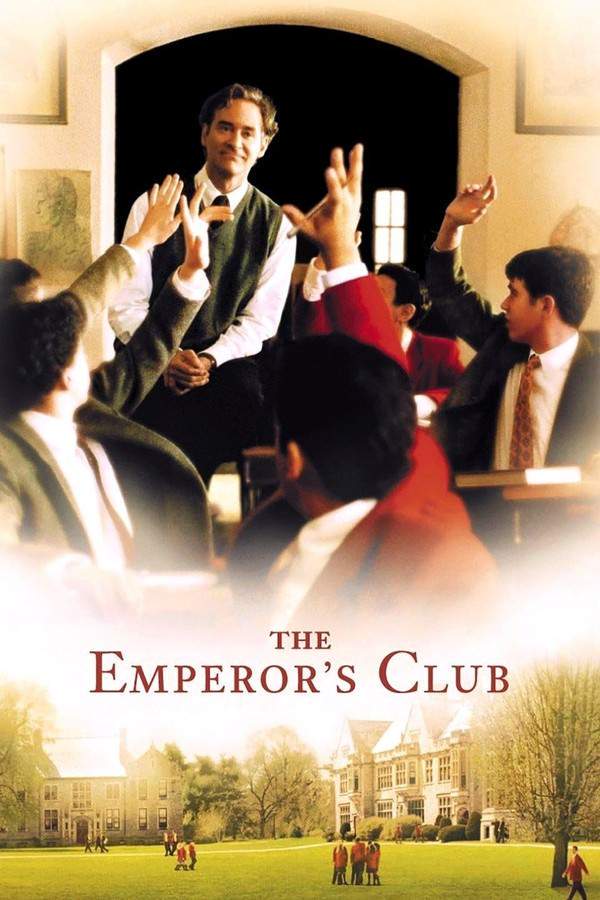
A passionate teacher, Arthur Hundert, finds his classroom disrupted by the arrival of Sedgewick Bell, the privileged son of a powerful senator. Their clash ignites a rivalry that tests the values and traditions of the prestigious St. Benedictus prep school. As Arthur strives to impart his principles of honor and integrity, he and Sedgewick embark on a transformative journey that challenges them both and exposes the complexities of morality and ambition within the school's elite community.
Warning: spoilers below!
Haven’t seen The Emperor's Club yet? This summary contains major spoilers. Bookmark the page, watch the movie, and come back for the full breakdown. If you're ready, scroll on and relive the story!
Read the complete plot breakdown of The Emperor's Club (2002), including all key story events, major twists, and the ending explained in detail. Discover what really happened—and what it all means.
Professor William Hundert is a respected Classics history teacher at St. Benedict’s Academy for Boys, beginning another academic year as students introduce themselves. Among his rituals is a plaque above his door that he asks one student, Martin Blythe, to read aloud. The inscription details the legacy of Shutruk Nahunte, recounting conquests and achievements forgotten by time. Hundert emphasizes that “Ambition and conquest without contribution is without significance,” prompting a thought-provoking challenge: “What will your contribution be? How will history remember you?” This notion becomes the underlying theme of the film. A budding friendship with fellow teacher Elizabeth is also established, as she returns from Greece gifting Hundert a snow globe of the Parthenon.
But soon, a new student named Sedgewick Bell enters the classroom, the son of a West Virginia senator. His arrogant demeanor clashes sharply with Hundert’s principles, leading to escalating tensions. As Hundert attempts to guide Sedgewick’s troubled path, he feels compelled to discuss the situation with Senator Bell. However, the senator’s indifferent response to his son’s moral development leaves Hundert frustrated, insisting that his job is merely to impart knowledge from textbooks, not shape character.
Returning to St. Benedict’s, Hundert prepares for the much-anticipated “Mr. Julius Caesar” contest, determining finalists based on their essay performances. Among the top scorers are Deepak Mehta, Louis Masoudi, and the transformed Sedgewick Bell, who surprises Hundert with his newfound dedication. However, in a moment of concern for Bell’s potential, Hundert bends the rules to alter his scores, pushing him ahead of Blythe.
When the contest arrives, Masoudi quickly falters, leaving Bell and Mehta to compete for the title. As Hundert perceives Bell making suspicious gestures during questions, he suspects cheating. Unsure of what to do, he consults the headmaster, who shockingly advises him to overlook it. Using his knowledge of Hamilcar Barca—a topic not covered in their textbooks—Hundert outsmarts Bell, leading to Mehta’s well-deserved victory. Following the contest, Hundert uncovers Bell’s deceitful tactics and is left disillusioned.
Fast forward twenty-five years, where Hundert is married to Elizabeth and learns he won’t be appointed headmaster after the previous one’s passing. His resignation follows swiftly after the Board favors a younger colleague’s fundraising potential over his experience. Shortly thereafter, Hundert receives an invitation from the now-wealthy Sedgewick Bell, who requests a rematch of the “Mr. Julius Caesar” contest and promises substantial funding for the school if Hundert agrees.
At Bell’s opulent estate, Bell expresses gratitude for the lessons he learned despite his past defiance. As the contest commences, Masoudi once again falters, leading to a duel between Mehta and Bell. But Hundert notices an earpiece in Bell’s ear, indicating cheating—just as a man in the back with a headset searches books. To test Bell, Hundert asks him about Shutruk Nahunte; both Bell and the man are stumped, allowing Mehta to win again through recalling the plaque’s inscription.
When Hundert confronts Bell later, he is met with hostility, with Bell dismissively asserting that in his world, “people do what they do to get what they want,” revealing his true nature. This exchange shocks Bell’s son, inadvertently present, causing Bell to realize the hypocrisy of his words.
The next morning, Hundert finds a note from his students wishing him well before preparing to depart. However, they unexpectedly surprise him with a party. In a reflective moment, he admits to Martin Blythe that he allowed Bell’s unfair advantage back then. Ultimately, Hundert finds solace knowing that despite his failure with Bell, most of his former students have matured into honorable individuals.
Determined to redefine his purpose, Hundert returns to St. Benedict’s, now a co-ed institution, as a Classics teacher. The sight of a new cohort of students, including Blythe’s son, brings happiness as he witnesses a familiar face outside his classroom and encourages Blythe’s son to read Shutruk Nahunte’s plaque, reminiscent of his father’s experience years ago.
Last Updated: November 08, 2024 at 01:01
Discover curated groups of movies connected by mood, themes, and story style. Browse collections built around emotion, atmosphere, and narrative focus to easily find films that match what you feel like watching right now.
Stories where teachers shape lives, but face complex moral challenges and disillusionment.Find movies like The Emperor's Club, featuring thoughtful stories about teachers and mentors whose lives become intertwined with their students. These similar dramas explore themes of ethical responsibility, academic rivalry, and the lasting, sometimes bittersweet, impact of education on future generations.
Narratives typically follow a dedicated mentor figure, often in an academic or institutional setting, who invests heavily in a promising or troubled student. The story explores their intellectual and moral clashes, the teacher's personal ideals, and the long-term consequences—both fulfilling and disillusioning—of their influence.
Movies are grouped here for their shared focus on the teacher-student dynamic as a vehicle for exploring ethics, ambition, and personal failure. They share a reflective, thought-provoking mood and a steady pacing that allows for deep character study, often culminating in a bittersweet evaluation of one's life work.
Character-driven dramas where personal integrity clashes with power and entitlement.If you liked The Emperor's Club, explore these similar dramas about moral conflict within privileged environments. These stories examine the tension between personal integrity and systemic power, often set in exclusive worlds like elite schools or powerful institutions, with a steady, reflective pace.
The narrative pattern centers on an ethical protagonist navigating a world defined by power, tradition, and entitlement. A central conflict arises, often with a charismatic but morally ambiguous antagonist, forcing a re-examination of principles. The story unfolds with a focus on dialogue and moral quandaries rather than action, leading to an ending that acknowledges complexity rather than simple victory.
These films share a specific vibe: a medium-intensity, steady-paced exploration of ethics set against a backdrop of privilege. They are united by a thoughtful tone, themes of moral compromise, and a setting that isolates and magnifies character flaws and virtues.
Don't stop at just watching — explore The Emperor's Club in full detail. From the complete plot summary and scene-by-scene timeline to character breakdowns, thematic analysis, and a deep dive into the ending — every page helps you truly understand what The Emperor's Club is all about. Plus, discover what's next after the movie.
Track the full timeline of The Emperor's Club with every major event arranged chronologically. Perfect for decoding non-linear storytelling, flashbacks, or parallel narratives with a clear scene-by-scene breakdown.
Discover the characters, locations, and core themes that shape The Emperor's Club. Get insights into symbolic elements, setting significance, and deeper narrative meaning — ideal for thematic analysis and movie breakdowns.
Get a quick, spoiler-free overview of The Emperor's Club that covers the main plot points and key details without revealing any major twists or spoilers. Perfect for those who want to know what to expect before diving in.
Visit What's After the Movie to explore more about The Emperor's Club: box office results, cast and crew info, production details, post-credit scenes, and external links — all in one place for movie fans and researchers.
Discover movies like The Emperor's Club that share similar genres, themes, and storytelling elements. Whether you’re drawn to the atmosphere, character arcs, or plot structure, these curated recommendations will help you explore more films you’ll love.
The Emperor's Club (2002) Scene-by-Scene Movie Timeline
The Emperor's Club (2002) Movie Characters, Themes & Settings
The Emperor's Club (2002) Spoiler-Free Summary & Key Flow
Movies Like The Emperor's Club – Similar Titles You’ll Enjoy
The Catholic School (2022) Story Summary & Characters
The Club (2016) Full Summary & Key Details
Art School Confidential (2006) Full Summary & Key Details
School Ties (1992) Full Movie Breakdown
Class (1983) Full Movie Breakdown
The Men's Club (1986) Plot Summary & Ending Explained
The Emperor’s Wife (2003) Story Summary & Characters
Book of Love (2004) Movie Recap & Themes
The Lords of Discipline (1983) Movie Recap & Themes
The Everlasting Secret Family (1988) Ending Explained & Film Insights
The Schoolmaster Games (2022) Story Summary & Characters
if… (1968) Spoiler-Packed Plot Recap
The Devil’s Playground (1976) Spoiler-Packed Plot Recap
Assassination of a High School President (2008) Story Summary & Characters
Private Vices, Public Virtues (1976) Plot Summary & Ending Explained