Plot Explained Spoilers guaranteed!
Plot Explained

Browse by genre

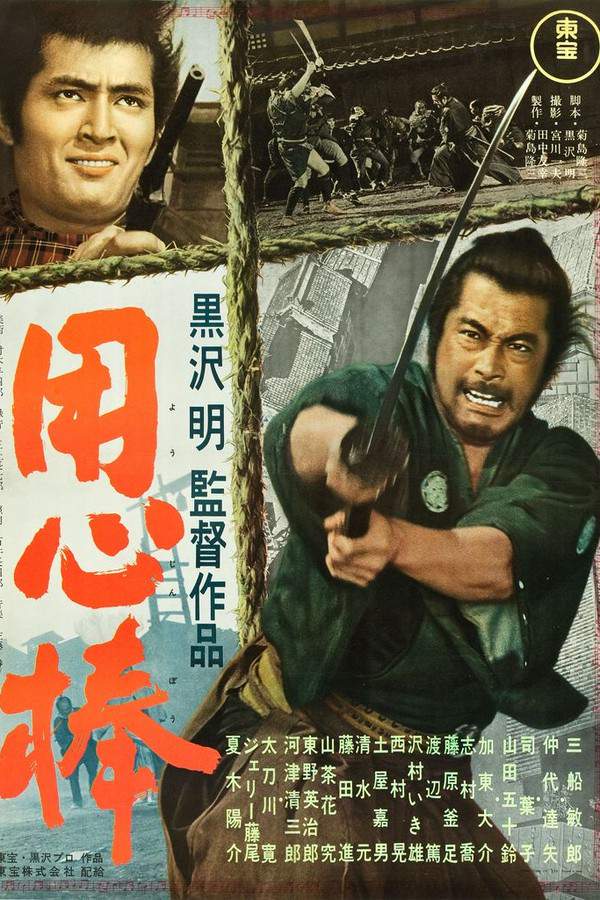
Yojimbo (1961) movie poster

Plot Summary

Yojimbo (1961) Plot Summary Explained

Release, runtime and language
1961 · 110 min · Japanese
Loading streaming availability…
Directed by
Akira Kurosawa
Starring
Tatsuya Nakadai, Toshirô Mifune, Yôko Tsukasa, Takashi Shimura, Daisuke Katô, Eijirô Tôno

During the turbulent era of feudal Japan, a mysterious ronin encounters a town fractured by conflict between rival merchants. Posing as a bodyguard named Sanjuro Kuwabatake, the lone samurai subtly influences the power struggle between silk merchant Tazaemon and sake merchant Tokuemon. He cleverly exploits their greed and ambition, orchestrating a violent and chaotic gang war as he navigates the dangerous landscape and seeks his own reward.

On this page (7)
  1. 1 Where to watch
  2. 2 What happens: full plot
  3. 3 Plot questions answered
  4. 4 The book behind the movie
  5. 5 Movie threads
  6. 6 Movies like Yojimbo
  7. 7 Every angle
Loading streaming availability…

Full plot summary · contains spoilers

What Happens in Yojimbo: Full Plot Summary

The whole story of Yojimbo (1961) explained, from the opening scene to the final frame: every key event, every twist and what it all adds up to. Read it as a quick recap before the sequel, to check a scene you missed, or to finally understand what really happened.

In the late 19th century, a wandering ronin, portrayed by Toshiro Mifune, travels along a dusty road and stumbles upon a house. Seeking a drink from the well, he encounters a man who is busy chastising his son for wanting to escape a life of "eating gruel" by joining a nearby gang of gamblers. When the son departs, the father insults the ronin, claiming that he attracts trouble when "they smell blood."

Venturing into the nearby town, the ronin finds the streets deserted, with only hostile stares from local gang members lurking behind sliding doors. Suddenly, he is taken aback by a dog carrying a human hand in its mouth. Unfazed, he wanders further and finds an empty tavern where he meets the elderly owner, Gonji, who serves him hot sake and cold rice. Gonji provides a grim overview of the town's criminal hierarchy: Seibei (played by Seizaburô Kawazu), the older crime boss, operates a brothel with his domineering wife Orin (portrayed by Isuzu Yamada), while the more ruthless Ushitora (featured with ferocity by [Kyu Sazanka]) dominates the scene through violence, supported by his brutish brother Inokichi (acted by Daisuke Katô) and the corrupt sake-brewer Tokuemon (played by Takashi Shimura).

Despite Gonji's attempts to persuade the ronin to leave, he surprises everyone by declaring his intention to "stay for a while." Soon after, he visits Seibei's home, challenging his gang to display their skills. When the ronin confronts Ushitora's thugs and promises them death, a swift battle ensues where he dispatches several gang members with ease, indicating his deadly prowess.

Recognizing the value of the ronin's skills, Seibei hires him as a bodyguard, giving him the name Sanjuro Kuwabatake—meaning "Thirty-something mulberry field", although he amusingly adds that he's "actually nearly forty." Unknown to Sanjuro, Seibei and Orin are plotting to eliminate him once they have utilized his talents.

As tensions escalate, Sanjuro finds himself in the middle of a standoff between the two rival gangs, observing from afar as they fail to engage each other in combat. Things take a darker turn when Ushitora sends his men to kidnap Seibei's son, Yoichiro, while Sanjuro vows to spy on Ushitora in hopes of unearthing valuable intel.

In a tangled web of deceit and danger, Sanjuro gathers crucial information, ultimately leading him to discover Nui (played by Yôko Tsukasa), who has been tragically caught in the crossfire of gang violence. With a fierce resolve, he undertakes a daring rescue, facing off against Ushitora's heavily-guarded stronghold, demonstrating both cunning and skill as he navigates through this chaotic world.

As Sanjuro repeatedly maneuvers through violence and treachery, he becomes a lone wolf, determined to end the cycle of bloodshed. The climactic confrontation sees him ambush Ushitora's gang, culminating in a series of swift and brutal clashes that leave the street littered with the remnants of chaos. He spares only one of Ushitora’s thugs, reminiscent of his early experiences in a town now drenched in violence.

With the town at his feet, Sanjuro finally frees Gonji from his bonds and declares that the town should be "pretty quiet" now. In a final act of rebellion and freedom, Sanjuro walks away from the remnants of the conflict, leaving the shattered town behind as he heads off into the unknown, proving that amidst the dark chaos, there still exists the potential for a new dawn.

Last updated: November 16, 2024 at 12:27

Was this helpful?

Plot questions answered

Yojimbo Plot Explained: Your Questions Answered

The questions people ask most about Yojimbo (1961): what happens in the confusing scenes, why the characters do what they do, the twists, hidden details and what the ending means. Each answer contains spoilers.

Q1

Why does the ronin decide to stay in a town controlled by warring gangs?

The ronin stays because he sees an opportunity to profit from the conflict between the two gangsters. When Gonji warns him about the dangers, the ronin simply declares he will "stay for a while," revealing his opportunistic nature. His aim is to leverage the rivalry between Seibei and Ushitora for his own financial gain.

Foreshadowing: Early in his arrival, the father at the well warns that the ronin attracts trouble when "they smell blood," hinting at his magnetic pull toward conflict.

  • ronin
  • motivation
  • gangs
  • Seibei
  • Ushitora
  • opportunity
Q2

What does the name Sanjuro Kuwabatake mean and why is it significant?

Sanjuro Kuwabatake translates to "Thirty-something mulberry field," but the ronin amusingly admits he is "nearly forty." The name is given to him by Seibei when he hires him as a bodyguard. This renaming symbolizes how the ronin adopts a new identity for his scheme, becoming whoever the situation demands.

  • Sanjuro Kuwabatake
  • name
  • identity
  • Seibei
  • ronin
Q3

Why do Seibei and Orin plot to kill Sanjuro after hiring him?

Seibei and Orin hire Sanjuro for his deadly combat skills but plan to eliminate him once his usefulness ends because they view him as too dangerous to keep alive. Orin, Seibei's domineering wife, is particularly ruthless and encourages this betrayal. This reflects the corrupt moral compass of all parties in the town, they use violence but fear it in the wrong hands.

Foreshadowing: When Sanjuro first challenges Seibei's gang, his display of lethal prowess immediately makes him both valuable and threatening.

  • Seibei
  • Orin
  • betrayal
  • Sanjuro
  • conspiracy
  • violence
Q4

How does Sanjuro manage to rescue Nui from Ushitora's stronghold?

Sanjuro infiltrates Ushitora's heavily-guarded stronghold through a combination of cunning and combat skill. The summary describes it as a "facing off" where he demonstrates both tactical intelligence and martial prowess. Nui had been "tragically caught in the crossfire of gang violence," and Sanjuro's rescue mission marks a turning point where he shifts from merely manipulating the gangs to actively intervening on behalf of victims.

Foreshadowing: Earlier, Sanjuro vows to spy on Ushitora to "unearth valuable intel," which ultimately leads him to discover Nui's location.

  • Nui
  • rescue
  • Ushitora
  • stronghold
  • gang violence
  • Sanjuro
Q5

Why does Sanjuro spare only one of Ushitora's thugs during the final confrontation?

Sanjuro spares one thug as a deliberate message to the surviving townspeople, reminiscent of his earlier experiences in a town now drenched in violence. This act shows his continued use of psychological manipulation even at the climax. By leaving one witness, he ensures the story of what happened will spread, reinforcing his role as an agent of chaos who orchestrates outcomes rather than simply killing indiscriminately.

Foreshadowing: Early on, the ronin shows he is unfazed by violence but uses it strategically, not brutally, he dispatches thugs when necessary but spares when it serves his purpose.

  • sparing thug
  • final confrontation
  • Ushitora
  • Sanjuro
  • message
  • violence
Q6

What is the significance of the dog carrying a human hand in its mouth?

The dog carrying a human hand is the first indicator of the town's extreme violence and lawlessness. It establishes the grim atmosphere immediately upon the ronin's arrival. This unsettling image foreshadows the brutal events to come and signals that death is commonplace in this corrupt settlement.

  • dog
  • human hand
  • violence
  • symbolism
  • town atmosphere
Q7

Why does Sanjuro free Gonji at the end and what does his final declaration mean?

Sanjuro frees Gonji from captivity as a final act of liberation before departing. He declares the town should be "pretty quiet" now, signifying that he has eliminated the gang leaders who controlled the town through violence and fear. This act represents his one genuinely altruistic gesture, freeing someone who showed him kindness despite the dangers. However, the quiet he brings comes at tremendous cost, leaving the town shattered.

Foreshadowing: Gonji was the only person who welcomed the ronin with food and honest conversation, making his rescue meaningful rather than strategic.

  • Gonji
  • freeing
  • departure
  • quiet
  • town
  • liberation
Q8

Why is the ending of Yojimbo considered bittersweet rather than a outright victory?

The ending is bittersweet because while Sanjuro successfully eliminates both warring gangs and brings temporary peace to the town, he does so by using the very violence he claims to oppose. He walks away alone into "the unknown," having exploited everyone's greed and bloodshed for his own profit. The town is left shattered, and his methods mirror the corrupt tactics of the gangsters he destroyed, making his victory hollow and pyrrhic.

Foreshadowing: Throughout the film, Sanjuro operates with an amoral, strategic flair, manipulating both sides without loyalty to any cause beyond his own gain.

  • ending
  • bittersweet
  • victory
  • pyrrhic
  • Sanjuro
  • departure
  • violence
  • town
Q9

How does Sanjuro successfully manipulate both gangs without being exposed?

Sanjuro plays both sides by presenting himself as a valuable bodyguard to Seibei while secretly gathering intelligence on Ushitora's operations. He exploits the mutual hatred and mistrust between the two rival gangsters, who are each too paranoid and greedy to question his true allegiances. His strategy relies on keeping both sides convinced they need him while he engineers their mutual destruction.

  • manipulation
  • gangs
  • Seibei
  • Ushitora
  • strategy
  • deception
  • Sanjuro
Q10

Why does Ushitora kidnap Seibei's son Yoichiro?

Ushitora kidnaps Yoichiro as a strategic move to gain leverage over Seibei in their ongoing gang war. By holding the son hostage, Ushitora aims to force Seibei into surrendering territory or paying tribute. This act escalates the conflict significantly and drives the story toward its violent climax, as Sanjuro uses this crisis to further his own scheming.

Foreshadowing: The kidnapping occurs during a period when tensions are already high and the gangs are in a tense standoff, ready to strike at any advantage.

  • Yoichiro
  • kidnapping
  • Ushitora
  • Seibei
  • leverage
  • gang war
  • escalation

Movie threads

More Movies Like Yojimbo, by Mood & Story

Curated lists built around what makes Yojimbo tick: the same mood, the same kind of story or the same emotional payoff. Each list explains why these movies belong together.

Movies with a cynical manipulator like in Yojimbo

A lone, amoral protagonist plays warring factions against each other for personal gain. If you liked the clever, amoral strategy of Sanjuro in Yojimbo, you'll enjoy these movies. This thread gathers stories featuring lone wolves who navigate corrupt systems by turning rival factions against each other, leading to chaotic and violent outcomes. Fans of tactical anti-heroes and stories of systematic manipulation will find similar thrills here.

  • cynical
  • calculating
  • strategic
  • chaotic
  • grim
  • tense
  • Tone: dark, cynical, calculating
  • Pacing: steady, strategic build
Why these movies?

The story pattern: The narrative follows a single, highly competent individual who arrives in a setting defined by conflict, often between two or more opposing groups. Rather than joining a side, the protagonist exploits the flaws and ambitions of all parties, carefully escalating the conflict to serve their own ends, resulting in a pyrrhic victory or a world cleansed by the very violence they unleashed.

Why they belong together: Movies are grouped here for their shared focus on a specific character archetype—the calculating, morally ambiguous manipulator—and the narrative structure of pitting factions against each other. They share a dark, cynical tone, a steady pacing that builds towards orchestrated chaos, and a heavy emotional weight rooted in moral decay.

Movies set in a corrupt town like Yojimbo

A forsaken community becomes a battlefield for morally bankrupt factions. For viewers who appreciated the bleak, forsaken town in Yojimbo, this thread collects movies where the setting itself is a character. These stories explore communities consumed by greed and violence, where outsider protagonists navigate a landscape of moral decay. If you like tales of systemic corruption and grim world-building, you'll find similar movies here.

  • grim
  • brutal
  • tense
  • corrupt
  • forsaken
  • chaotic
  • Tone: dark, grim, tense
  • Pacing: steady, atmospheric
Why these movies?

The story pattern: The narrative pattern revolves around a corrupt or isolated setting that amplifies human flaws. An outsider or a resident must navigate this dangerous ecosystem, where loyalty is nonexistent and survival depends on understanding the intricate web of greed and power. The story often culminates in a violent purge that leaves the setting scarred but perhaps momentarily cleansed.

Why they belong together: These movies share a powerful, atmospheric focus on a world defined by its own moral bankruptcy. They are connected by a dark, grim tone, a steady pacing that reveals the depth of corruption, and a heavy emotional weight. The central conflict is not just between individuals, but between order and the pervasive chaos of a broken system.

If you liked this

Movies Like Yojimbo

Similar movies to Yojimbo: the same genre, themes or kind of story. Each one comes with its own plot summary, timeline and ending explained.

Browse all movie summaries

Every angle

Yojimbo (1961) Explained: Plot, Timeline & Characters

Everything about Yojimbo in one place: what happens in the plot summary, the timeline in chronological order, the characters and meaning and a spoiler-free summary. What's After the Movie adds the cast, box office and post-credit scenes.

Coming soon on iOS and Android

The Plot Explained Movie Summary App

Plot summaries, endings explained and timelines on your phone. Catch up on any movie in minutes, save your favorites and never miss a twist again.

Be the first to know when we launch. Your email stays private, always.

Learn more about the app