Plot Explained Spoilers guaranteed!
Plot Explained

Browse by genre

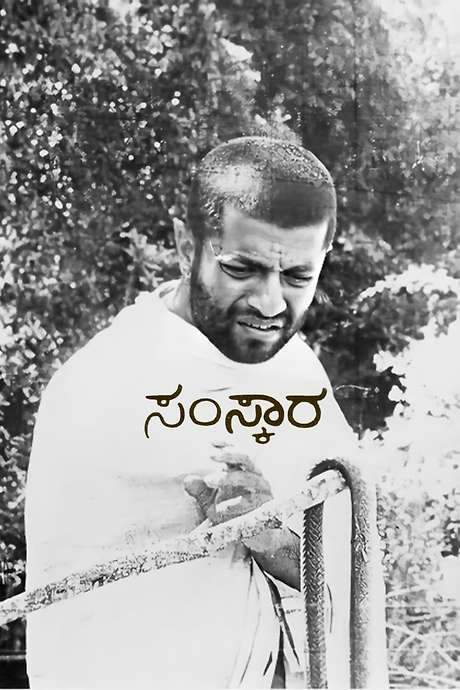
Samskara (1970) movie poster

Timeline

Samskara (1970) Timeline Explained – Every Event in Order

Release, runtime and language
1970 · 113 mins · Kannada
Directed by
Pattabhirama Reddy
Starring
Girish Karnad, Lakshmi Krishnamurthy, Dasharathi Dixit, Snehalata Reddy, B.R. Jayaram, P. Lankesh

Narayanappa, a Madhwa Brahmin, passes away in the Agrahara of Durvasapura. Madhwa tradition demands his funeral rites be carried out, yet his transgressions—eating meat, drinking alcohol and marrying a prostitute—spark a dispute among the village Brahmins over who may perform the rites. The dispute stalls the rites until a resolution is reached.

On this page (5)
  1. 1 Events in order (14)
  2. 2 Timeline questions answered
  3. 3 Movie threads
  4. 4 Movies like Samskara
  5. 5 Every angle

14 events in order · contains spoilers

Samskara Timeline: Events in Chronological Order

Every key event of Samskara (1970) in order, scene by scene, with when and where it takes place. Use it to untangle flashbacks, time jumps and parallel storylines, to refresh your memory before the sequel or to find the exact scene you are thinking of.

  1. Praneshacharya returns as village leader seeking moksha

    Praneshacharya, a devout Brahmin who has completed Vedic studies, returns to Durvasapura and is revered as the spiritual leader of the Brahmin community. His overarching goal is liberation (moksha) and he is willing to endure personal sacrifices to pursue it. The setting establishes his authority and single-minded pursuit.

    Where
    Durvasapura
  2. Praneshacharya marries an invalid woman for celibacy-laden sacrifice

    To remain focused on moksha, he takes a wife who is invalid, thereby choosing celibacy as the price of his spiritual quest. This act signals his willingness to bear harsh personal consequences for his goal. It also sets up the moral tension surrounding his future decisions.

    Where
    Durvasapura
  3. Narayanappa rejects Brahmin rules by eating meat and associating with Chandri

    Although a Brahmin by birth, Narayanappa embraces a lifestyle outside the strict caste norms. His acts spark controversy among the villagers and threaten the social order of Durvasapura.

    Where
    Durvasapura
  4. Sacred fish incident in temple tank

    Narayanappa and his companions catch sacred fish in the temple tank and cook them, feeding a direct challenge to Brahmin authority. The act triggers collective outrage among the Brahmins and a demand for Narayanappa's expulsion.

    Where
    Durvasapura temple tank
  5. Brahmins urge Praneshacharya to expel Narayanappa

    The Brahmins confront Praneshacharya, asking him to remove Narayanappa from the community. Praneshacharya considers the request, weighing the severity of the offense against the possibility of reform.

    Where
    Durvasapura
  6. Praneshacharya chooses reform over expulsion

    He decides against taking the extreme step of banishment, hoping to convince Narayanappa to renounce his immoral acts. He believes dialogue and reform are possible within the village's frame of Brahmin ethics.

    Where
    Durvasapura
  7. Narayanappa travels to Shimoga and dies after returning

    Narayanappa leaves for Shimoga to escape the pressure, but returns with a high fever and dies. His death deepens the crisis of ritual purity and raises questions about who can perform the necessary rites.

    Where
    Shimoga
  8. Cremation dilemma: pollution vs tradition

    With Narayanappa dead, the Brahmins face a cruel dilemma: cremating a Brahmin's body risks pollution, but a non-Brahmin cannot perform the rite. They search for a solution within their constraints but find none.

    Where
    Durvasapura
  9. Praneshacharya searches for an answer in scriptures and prayer

    He studies the holy books and goes to a temple to pray for guidance, spending a full day in contemplation. The scriptures fail to offer a clear solution, leaving him spiritually unsettled.

    Where
    Durvasapura temple
  10. Encounter with Chandri and the night awakening

    On his way home, he encounters Chandri and is entranced by her beauty. In a moment of weakness, he falls under her influence, an act that exposes a hidden guilt within him.

    Where
    Durvasapura
  11. Chandri secretly cremates Narayanappa and leaves

    Chandri rushes home, discovers Narayanappa's body decaying, and arranges for a private cremation away from Durvasapura. She then flees the village, leaving the others to their complicating secrets.

    Where
    Durvasapura
  12. Guilt drives Praneshacharya away from the village

    Feeling the weight of his own indiscretion, Praneshacharya departs Durvasapura, hoping to escape the repercussions of his actions. The departure marks a drastic break from his role as community guide.

    Where
    Durvasapura
  13. He returns to face his act and perhaps confess

    Eventually he returns to the village, determined to own up to his act and bear the consequences. The narrative stops short of revealing whether he finally confesses, leaving the outcome to the viewer.

    Where
    Durvasapura
  14. Ending left to imagination

    The story closes with ambiguity about whether Praneshacharya reveals his indiscretion. The moral and spiritual dilemma lingers, inviting reflection on guilt, power, and reform.

    Where
    Durvasapura

Last updated: October 07, 2025 at 08:39

Was this helpful?

Timeline questions answered

Samskara Timeline Explained: Your Questions Answered

When does it happen, and why in that order? The questions people ask about the chronology of Samskara (1970): time jumps, flashbacks, cause and effect between scenes and the correct order of events, each answered with spoilers.

Q1

Why can't the Brahmins let a non-Brahmin cremate Narayanappa?

In Madhwa Brahmin tradition, a Brahmin's body must be cremated by another Brahmin to avoid ritual pollution. If a non-Brahmin performs the cremation, it would defile the entire community's spiritual purity. This is why the Brahmins face an impossible situation after Narayanappa's death - he violated Brahmin codes by eating meat and living with a prostitute, yet he still requires a Brahmin to perform the last rites.

  • cremation ritual
  • Brahmin purity
  • pollution
  • Narayanappa death
Q2

Why does Praneshacharya decide to reform Narayanappa instead of banishing him?

Praneshacharya believes Narayanappa can be persuaded to renounce his transgressions through dialogue rather than exile. As a spiritual leader seeking moksha through sacrifice, he embodies the principle that redemption is possible. He sees expulsion as too harsh and hopes his influence as the village's moral authority can guide Narayanappa back to Brahminical codes.

Foreshadowing: Earlier, the Brahmins demanded expulsion after the sacred fish incident, but Praneshacharya intervened.

  • Praneshacharya
  • reform
  • banishment
  • Narayanappa
  • moral authority
Q3

What happens when Praneshacharya meets Chandri on the road?

On his way home from searching the scriptures, Praneshacharya encounters Chandri and is captivated by her beauty. Under her spell, he spends the night with her and wakes to find himself in her arms. This moment of weakness exposes his hidden desire and guilt, contradicting the ascetic ideals he has pursued.

Foreshadowing: Praneshacharya's self-imposed celibacy through marriage to an invalid woman hints at suppressed desires.

  • Chandri
  • Praneshacharya
  • encounter
  • desire
  • guilt
Q4

Why does Chandri cremate Narayanappa's body and leave Durvasapura?

When Chandri returns and discovers Narayanappa's body decomposing, she takes matters into her own hands to prevent further scandal. Knowing the Brahmins are stuck in ritual deadlock and aware of her own compromised reputation, she arranges a private cremation and flees the village, hoping to protect both herself and the community from additional disgrace.

  • Chandri
  • cremation
  • Narayanappa
  • scandal
  • leaves village
Q5

Why does Praneshacharya leave Durvasapura after the incident with Chandri?

Praneshacharya feels overwhelming guilt for his moment of weakness with Chandri and cannot face the community as its spiritual leader. His encounter exposes a hypocrisy between his ascetic pursuit of moksha and his hidden human desires. The weight of this guilt drives him to abandon his role and leave the village.

Foreshadowing: After discovering Narayanappa already cremated, Praneshacharya realizes someone has acted and the village will be questioning what happened.

  • Praneshacharya
  • guilt
  • leaves village
  • shame
  • moksha
Q6

Why does Praneshacharya return to Durvasapura?

Praneshacharya eventually returns to confront his actions and consider confessing his indiscretion with Chandri. The return represents his attempt to face the consequences of his choices rather than escape them forever. The film leaves ambiguous whether he actually confesses, leaving this moral reckoning to the viewer.

  • Praneshacharya
  • return
  • confession
  • accountability
  • resolution
Q7

What is the sacred fish incident and why does it outrage the Brahmins?

Narayanappa and his friends catch fish from the temple tank, cook them, and eat them. In Brahmin tradition, the temple tank's fish are sacred and protected. This act represents a direct defiance of religious taboos and Brahmin authority, sparking outrage and the demand for Narayanappa's expulsion from the community.

  • sacred fish
  • temple tank
  • Narayanappa
  • defiance
  • Brahmin rules
Q8

Why does Praneshacharya marry an invalid woman if he seeks moksha?

Praneshacharya marries an invalid woman to remain celibate while still appearing to fulfill social expectations. This calculated sacrifice allows him to devote himself entirely to spiritual pursuits without the distractions of conjugal life. It demonstrates his willingness to make personal sacrifices for his goal of liberation.

  • Praneshacharya
  • marriage
  • celibacy
  • moksha
  • sacrifice
Q9

What is moksha and why does Praneshacharya pursue it?

Moksha is the Hindu concept of spiritual liberation or enlightenment - freedom from the cycle of rebirth. Praneshacharya returned to Durvasapura specifically to attain moksha through extreme self-denial and devotion. His entire identity as spiritual leader is built around this pursuit, making his fall with Chandri a profound spiritual failure.

  • moksha
  • liberation
  • spiritual pursuit
  • Praneshacharya
  • enlightenment
Q10

Why does Narayanappa reject Brahminical conventions?

Narayanappa consciously rejects the strict Brahmin codes despite being born into the caste. He eats meat, drinks alcohol, and lives openly with Chandri, a prostitute. His defiance appears to be a personal choice to live outside the rigid social and religious constraints that define the community, though the film doesn't fully explain his motivations.

  • Narayanappa
  • transgression
  • defiance
  • Chandri
  • Brahmin rules
Q11

Why must Narayanappa's cremation happen quickly?

In Brahmin tradition, a dead body causes ritual pollution that spreads the longer it remains. Cremation must occur quickly, preferably on the same day, to prevent this pollution from affecting the community. This urgency is why Narayanappa's death creates such a crisis - the Brahmins cannot delay the rites, but they cannot agree on who can perform them.

  • cremation urgency
  • pollution
  • ritual
  • Brahmin tradition
  • death rites
Q12

Why does the film leave Praneshacharya's fate unresolved?

The ending deliberately remains ambiguous to force viewers to grapple with the same moral questions the characters face. Whether Praneshacharya confesses or remains silent reflects different interpretations of sin, redemption, and community harmony. This unresolved ending reinforces the film's central theme: that rigid tradition cannot easily answer complex human dilemmas.

  • ending
  • ambiguity
  • Praneshacharya
  • confession
  • moral dilemma

Movie threads

More Movies Like Samskara, by Mood & Story

Curated lists built around what makes Samskara tick: the same mood, the same kind of story or the same emotional payoff. Each list explains why these movies belong together.

Movies about moral dilemmas like Samskara

Stories where a single decision exposes the cracks in rigid belief systems. If you liked the ethical conflict in Samskara, explore more movies like it that center on a single, heavy moral choice. These films often feature a slow burn pace, tense atmospheres, and explore themes of duty, tradition, and personal hypocrisy, creating a deeply introspective viewing experience.

  • moral conflict
  • tense
  • contemplative
  • oppressive
  • introspective
  • uncertain
  • Tone: tense, contemplative, somber
  • Pacing: slow, deliberate
Why these movies?

The story pattern: The narrative typically hinges on a single, pivotal ethical question that disrupts the status quo. Characters, often authority figures or community leaders, are forced into a crisis of conscience, and the plot unfolds as they grapple with the implications of their choice, challenging the very foundations of their world.

Why they belong together: These movies are grouped together because they share a focus on a central moral conflict as the primary driver of the plot. They create a similar viewing experience defined by psychological tension, heavy emotional weight, and a slow, deliberate pace that allows the audience to immerse themselves in the complexity of the dilemma.


Movies about tradition and hypocrisy like Samskara

Films set in insular communities where rigid customs lead to spiritual decay. Discover more films like Samskara that offer a sharp critique of tradition and social hypocrisy. These stories are often set in claustrophobic communities, feature a tense tone, and explore the heavy emotional toll of challenging or upholding rigid belief systems.

  • oppressive
  • somber
  • claustrophobic
  • social critique
  • hypocrisy
  • tradition
  • Tone: somber, oppressive, tense
  • Pacing: slow, immersive
Why these movies?

The story pattern: The narrative unfolds within a tightly-knit, often isolated community bound by strict conventions. A disruptive event or an individual's transgression exposes the underlying hypocrisy and moral rot of the system, forcing a central character to confront the conflict between outward conformity and inner truth, usually with ambiguous or bleak consequences.

Why they belong together: These films are connected by their shared setting of an insular community and their thematic focus on the tension between individual desire and societal expectation. They generate a similar mood of claustrophobia, moral unease, and somber reflection on the cost of upholding tradition.

If you liked this

Movies Like Samskara

Similar movies to Samskara: the same genre, themes or kind of story. Each one comes with its own plot summary, timeline and ending explained.

Browse all movie summaries

Every angle

Samskara (1970) Explained: Plot, Timeline & Characters

Everything about Samskara in one place: what happens in the plot summary, the timeline in chronological order, the characters and meaning and a spoiler-free summary. What's After the Movie adds the cast, box office and post-credit scenes.

Coming soon on iOS and Android

The Plot Explained Movie Summary App

Plot summaries, endings explained and timelines on your phone. Catch up on any movie in minutes, save your favorites and never miss a twist again.

Be the first to know when we launch. Your email stays private, always.

Learn more about the app