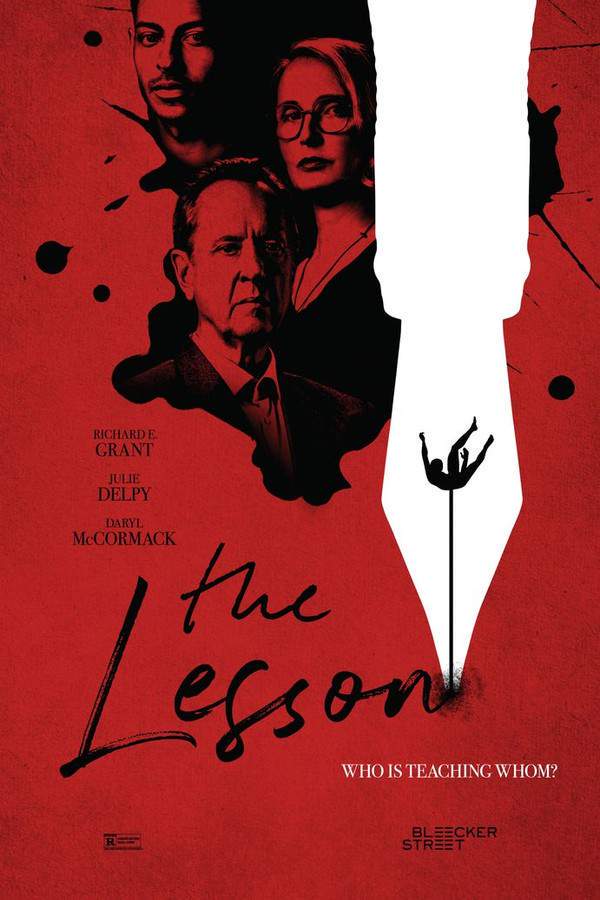
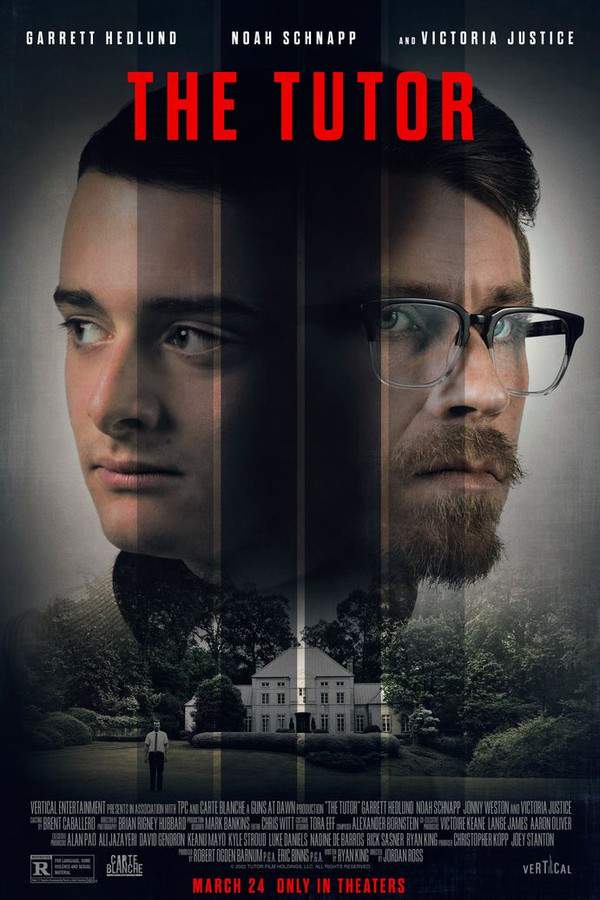
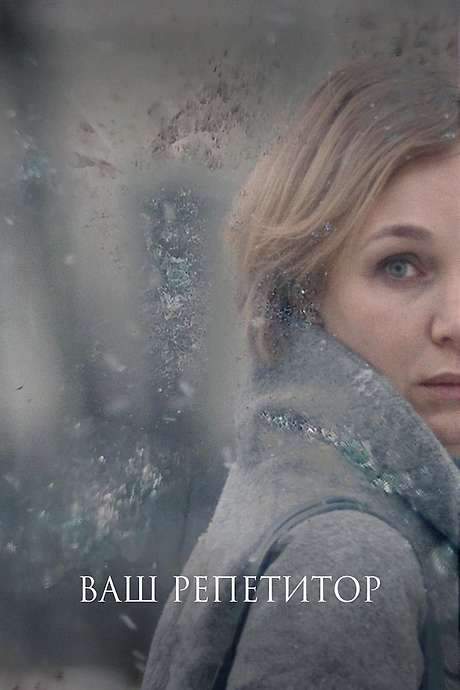
Liam Somers is a young English literature PhD student at Oxford who becomes the focus of a family drama set on a vast country estate. The film opens in medias res, with him being interviewed about his debut novel, and then settles into the main thread: what inspired him to write a story about a declining, domineering patriarch who struggles to reclaim control over both his family and his career.
The employer who changes the course of Liam’s life is a wealthy family living in a secluded villa. They hire him through a tutoring arrangement so their son, Bertie, can prepare for the university entrance exam. Upon arrival, Liam is shown into a small house on the estate, from which he can glimpse the patriarch’s study in the main house. He quickly forges a rapport with Bertie, but the atmosphere around the house is tense and opaque. The mother, Hélène, is distant and icy, while the father, J.M. Sinclair, exudes a self‑same confidence that borders on arrogance and control.
As Liam becomes more integrated into daily life, the family dynamics begin to unfold in slow, unsettling increments. A key moment of the dynamic shift comes when Liam helps [J.M.] regain use of a malfunctioning printer, a small victory that unexpectedly softens the older man’s posture toward him. Liam also learns that Bertie’s older brother, Felix, has recently died by suicide, drowning in the pond outside the villa. The family treats this tragedy as a forbidden, almost sacred secret, which deepens the air of fragility and unspoken hurt that hangs over the estate.
The plot thickens when J.M. begins work on a new novel and offers to pay Liam to proofread it. In exchange, Liam asks for a chance to read J.M.’s manuscript in return. Liam’s critique of J.M.’s work is frank: the first two-thirds are compelling and stylistically distinct, but the ending feels weak and out of step with the rest. J.M. takes this harsh feedback with visible irritation, and when Liam in turn asks for feedback on his own manuscript, the response is scathing and dismissive. The scene makes clear that power and ego are at stake—Liam is humiliated, and in a moment of rage he tears the manuscript to pieces and tosses it into the pond.
A forbidden affair begins to blossom between Liam and Hélène while J.M. is away meeting with his publisher and Bertie attends a party. Their affair pushes the boundaries of the household’s decorum, and it propels Liam toward a clandestine discovery. In a server room adjacent to J.M.’s study, Liam uncovers a hidden repository: the full, electronic version of J.M.’s novel, stored as a single Word document on a secondary computer. He deletes this file, and the couple briefly revels in their shared secret. Yet they soon realize a deeper truth: Felix wrote the unfinished manuscript, not J.M. The older man had been appropriating Felix’s story, tagging a final ending onto his brother’s life as if it were his own.
When J.M. returns, he discovers that the electronic copy has vanished. He suspects a virus and grows increasingly distraught as he searches for the lone paper copy of the manuscript, which Liam had thrown into the pond. His suspicions fall on Bertie, though nothing is proven. Liam, who has a photographic memory, is asked to rewrite the entire novel by hand so J.M. can present a fresh copy to his publisher. Liam accepts and, in the process, composes two endings: one that mirrors J.M.’s original but feels flawed, and another that aligns with Liam’s own instincts. Hélène reads both endings and proclaims Liam’s version the superior, though she does not reveal the authorship publicly.
In a climactic confrontation, Liam and J.M. celebrate their rewritten manuscript with heavy drinking and a tense swim in the pond. Liam confronts J.M. with the truth about Felix’s influence on the family’s writing and reveals that he has slept with Hélène. A violent struggle ensues, and the two men fall into the water. Liam escapes as J.M. drowns, a death that Hélène later explains to the responders as accidental. Liam faces a stark choice: demand recognition for the new ending or agree to disappear after Hélène’s warning that any accusation of murder would be met with a charge against him. Realizing that Hélène engineered the entire sequence to precipitate J.M.’s death, Liam chooses to leave, agreeing to avoid public credit.
The story circles back to the present, where Bertie sits in the studio audience during Liam’s interview. As the audience settles, the two men share a knowing smile, suggesting a quiet acknowledgment of the events that unfolded and the secrets that remained unsaid.
This intimate chamber drama weaves themes of power, creativity, family legacy, and the moral ambiguities of literary authorship, inviting viewers to consider how a writer’s voice can be shaped—and sometimes stolen—by those who claim to guide it.