Plot Explained Spoilers guaranteed!
Plot Explained

Browse by genre

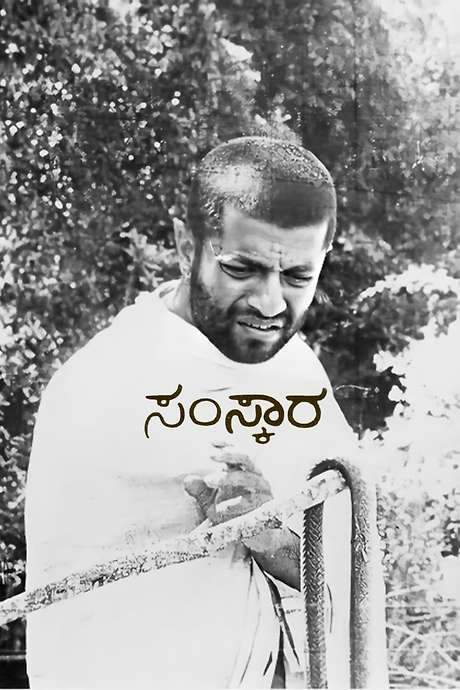
Samskara (1970) movie poster

Characters & Themes

Samskara (1970) Characters, Setting & Themes Explained

Release, runtime and language
1970 · 113 mins · Kannada
Directed by
Pattabhirama Reddy
Starring
Girish Karnad, Lakshmi Krishnamurthy, Dasharathi Dixit, Snehalata Reddy, B.R. Jayaram, P. Lankesh

Narayanappa, a Madhwa Brahmin, passes away in the Agrahara of Durvasapura. Madhwa tradition demands his funeral rites be carried out, yet his transgressions—eating meat, drinking alcohol and marrying a prostitute—spark a dispute among the village Brahmins over who may perform the rites. The dispute stalls the rites until a resolution is reached.

On this page (7)
  1. 1 Characters explained (3)
  2. 2 Where & when it takes place
  3. 3 Themes & meaning (3)
  4. 4 Character & meaning questions
  5. 5 Movie threads
  6. 6 Movies like Samskara
  7. 7 Every angle

3 main characters · contains spoilers

Samskara Characters Explained: Who Is Who

The main characters of Samskara (1970), heroes and villains: what drives them, how they change over the course of the story and what each of them reveals about the film's bigger ideas.

  • Praneshacharya (Girish Karnad)

    A devout Brahmin and village leader who has completed Vedic studies and returned to Durvasapura. He pursues moksha and sacrifices personal happiness by taking a celibate path, but his encounter with Chandri tests his principles and resolve.

    • 🎯 Devout
    • 🧭 Leader
    • 🕊️ Moral conflict
    • 🕯️ Celibacy
  • Narayanappa (P. Lankesh)

    A Brahmin who rejects strict Brahminism by eating meat and keeping company with a prostitute. His transgression destabilizes the village’s rules, triggering a crisis over ritual purity and communal judgment.

    • 🔥 Rebel
    • 🥩 Nonconformist
    • 👥 Outsider
  • Chandri

    A prostitute whose beauty captivates Praneshacharya; her presence catalyzes his momentary lapse and drives the central conflict. She leaves Durvasapura after the incident, fueling the village’s moral dilemma.

    • 💃 Prostitute
    • 💫 Temptation
    • 🧭 Catalyst

Last updated: October 04, 2025 at 18:59

Was this helpful?

Setting

Where and When Does Samskara Take Place?

The setting of Samskara (1970): the year and time period, the places and locations, and how they shape the characters, the mood and the tension of the story.

Time period

Location

Durvasapura, Western Ghats, Karnataka, India

The action unfolds on a narrow street in Durvasapura, a small village in the Western Ghats of Karnataka. Most residents belong to the Madhwa Brahmin community and adhere to strict religious customs. The setting highlights a tight-knit, tradition-bound society where social norms govern daily life.

  • 🏞️ Rural village
  • 🕌 Brahmin community

Last updated: October 04, 2025 at 18:59

Was this helpful?

3 major themes

Samskara Meaning: Themes & Message Explained

What is Samskara (1970) really about? The emotional, social and philosophical themes the film keeps returning to, its symbolism and the message beneath the surface.

  • Tradition vs Desire

    Rigid Brahmin tradition collides with personal longing as Praneshacharya pursues moksha and celibacy while Narayanappa challenges caste and lifestyle norms. The narrative explores how duty and spiritual aims can clash with human impulses. This tension reveals the fragility of social order when faced with individual choices.

  • Guilt and Confession

    Praneshacharya carries a growing sense of guilt after a private lapse involving Chandri. The story probes whether private remorse can or should translate into public accountability. The tension between inner conscience and communal perception drives the moral core of the drama.

  • Purity and Social Rules

    Brahmin notions of ritual purity depend on caste boundaries, complicating even death rites. Narayanappa’s actions force the village to confront the limits of tradition versus compassion. The crisis exposes the rigidity and cost of strict social codes.

Last updated: October 04, 2025 at 18:59

Was this helpful?

Character & theme questions

Samskara Characters & Meaning: Your Questions Answered

The questions people ask about Samskara (1970): who the characters really are, their relationships, what the symbols mean, where it takes place and what the movie is really about. Each answer contains spoilers.

Q1

Where is the film set?

The story takes place in Durvasapura, a fictional village nestled in the Western Ghats of Karnataka, India. It is depicted as a tight-knit community where most residents belong to the Madhwa Brahmin caste and adhere to strict religious customs that govern daily life.

  • durvasapura
  • setting
  • village
  • karnataka
  • western ghats
  • brahmin community
Q2

What does the title Samskara mean?

Samskara refers to the ritual ceremonies performed in Hindu tradition, particularly funeral rites. The title refers to the crisis that arises when the deceased Narayanappa's violations of Brahmin customs make it problematic to perform these sacred rites, forcing the community to confront the conflict between tradition and compassion.

  • samskara
  • title meaning
  • ritual
  • funeral rites
  • tradition
Q3

What are the main themes of the film?

The film explores three interconnected themes: Tradition vs Desire, as Praneshacharya's pursuit of moksha and celibacy conflicts with human impulses; Guilt and Confession, examining whether private moral failure should result in public accountability; and Purity and Social Rules, revealing the rigid cost of Brahminical caste boundaries even in death.

  • tradition vs desire
  • guilt
  • confession
  • purity
  • social rules
  • themes
Q4

Who is Praneshacharya and what is his role?

Praneshacharya (played by Girish Karnad) is a devout Brahmin and village leader who has completed Vedic studies and returned to Durvasapura. He follows a celibate path pursuing moksha, serving as the spiritual representative of the community's highest ideals. His encounter with Chandri creates a crisis of faith that lies at the moral center of the film.

  • praneshacharya
  • girish karnad
  • brahmin
  • protagonist
  • spiritual leader
Q5

Why does Narayanappa's death cause a crisis in the village?

Narayanappa's death triggers a crisis because he violated core Brahmin conventions by eating meat, drinking alcohol, and keeping company with a prostitute. His transgressions raise an uncomfortable question for the village: whether a man who rejected Brahmin ideals can receive Brahmin funeral rites, leading to a dispute over who may perform the rites.

  • narayanappa
  • death crisis
  • funeral rites
  • ritual purity
  • caste transgression
Q6

What is the Madhwa Brahmin community?

The Madhwa Brahmin community follows theDvaita philosophy founded by Madhvacharya and is known for strict adherence to religious customs, dietary restrictions, and ritual purity. The film depicts a community where these traditions define social identity and status, with violations threatening the social order.

  • madhwa
  • brahmin community
  • dvaita
  • caste
  • hindu tradition
Q7

Who is Chandri and what is her significance?

Chandri is a prostitute whose beauty captivates Praneshacharya during his daily walks. Her presence triggers his momentary lapse from celibacy, which becomes the catalyst for his internal conflict. She leaves Durvasapura after the incident, but her role as the embodiment of desire that challenges the Brahmin's spiritual resolve is central to the film's moral exploration.

  • chändri
  • prostitute
  • desire
  • temptation
  • praneshacharya
Q8

What is the cultural significance of the film?

Samskara is considered a landmark in Indian parallel cinema and the Kannada New Wave movement. Adapted from a play by Girish Karnad, it was one of the first Indian films to directly confront caste hierarchies and religious orthodoxy, sparking discussions about faith, tradition, and individual conscience that remain relevant.

  • cultural significance
  • kannada new wave
  • indian cinema
  • girish karnad
  • social critique

Movie threads

More Movies Like Samskara, by Mood & Story

Curated lists built around what makes Samskara tick: the same mood, the same kind of story or the same emotional payoff. Each list explains why these movies belong together.

Movies about moral dilemmas like Samskara

Stories where a single decision exposes the cracks in rigid belief systems. If you liked the ethical conflict in Samskara, explore more movies like it that center on a single, heavy moral choice. These films often feature a slow burn pace, tense atmospheres, and explore themes of duty, tradition, and personal hypocrisy, creating a deeply introspective viewing experience.

  • moral conflict
  • tense
  • contemplative
  • oppressive
  • introspective
  • uncertain
  • Tone: tense, contemplative, somber
  • Pacing: slow, deliberate
Why these movies?

The story pattern: The narrative typically hinges on a single, pivotal ethical question that disrupts the status quo. Characters, often authority figures or community leaders, are forced into a crisis of conscience, and the plot unfolds as they grapple with the implications of their choice, challenging the very foundations of their world.

Why they belong together: These movies are grouped together because they share a focus on a central moral conflict as the primary driver of the plot. They create a similar viewing experience defined by psychological tension, heavy emotional weight, and a slow, deliberate pace that allows the audience to immerse themselves in the complexity of the dilemma.


Movies about tradition and hypocrisy like Samskara

Films set in insular communities where rigid customs lead to spiritual decay. Discover more films like Samskara that offer a sharp critique of tradition and social hypocrisy. These stories are often set in claustrophobic communities, feature a tense tone, and explore the heavy emotional toll of challenging or upholding rigid belief systems.

  • oppressive
  • somber
  • claustrophobic
  • social critique
  • hypocrisy
  • tradition
  • Tone: somber, oppressive, tense
  • Pacing: slow, immersive
Why these movies?

The story pattern: The narrative unfolds within a tightly-knit, often isolated community bound by strict conventions. A disruptive event or an individual's transgression exposes the underlying hypocrisy and moral rot of the system, forcing a central character to confront the conflict between outward conformity and inner truth, usually with ambiguous or bleak consequences.

Why they belong together: These films are connected by their shared setting of an insular community and their thematic focus on the tension between individual desire and societal expectation. They generate a similar mood of claustrophobia, moral unease, and somber reflection on the cost of upholding tradition.

If you liked this

Movies Like Samskara

Similar movies to Samskara: the same genre, themes or kind of story. Each one comes with its own plot summary, timeline and ending explained.

Browse all movie summaries

Every angle

Samskara (1970) Explained: Plot, Timeline & Characters

Everything about Samskara in one place: what happens in the plot summary, the timeline in chronological order, the characters and meaning and a spoiler-free summary. What's After the Movie adds the cast, box office and post-credit scenes.

Coming soon on iOS and Android

The Plot Explained Movie Summary App

Plot summaries, endings explained and timelines on your phone. Catch up on any movie in minutes, save your favorites and never miss a twist again.

Be the first to know when we launch. Your email stays private, always.

Learn more about the app