Plot Explained Spoilers guaranteed!
Plot Explained

Browse by genre

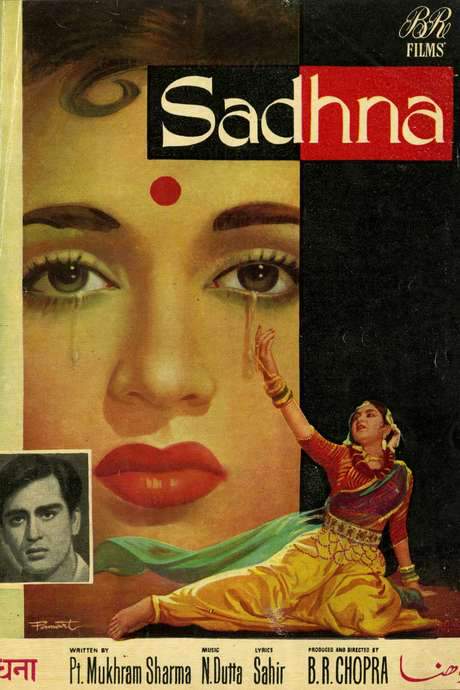
Sadhna (1958) movie poster

Plot Summary

Sadhna (1958) Plot Summary Explained

Release, runtime and language
1958 · 137 mins · Hindi
Loading streaming availability…
Directed by
B.R. Chopra
Starring
Sunil Dutt, Manmohan Krishna, Uma Dutt, Leela Chitnis, Vyjayanthimala, Radhakrishan

Mohan, a college professor living with his ailing mother, delays marriage until his probation ends. He lectures against prostitution, condemning courtesans. When his mother collapses and her condition worsens, he feels compelled to marry quickly. Neighbor Jeevan Ram finds a woman, Rajni, to pose as his wife, hoping to satisfy his mother’s wish.

On this page (6)
  1. 1 Where to watch
  2. 2 What happens: full plot
  3. 3 Plot questions answered
  4. 4 Movie threads
  5. 5 Movies like Sadhna
  6. 6 Every angle
Loading streaming availability…

Full plot summary · contains spoilers

What Happens in Sadhna: Full Plot Summary

The whole story of Sadhna (1958) explained, from the opening scene to the final frame: every key event, every twist and what it all adds up to. Read it as a quick recap before the sequel, to check a scene you missed, or to finally understand what really happened.

Professor Mohan is a morally upright, honest young man who teaches literature and poetry at a nearby college, and he lives with his devoted mother Mohan's Mother, whose single-minded goal is to see her son married. In a classroom moment, Mohan voices a quiet discomfort with dancing girls while discussing a medieval play about a nobleman who falls for a prostitute, revealing the core tension between propriety and desire that threads through the story.

When his mother falls ill and a flurry of neighbors crowds the house, a plan begins to take shape in a desperate moment. In the same village, Jeevan, Jeevan, who is pressed by creditors, sees a chance to make money by arranging a fake fiancé for Mohan. He introduces Champabai, a local prostitute played by Champabai, who agrees to pose as Mohan’s fiancée for a short time. A meeting with Mohan and his mother follows, with Champabai posing as “Rajni” to win their trust. The arrangement is quickly sealed, and the payment goes to the brothel owner, Lallu Bhai, Lallu Bhai, who pockets the fee.

The next day, Mohan’s mother asks to see Rajni again, and Mohan arranges another visit. Champabai is dazzled by the family’s jewelry and the aura of a possible wedding, and she decides to forgo her fee, pretending to have real feelings for Mohan while she plots to seize the opportunity for herself. The mother hands her a bridal sari and jewelry to wear, and Champabai returns to the bazaar in a bridal guise, only to be mocked by the customers who demand she perform as a bride or a deity. The humiliation marks a turning point: Champabai begins to glimpse the respect and affection that a true marriage can command within a household. The next day, she returns the jewelry and sari to Mohan’s mother, who greets her warmly, and a subtle bond forms between Mohan and the woman who is really Champabai.

Meanwhile, Mohan wishes to speak to Champabai’s father, but Jeevan stalls him. When Mohan returns home, he finds Rajni there and learns the hard truth: she is Champabai, and she fears becoming a fallen woman in his eyes. She pleads with him not to tell his mother. Soon after, Mohan sees Rajni in the street and follows her to the kotha, where the bazaar crowd reveals her identity as Champabai. He is horrified and declares that he will never see her again.

Champa later sends a late-night letter asking to meet, and Mohan goes out despite his resolve. The two meet, and Champa humbly apologizes for the deception, sharing the hardships that drove her into a life she never chose. Mohan declares that he will marry her as Champa, not merely as Rajni, but she fears her mother-in-law’s shame and begs him to return home. In a dramatic turn, Lallu tells Mohan’s mother the truth about Rajni’s background, leaving her shellshocked. Champa arrives at the house to seek the family’s blessing, but is brusquely dismissed. Yet the mother’s heart proves more merciful than expected; she reveals a transformative belief that a woman who enters a household can wash away her past. The moment of revelation is powerful and compassionate, and Champa is overwhelmed with gratitude. The film closes on a hopeful note, with Champa and Mohan reuniting and moving forward together.
Last updated: October 05, 2025 at 11:27

Was this helpful?

Plot questions answered

Sadhna Plot Explained: Your Questions Answered

The questions people ask most about Sadhna (1958): what happens in the confusing scenes, why the characters do what they do, the twists, hidden details and what the ending means. Each answer contains spoilers.

Q1

Why does Mohan agree to a fake engagement in Sadhna?

Mohan agrees because his mother is gravely ill and desperate to see him married before she dies. As a dutiful son, he cannot bear to refuse her wish. Though he is a morally upright professor who publicly condemns prostitution, he rationalizes that hiring a fake fiancée is a harmless ruse to bring his mother peace, not a real marriage. This decision sets up the central conflict between his strict moral principles and his capacity for compassion.

Foreshadowing: Earlier in class, Mohan expresses discomfort about a nobleman falling for a prostitute in a medieval play, hinting at his struggle between propriety and desire.

  • mohan
  • fake engagement
  • mother
  • illness
  • moral conflict
Q2

Why does Champabai return the jewelry and sari to Mohan's mother?

Champabai returns the jewelry because she experiences a genuine emotional transformation after wearing the bridal sari in the bazaar. When customers demand she perform as a bride or deity, she is humiliated and realizes the respect and dignity that come with being a real bride in a household. This moment shifts her motivation from profit to genuinely wanting the life Mohan offers. She returns the gifts to signal her intentions are now sincere, not transactional.

Foreshadowing: After her first meeting with the family, Champabai is already charmed by the jewelry and imagines a different life.

  • champa
  • jewelry
  • sari
  • transformation
  • bazaar humiliation
Q3

How does Mohan discover that Rajni is actually Champabai?

Mohan discovers the truth when he sees Rajni in the street and calls out to her. She flees, and Mohan follows her all the way to the kotha (brothel). There, the people in the bazaar openly reveal her identity as Champabai, the prostitute. Mohan is horrified and declares he will never see her again, unable to reconcile his moral beliefs with what he has learned.

Foreshadowing: Earlier, Jeevan stalls Mohan when he tries to speak to Champabai's father, and Rajni tells Mohan she is unworthy of his feelings.

  • mohan discovers
  • champabai identity
  • kotha
  • bazaar
Q4

Why does Mohan's mother accept Champabai after learning the truth?

Mohan's mother accepts Champabai because she holds a transformative belief that a woman who enters a respectable household as a wife washes away her past sins. Despite her initial shock and anger upon learning the truth from Lallu, she chooses compassion over judgment. She tells Champabai that once she enters the household as a daughter-in-law, she is no longer a prostitute. This acceptance is the emotional climax where societal forgiveness triumphs over prejudice.

Foreshadowing: The mother's single-minded desire to see Mohan married suggests she values having a wife for her son above social niceties.

  • mother accepts
  • champa
  • forgiveness
  • redemption
  • family
Q5

Why does Champabai decide to forgo her fee and pursue real feelings for Mohan?

Champabai decides to forgo her fee because she is charmed by the respect and attention she receives as a pretend bride. The family treats her kindly, gifts her jewelry and a bridal sari, and she glimpses what a normal life could feel like. Seeing the possibility of escape from the brothel, she chooses to invest emotionally in the ruse, hoping it might become real. Her transformation from mercenary to genuinely invested reflects her desperation for a dignified life.

Foreshadowing: During her first meeting, Champabai is dazzled by the household's warmth and the jewelry.

  • champa
  • fee
  • feelings
  • transformation
  • escape
Q6

Why does Mohan decide to marry Champabai after discovering her truth?

Mohan decides to marry Champabai because at their midnight meeting, she honestly confesses her past and the hardships that drove her into prostitution. Moved by her humility and vulnerability, Mohan declares he will marry her as Champa, not as the fictional Rajni. He chooses to look beyond her profession to her genuine character, proving his love transcends his earlier moral rigidity. This decision marks his moral evolution from judgment to compassion.

Foreshadowing: Mohan already feels a pull toward Rajni earlier, even before knowing her true identity.

  • mohan marries
  • champa
  • acceptance
  • love
  • compassion
Q7

Why does Lallu tell Mohan's mother about Champabai's true identity?

Lallu reveals the truth to Mohan's mother because he is the brothel owner who profits from Champabai's work. When Champabai stops returning to the kotha and seems committed to leaving, Lallu feels cheated out of his earnings and seeks revenge by destroying the engagement. His revelation is motivated by spite and financial loss, not any moral concern for the family.

Foreshadowing: Earlier, Lallu pockets the payment from Jeevan for arranging the fake engagement.

  • lallu
  • truth revelation
  • brothel owner
  • revenge
Q8

What does the bazaar humiliation scene symbolize in Sadhna?

The bazaar scene symbolizes Champabai's awakening to the dignity she could have in a real marriage versus the degradation of her current life. When customers demand she perform as a bride or deity, she feels the cruelty of being treated as an object rather than a person. This humiliation shatters her transactional mindset and makes her crave genuine respect. It is the turning point where she stops seeing the engagement as just a job and starts wanting it to be real.

Foreshadowing: The family gifts her the bridal sari specifically to make the deception convincing.

  • bazaar scene
  • symbolism
  • humiliation
  • transformation
  • dignity
Q9

Why does Jeevan arrange the fake engagement for Mohan?

Jeevan arranges the fake engagement because he is in debt to creditors and sees an opportunity to make quick money. He approaches Champabai through her brothel owner Lallu and negotiates a price for her to pose as Mohan's fiancée. Jeevan's motivation is purely financial gain, and he is indifferent to the moral implications or potential harm the deception could cause. He later stalls Mohan when he tries to speak to Champabai's father, further enabling the deception.

Foreshadowing: Jeevan is pressed by creditors, establishing his financial desperation.

  • jeevan
  • fake engagement
  • money
  • creditors
  • arrangement
Q10

Why does Champabai write a letter to Mohan asking to meet at midnight?

Champabai writes the midnight letter because she wants to confess her truth directly to Mohan before he learns it from another source. She hopes that honesty might earn his forgiveness, even though she fears losing him. Mohan initially tears up the letter but still goes out to meet her, drawn by his lingering feelings despite his earlier declaration to never see her again. The midnight setting emphasizes the secrecy and vulnerability of their conversation.

Foreshadowing: Champa previously told Mohan she is unworthy of his feelings, foreshadowing her eventual full confession.

  • champa letter
  • midnight meeting
  • confession
  • forgiveness

Movie threads

More Movies Like Sadhna, by Mood & Story

Curated lists built around what makes Sadhna tick: the same mood, the same kind of story or the same emotional payoff. Each list explains why these movies belong together.

Movies about redemptive deceptions like Sadhna

Well-intentioned lies unravel, leading to personal growth and societal questioning. If you liked Sadhna's story of a well-meaning lie that tests relationships and morals, explore these similar dramas. This thread features movies where characters navigate the fallout of a deception intended for good, leading to tense, socially conscious stories about redemption and compassion.

  • tense
  • redemptive
  • morally complex
  • dramatic
  • socially conscious
  • hopeful
  • Tone: tense, hopeful, socially conscious
  • Pacing: steady, character-driven
Why these movies?

The story pattern: These stories typically begin with a high-stakes motivation that justifies a lie. The middle act builds tension as the deception threatens to collapse, forcing characters to confront their hypocrisy. The narrative arc moves towards a climax of revelation, followed by a resolution that prioritizes emotional truth and moral growth over simple punishment.

Why they belong together: Movies are grouped here for their shared focus on the 'deception for a good cause' plot device, which creates a sustained moral tension. They share a hopeful tone despite serious themes, a steady pacing that lets character drama unfold, and a central conflict between societal judgment and personal compassion.

Hopeful social drama movies similar to Sadhna

Serious explorations of societal ills that ultimately advocate for compassion and change. For viewers who appreciated Sadhna's blend of social criticism and heartfelt optimism, this thread gathers dramas that confront difficult topics but maintain a hopeful core. Discover movies like Sadhna that explore complex societal problems while ultimately celebrating redemption and the power of forgiveness.

  • hopeful
  • socially conscious
  • redemptive
  • dramatic
  • compassionate
  • tense
  • Tone: hopeful, dramatic, socially conscious
  • Pacing: steady, deliberate
Why these movies?

The story pattern: The narrative pattern involves introducing a character or system bound by rigid, hypocritical social rules. A catalyst—often an outsider or a personal crisis—forces a confrontation with these injustices. The conflict is emotionally charged and tense, but the story resolves by affirming the possibility of individual and societal change, offering a happy or bittersweet ending that feels earned.

Why they belong together: This thread groups films that share a specific tonal balance: they have the emotional weight and seriousness of a social problem drama, but are distinguished by their ultimately hopeful and uplifting message. The pacing is often steady, allowing for deep immersion in the social context, and the intensity comes from moral and emotional conflicts rather than physical danger.

If you liked this

Movies Like Sadhna

Similar movies to Sadhna: the same genre, themes or kind of story. Each one comes with its own plot summary, timeline and ending explained.

Browse all movie summaries

Every angle

Sadhna (1958) Explained: Plot, Timeline & Characters

Everything about Sadhna in one place: what happens in the plot summary, the timeline in chronological order, the characters and meaning and a spoiler-free summary. What's After the Movie adds the cast, box office and post-credit scenes.

Coming soon on iOS and Android

The Plot Explained Movie Summary App

Plot summaries, endings explained and timelines on your phone. Catch up on any movie in minutes, save your favorites and never miss a twist again.

Be the first to know when we launch. Your email stays private, always.

Learn more about the app