Plot Explained Spoilers guaranteed!
Plot Explained

Browse by genre

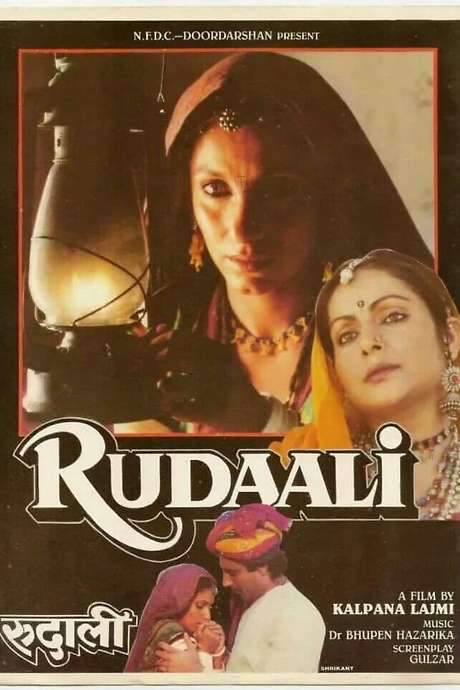
Rudaali (1993) movie poster

Plot Summary

Rudaali (1993) Plot Summary Explained

Release, runtime and language
1993 · 128 mins · Hindi
Loading streaming availability…
Directed by
Kalpana Lajmi
Starring
Dimple Kapadia, Sushmita Mukherjee, Ravi Jhankal, Raj Babbar, Raghubir Yadav, Suneel Sinha

Shanichari, a caste woman, endures poverty, orphaned parents, a drunken husband and a young son. The title refers to Rajasthan’s Rudaali tradition, where hired female mourners grieve a male relative since aristocratic women cannot show emotion. Based on Mahasweta Devi’s short story, the NFCD‑Doordarshan film shows the hardships of marginalized women.

On this page (6)
  1. 1 Where to watch
  2. 2 What happens: full plot
  3. 3 Plot questions answered
  4. 4 Movie threads
  5. 5 Movies like Rudaali
  6. 6 Every angle
Loading streaming availability…

Full plot summary · contains spoilers

What Happens in Rudaali: Full Plot Summary

The whole story of Rudaali (1993) explained, from the opening scene to the final frame: every key event, every twist and what it all adds up to. Read it as a quick recap before the sequel, to check a scene you missed, or to finally understand what really happened.

Thakur Ramavtar Singh, the zamindar (transl. landlord) of Barna, on his death bed, bemoans that none of his relatives would shed tears for him. He calls for a famous rudaali to mourn him after his death. Bhikni, the renowned rudaali Rakhee Gulzar, arrives and stays with the widow Shanichari Dimple Kapadia, who lives in the Thakur's village. As their friendship grows, Shanichari tells Bhikni her life's story, which unfolds in a sequence of vivid flashbacks.

Shanichari was born on a Shanichar (Saturday), named after the planet Shani (Saturn), considered inauspicious in Hindu astrology. She is blamed by the villagers for every misfortune around her—from her father’s death to her mother Peewli’s running off to join a theatre troupe. While still young, Shanichari is married off to Ganju, a drunkard. Her son, Budhua, whom she loves deeply, roams freely, mirroring the fate of Peewli.

Meanwhile, Lakshman Singh, the Thakur’s son, declares his affection for her and hires her as a maid to his wife. In his haveli, Lakshman presses Shanichari to challenge social norms and even encourages her to “look up” into his eyes when she speaks. One night, after she sings at the haveli, he bestows upon her a house of her own and two acres of land.

Ganju dies from cholera at a village fair. After curses and threats from the village pundit for failing to observe prescribed customs, Shanichari borrows 50 rupees to perform the rituals from Ramavatar Singh [Ravi Jhankal], and becomes a bonded labourer under him.

Some years later, a grown Budhua brings home Mungri, a prostitute, as his wife. Shanichari tries to throw her out but relents when she learns that Mungri is pregnant with Budhua’s child. Yet the snide remarks of the village pundit and shop-owners fuel tension between the two women, and in a fit of rage after a confrontation, Mungri aborts the child. Budhua leaves home. Shanichari confides to Bhikni that none of these bereavements ever moved her to tears.

One night, Bhikni is summoned to a neighboring village by a man named Bhishamdata. Ramavatar Singh dies a few hours later. Shanichari goes to bid farewell to Lakshman Singh, who intends to leave the village. A messenger arrives with the news of Bhikni’s death from the plague and reveals to Shanichari that Bhikni was her mother, Peewli. Overcome, Shanichari begins to weep uncontrollably and then steps into Bhikni’s worn shoes, becoming the new rudaali herself, crying at the Thakur’s funeral.

Last updated: October 09, 2025 at 12:39

Was this helpful?

Plot questions answered

Rudaali Plot Explained: Your Questions Answered

The questions people ask most about Rudaali (1993): what happens in the confusing scenes, why the characters do what they do, the twists, hidden details and what the ending means. Each answer contains spoilers.

Q1

Why is Shanichari considered unlucky in the movie?

Shanichari was born on a Shanichar, which is Saturday named after the planet Shani (Saturn). In Hindu astrology, Saturday is considered inauspicious, and villagers blame her for every misfortune that occurs in the village, from her father's death to her mother leaving. This superstition shapes her entire life and social standing.

Foreshadowing: The villagers blame Shanichari for her father's death and her mother's departure, establishing the tragic pattern of her life.

  • shanichari
  • superstition
  • shani
  • saturday
  • inauspicious
  • caste
Q2

Why does Lakshman Singh give Shanichari a house and land?

Lakshman Singh, the Thakur's son, is attracted to Shanichari and hires her as a maid. After she sings at the haveli one night, he rewards her with a house and two acres of land. This gift represents both his affection for her and a shift in her social status, though it also creates complex dynamics in the village.

Foreshadowing: Lakshman encourages Shanichari to challenge social norms and look him in the eyes, signaling his unusual interest in her.

  • lakshman singh
  • house
  • land
  • haveli
  • gift
  • thakur son
Q3

Why does Shanichari become a bonded labourer?

After Ganju dies from cholera, the village pundit curses Shanichari for failing to observe prescribed customs. To perform the required rituals for her dead husband, she borrows 50 rupees from Ramavatar Singh. Unable to repay the debt, she becomes a bonded labourer under him, deepening her cycle of poverty and servitude.

Foreshadowing: The pundit's curses and threats establish the rigid social expectations that trap Shanichari throughout the film.

  • bonded labour
  • ramavatar singh
  • 50 rupees
  • village pundit
  • debt
  • poverty
Q4

Why does Mungri abort her pregnancy in Rudaali?

After Shanichari learns Mungri is pregnant and allows her to stay, the village pundit and shop-owners continue making snide remarks about Mungri being a prostitute. The constant social harassment and humiliation become unbearable, leading Mungri to abort the child in a fit of rage. This tragic decision causes Budhua to leave home.

Foreshadowing: Tension between Shanichari and Mungri builds throughout their cohabitation, foreshadowing the devastating confrontation.

  • mungri
  • abortion
  • pregnancy
  • budhua
  • village gossip
  • prostitute
Q5

Who is Bhikni really in Rudaali?

Bhikni, the famous rudaali who comes to mourn the Thakur, is revealed to be Shanichari's mother Peewli. After abandoning Shanichari to join a theatre troupe years ago, she became the renowned rudaali Bhikni. This devastating revelation comes when a messenger tells Shanichari that Bhikni died of the plague.

Foreshadowing: Shanichari's mother Peewli leaving for a theatre troupe is shown early in the film, setting up the eventual identity reveal.

  • bhikni
  • peewli
  • mother
  • identity
  • rudaali
  • revelation
  • theatre troupe
Q6

Why can't Shanichari cry despite all her suffering?

Throughout all her tragedies, her father's death, her mother's abandonment, Ganju's death, Budhua leaving, and countless losses, Shanichari never sheds a tear. She has become emotionally numb from years of hardship and systemic oppression. Only when she learns Bhikni was her mother does she finally break down and weep.

Foreshadowing: The narrative repeatedly emphasizes that Shanichari never cries, building toward the emotional climax where she finally does.

  • tears
  • crying
  • emotion
  • grief
  • numbness
  • tragedy
  • motherhood
Q7

Why does Shanichari become the new rudaali at the end?

After learning that Bhikni was her mother Peewli and dying from the plague, Shanichari is overwhelmed by grief. She goes to bid farewell to Lakshman Singh, who is leaving the village, and then steps into Bhikni's worn shoes. She takes over as the village's new rudaali, finally able to cry and mourn at the Thakur's funeral, transforming her personal tragedy into a professional role.

Foreshadowing: Bhikni's worn shoes and her mourning role foreshadow Shanichari taking over this sacred duty.

  • rudaali
  • mourning
  • funeral
  • tears
  • succession
  • profession
  • tradition
Q8

Why does the Thakur want a rudaali to mourn him?

On his deathbed, Thakur Ramavtar Singh laments that none of his relatives would shed genuine tears for him. In Rajasthan, aristocratic women cannot publicly show emotion, so the tradition of hiring rudaali, professional female mourners, developed. The Thakur specifically calls for the famous rudaali Bhikni to ensure he receives proper mourning after death.

Foreshadowing: The Thakur's deathbed scene establishes the importance of the rudaali tradition from the opening of the film.

  • thakur
  • rudaali
  • funeral
  • mourning
  • tradition
  • landlord
  • zamindar
Q9

Why did Shanichari's mother leave her?

Peewli, Shanichari's mother, abandoned her daughter to join a theatre troupe. The film doesn't provide extensive explanation, but the social constraints and poverty facing lower-caste women likely drove her to seek a different life. This abandonment contributes to Shanichari's emotional numbness and establishes the cycle of women leaving in the story.

Foreshadowing: Shanichari's mother leaving is referenced when she tells Bhikni about her mother's departure to a theatre troupe.

  • peewli
  • mother
  • abandonment
  • theatre troupe
  • desertion
  • poverty
Q10

Why does Budhua leave home in Rudaali?

Budhua leaves home after Mungri aborts their child due to the constant harassment from village social authorities. Unable to bear the shame and tension, Budhua abandons Shanichari, continuing the pattern of men leaving women in the film. His departure adds to Shanichari's accumulated losses.

Foreshadowing: Budhua's restless nature throughout the film, roaming freely like his grandmother Peewli, foreshadows his eventual departure.

  • budhua
  • leaves
  • mungri
  • home
  • abandonment
  • son

Movie threads

More Movies Like Rudaali, by Mood & Story

Curated lists built around what makes Rudaali tick: the same mood, the same kind of story or the same emotional payoff. Each list explains why these movies belong together.

Dramas about grieving women and resilience like Rudaali

Stories of marginalized women enduring profound loss and finding strength. Explore movies like Rudaali that delve into themes of grief, female fortitude, and social marginalization. If you were moved by the quiet strength and profound sorrow in Rudaali, this thread features similar slow-paced, character-driven dramas about women enduring hardship and finding purpose in their pain.

  • somber
  • grieving
  • resigned
  • oppressive
  • lonely
  • harsh
  • Tone: melancholic, somber
  • Pacing: slow, deliberate
Why these movies?

The story pattern: These films typically center on a female protagonist facing a series of devastating losses within a restrictive societal framework. The narrative unfolds patiently, often through flashbacks or reflective moments, building a portrait of resilience. The journey is not about external victory but an internal awakening, culminating in a bittersweet resolution where sorrow is transformed into a new form of agency or identity.

Why they belong together: Movies in this thread share a melancholic tone, heavy emotional weight, and a focus on the inner lives of women grappling with grief and oppression. They are grouped together for their powerful portrayal of female endurance, their slow-burn pacing that emphasizes atmosphere over plot, and their poignant, often bittersweet, conclusions.


Movies about social oppression and harsh realism like Rudaali

Sobering character studies set within rigid, unforgiving social hierarchies. Find films similar to Rudaali that explore the crushing weight of tradition and social hierarchy on individual lives. If you appreciated the film's stark portrayal of a caste system and the marginalization of its characters, this collection offers other melancholic, socially-conscious dramas with a heavy emotional impact and a focus on harsh realities.

  • oppressive
  • harsh
  • somber
  • realistic
  • bleak
  • resigned
  • Tone: melancholic, bleak
  • Pacing: slow, atmospheric
Why these movies?

The story pattern: The narrative pattern centers on an individual or community crushed by an immutable social order. The plot is less about overcoming the system and more about surviving within it, highlighting the small acts of defiance or the painful cost of conformity. The story unfolds as a series of hardships, revealing how personal destiny is shaped by societal constraints, often leading to an ambiguous or bittersweet ending that offers little escape but a deepened understanding.

Why they belong together: These films are united by their unflinching look at social injustice, their melancholic and often bleak atmosphere, and their use of a personal story to illuminate a larger systemic problem. They share a moderate complexity that intertwines character drama with social critique, creating a powerful and thought-provoking viewing experience.

If you liked this

Movies Like Rudaali

Similar movies to Rudaali: the same genre, themes or kind of story. Each one comes with its own plot summary, timeline and ending explained.

Browse all movie summaries

Every angle

Rudaali (1993) Explained: Plot, Timeline & Characters

Everything about Rudaali in one place: what happens in the plot summary, the timeline in chronological order, the characters and meaning and a spoiler-free summary. What's After the Movie adds the cast, box office and post-credit scenes.

Coming soon on iOS and Android

The Plot Explained Movie Summary App

Plot summaries, endings explained and timelines on your phone. Catch up on any movie in minutes, save your favorites and never miss a twist again.

Be the first to know when we launch. Your email stays private, always.

Learn more about the app