Plot Explained Spoilers guaranteed!
Plot Explained

Browse by genre

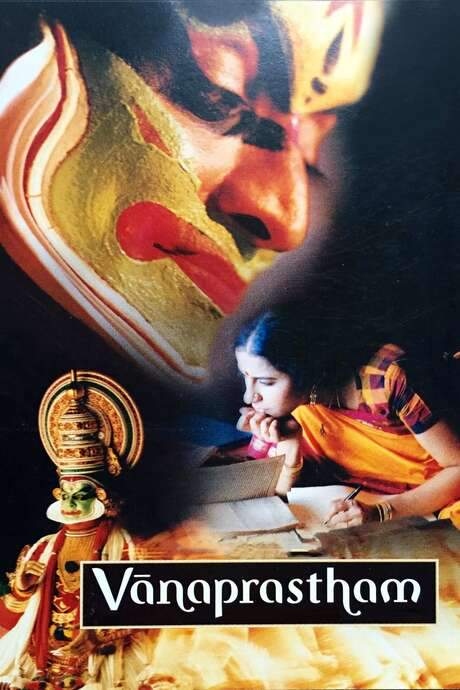
Vanaprastham (1999) movie poster

Plot Summary

Vanaprastham (1999) Plot Summary Explained

Release, runtime and language
1999 · 119 mins · Malayalam
Loading streaming availability…
Directed by
Shaji N. Karun
Starring
Mohanlal, Suhasini Maniratnam, Bindu Panicker, Raveena Ravi, Sindhu Shyam, Kalamandalam Kesavan

Kunhikuttan, a famous Kathakali dancer, meets Subhadra, a woman from an upper caste family, who falls in love with his character rather than himself.

On this page (6)
  1. 1 Where to watch
  2. 2 What happens: full plot
  3. 3 Plot questions answered
  4. 4 Movie threads
  5. 5 Movies like Vanaprastham
  6. 6 Every angle
Loading streaming availability…

Full plot summary · contains spoilers

What Happens in Vanaprastham: Full Plot Summary

The whole story of Vanaprastham (1999) explained, from the opening scene to the final frame: every key event, every twist and what it all adds up to. Read it as a quick recap before the sequel, to check a scene you missed, or to finally understand what really happened.

Kunhikuttan, Mohanlal, is a celebrated Kathakali artiste who earns respect even though he comes from a lower caste, a social divide that casts a long shadow over his life. He is poor, deeply unhappy, and trapped in an arranged marriage that offers little solace, yet he endures for the sake of his daughter.

One night, while performing as Putana from Poothanamoksham—a dramatic moment drawn from the Mahabharata—Subhadra, Suhasini Maniratnam, an educated and married upper-caste woman who is the niece of the Dewan and an aspiring composer, witnesses his skill on stage. Her eyes light up with possibility, and she invites him to take on the role of Arjuna in her own adaptation of Subhadraharanam. This meeting sparks a forbidden romance that defies the rigid caste norms of the time, and it leads to the birth of a son.

As the affair unfolds, Subhadra’s heart seems to be captured more by the archetype of Arjuna—the noble, valiant hero of the Mahabharata—than by Kunhikuttan himself, the man who embodies the dancer’s art. She refuses to let Kunhikuttan meet their child, deepening his sense of betrayal and isolation. Denied access to his son and rejected by his father, Kunhikuttan retreats from the hero roles that once defined him and returns to the stage, where he begins to inhabit demonic characters. This shift sends him spiraling toward darker emotions, swelling with resentment and anger as he confronts the loss of recognition, lineage, and love.

The narrative follows his turbulent inner journey as he navigates a social world stacked against him, a world that alternately honors spectacle and shuns humanity. His art becomes a battleground, drawing him into increasingly intense, shadowed performances. The film builds toward a climactic, expressive last dance that encapsulates the pain, longing, and stoic endurance of a man who has been torn between duty, desire, and dignity. In the end, this final, haunting dance delivers a striking resolution that lingers with the audience, leaving questions about identity, belonging, and the cost of breaking tradition.

Last updated: February 17, 2026 at 19:57

Was this helpful?

Plot questions answered

Vanaprastham Plot Explained: Your Questions Answered

The questions people ask most about Vanaprastham (1999): what happens in the confusing scenes, why the characters do what they do, the twists, hidden details and what the ending means. Each answer contains spoilers.

Q1

Why does Subhadra refuse to let Kunhikuttan see their son?

Subhadra denies Kunhikuttan access to their son because her primary attachment was to the heroic persona of Arjuna that Kunhikuttan embodied on stage, rather than to Kunhikuttan himself as a person. She views their child as a product of that idealized image, not as a connection to the man she actually interacted with offstage. Additionally, as an upper-caste married woman, allowing contact would expose the scandalous affair that already defied rigid social norms.

Foreshadowing: Earlier, Subhadra's invitation to play Arjuna hints at her fascination with the character rather than the actor.

  • subhadra
  • kunhikuttan
  • son
  • denied access
  • caste
Q2

Why does Kunhikuttan start playing demonic characters instead of heroes?

Kunhikuttan shifts to demonic roles after being denied access to his son and facing continued rejection from his upper-caste father. His personal losses, rejection by the woman he loved, denial of his child, and societal marginalization, trigger deep resentment and anger. These negative emotions align with the nature of demonic characters in Kathakali, allowing him to express his inner turmoil through art. The shift reflects how his real-life suffering transforms his artistic expression.

Foreshadowing: His earlier roles as heroes like Arjuna represented hope and recognition, which he now loses.

  • kathakali
  • demonic characters
  • transformation
  • rejection
  • art
Q3

Why does Subhadra fall in love with Arjuna rather than Kunhikuttan?

Subhadra is an educated, aspiring composer who is captivated by the mythic heroism and nobility embodied in the character of Arjuna from the Mahabharata. When she watches Kunhikuttan perform, she sees the heroic archetype rather than the actual man behind the makeup. She treats their affair as a connection to that idealized persona, valuing the artistic transcendence of Kathakali more than the human being performing it. This emotional mismatch leaves Kunhikuttan feeling used and unloved for who he truly is.

Foreshadowing: Her invitation for him to play Arjuna reveals her interest lies in the character, not the person.

  • subhadra
  • arjuna
  • kathakali
  • idealization
  • love
Q4

What drives Kunhikuttan's emotional transformation throughout the film?

Kunhikuttan's transformation is driven by a series of rejections: his upper-caste father denies paternity, Subhadra denies him access to their son, and the social system denies him dignity despite his artistic excellence. Each rejection compounds his isolation and resentment. His art becomes the only outlet for his pain, and as his emotional state darkens, his performances shift from heroic roles to demonic ones, blurring the line between his on-stage personas and his real suffering.

Foreshadowing: His initial happiness in playing heroes like Arjuna is directly contrasted with his later descent into darkness.

  • transformation
  • rejection
  • resentment
  • art
  • identity
Q5

How does caste discrimination shape Kunhikuttan's story?

Caste discrimination is the foundation of Kunhikuttan's suffering throughout the film. Despite being a celebrated Kathakali artist who earns respect through his craft, he remains socially marginalized due to his lower-caste background. His own father rejects him, denying paternity. His affair with upper-caste Subhadra is forbidden by social norms, and she ultimately values his art, which transcends caste, more than his humanity. The rigid caste system prevents him from gaining recognition as a person, trapping him in a cycle of alienation and artistic expression as his only escape.

Foreshadowing: Even his early success on stage occurs despite his lower-caste status, setting up the central conflict.

  • caste discrimination
  • lower caste
  • social marginalization
  • rejection
Q6

What is the significance of Kunhikuttan's final dance?

The final dance represents the culmination of all Kunhikuttan's pain, longing, and artistic mastery. It is a cathartic expression of his suffering, combining the anger from rejection, the grief of lost love, and the resilience of an artist who has given everything to his craft. The dance delivers a haunting resolution that visually embodies his internal turmoil, leaving the audience with a powerful image of a man who has been torn between duty, desire, and dignity. It signals both an ending and an open wound that refuses to heal.

Foreshadowing: His gradual shift from heroic to demonic roles builds toward this climactic moment of emotional release.

  • final dance
  • climax
  • catharsis
  • performance
  • resolution
Q7

Why does Subhadra invite Kunhikuttan to play Arjuna in her composition?

Subhadra invites Kunhikuttan to portray Arjuna because she is an aspiring composer who recognizes his exceptional skill as a Kathakali performer. She is drawn to the legendary hero Arjuna from the Mahabharata, a noble, valiant figure, and sees Kunhikuttan as the perfect vessel to bring this character to life in her adaptation of Subhadraharanam. Her invitation is both artistic admiration and the beginning of a dangerous emotional connection that crosses caste boundaries.

Foreshadowing: This invitation directly leads to their affair and the birth of their son.

  • subhadra
  • arjuna
  • invitation
  • kathakali
  • composition
Q8

What causes the conflict between Kunhikuttan and Subhadra?

The core conflict stems from incompatible expectations: Kunhikuttan desires genuine love and connection, while Subhadra is obsessed with the mythic heroism he portrays on stage. When their son is born, Subhadra refuses to let Kunhikuttan meet the child because she associates the boy with her idealized Arjuna, not with the man she actually loves. Kunhikuttan feels betrayed and used, valued only for his performance, not his person. This emotional mismatch creates deep tension that spirals into his artistic and personal downfall.

Foreshadowing: Subhadra's fascination with the character rather than the man plants the seeds of this conflict from their first meeting.

  • conflict
  • relationship
  • betrayal
  • emotional mismatch
Q9

How does the film portray the blurring between on-stage roles and real life?

The film uses parallel structures between Kunhikuttan's Kathakali roles and his personal tragedy. As he suffers rejections in real life, his performances shift from heroic characters to demonic ones, reflecting his inner emotional state. The makeup and mask that transform him into Arjuna or Putana become metaphors for how society sees him, valued for spectacle but denied humanity. The blurring intensifies until his final dance becomes indistinguishable from his actual pain, making art and life merge into one expression of suffering.

Foreshadowing: His performance as Putana from Poothanamoksham marks the first display of his emotional range linking to personal narrative.

  • stage
  • reality
  • persona
  • transformation
  • kathakali
Q10

Why does Kunhikuttan stay in his unhappy arranged marriage?

Kunhikuttan remains in his unhappy arranged marriage despite lacking love and happiness because he feels obligated to care for his daughter. His lower-caste status limits his options in society, and leaving would mean abandoning the few ties he has. The marriage represents another instance of his trapped existence, bound by social expectations and duty rather than personal fulfillment. His daughter provides the only source of purpose in his otherwise bleak domestic life.

Foreshadowing: His commitment to his daughter is mentioned early, establishing his sense of responsibility despite personal suffering.

  • marriage
  • daughter
  • duty
  • arranged
  • sacrifice

Movie threads

More Movies Like Vanaprastham, by Mood & Story

Curated lists built around what makes Vanaprastham tick: the same mood, the same kind of story or the same emotional payoff. Each list explains why these movies belong together.

Artists consumed by their craft like in Vanaprastham

When the mask becomes the person and the artist is lost. This collection features movies similar to Vanaprastham, focusing on performers and artists whose identity crisis is central to the narrative. If you liked the exploration of being loved for a character rather than the self, you'll find these films resonate deeply.

  • melancholic
  • tragic
  • identity crisis
  • lonely
  • brooding
  • despairing
  • Tone: melancholic, tragic
  • Pacing: slow, contemplative
Why these movies?

The story pattern: These narratives typically follow an artist who achieves great success through a specific character or art form, but this success comes at the cost of their personal identity. The plot revolves around their increasing alienation from their own life, culminating in a profound sense of loss as the art consumes the artist.

Why they belong together: Movies are grouped here due to their shared focus on the psychological toll of artistic performance. They share themes of alienation, identity crisis, and the melancholic realization that the art has overshadowed the artist's soul.


Forbidden love stories with tragic endings like Vanaprastham

Relationships that break societal rules at a devastating personal cost. This thread gathers films like Vanaprastham that depict love affairs shattered by societal prejudice. If you were moved by the tragic romance challenged by caste, you will find these movies share a heartbreaking thematic core.

  • oppressive
  • tragic
  • unrequited love
  • social inequality
  • resigned
  • passionate
  • Tone: melancholic, oppressive
  • Pacing: slow, deliberate
Why these movies?

The story pattern: The narrative pattern involves a passionate but impossible love affair between individuals from vastly different social standings. The society's rejection is absolute, leading to a downward spiral of despair, unrequited love, and often, tragic separation or resignation.

Why they belong together: These films are connected by their focus on the destructive power of social inequality on personal relationships. They share a melancholic tone, oppressive atmosphere, and the theme that love alone cannot conquer deeply ingrained prejudice.

If you liked this

Movies Like Vanaprastham

Similar movies to Vanaprastham: the same genre, themes or kind of story. Each one comes with its own plot summary, timeline and ending explained.

Browse all movie summaries

Every angle

Vanaprastham (1999) Explained: Plot, Timeline & Characters

Everything about Vanaprastham in one place: what happens in the plot summary, the timeline in chronological order, the characters and meaning and a spoiler-free summary. What's After the Movie adds the cast, box office and post-credit scenes.

Coming soon on iOS and Android

The Plot Explained Movie Summary App

Plot summaries, endings explained and timelines on your phone. Catch up on any movie in minutes, save your favorites and never miss a twist again.

Be the first to know when we launch. Your email stays private, always.

Learn more about the app