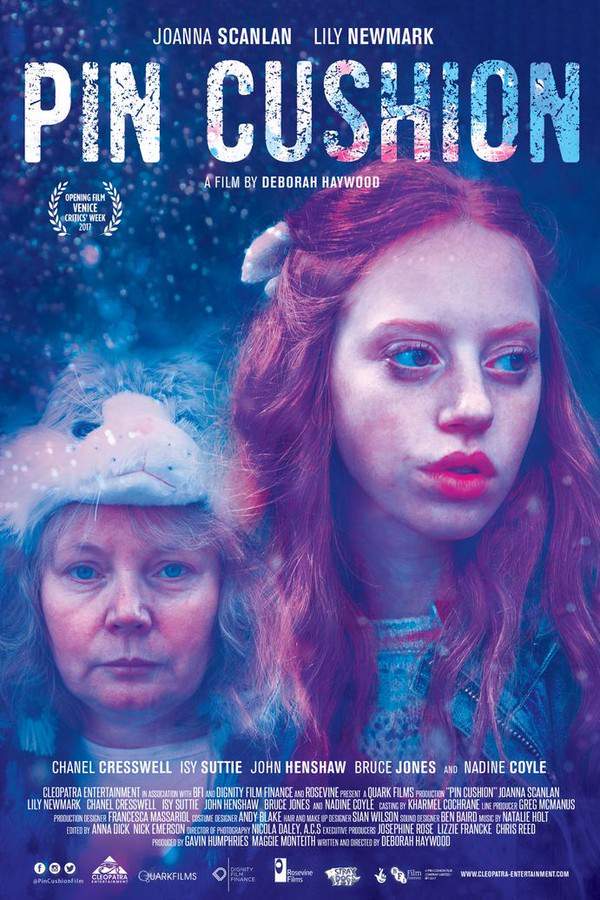
In a quiet Midlands town, Joanna Scanlan as Lyn and her daughter Lily Newmark as Iona are eager to start a fresh chapter together. The move promises a clean slate, and the pair throw themselves into the new life with a mix of hope and nerves. Iona quickly crosses paths with a boy named Daz, Loris Scarpa as Daz, and the two start dating, offering a glimpse of teenage romance amid the upheaval of suburban relocation and a brand-new school.
To help Iona settle in, she forges a tight-knit circle with Keeley, Stacie and Chelsea. Keeley is played by Sacha Cordy-Nice (Keeley), Stacie by Saskia Paige Martin (Stacie), and Chelsea by Bethany Antonia (Chelsea). This trio becomes the axis of Iona’s social world, bringing both warmth and pressure as they navigate the precincts of friendship, loyalty, and the pressure to fit in. Lyn, feeling increasingly peripheral, makes tentative moves to connect with others, starting with Belinda, a sour-faced neighbor whose offered friendship never quite lands as she hopes. The film lays out a portrait of two generations contending with isolation and the desire to belong within a neighborhood that is both familiar and alien.
As Iona’s school life unfolds, the dynamics among her peers shift from tentative camaraderie to a more complicated web of frenemy behavior. Chelsea remains the only one who treats her with decency, even as the others toe a line that blurs support with spite. The social atmosphere grows tense, and the audience is invited to consider how quickly a young person’s sense of identity can become entangled with the opinions and actions of those around them. The film does not shy away from the ambiguous loyalties that form in such a climate, and Iona’s confidence is continually tested by the shifting currents of popularity.
At Iona’s party, Sicko, Keeley’s cousin, Aury Wayne accidentally kills their Budgie, a moment that unsettles the group and sends ripples through the night. The fallout from that evening becomes a catalyst for the more damaging conduct that follows. Keeley and Stacie exploit the moment and push Iona into a risky situation, getting her drunk and stripped, and then spreading the photos around the school. Chelsea’s sharp line about the cruelty of the moment—> they like making people unhappy —cuts to the film’s core observation about the social cruelty that can humiliate and isolate a teenager.
The consequences extend beyond the party, as Daz is hurt by Iona’s apparent withdrawal and the shift in her attention toward her new circle, highlighting the ache that can accompany genuine affection when friends pull away in favor of the louder, more dominant dynamic. Lyn, meanwhile, is left to contend with the family’s loss of the Budgie and its emotional toll, culminating in her decision to attend a celebrity psychic event in an attempt to make sense of the turmoil at home and in Iona’s life.
Throughout, the film balances moments of tenderness with stingingly honest portraits of peer pressure, jealousy, and the fragile line between care and control. It peels back the layers of a community trying to adapt to change while the most intimate relationships—between a mother and daughter, and between friends who drift apart—are tested in ways that feel both specific and universal. The result is a thoughtful, empathetic exploration of adolescence, family, and the sometimes harsh truths that accompany growing up in a world where friendship can be both a shelter and a spotlight.