Plot Explained Spoilers guaranteed!
Plot Explained

Browse by genre

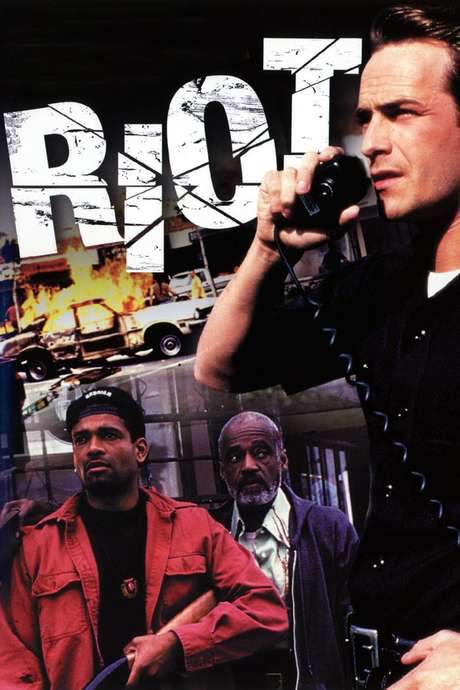
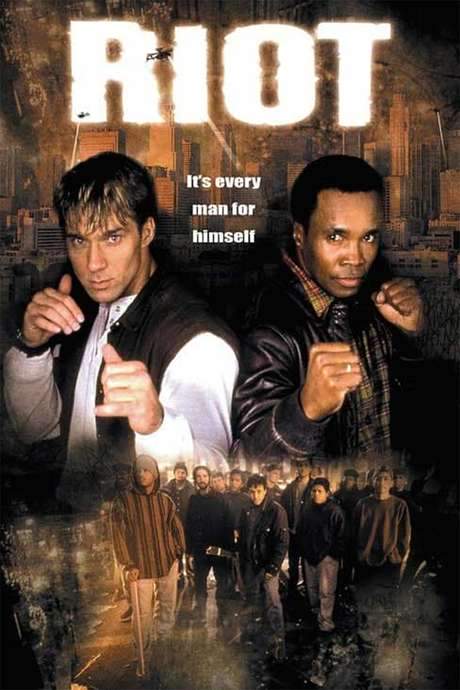
Riot (1996) movie poster

Timeline

Riot (1996) Timeline Explained – Every Event in Order

Release, runtime and language
1996 · 94 mins · English
Loading streaming availability…
Directed by
Joseph Merhi
Starring
Paul Higgins, Tim Colceri, Charles Napier, Patrick Kilpatrick, Carlos Gómez, Kyla Pratt

Every man for himself An heiress is kidnapped during the chaos of a riot on Christmas Eve.

On this page (6)
  1. 1 Where to watch
  2. 2 Events in order (12)
  3. 3 Timeline questions answered
  4. 4 Movie threads
  5. 5 Movies like Riot
  6. 6 Every angle
Loading streaming availability…

12 events in order · contains spoilers

Riot Timeline: Events in Chronological Order

Every key event of Riot (1996) in order, scene by scene, with when and where it takes place. Use it to untangle flashbacks, time jumps and parallel storylines, to refresh your memory before the sequel or to find the exact scene you are thinking of.

  1. Rodney King verdict and unrest

    The film opens in the wake of the Rodney King verdict, as tension in Los Angeles spirals into riots. Authorities struggle to maintain order while communities brace for what comes next. This event sets the stage for the intersecting stories that follow.

    When
    1992, after the verdict
    Where
    Los Angeles
  2. Chinese liquor store owner and son clash over values

    The Chinese liquor store owner wrestles with assimilation as his teenage son challenges his Old World values. The son views his father’s traditional ways and Buddhist restraint as signs of weakness, pushing their relationship toward strain. Their conversations take place amid the store’s aisles and the surrounding city’s mounting stress.

    When
    1992, post-verdict
    Where
    LA Chinese neighborhood
  3. Store as focal point amid unrest

    The liquor store becomes a microcosm of the broader tension, drawing attention from neighbors and the police during the chaotic aftermath. The owner weighs protecting his shop and family against the demands of a city burning outside. Conversations and wary glances reveal how fear, distrust, and cultural differences shape decisions.

    When
    During the riots, aftermath
    Where
    Store in LA
  4. Hispanic teenager aims for a straight path

    The Hispanic teen strives to live straight and excel in school to avoid his older brother’s mistakes. He hopes to provide for his current and future family by staying on a lawful path and investing in his education. The pressure to succeed intensifies as the city’s turmoil seeps into his daily life.

    When
    1992, post-verdict
    Where
    Los Angeles
  5. Family-centered motivation

    He weighs the temptations of street life against the promise of education and a stable future. He understands that his success could uplift his family and perhaps future generations. The looming city-wide tension makes every choice feel consequential.

    When
    1992, post-verdict
    Where
    Local neighborhood
  6. White LAPD officer's personal conflict

    A white LAPD officer negotiates obligations to a girlfriend and a not-quite-wife while facing a gung-ho culture among some colleagues. He struggles to balance personal life with professional duty in a city on edge. The aftermath of the verdict forces him to confront how his department’s actions affect civilians and trust.

    When
    1992, post-verdict
    Where
    Los Angeles
  7. Cops' aggressive camaraderie vs restraint

    The officer’s fellow officers display a hard-charging attitude that collides with his more measured impulses. He questions where loyalty to the force ends and morality begins as tensions rise in the streets. This inner conflict foreshadows potential consequences of policing during a riot.

    When
    1992, post-verdict
    Where
    LA streets
  8. African American middle-class man returns home

    An African American man who recently moved his family out of the ghetto visits the store his father once owned, seeking to share good news with his mother. He wants to celebrate progress and stability while acknowledging memories of the Watts riots. The visit reconnects generations and highlights persistent gaps between neighborhoods.

    When
    Following move to suburbs
    Where
    Old neighborhood and his mother’s home
  9. Mother's memories surface

    The mother recalls living through the Watts riots less than thirty years earlier, and the visit stirs memories of fear and resilience. She offers perspective on change, continuity, and the cost of progress in a city scarred by violence. The past informs the present tension.

    When
    During visit
    Where
    Mother's home
  10. Interweaving fates in the city

    Though each vignette follows a separate thread, the stories interact throughout the film as incidents ripple from one character to another. A chance encounter or shared moment in a crowded street reveals how their choices affect each other. The riot’s aftermath provides common ground for reflection on family, loyalty, and survival.

    When
    Throughout the timeline
    Where
    Los Angeles
  11. Store’s proximity to the violence

    The liquor store and its surrounding area become a staging ground for tension as neighbors confront fear and suspicion. Small acts of kindness collide with rumors and distrust, illustrating how communities test bonds in crisis. The store’s fate looms over the four family narratives.

    When
    During unrest
    Where
    Store neighborhood
  12. Resolution glimpses

    The film closes with glimpses of resolution and continued challenges. Each character reflects on what they learned about assimilation, responsibility, and belonging. The movie leaves a sense that personal histories persist even as the city tries to heal.

    When
    After the events
    Where
    Los Angeles

Last updated: April 07, 2026 at 21:05

Was this helpful?

Timeline questions answered

Riot Timeline Explained: Your Questions Answered

When does it happen, and why in that order? The questions people ask about the chronology of Riot (1996): time jumps, flashbacks, cause and effect between scenes and the correct order of events, each answered with spoilers.

Q1

Why does the Chinese son see his father's traditional values as weakness

The son views his father's Old World values and Buddhist non-confrontational stance as weakness because he is assimilating into American culture and sees assertiveness and direct action as strength. During the chaos of the riots, the father's calm restraint appears to the son like passivity when the family should be defending themselves and their store.

Foreshadowing: Early scenes show the son challenging his father's way of handling everyday conflicts, establishing the generational tension that intensifies during the riot.

  • chinese family
  • father son conflict
  • assimilation
  • cultural values
  • generation gap
Q2

Why doesn't the liquor store owner confront the rioters

The Chinese liquor store owner maintains his Buddhist principles and non-confrontational stance throughout the riots. He believes in protecting his family and store through patience and restraint rather than escalating violence. His traditional values dictate that engaging in conflict would put his family at greater risk and go against his spiritual beliefs.

Foreshadowing: The father's character is established early as someone who resolves disputes through calm discussion rather than aggression.

  • liquor store
  • buddhism
  • non-confrontation
  • family protection
  • riots
Q3

What motivates the Hispanic teen to stay away from street life

The Hispanic teenager is motivated by a desire to create a better future for his family. He watches his older brother make mistakes and become involved in street life, and he deliberately chooses a different path. His motivation stems from responsibility to his current family and hope of supporting future generations through education and lawful work.

Foreshadowing: Early scenes establish his determination to excel in school as an act of resistance against circumstances pulling him toward his brother's path.

  • hispanic teen
  • education
  • family responsibility
  • street life
  • ambition
Q4

Why does the LAPD officer disagree with his fellow officers' aggressive approach

The white LAPD officer struggles with the gung-ho culture among some colleagues who embrace aggressive policing tactics. He questions where loyalty to the force ends and personal morality begins, especially as tensions rise and his department's actions affect civilians. His conflict is heightened by his personal relationships with a girlfriend and a not-quite-ex-wife, forcing him to evaluate what he's willing to do for camaraderie versus conscience.

Foreshadowing: His internal struggles about duty and trust are introduced early, contrasting his measured impulses with the hard-charging attitude of fellow officers.

  • lapd officer
  • police culture
  • moral conflict
  • duty
  • police brutality
Q5

What triggers the African American man's visit to his father's old store

The African American middle-class man visits the store his father once owned in the old neighborhood because he has recently moved his family to the suburbs and wants to bring good news to his mother. He hopes to celebrate progress and stability while acknowledging the family's history. The visit is driven by a desire to connect his present success to his family's legacy.

Foreshadowing: The character's move to suburbs is established early, creating the tension between leaving and returning to one's roots.

  • african american family
  • legacy
  • store
  • suburb move
  • mother
Q6

How do the four separate storylines connect in the movie

Though the four vignettes appear separate, they continually intersect through small encounters and shared atmospheres throughout Los Angeles. Characters cross paths in crowded streets, share tense moments at the liquor store, or experience ripple effects from each other's choices. The riot's aftermath provides common ground where their lives briefly touch, revealing how individual decisions affect the broader community.

Foreshadowing: The film signals early that these stories will intersect through parallel editing and shared city atmosphere.

  • interweaving stories
  • los angeles
  • connection
  • community
  • parallel narratives
Q7

Why are the mother's memories of the Watts riots significant

The African American mother's memories of living through the Watts riots less than thirty years earlier are significant because they provide historical context to the current unrest. Her perspective connects the 1992 riots to a longer pattern of racial violence and resilience in Los Angeles. The memories inform how she interprets the present chaos and add emotional weight to her son's attempt to bring hope amid recurring turmoil.

Foreshadowing: Her dialogue early establishes her awareness of how history repeats, adding depth to the family's present choices.

  • watts riots
  • mother
  • historical memory
  • racial violence
  • generational trauma
Q8

Why does the liquor store become a focal point during the riots

The liquor store becomes a microcosm of broader tension because it sits at the intersection of multiple communities and represents vulnerable minority-owned business during chaos. Both neighbors and police pay attention to it during the aftermath. The owner must weigh protecting his shop and family against the demands of a city burning outside, making small decisions that reflect larger questions about safety, loyalty, and belonging.

Foreshadowing: The store is introduced early as a central location where cultural differences and fears collide.

  • liquor store
  • minority business
  • riots
  • community tension
  • focal point
Q9

How does the Rodney King verdict trigger the events of the film

The film opens in the wake of the Rodney King verdict, when the acquittal of police officers accused of beating Rodney King sparks the 1992 Los Angeles riots. This watershed moment sets the stage for all four intersecting stories, creating the atmosphere of fear, outrage, and uncertainty that forces each character to confront their values, relationships, and choices. The verdict serves as both setting and catalyst for the human drama that unfolds.

Foreshadowing: The opening immediately establishes the verdict as the spark for everything that follows.

  • rodney king verdict
  • 1992 riots
  • los angeles
  • catalyst
  • police brutality
Q10

What does the film say about family legacy and changing neighborhoods

The film explores how family legacy persists even as neighborhoods change. The African American man's visit to his father's old store symbolizes the connection between past and present, while his mother's memories show how trauma and hope coexist across generations. The Chinese family's store represents similar intergenerational themes, as the father clings to tradition while his son seeks assimilation. Both narratives examine how families negotiate history while trying to build better futures.

Foreshadowing: Multiple storylines involve characters returning to or reflecting on family spaces from previous generations.

  • legacy
  • neighborhoods
  • family
  • change
  • intergenerational
  • memory

Movie threads

More Movies Like Riot, by Mood & Story

Curated lists built around what makes Riot tick: the same mood, the same kind of story or the same emotional payoff. Each list explains why these movies belong together.

Urban Crisis Collision Narratives like Riot

Personal lives colliding against a backdrop of explosive social unrest. Find more movies like Riot that explore personal stories set against explosive social unrest. These films capture the raw energy and urgent social commentary of urban crisis narratives, perfect for viewers seeking tense, socially conscious dramas.

  • tense
  • urgent
  • gritty
  • confrontational
  • socially conscious
  • anxious
  • Tone: tense, confrontational, urgent
  • Pacing: steady, building tension
Why these movies?

The story pattern: These narratives typically interweave multiple character perspectives that are all connected by a single, large-scale urban crisis event. The external chaos acts as a catalyst, accelerating personal conflicts, forcing moral choices, and revealing deep-seated societal fractures. The structure is often steady and methodical, building tension as the disparate storylines inevitably converge.

Why they belong together: They are grouped by their shared setting of a city in turmoil, a tense and urgent tone, and a narrative structure that balances broad social commentary with intimate, personal drama. The high intensity and heavy emotional weight are consistent across these films.

Socially Charged Tense Dramas like Riot

Gripping stories where deep societal conflicts drive personal turmoil. If you liked the heavy themes in Riot, explore these other tense dramas about social injustice. These movies share a gritty, confrontational tone and delve into urgent topics like race relations and urban decay for a powerful viewing experience.

  • tense
  • somber
  • socially conscious
  • confrontational
  • gritty
  • reflective
  • Tone: tense, somber, reflective
  • Pacing: steady, methodical
Why these movies?

The story pattern: The narrative pattern revolves around a central, socially relevant conflict that creates immense pressure on the characters. The plot is driven by this external tension, forcing characters to confront systemic issues and their own prejudices. The journey is often emotionally harrowing, leading to mixed or bittersweet resolutions that reflect the complexity of the real-world problems being depicted.

Why they belong together: They are united by a dominant tense tone, heavy emotional weight, and a serious commitment to exploring difficult social themes. The pacing is often steady, allowing the gravity of the issues to sink in, and the intensity is consistently high due to the high-stakes subject matter.

If you liked this

Movies Like Riot

Similar movies to Riot: the same genre, themes or kind of story. Each one comes with its own plot summary, timeline and ending explained.

Browse all movie summaries

Every angle

Riot (1996) Explained: Plot, Timeline & Characters

Everything about Riot in one place: what happens in the plot summary, the timeline in chronological order, the characters and meaning and a spoiler-free summary. What's After the Movie adds the cast, box office and post-credit scenes.

Coming soon on iOS and Android

The Plot Explained Movie Summary App

Plot summaries, endings explained and timelines on your phone. Catch up on any movie in minutes, save your favorites and never miss a twist again.

Be the first to know when we launch. Your email stays private, always.

Learn more about the app