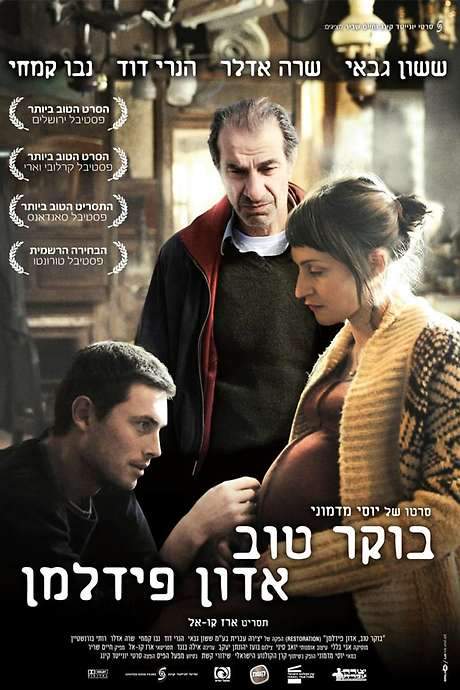
Set in downtown Tel Aviv, the intimate workshop Malamud & Fidelman centers on Yaakov Fidelman [Sasson Gabai], a skilled craftsman whose passion for woodwork is matched by a stubborn reluctance to manage money. When one partner, Max Malamud, dies, the bequest shocks the shop: the share does not go to Yaakov but to Yaakov's son Noah Fidelman [Nevo Kimchi], a successful lawyer who sees the workshop as a potentially lucrative stake in a neighborhood undergoing a real-estate boom.
Yaakov, aging and exacting, keeps the workshop's standards high even as demand declines and banks refuse him loans. Noah pushes for Yaakov to retire and sell off the operation, betting that a quick windfall could capitalize on the booming market, while Yaakov clings to the life he built through craft rather than commerce.
Shortly before Max’s death, a mysterious young man named Anton [Henry David] arrives as Yaakov’s helper and apprentice. Little is revealed about Anton’s past—he has severed ties with his family, and he avoids his brother who comes by seeking him. Anton spots a potential lifeline for the ailing business: a broken-down 19th-Century German Steinway piano he discovers among old junk in the workshop, which might be repaired and sold for a considerable sum.
Anton, a gifted pianist in his own right, throws himself into the repair project with a single‑mighted focus. His commitment deepens the rift with Noah, who infiltrates the workshop at times but cannot bring himself to smash the piano, even as the stakes rise and the pressure to salvage the business becomes personal.
Complicating matters, Anton develops romantic feelings for Hava [Sarah Adler], Noah’s wife and a sensitive, artistic soul who is heavily pregnant with Noah’s child. Her presence in the workshop and her latent yearning for meaning pull her away from the busy life Noah leads, creating a tangle of loyalties and longing that neither man anticipated.
As the piano project progresses, Yaakov faces a defining choice: back Anton’s quest to revive a solitary lifework through the piano, or support Noah’s real-estate strategy that could secure a future for the family and the legacy of the workshop in a changing city. The decision weighs on Yaakov’s sense of duty, tradition, and what it truly means to carry on a life’s work.
In the end, the film centers on a pivotal moment of judgment for Yaakov, where craft, love, family, and ambition converge, and the future of his workshop hinges on which path—artistic devotion or financial opportunity—he chooses to honor as his legacy.