
















Plot Explained Spoilers guaranteed!
Plot Explained

Browse by genre

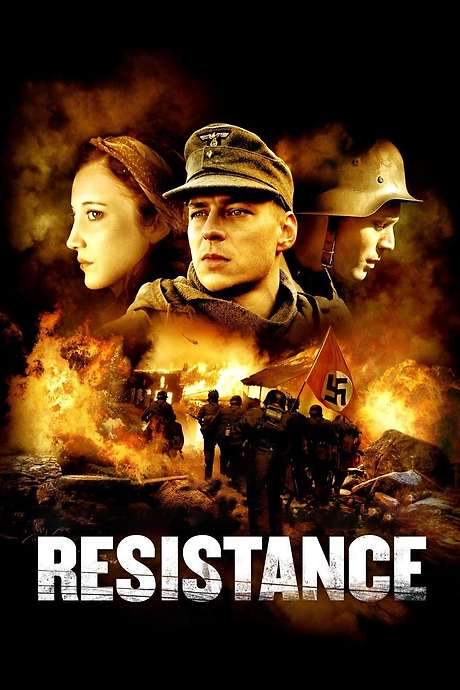
Resistance (2011) movie poster

Timeline

Resistance (2011) Timeline Explained – Every Event in Order

Release, runtime and language
2011 · 92 mins · English
JustWatch #11,202 9
Directed by
Amit Gupta
Starring
Michael Sheen, Andrea Riseborough, George Taylor, Tom Wlaschiha, Iwan Rheon, Anatole Taubman

In 1944, after a failed D‑Day invasion, German forces have occupied England and are advancing west toward Wales. In an isolated Welsh village on the English border, the women awaken to discover their husbands have mysteriously vanished. Determined, they trek into the mountains to join the Resistance.

On this page (6)
  1. 1 Where to watch
  2. 2 Events in order (15)
  3. 3 Timeline questions answered
  4. 4 The book behind the movie
  5. 5 Movie threads
  6. 6 Every angle

Where to watch

Where to Watch Resistance (2011)

Where can you watch Resistance? Stream, rent or buy it in the US, including on Fawesome, Hoopla and Kanopy: current JustWatch availability with up-to-date prices.

Streaming availability powered by JustWatch

15 events in order · contains spoilers

Resistance Timeline: Events in Chronological Order

Every key event of Resistance (2011) in order, scene by scene, with when and where it takes place. Use it to untangle flashbacks, time jumps and parallel storylines, to refresh your memory before the sequel or to find the exact scene you are thinking of.

  1. German Occupation Begins

    In an alternate 1944, German forces invade the United Kingdom successfully after D-Day fails. They arrive in a remote Welsh valley, unsettling the local population and changing their way of life.

    When
    1944
    Where
    Welsh Valley
  2. Husbands Leave for War

    The husbands of the local women leave to join the covert British Resistance, leaving the women to fend for themselves in a harsh winter. The absence of their partners creates a tense atmosphere of distrust and uncertainty.

    Where
    Welsh Valley
  3. Strained Relationships

    With the arrival of the German soldiers, the local women find themselves in a difficult position as they navigate their loyalty to their missing husbands. The soldiers, viewed as the enemy, are also struggling with their own conflicts and doubts.

    Where
    Welsh Valley
  4. Changing Dynamics

    As the winter progresses, the German soldiers begin to abandon their uniforms and help with farm chores. This cooperation hints at a change in dynamics, but underlying tensions remain.

    When
    During Winter
    Where
    Welsh Valley
  5. Albrecht and Sarah's Connection

    Captain Albrecht forms a bond with local woman Sarah, which causes complications due to their opposing roles. To demonstrate he is trustworthy, Albrecht reveals a hidden cave containing a priceless Medieval world map.

    Where
    Cave Near Welsh Valley
  6. Maggie's Friendship

    Maggie, an elderly woman, builds an unexpected friendship with soldier Bernhardt. Their camaraderie represents a fragile alliance amidst the larger conflict surrounding them.

    Where
    Welsh Valley
  7. County Fair Plans

    With spring approaching, Sarah persuades Albrecht to let Maggie take her prized horse to the county fair. This outing symbolizes hope and normalcy amidst the war-torn reality.

    When
    Spring
    Where
    County Fair
  8. Devastating News

    Maggie learns from a friend at the fair that the men who destroyed a railway bridge have been executed by the Nazis. This news shatters her spirit and alters her perception of her circumstances.

    When
    Spring
    Where
    Fair
  9. Tragic Retribution

    Young teenager George views Maggie's participation in the fair as an act of betrayal. In a moment of anger, he shoots her horse, showcasing the escalating tensions between the occupiers and the local populace.

    When
    After County Fair
    Where
    Welsh Valley
  10. Maggie's Heartbreak

    The losses Maggie endures—the death of her horse and the certainty of her husband's demise—prove devastating. This emotional toll becomes too great for her to bear, leading to her downfall.

    Where
    Welsh Valley
  11. Steiner's Betrayal

    Distrust towards the local women drives soldier Steiner to flee to town with the Army radio. His actions reflect a deep-seated paranoia and the complex relations between occupiers and civilians.

    Where
    Town
  12. Albrecht's Proposal

    Albrecht, now deeply in love with Sarah, offers her a chance to escape with him before the Gestapo arrive. This romantic development underscores the emotional stakes in the dangerous reality they live in.

  13. Sarah's Internal Conflict

    While Sarah initially agrees to escape with Albrecht, she returns home to confront her true loyalties. She writes her date of death in the family Bible, symbolizing her acceptance of fate.

    Where
    Sarah's Home
  14. Burning the Map

    In a final act of defiance and loyalty to her husband, Sarah destroys the priceless Medieval map that Albrecht had safeguarded. This act illustrates her commitment to her country and her resistance against the occupiers.

    Where
    Cave Near Welsh Valley
  15. Walking into the Mountains

    The film concludes with Sarah walking off into the mountains, embracing her fate and the harsh reality of her situation. This act symbolizes her ultimate choice of loyalty over love in a time of war.

    Where
    Mountains

Last updated: September 26, 2026 at 05:35

Was this helpful?

Timeline questions answered

Resistance Timeline Explained: Your Questions Answered

When does it happen, and why in that order? The questions people ask about the chronology of Resistance (2011): time jumps, flashbacks, cause and effect between scenes and the correct order of events, each answered with spoilers.

Q1

Why did the husbands vanish from the Welsh village?

The husbands secretly left to join an underground British Resistance movement after Germany successfully invaded the UK following the failure of D-Day. They departed without telling their wives the full details of their mission, leaving the women to face a harsh winter alone under German occupation.

Foreshadowing: The summary hints that the men's disappearance is coordinated and covert, as the women awaken to find them already gone rather than witnessing their departure.

  • missing husbands
  • british resistance
  • husbands disappear
  • d-day failure
Q2

Why did the German soldiers start helping the women with farm work?

As winter wore on with no active combat in the remote valley, the German soldiers began to relax their hostility and assist with daily farm labor, even leaving small gifts like rabbits. They hoped the war would end soon and saw the valley as a temporary refuge from the fighting elsewhere, which encouraged a fragile but real cooperation with the local women.

Foreshadowing: The arrival of spring and the county fair outing suggests this winter cooperation was always fragile and bound to collapse once larger war realities returned.

  • german soldiers
  • farm work
  • cooperation
  • winter occupation
  • collaboration
Q3

Why did Albrecht reveal the hidden Medieval map to Sarah?

Captain Albrecht, a former medieval history student, showed Sarah the priceless world map hidden in a cave to prove he was more than just an occupying soldier. He wanted to demonstrate his cultural values and his determination to keep the artifact from being seized by the SS or Himmler, using trust in the map as a way to deepen his relationship with her.

Foreshadowing: Albrecht's academic background and his earlier protective behavior toward the women signal that he sees himself as different from the SS, which makes Sarah's later destruction of the map even more painful for him.

  • albrecht
  • medieval map
  • hidden cave
  • sarah
  • himmler
Q4

Why did George shoot Maggie's horse after the county fair?

Young George viewed Maggie's decision to showcase her horse at a fair attended alongside German forces as a humiliating act of collaboration with the occupiers. Already grieving his own father's execution by the Nazis, he lashed out at Maggie's cob as a form of brutal punishment for what he saw as betrayal.

Foreshadowing: George's earlier silence and visible grief after learning about the executed resistance fighters foreshadows his capacity for impulsive violence.

  • george
  • horse shooting
  • county fair
  • betrayal
  • maggie
Q5

What happens to Maggie after the fair in Resistance?

Maggie learns at the fair that her husband and the other resistance fighters who destroyed a railway bridge have been hanged by the Nazis. Although her horse places third in the competition, she returns home only to have George shoot the animal in retaliation for attending. Overwhelmed by the loss of both her husband and her horse, Maggie succumbs to despair and dies.

  • maggie death
  • horse killed
  • husband executed
  • despair
Q6

Why did Steiner abandon his unit and take the Army radio?

Soldier Steiner harbored a deep distrust of the women in the valley and disagreed with the relaxed, cooperative tone Albrecht had allowed to develop. He broke away and headed to town with the Army radio, either to report the situation to higher German command or to act on his own paranoia, signaling that the fragile peace in the valley was about to shatter.

Foreshadowing: Steiner's visible tension during the winter interactions hints that he never accepted the collaborative arrangement and would eventually act on his suspicions.

  • steiner
  • army radio
  • betrayal
  • german soldier
  • distrust
Q7

Why did Albrecht ask Sarah to run away with him?

Albrecht had fallen genuinely in love with Sarah and feared for both their lives once the Gestapo arrived in the valley. His offer to escape together was an attempt to save her from the brutal crack-down that was coming and to build a future with her outside the war.

Foreshadowing: Albrecht's earlier willingness to share the secret map already showed he saw Sarah as a confidante, not merely an enemy civilian.

  • albrecht
  • sarah
  • escape
  • gestapo
  • love
Q8

Why did Sarah refuse to leave with Albrecht?

Although Sarah initially agreed to Albrecht's escape plan, she ultimately could not abandon her loyalty to her missing husband, her family, and her country. She returned home, recorded her expected date of death in the family Bible, and accepted her fate rather than start a new life with a German officer.

Foreshadowing: Sarah's continued visits to her family home and quiet emotional restraint throughout the winter hint that her attachment to her husband and her identity remained stronger than her bond with Albrecht.

  • sarah refuses escape
  • family bible
  • loyalty
  • husband
  • choice
Q9

Why did Sarah destroy the Medieval world map?

Sarah burned the priceless Medieval map to prevent it from falling into the hands of the SS or being used as a symbol of German cultural conquest. It was her final act of defiance against the occupiers and a way of honoring her husband's resistance, even though she knew the gesture would also destroy something Albrecht deeply cared about.

Foreshadowing: Albrecht's earlier warning about Himmler's interest in the artifact foreshadows that the map was always a target, making Sarah's choice to destroy it both protective and political.

  • burn map
  • medieval map
  • defiance
  • sarah
  • ss
  • himmler
Q10

What does Sarah walking into the mountains at the end mean?

Sarah's solitary walk into the mountains symbolizes her complete rejection of life under occupation and her acceptance of an almost certain death. By choosing the wild Welsh landscape over escape with Albrecht, she reclaims her agency, embraces her identity as a member of the Resistance, and accepts martyrdom over compromise.

Foreshadowing: Throughout the film, Sarah's quiet stillness and refusal to fully engage with the German soldiers foreshadows that she would rather face danger than submit.

  • ending explained
  • sarah mountains
  • martyrdom
  • symbolism
  • final scene
Q11

How did Maggie find out her husband had been executed?

Maggie learned of her husband's death from a friend at the county fair, who told her that the resistance fighters responsible for blowing up a railway bridge had been captured and hanged by the Nazis. The news arrived precisely when Maggie was experiencing a rare moment of hope through her horse's success at the fair.

  • maggie husband death
  • railway bridge
  • executed
  • news at fair
Q12

Why does Resistance show a world where D-Day failed?

The film uses a failed D-Day invasion as its alternate history premise to create a scenario in which Germany successfully occupies the United Kingdom. This setup allows the story to explore what happens to ordinary civilians, loyalties, and small acts of rebellion when the wider war has turned decisively against the Allies.

  • alternate history
  • d-day failure
  • german occupation uk
  • premise

Movie threads

More Movies Like Resistance, by Mood & Story

Curated lists built around what makes Resistance tick: the same mood, the same kind of story or the same emotional payoff. Each list explains why these movies belong together.

Movies like Resistance: Alternate history WWII occupation dramas

Stories imagining what life looks like when enemy boots march through peaceful lands. Looking for movies like Resistance (2011)? These alternate history dramas explore wartime occupation, resistance movements, and civilians caught under enemy rule. Featuring bleak endings, somber atmospheres, and morally complex questions about loyalty, collaboration, and survival, these WWII alternate history films deliver heavy emotional weight and historically grounded tension.

  • oppressive
  • somber
  • wartime
  • isolated
  • tense
  • wintry
  • Tone: somber, bleak, oppressive
  • Pacing: variable, slow build punctuated by shocks
Why these movies?

The story pattern: These films typically establish a peaceful community or nation that is suddenly subjected to foreign occupation. The narrative follows civilians as they adapt to curfews, rationing, and hostile authority — hiding resistors, weighing personal safety against moral duty, and watching collaborators emerge from within their own ranks. The trajectory usually descends from uneasy normalcy through incremental losses to a devastating climax, often ending in sacrifice, betrayal, or ambiguous survival.

Why they belong together: They share the somber weight of imagining familiar places under foreign rule, the constant threat of discovery or retaliation, and the moral complexity of who collaborates versus who resists. Pacing tends to alternate between quiet daily life and sudden violence, mirroring the unpredictability of occupation and the chilling arrival of authority at any door.

Bleak wartime grief stories like Resistance

Stories where fragile warmth is slowly strangled by an avalanche of wartime deaths. If you were devastated by Resistance (2011), these films share its heavy emotional weight — stories where characters endure compounding losses in wartime settings. Featuring variable pacing that lingers on intimate bonds before striking with violence, these bleak dramas explore survival, loyalty, forbidden connection, and the slow suffocation of hope under occupation or siege.

  • somber
  • melancholic
  • slow burn
  • tragic
  • grief
  • intimate
  • Tone: bleak, melancholic, tragic
  • Pacing: variable, slow burn punctuated by shock
Why these movies?

The story pattern: The narrative usually opens with a tight community or small group facing extraordinary circumstances, often wartime occupation or siege. Initial bonds form through shared hardship, daily rituals, and quiet acts of care. Then loss arrives — first as rumor, then as fact — and each death, capture, or betrayal chips away at the group's cohesion and morale. By the end, what began as collective hope has been replaced by grief, exhaustion, or symbolic self-destruction.

Why they belong together: They are unified by the slow-suffocation effect: warmth and cooperation that feels earned is gradually extinguished by an unceasing series of losses. Pacing allows viewers to know and care about each character before they are taken, making the eventual devastation feel personal rather than abstract. Endings tend to be bleak, ambiguous, or pyrrhic, refusing easy consolation.

Every angle

Resistance (2011) Explained: Plot, Timeline & Characters

Everything about Resistance in one place: what happens in the plot summary, the timeline in chronological order, the characters and meaning and a spoiler-free summary. What's After the Movie adds the cast, box office and post-credit scenes.

Coming soon on iOS and Android

The Plot Explained Movie Summary App

Plot summaries, endings explained and timelines on your phone. Catch up on any movie in minutes, save your favorites and never miss a twist again.

Be the first to know when we launch. Your email stays private, always.

Learn more about the app