
















Plot Explained Spoilers guaranteed!
Plot Explained

Browse by genre

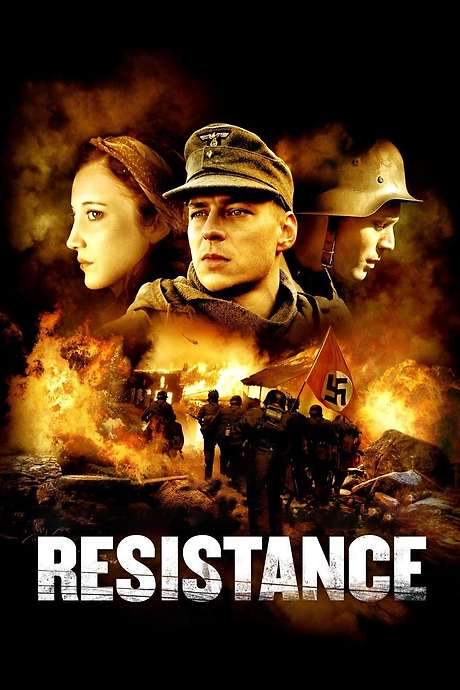
Resistance (2011) movie poster

Characters & Themes

Resistance (2011) Characters, Setting & Themes Explained

Release, runtime and language
2011 · 92 mins · English
JustWatch #11,177 13
Directed by
Amit Gupta
Starring
Michael Sheen, Andrea Riseborough, George Taylor, Tom Wlaschiha, Iwan Rheon, Anatole Taubman

In 1944, after a failed D‑Day invasion, German forces have occupied England and are advancing west toward Wales. In an isolated Welsh village on the English border, the women awaken to discover their husbands have mysteriously vanished. Determined, they trek into the mountains to join the Resistance.

On this page (8)
  1. 1 Where to watch
  2. 2 Characters explained (4)
  3. 3 Where & when it takes place
  4. 4 Themes & meaning (3)
  5. 5 Character & meaning questions
  6. 6 The book behind the movie
  7. 7 Movie threads
  8. 8 Every angle

Where to watch

Where to Watch Resistance (2011)

Where can you watch Resistance? Stream, rent or buy it in the US, including on Fawesome, Hoopla and Kanopy: current JustWatch availability with up-to-date prices.

Streaming availability powered by JustWatch

4 main characters · contains spoilers

Resistance Characters Explained: Who Is Who

The main characters of Resistance (2011), heroes and villains: what drives them, how they change over the course of the story and what each of them reveals about the film's bigger ideas.

  • Sarah (Andrea Riseborough)

    Sarah is a resilient and resourceful woman who grapples with her loyalty to her husband and the growing connection with German officer Albrecht. Throughout the film, she exhibits strength and determination, ultimately making a heartbreaking choice to protect her values. Her character represents the struggle between personal desires and patriotic duty.

    • ❤️ Loyalty
    • 🏃‍♀️ Survival
    • ✍️ Sacrifice
  • Albrecht (Tom Wlaschiha)

    Captain Albrecht is a complex character who embodies the conflict of war. His growing affection for Sarah symbolizes a bridge between enemy lines, as he tries to prove his trustworthiness while wrestling with his own duties as a soldier. Albrecht's character highlights themes of humanity amidst chaos.

    • 💑 Affection
    • ⚖️ Conflict
    • 🎖️ Duty
  • Maggie (Sharon Morgan)

    Maggie is an elderly woman who provides wisdom and perspective in the face of impending loss. Her friendship with soldier Bernhardt underscores the complexities of relationships forged in war. As she grapples with the effects of occupation and personal tragedy, Maggie's journey illustrates the harrowing impacts of loss.

    • 👵 Wisdom
    • 🏇 Friendship
    • 😢 Sadness
  • George (Iwan Rheon)

    Young teen George embodies the conflicting emotions experienced by those caught in war. His actions, driven by a sense of betrayal and collaboration, highlight the tension and misunderstanding between the local women and German soldiers. George struggles to navigate his loyalties in a changing world.

    • 🔥 Anger
    • ⚡ Rebellion
    • 🤔 Confusion

Last updated: September 27, 2026 at 19:27

Was this helpful?

Setting

Where and When Does Resistance Take Place?

The setting of Resistance (2011): the year and time period, the places and locations, and how they shape the characters, the mood and the tension of the story.

Time period

1944

The events unfold in 1944, a critical year during World War II when the tides of war were beginning to shift. D-Day, a pivotal moment in Allied military strategy, had failed in this alternative reality, leading to the successful invasion of the UK by German forces. This backdrop creates a sense of desperation and tension as the characters confront the realities of occupation and loyalty.

Location

Welsh border, remote valley

The movie takes place in a remote valley on the Welsh border, a picturesque yet isolated area known for its rugged landscape and tight-knit communities. Set in the backdrop of World War II, this valley becomes a focal point of tension as German occupiers and local women must navigate their relationships amidst the pressures of war. The rugged terrain also symbolizes the harsh conditions they face, emphasizing the struggle for survival.

  • 🏞️ Landscape
  • 🇬🇧 United Kingdom
  • 🌲 Rural

Last updated: September 27, 2026 at 19:27

Was this helpful?

3 major themes

Resistance Meaning: Themes & Message Explained

What is Resistance (2011) really about? The emotional, social and philosophical themes the film keeps returning to, its symbolism and the message beneath the surface.

  • Collaboration

    The theme of collaboration emerges as characters from opposing sides are forced to work together for survival. The local women and German soldiers navigate their hostility and find ways to support each other, though underlying distrust remains. This complex dynamic highlights the blurred lines of enemy and ally in a time of crisis.

  • Loss

    The theme of loss resonates deeply throughout the film, as characters face the absence of their loved ones and the harsh realities of war. Maggie's heart-wrenching experiences serve as a poignant reminder of the personal costs of conflict. The loss of the horse symbolizes the shattering of hope and the finality of her grief.

  • War

    War looms large over the characters' lives, influencing their choices and relationships. The film explores the impact of warfare on human connections and the moral dilemmas faced by individuals caught in the crossfire. The constant threat of violence serves to amplify the tension and fear experienced by both the women and the soldiers.

Last updated: September 27, 2026 at 19:27

Was this helpful?

Character & theme questions

Resistance Characters & Meaning: Your Questions Answered

The questions people ask about Resistance (2011): who the characters really are, their relationships, what the symbols mean, where it takes place and what the movie is really about. Each answer contains spoilers.

Q1

Where is the movie set?

Resistance takes place in a remote valley on the Welsh border, a rugged and isolated stretch of countryside on the edge of England and Wales. The landscape is rural and tight-knit, with the surrounding mountains shaping both the physical journey of the characters and the atmosphere of the film. This isolation makes the valley feel like a small pocket of resistance cut off from the rest of a conquered Britain.

  • welsh border
  • rural setting
  • remote valley
  • landscape
  • uk
Q2

What year does the story take place?

Resistance is set in 1944, during the later years of World War II. The film uses this real historical moment as the foundation for an alternate history scenario, so the specific year matters: D-Day has already happened, and the Allies' expected breakthrough never came. That timeline choice is what allows the premise of a German-occupied Britain to feel plausible within the film's world.

  • 1944
  • world war 2
  • alternate history
  • timeline
  • d-day
Q3

What is the alternate history premise of Resistance?

The film imagines a world where the D-Day invasion failed, allowing German forces to push across the Channel and successfully occupy Great Britain. By 1944 in this version of events, the Wehrmacht is advancing westward through England toward Wales, and pockets of local resistance are the only opposition left. This premise reframes a familiar war story by placing occupation on British soil rather than continental Europe.

  • alternate history
  • german occupation
  • d-day failure
  • invasion
  • premise
Q4

Who is Sarah and what role does she play?

Sarah, played by Andrea Riseborough, is the central character of Resistance, a resilient Welsh woman whose husband has disappeared with the other village men. She carries the weight of the community's resistance while navigating a complicated connection with German officer Albrecht. Her arc embodies the tension between personal feeling and patriotic duty, making her the emotional core of the film.

  • sarah
  • andrea riseborough
  • lead character
  • protagonist
  • resistance
Q5

Who is Captain Albrecht and what does he represent?

Captain Albrecht, played by Tom Wlaschiha, is a German officer stationed in the occupied Welsh valley who forms an unexpected bond with Sarah. He embodies the theme of humanity within an occupying force, trying to prove himself trustworthy even as his military duties pull him in the opposite direction. Albrecht represents the moral gray zone of war, where individual decency and institutional brutality coexist.

  • albrecht
  • tom wlaschiha
  • german officer
  • occupier
  • humanity
Q6

Who is Maggie and what does her character represent?

Maggie, played by Sharon Morgan, is an elderly villager who provides wisdom and steadiness to the community after the men vanish. Her friendship with the German soldier Bernhardt shows how ordinary people can forge connections across enemy lines during war. Her personal tragedies, including the loss of her horse, make her the emotional symbol of what occupation costs a community.

  • maggie
  • sharon morgan
  • elder
  • bernhardt
  • loss
Q7

Who is George and what role does he play?

George, played by Iwan Rheon, is a young Welsh man whose loyalties become a source of tension in the village. Torn between collaboration with the occupiers and resistance to them, his choices highlight how war scrambles simple notions of right and wrong. He serves as a mirror for the older characters' debates about betrayal, trust, and survival under occupation.

  • george
  • iwan rheon
  • collaborator
  • youth
  • loyalty
Q8

What does the theme of collaboration explore?

The collaboration theme in Resistance looks at how enemies on paper can become allies in practice when survival demands it. The Welsh women and German soldiers share food, work, and even quiet friendships, even as they remain aware of which side each is technically on. The film uses this uneasy cooperation to ask whether human connection can survive when it is built on top of occupation.

  • collaboration
  • cooperation
  • enemy
  • trust
  • theme
Q9

How does the theme of loss drive the story?

Loss in Resistance operates on several layers: the disappearance of the husbands, the deaths of villagers, and the slow erosion of hope as occupation tightens. Maggie's experiences are the clearest expression of this theme, especially the death of her horse, which marks the point where grief becomes final rather than bearable. The film treats loss not as a single event but as an atmosphere that gradually overwhelms the community.

  • loss
  • grief
  • death
  • hope
  • maggie
Q10

What does the remote Welsh valley setting symbolize?

The isolated valley works as both a literal refuge and a symbol of entrapment. Its mountains and rough terrain offer a natural fortress for the resistance effort, but they also cut the villagers off from any wider help. The landscape mirrors the characters' emotional state, beautiful on the surface yet unforgiving, and reinforces the sense that the community is alone against an occupying force that surrounds them.

  • welsh valley
  • mountains
  • isolation
  • symbolism
  • landscape
Q11

What is the central conflict of the movie?

The central conflict in Resistance is the struggle of an isolated community to preserve its identity and dignity under German occupation. On one side are the villagers, especially the women left behind, who must choose between quiet survival and active resistance. On the other are the occupying soldiers and the ever-present threat of the Gestapo, whose violence turns personal relationships into dangerous choices.

  • central conflict
  • occupation
  • resistance
  • women
  • gestapo
Q12

What is the overall tone and mood of Resistance?

Resistance carries a bleak and steadily darkening tone, marked by quiet beauty that is gradually suffocated by the realities of occupation. The film lingers on seasonal rhythms and slow, human moments between the villagers and soldiers, then punctures that warmth with sudden violence and irreversible loss. The result is a war film that feels less like an action story and more like a slow, emotional collapse.

  • tone
  • mood
  • bleak
  • dark
  • atmosphere

Movie threads

More Movies Like Resistance, by Mood & Story

Curated lists built around what makes Resistance tick: the same mood, the same kind of story or the same emotional payoff. Each list explains why these movies belong together.

Movies like Resistance: Alternate history WWII occupation dramas

Stories imagining what life looks like when enemy boots march through peaceful lands. Looking for movies like Resistance (2011)? These alternate history dramas explore wartime occupation, resistance movements, and civilians caught under enemy rule. Featuring bleak endings, somber atmospheres, and morally complex questions about loyalty, collaboration, and survival, these WWII alternate history films deliver heavy emotional weight and historically grounded tension.

  • oppressive
  • somber
  • wartime
  • isolated
  • tense
  • wintry
  • Tone: somber, bleak, oppressive
  • Pacing: variable, slow build punctuated by shocks
Why these movies?

The story pattern: These films typically establish a peaceful community or nation that is suddenly subjected to foreign occupation. The narrative follows civilians as they adapt to curfews, rationing, and hostile authority — hiding resistors, weighing personal safety against moral duty, and watching collaborators emerge from within their own ranks. The trajectory usually descends from uneasy normalcy through incremental losses to a devastating climax, often ending in sacrifice, betrayal, or ambiguous survival.

Why they belong together: They share the somber weight of imagining familiar places under foreign rule, the constant threat of discovery or retaliation, and the moral complexity of who collaborates versus who resists. Pacing tends to alternate between quiet daily life and sudden violence, mirroring the unpredictability of occupation and the chilling arrival of authority at any door.

Bleak wartime grief stories like Resistance

Stories where fragile warmth is slowly strangled by an avalanche of wartime deaths. If you were devastated by Resistance (2011), these films share its heavy emotional weight — stories where characters endure compounding losses in wartime settings. Featuring variable pacing that lingers on intimate bonds before striking with violence, these bleak dramas explore survival, loyalty, forbidden connection, and the slow suffocation of hope under occupation or siege.

  • somber
  • melancholic
  • slow burn
  • tragic
  • grief
  • intimate
  • Tone: bleak, melancholic, tragic
  • Pacing: variable, slow burn punctuated by shock
Why these movies?

The story pattern: The narrative usually opens with a tight community or small group facing extraordinary circumstances, often wartime occupation or siege. Initial bonds form through shared hardship, daily rituals, and quiet acts of care. Then loss arrives — first as rumor, then as fact — and each death, capture, or betrayal chips away at the group's cohesion and morale. By the end, what began as collective hope has been replaced by grief, exhaustion, or symbolic self-destruction.

Why they belong together: They are unified by the slow-suffocation effect: warmth and cooperation that feels earned is gradually extinguished by an unceasing series of losses. Pacing allows viewers to know and care about each character before they are taken, making the eventual devastation feel personal rather than abstract. Endings tend to be bleak, ambiguous, or pyrrhic, refusing easy consolation.

Every angle

Resistance (2011) Explained: Plot, Timeline & Characters

Everything about Resistance in one place: what happens in the plot summary, the timeline in chronological order, the characters and meaning and a spoiler-free summary. What's After the Movie adds the cast, box office and post-credit scenes.

Coming soon on iOS and Android

The Plot Explained Movie Summary App

Plot summaries, endings explained and timelines on your phone. Catch up on any movie in minutes, save your favorites and never miss a twist again.

Be the first to know when we launch. Your email stays private, always.

Learn more about the app