












Plot Explained Spoilers guaranteed!
Plot Explained

Browse by genre

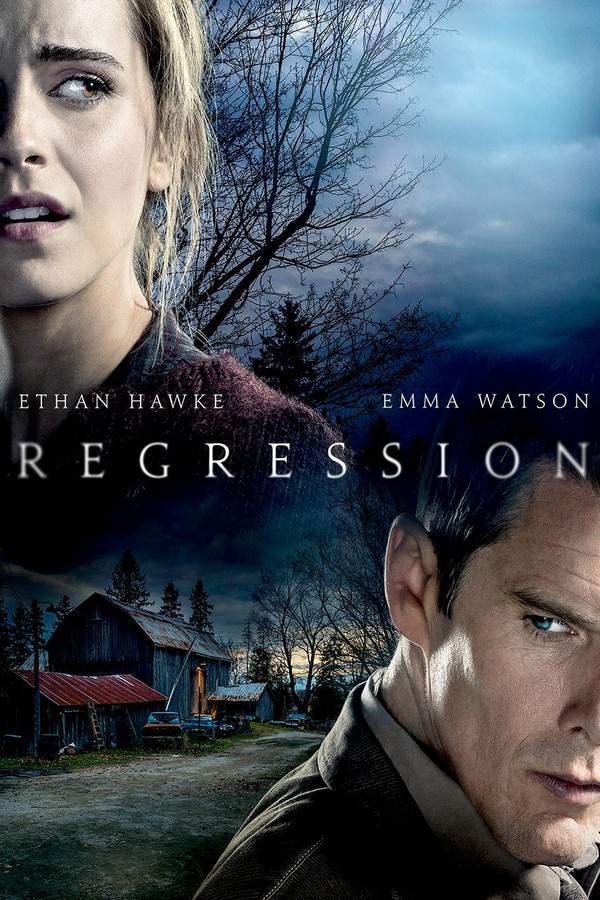
Regression (2016) movie poster

Characters & Themes

Regression (2016) Characters, Setting & Themes Explained

Release, runtime and language
2016 · 106 min · English
JustWatch #9,557 10
Directed by
Alejandro Amenábar
Starring
David Thewlis, Dale Dickey, Emma Watson

In 1990s Minnesota, Detective Bruce Kenner investigates the troubling allegations of a young girl accusing her father of a terrible crime. Following an unexpected confession by John Gray, a respected psychologist is brought in to examine the case. As the psychologist digs deeper, a disturbing truth emerges, suggesting a widespread and unsettling pattern. The investigation leads to a shocking national secret, challenging perceptions of memory and reality and revealing hidden horrors.

On this page (7)
  1. 1 Where to watch
  2. 2 Characters explained (3)
  3. 3 Where & when it takes place
  4. 4 Themes & meaning (3)
  5. 5 Character & meaning questions
  6. 6 Movie threads
  7. 7 Every angle

Where to watch

Where to Watch Regression (2016)

Where can you watch Regression? Stream, rent or buy it in the US, including on Fawesome, Hoopla and Fandango at Home Free: current JustWatch availability with up-to-date prices.

Streaming availability powered by JustWatch

3 main characters · contains spoilers

Regression Characters Explained: Who Is Who

The main characters of Regression (2016), heroes and villains: what drives them, how they change over the course of the story and what each of them reveals about the film's bigger ideas.

  • Professor Kenneth Raines (David Thewlis)

    A university professor who oversees recovered-memory therapy. He grows skeptical of the retrieved memories as Bruce questions their authenticity, revealing ethical tensions in the therapeutic process. His evolving doubt mirrors the film's broader critique of memory under pressure and mass hysteria.

    • 🔎 Psychology
    • 🧭 Investigation
  • Rose Gray (Dale Dickey)

    Roy Gray's grandmother, depicted as distressed by the alleged events and prone to fracture under the strain of fear. She experiences frightening visions and takes drastic actions, underscoring how the case unsettles even the older generations. Her behavior illustrates the reach of the investigation into family life.

    • 🌫️ Mystery
    • 👪 Family
  • Angela Gray (Emma Watson)

    The 17-year-old at the center of the case, whose testimony triggers the hunt for a Satanic cult. She reveals a volatile mixture of fear and manipulation, and her later statements imply a desire to escape her home life. Her relationship with a colleague adds complexity to the narrative and its revelations.

    • 🗝️ Escape
    • 🌀 Manipulation

Last updated: October 03, 2025 at 19:49

Was this helpful?

Setting

Where and When Does Regression Take Place?

The setting of Regression (2016): the year and time period, the places and locations, and how they shape the characters, the mood and the tension of the story.

Time period

1990

The events unfold in 1990, amid debates over recovered-memory therapy and the era's Satanic Panic. The atmosphere reflects a time of uneasy public fear about ritual abuse and the reliability of memory. The narrative follows weeks of interviews, therapy sessions, and confrontations that shape the case.

Location

Hoyer, Minnesota, Pittsburgh, Pennsylvania

Hoyer, Minnesota serves as the quiet Midwestern backdrop where the initial allegations unfold. The close-knit town amplifies fear and rumor as investigators pursue a tangled web of memories and motives. The investigation then shifts to Pittsburgh, Pennsylvania, highlighting the contrast between a sleepy town and a larger urban setting as clues emerge.

  • 🏘️ Small town
  • 🗺️ Midwest setting
  • 🕰️ 1990s atmosphere

Last updated: October 03, 2025 at 19:49

Was this helpful?

3 major themes

Regression Meaning: Themes & Message Explained

What is Regression (2016) really about? The emotional, social and philosophical themes the film keeps returning to, its symbolism and the message beneath the surface.

  • Memory vs Reality

    Recovered-memory therapy is used to retrieve past abuse, but the film shows memories can be unreliable or planted by suggestion. As evidence is questioned, Bruce and Kenneth struggle to distinguish truth from fabrication. The tension reveals how memory can be shaped by therapy, fear, and social pressure.

  • Satanic Panic

    Angela's testimony ignites fears of a ritualistic cult, fueling a climate of suspicion. The story uses the era's panicked atmosphere to question whether such rituals actually existed or were a societal fever. The pursuit of the cult becomes a proxy for anxiety and scapegoating.

  • Truth and Guilt

    Characters wrestle with what they owe to others and to themselves as guilt shifts between victim, accuser, and family. John's willingness to bear the blame to protect Angela highlights the moral complexities of the case. The film ultimately interrogates who is responsible for the consequences of false memories and accusations.

Last updated: October 03, 2025 at 19:49

Was this helpful?

Character & theme questions

Regression Characters & Meaning: Your Questions Answered

The questions people ask about Regression (2016): who the characters really are, their relationships, what the symbols mean, where it takes place and what the movie is really about. Each answer contains spoilers.

Q1

Where is the movie set?

The film takes place primarily in Hoyer, Minnesota, a small Midwestern town where the initial allegations emerge. The investigation later shifts to Pittsburgh, Pennsylvania, providing contrast between the quiet rural community and a larger urban setting as clues surface.

  • setting
  • locations
  • Minnesota
  • Pennsylvania
  • Midwest
  • small town
Q2

What time period does the story take place in?

The events unfold in 1990, during the height of the Satanic Panic era. This was a period marked by widespread public fear about ritual abuse and the reliability of recovered-memory therapy, reflecting the cultural anxieties of that time.

  • 1990
  • time period
  • era
  • Satanic Panic
  • historical context
Q3

What does Memory vs Reality mean in the film?

Recovered-memory therapy is used to retrieve alleged past abuse, but the film demonstrates how memories can be unreliable or even planted by suggestion. As the investigation progresses, Detective Bruce Kenner and Professor Kenneth Raines struggle to distinguish truth from fabrication, revealing how memory can be shaped by therapy, fear, and social pressure.

  • memory
  • reality
  • recovered memory therapy
  • unreliable memories
  • psychology
Q4

What is the Satanic Panic theme about?

Angela's testimony ignites fears of a ritualistic cult, fueling a climate of suspicion in the community. The film uses the era's panicked atmosphere to question whether such rituals actually existed or were merely a societal fever dream, making the pursuit of the cult a proxy for broader anxiety and scapegoating.

  • Satanic Panic
  • cult
  • ritual abuse
  • hysteria
  • fear
Q5

What does the Truth and Guilt theme explore?

Characters wrestle with what they owe to others and to themselves as guilt shifts between victim, accuser, and family. John's willingness to bear false blame to protect Angela highlights the moral complexities of the case, ultimately interrogating who bears responsibility for the consequences of false memories and accusations.

  • truth
  • guilt
  • morality
  • responsibility
  • blame
  • false accusations
Q6

Who is Professor Kenneth Raines?

Professor Kenneth Raines is a university professor who oversees the recovered-memory therapy sessions in the case. He grows increasingly skeptical of the retrieved memories as the investigation questions their authenticity, revealing ethical tensions in the therapeutic process and mirroring the film's broader critique of memory manipulation under pressure.

  • Kenneth Raines
  • professor
  • therapist
  • psychology
  • character role
Q7

Who is Angela Gray?

Angela Gray is the 17-year-old at the center of the case, whose accusations trigger the investigation into a suspected Satanic cult. She displays a volatile mixture of fear and manipulation, and her later statements suggest a desire to escape her home life, adding complexity to the narrative and its revelations.

  • Angela Gray
  • accuser
  • daughter
  • central character
  • manipulation
Q8

Who is Rose Gray?

Rose Gray is Roy Gray's grandmother, depicted as deeply distressed by the alleged events. She is prone to fracturing under the strain of fear, experiencing frightening visions and taking drastic actions, which illustrates how the case unsettles even older generations and reaches into family life.

  • Rose Gray
  • grandmother
  • family
  • distress
  • visions
Q9

What is the tone and atmosphere of the film?

The film carries a dark, psychological tone given its serious subject matter of sexual abuse allegations, satanic cult suspicions, and psychological manipulation. The atmosphere is defined by constant tension, paranoia, and unease, reflecting the cultural fears of the early 1990s era.

  • tone
  • atmosphere
  • mood
  • dark
  • psychological
  • tension
Q10

Is the ending resolved or left open?

The ending is bittersweet. While the threat of a Satanic cult is revealed as a fabrication born from false memories, the personal cost remains high. Roy Gray accepts false blame to protect his daughter, leaving a complicated mix of resolution and tragedy that underscores the film's critique of the Satanic Panic era.

  • ending
  • resolution
  • bittersweet
  • conclusion
  • twist

Movie threads

More Movies Like Regression, by Mood & Story

Curated lists built around what makes Regression tick: the same mood, the same kind of story or the same emotional payoff. Each list explains why these movies belong together.

Movies about unreliable memory and fractured truth like Regression

Stories where reality is questioned and memory becomes the main antagonist. If you liked Regression's exploration of false memories and psychological manipulation, you'll find more unsettling thrillers here. These movies question reality, feature unreliable narrators, and delve into the dark side of the human psyche, creating a watching experience full of doubt and suspense.

  • unreliable narrator
  • psychological
  • paranoid
  • mind-bending
  • unsettling
  • tense
  • Tone: dark, paranoid, unsettling
  • Pacing: steady, methodical
Why these movies?

The story pattern: Narratives in this thread typically center on a protagonist attempting to solve a mystery or understand a traumatic event, only to discover that their own memories or the accounts of others cannot be trusted. The plot often involves a gradual unraveling of a presumed truth, replaced by a more complex and disturbing reality.

Why they belong together: These movies are grouped together because they share a core thematic focus on the unreliability of memory and perception. They create a similar viewing experience defined by psychological tension, a constant questioning of facts, and a climax that recontextualizes the entire story.


Slow-burn investigative thrillers with dark secrets like Regression

Methodical investigations that uncover societal horrors and systemic deception. Fans of Regression's steady build-up and its revelation of a national secret will appreciate these movies. They feature similar patterns of a methodical investigation leading to shocking truths about society, authority, or hidden networks, all delivered with a heavy, tense atmosphere.

  • investigation
  • conspiracy
  • paranoid
  • tense
  • dread
  • unsettling
  • Tone: dark, tense, melancholic
  • Pacing: steady, slow-burn
Why these movies?

The story pattern: The narrative follows a procedural structure, but the focus is on the psychological toll of the investigation. The protagonist faces increasing resistance and gaslighting as they get closer to the truth, culminating in a bittersweet or bleak revelation where the problem is systemic and cannot be easily solved.

Why they belong together: These films are connected by their shared mood of pervasive dread built through a steady pace, a central investigation that reveals a horrifying truth, and a tone that is consistently dark and heavy. The experience is one of sinking deeper into a rabbit hole of paranoia.

Every angle

Regression (2016) Explained: Plot, Ending, Timeline & Characters

Everything about Regression in one place: what happens in the plot summary, the timeline in chronological order, the characters and meaning, the ending explained and a spoiler-free summary. What's After the Movie adds the cast, box office and post-credit scenes.

Coming soon on iOS and Android

The Plot Explained Movie Summary App

Plot summaries, endings explained and timelines on your phone. Catch up on any movie in minutes, save your favorites and never miss a twist again.

Be the first to know when we launch. Your email stays private, always.

Learn more about the app