Plot Explained Spoilers guaranteed!
Plot Explained

Browse by genre

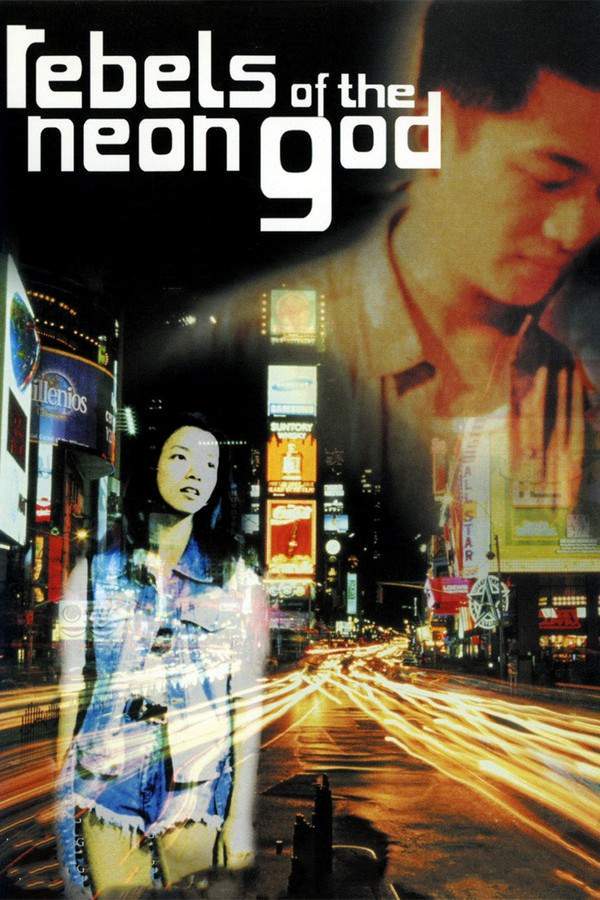
Rebels of the Neon God (1992) movie poster

Timeline

Rebels of the Neon God (1992) Timeline Explained – Every Event in Order

Release, runtime and language
1992 · 106 mins · Chinese
Directed by
Tsai Ming-liang
Starring
Lu Yi-ching, Lee Kang-sheng, Wang Yu-wen, Miao Tian, Jen Chang-bin, Chen Chao-jung

In Taipei, revenge and love twist the paths of wayward youths.

On this page (5)
  1. 1 Events in order (13)
  2. 2 Timeline questions answered
  3. 3 Movie threads
  4. 4 Movies like Rebels of the Neon God
  5. 5 Every angle

13 events in order · contains spoilers

Rebels of the Neon God Timeline: Events in Chronological Order

Every key event of Rebels of the Neon God (1992) in order, scene by scene, with when and where it takes place. Use it to untangle flashbacks, time jumps and parallel storylines, to refresh your memory before the sequel or to find the exact scene you are thinking of.

  1. Hsiao Kang and the parallel thieves introduced

    Hsiao Kang attends cram school and lives with his parents. In parallel, Tze and Ping are introduced as petty thieves, setting up intersecting storylines in the urban setting. The film begins to explore how ordinary life and crime coexist in Taipei.

    When
    Daytime
    Where
    Taipei city
  2. Tze returns to a flooded apartment after a night out

    After a night out, Tze returns to his flooded apartment, dealing with the messy aftermath. The scene conveys his unstable living situation and foreshadows the trouble ahead. The flooded apartment stands as a visual metaphor for the chaos of his life.

    When
    Night
    Where
    Tze's apartment
  3. Tze meets Kuei and gives her a ride

    The next morning, Tze meets Kuei, a young woman who had a one-night stand with Ah Tze's brother. He offers her a ride on his motorcycle, pulling her into the day’s unfolding drama. Kuei's uncertain footing hints at the fragility of strangers' lives in the city.

    When
    Morning
    Where
    City streets
  4. Hsiao Kang's motorcycle impounded and a taxi altercation

    Hsiao Kang's motorcycle is impounded, pushing him to accept a ride from his taxi-driving father. During the ride, Tze's traffic move results in the taxi’s side mirror being broken, tying their stories together in a moment of conflict.

    When
    Morning
    Where
    On the road between home and school
  5. Night out with Tze, Ping, and Kuei ends with Kuei in a hotel

    That night, Tze, Ping, and Kuei go out, get drunk, and end with Kuei passed out in a hotel room. The two men leave her behind, showing a callous disregard for her welfare. This episode foreshadows the fragile trust that binds and breaks among them.

    When
    Night
    Where
    Hotel room
  6. Kuei calls Tze to reconnect

    In the morning, Kuei calls Tze and asks to see him again. The simple act of reaching out rekindles a connection amid the characters' volatile lives. It underscores how quickly proximity can shift from indifference to longing.

    When
    Morning
    Where
    Hotel room/phone
  7. Hsiao Kang drops out of school

    Hsiao Kang makes the decision to drop out of school and receives a refund. He chooses to stay out rather than go home, widening the rift with his parents. This move marks a turning point in his personal disaffection.

    When
    Daytime
    Where
    School
  8. Hsiao Kang stalks Tze after staying out

    Rather than returning home, Hsiao Kang stays out and spots Tze, following him for a while. The pursuit reveals his growing obsession and turns the city into a quiet arena for his fixation. The line between observer and participant blurs.

    When
    Evening
    Where
    City streets
  9. Tze and Ping rob an arcade

    Later, Tze and Ping rob an arcade by removing motherboards from the machines. They operate with a reckless thrill, but their crime draws attention and danger. The act tests their bond and threatens to unravel it.

    When
    Evening
    Where
    Arcade
  10. Tze and Kuei reunite in a hotel room

    That night, after meeting again, Tze and Kuei end up in a hotel room, and they have sex. Kuei still resents being stood up, adding emotional tension to their encounter. The scene deepens the entanglement of their relationships.

    When
    Night
    Where
    Hotel room
  11. Hsiao Kang vandalizes Tze's motorcycle; homecomings blocked

    Hsiao Kang finds Tze's motorcycle and vandalizes it, escalating the personal feud between them. When he tries to return home, his parents refuse to let him in, worsening his alienation. The vandalism and rejection compound the film's mood of frustration.

    When
    Day
    Where
    Near Tze's motorcycle/Home street
  12. The taxi reunion: Ping returns with Tze; Kuei arrives; embrace and plan to run away

    That night, Tze brings Ping back to his apartment in a taxi driven by Hsiao Kang's father. Kuei shows up, expressing a desire to run away with Tze, and they share an embrace. The scene cements the characters' entangled loyalties and tangled desires.

    When
    Night
    Where
    Tze's apartment
  13. Closing image: door ajar and dating service note

    Hsiao Kang's father drives home and leaves the apartment door ajar, a small symbol of trust left open. Hsiao Kang later visits a phone dating service but does not answer any calls, leaving potential connections unrealized. The city keeps turning, with lives glancing off one another.

    When
    Evening
    Where
    Apartment

Last updated: October 09, 2025 at 12:37

Was this helpful?

Timeline questions answered

Rebels of the Neon God Timeline Explained: Your Questions Answered

When does it happen, and why in that order? The questions people ask about the chronology of Rebels of the Neon God (1992): time jumps, flashbacks, cause and effect between scenes and the correct order of events, each answered with spoilers.

Q1

Why does Hsiao Kang drop out of school?

Hsiao Kang drops out of school after growing increasingly disconnected from his studies and life at home. The film shows him attending a cram school but feeling aimless, and the decision represents his growing alienation from the conventional path his parents expect him to follow. This choice marks his transition from observer to participant in the city's underworld.

Foreshadowing: Earlier scenes show Hsiao Kang watching Tze and Ping with curiosity, hinting at his desire to escape his mundane life.

  • Hsiao Kang
  • school dropout
  • Taipei
  • alienation
  • coming-of-age
Q2

Why does Hsiao Kang vandalize Tze's motorcycle?

Hsiao Kang vandalizes Tze's motorcycle out of jealous frustration after seeing Tze with Kuei. This act of vandalism is a personal attack that escalates the tension between the two young men, combining romantic rivalry with Hsiao Kang's growing obsession with Tze's lifestyle.

Foreshadowing: The earlier traffic incident where Tze breaks the taxi mirror establishes the rivalry between them.

  • Hsiao Kang
  • Tze
  • motorcycle vandalism
  • jealousy
  • rivalry
Q3

Why do Hsiao Kang's parents refuse to let him back home?

Hsiao Kang's parents refuse to let him in because they learned he dropped out of school. His father is a taxi driver and his mother watches over him, both invested in his education as their hope for a better life. Their rejection symbolizes the widening rift between Hsiao Kang and conventional society.

Foreshadowing: The earlier scene where Hsiao Kang receives his school refund sets up this confrontation.

  • Hsiao Kang
  • parents
  • rejection
  • school dropout
  • family conflict
Q4

Why does Tze break the side mirror of Hsiao Kang's father's taxi?

Tze deliberately breaks the taxi's side mirror during a traffic maneuver, an impulsive act of rebellion that connects his story to Hsiao Kang's for the first time. This small act of vandalism sets in motion the film's theme of how small actions ripple through interconnected lives.

Foreshadowing: This moment foreshadows the convergence of their storylines later in the film.

  • Tze
  • taxi mirror
  • traffic incident
  • Hsiao Kang father
  • connection
Q5

What is the significance of Tze's flooded apartment?

Tze returns to a flooded apartment after a night out, a chaotic visual that mirrors the disorder in his life. The flooded apartment serves as a metaphor for the turmoil and instability that defines his existence, and the mess he must deal with the next morning sets a tone of consequence and disorder.

Foreshadowing: This scene establishes the precarious living conditions that contrast with Hsiao Kang's stable home life.

  • Tze
  • flooded apartment
  • symbolism
  • chaos
  • instability
Q6

Why does Kuei want to run away with Tze?

Kuei wants to run away with Tze because she sees in him a way to escape her own aimless situation. After her one-night encounter with Tze's brother and being left in a hotel room by Tze and Ping, she seeks genuine connection and a fresh start, expressing her longing to leave her current life behind.

Foreshadowing: Her earlier vulnerability being left at the hotel establishes her desire for something more meaningful.

  • Kuei
  • Tze
  • run away
  • escape
  • relationship
  • longing
Q7

How are all the characters' storylines connected?

The parallel storylines of Hsiao Kang, the thieves Tze and Ping, and Kuei connect through chance encounters and small acts. Tze breaks Hsiao Kang's father's taxi mirror, Hsiao Kang stalks Tze, and eventually both Kuei and the injured Ping end up at Tze's apartment in Hsiao Kang's father's taxi, bringing all their worlds together in one convergence point.

Foreshadowing: The taxi mirror incident and Hsiao Kang's decision to follow Tze plant the seeds for this convergence.

  • connection
  • convergence
  • Tze
  • Hsiao Kang
  • Kuei
  • Ping
  • interweaving stories
Q8

Why do Tze and Ping leave Kuei at the hotel?

Tze and Ping leave the unconscious Kuei at the hotel after a night of drinking, showing their callous disregard for her wellbeing. This act demonstrates their self-centered nature and foreshadows the fragile trust that binds their relationships.

Foreshadowing: This moment contrasts with Kuei's later desire for genuine connection with Tze.

  • Tze
  • Ping
  • Kuei
  • hotel
  • abandonment
  • recklessness
Q9

What happens when Tze and Ping try to sell the stolen arcade motherboards?

Tze and Ping attempt to sell the stolen arcade motherboards to an arcade owner, but the men they robbed track them down. They are chased into the street and Ping gets beaten, showing the dangerous consequences of their criminal lifestyle.

Foreshadowing: The arcade robbery earlier establishes the stakes of their criminal activities.

  • arcade
  • motherboard theft
  • chase
  • Ping beaten
  • consequences
Q10

What does Hsiao Kang do at the phone dating service at the end?

At the end of the film, Hsiao Kang visits a phone dating service but does not answer any calls, staying only for a few minutes before leaving. This ambiguous action suggests his continued disconnection from meaningful human connection, leaving potential relationships unrealized.

Foreshadowing: Earlier scenes establish his alienation from both family and social connections.

  • Hsiao Kang
  • phone dating service
  • ending
  • isolation
  • unanswered calls
  • ambiguity

Movie threads

More Movies Like Rebels of the Neon God, by Mood & Story

Curated lists built around what makes Rebels of the Neon God tick: the same mood, the same kind of story or the same emotional payoff. Each list explains why these movies belong together.

Stories of alienated youth in the city like Rebels of the Neon God

Stories of young people adrift in the lonely, atmospheric sprawl of the city. Find movies like Rebels of the Neon God that explore the lives of disaffected young people navigating urban loneliness. These similar dramas focus on mood, alienation, and the quiet struggles of youth, often featuring atmospheric settings and a melancholic tone.

  • alienated
  • atmospheric
  • lonely
  • restless
  • mundane
  • anxious
  • Tone: melancholic, alienated
  • Pacing: slow, atmospheric
Why these movies?

The story pattern: Narratives in this thread often follow parallel, loosely-connected storylines of characters who are emotionally or physically isolated. The plot is secondary to capturing a feeling of restlessness and the search for meaning or connection in an impersonal environment. Journeys are internal and often end ambiguously, reflecting the ongoing nature of their discontent.

Why they belong together: Movies are grouped here for their shared focus on the melancholic experience of young adulthood in the city. They prioritize atmosphere, mood, and a sense of place, creating a cohesive viewing experience for those interested in character-driven stories of urban alienation.

Movies with muted consequences and impulsive characters like Rebels of the Neon God

Where small, impulsive acts ripple outward with quiet, unresolved outcomes. If you liked the way Rebels of the Neon God handles impulsive actions and their subtle consequences, explore these similar films. They feature characters driven by sudden urges, leading to stories with emotional weight, ambiguous endings, and a focus on realistic, understated outcomes.

  • impulse
  • revenge
  • boredom
  • ambiguous
  • contemplative
  • realistic
  • Tone: melancholic, contemplative
  • Pacing: slow, deliberate
Why these movies?

The story pattern: Stories unfold through character-driven impulses that disrupt the mundane flow of life. The central conflict is often internal, stemming from boredom or angst, and external actions lead to consequences that are psychological and unresolved. The structure avoids tidy resolutions, emphasizing the lingering impact of choices and the fragility of human connections.

Why they belong together: These films are connected by their nuanced approach to cause and effect. They share a narrative pattern where actions have weight but not explosive drama, resulting in a cohesive mood of contemplative realism and emotional ambiguity that resonates with a specific viewer preference.

If you liked this

Movies Like Rebels of the Neon God

Similar movies to Rebels of the Neon God: the same genre, themes or kind of story. Each one comes with its own plot summary, timeline and ending explained.

Browse all movie summaries

Every angle

Rebels of the Neon God (1992) Explained: Plot, Timeline & Characters

Everything about Rebels of the Neon God in one place: what happens in the plot summary, the timeline in chronological order, the characters and meaning and a spoiler-free summary. What's After the Movie adds the cast, box office and post-credit scenes.

Coming soon on iOS and Android

The Plot Explained Movie Summary App

Plot summaries, endings explained and timelines on your phone. Catch up on any movie in minutes, save your favorites and never miss a twist again.

Be the first to know when we launch. Your email stays private, always.

Learn more about the app