Plot Explained Spoilers guaranteed!
Plot Explained

Browse by genre

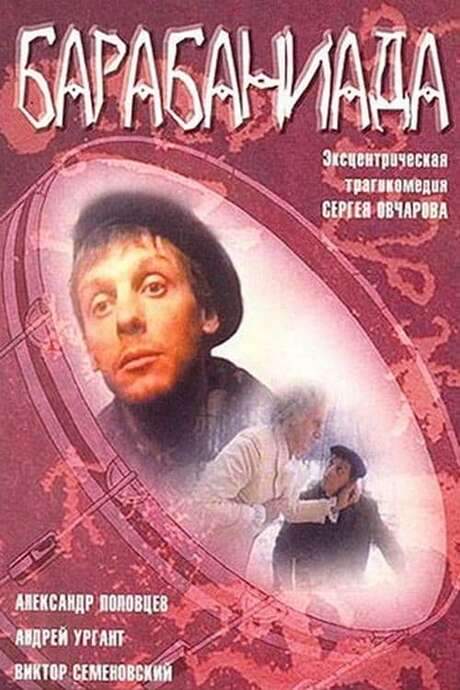
Drumroll (1993) movie poster

Plot Summary

Drumroll (1993) Plot Summary Explained

Release, runtime and language
1993 · 97 mins · Russian
Loading streaming availability…
Directed by
Sergey Ovcharov
Starring
Sergei Selin, Дмитрий Сорокин, Vladimir Ermilov, Svetlana Frolova, Andrey Urgant, Kira Krejlis-Petrova

A tragicomic grotesque fantasy about the adventures of a drum and its owner in a country once called the Soviet Union.

On this page (5)
  1. 1 Where to watch
  2. 2 What happens: full plot
  3. 3 Plot questions answered
  4. 4 Movie threads
  5. 5 Every angle
Loading streaming availability…

Full plot summary · contains spoilers

What Happens in Drumroll: Full Plot Summary

The whole story of Drumroll (1993) explained, from the opening scene to the final frame: every key event, every twist and what it all adds up to. Read it as a quick recap before the sequel, to check a scene you missed, or to finally understand what really happened.

In the depths of a cold winter, a funeral sets off an uncanny chain of events. At the ceremony, a dazzling, instrument-laden gift arrives—a large Stradivarius drum that seems to resonate with something beyond the ordinary. The drummer who performs with the ensemble soon discovers that the drum is not just an object, but a vehicle for a life of its own. As nightly rhythms spill from the drum, the bond between player and instrument tightens in a way that makes parting impossible, and the drummer is compelled to abandon his hostel and embark on a wandering journey.

Across the sprawling borders of the new post-Soviet space, the traveler carries only the drum as his tether to the world. Customs checks, shifting identities, and the relentless grind of movement erase most of his belongings, leaving him with nothing but the drum and a growing sense that the rhythm it carries may be his only steady companion. In the subterranean pulse of the city, the drummer tries to earn a living by tapping out coins in the subway; yet the money he earns slips away—taken by young, athletic youths, then by a policeman—and the sense of belonging slips further from reach. A diner encounter changes the day: a patient waitress shrouds the drum with a tablecloth, turning the shared act of eating into a strange, communal scene where food from others’ plates finds its way to him. A chance encounter with a pie and a kind, hungry young woman leads to an invitation into a modest home, where a mat is laid beside the door for the drum’s resting place.

The following morning brings a new energy as the drummer attempts to craft music anew, but life at home intrudes in improbable ways—the mundane embrace of a washing machine set inside the drum by his domestic partner. Escaping that suffocating scene, he seeks refuge among a sprawling dumping ground, a liminal universe where the homeless survive among discarded things, and where his world narrows to life inside the drum itself. The dump’s routines are interrupted by police raids, and wariness and grit rub shoulders with small acts of mercy. A delegation of French homeless people arrives, accompanied by officials, turning the two communities into a shared microcosm of cross-border humanity. They exchange stories, swap gifts, and toast in a makeshift harmony; the drummer keeps time beside a Black French colleague who answers his rhythms with his own, and a spark of friendship blooms. Before parting, the Frenchman invites the drummer to visit, hinting at a wider world beyond the dump’s fence.

Soon the drum travels again, now as a passport to a foreign land. A foreign passport is issued, and the drummer travels abroad, returning home with bags full of purchases only to be robbed at the airport. The harshness of loss lands him back on the streets, now colder and more determined than before, a winter of homelessness pressing in from all sides. In a moment of frustration and fury, the drum is shattered, its pieces scattered like memories that refuse to stay whole.

The film closes not with a tidy resolution but with a mockumentary-style newsreel that playfully muses on the origins of drums, imagining ancient peoples fashioning instruments from dinosaur skins. The ending leaves the viewer with a wry, almost folkloric reflection on music, migration, and the stubborn, stubbornly human impulse to create rhythm—even when the world seems to fall apart around us.
Last updated: October 09, 2025 at 11:20

Was this helpful?

Plot questions answered

Drumroll Plot Explained: Your Questions Answered

The questions people ask most about Drumroll (1993): what happens in the confusing scenes, why the characters do what they do, the twists, hidden details and what the ending means. Each answer contains spoilers.

Q1

Why can't the drummer separate from the drum?

The drum seems to possess a supernatural will of its own. From the moment it is presented at the funeral, the drummer senses an inexplicable bond forming. As he plays it nightly, this connection deepens into compulsion, he cannot bear to part with it, and the drum's grip eventually forces him to abandon the hostel and begin his wandering journey. The instrument becomes less a possession and more an force that dictates his existence.

Foreshadowing: The funeral gift itself is described as enigmatic and unsettling, foreshadowing the drum's control over the drummer.

  • drum
  • bond
  • supernatural
  • funeral gift
  • compulsion
  • obsession
Q2

Why does the drummer leave the hostel after receiving the drum?

The drum's growing influence compels him to leave. Each night's playing strengthens the bond between them, and the drum's grip becomes suffocating within the confined hostel walls. He feels drawn to move, to travel, as if the drum itself demands movement across the post-Soviet landscape. The instrument transforms from a gift into a tether that pulls him outward into the world.

  • hostel
  • journey
  • compulsion
  • travel
  • drum's influence
Q3

What happens to the drummer's belongings at the border?

As the drummer crosses the borders of the newly formed post-Soviet states, customs officers strip away almost everything he owns. After contact with customs, he is left with nothing but the drum itself. His previous life and possessions are systematically taken until the drum becomes his sole possession and connection to the world.

  • border
  • customs
  • belongings
  • post-soviet
  • theft
  • loss
Q4

Why does the waitress cover the drum with a tablecloth at the diner?

The waitress performs a small act of kindness toward the penniless drummer. When he enters the diner with nothing, she covers the drum with a tablecloth, a gesture that somehow enables the strange phenomenon where food from other patrons' plates mysteriously appears before him. This moment highlights the drum's odd influence on everyday life, as if it creates a ripple of generosity in those around it.

  • waitress
  • diner
  • tablecloth
  • food
  • kindness
  • surreal
Q5

What does the woman's home represent for the drummer?

After a kind young woman offers him food on the street, she invites him to her modest home and places a mat beside the door for the drum to rest. This moment represents a brief sanctuary, a pause in his wandering where he might find domestic stability. The mat next to the door signals acceptance into a personal space, a temporary home amid his otherwise transient existence.

  • woman
  • home
  • mat
  • door
  • sanctuary
  • temporary shelter
Q6

Why does the girlfriend put a washing machine inside the drum?

The drummer's girlfriend, absorbed in mundane domestic life, installs a washing machine inside the drum while he tries to compose music. This absurd intrusion of everyday life into the sacred space of the drum represents the clash between his magical connection to the instrument and the ordinary world. The scene illustrates how normal life cannot coexist with the drum's mystical pull, prompting him to flee to the dump.

  • girlfriend
  • washing machine
  • domestic
  • intrusion
  • absurdity
  • dump
Q7

What is the significance of the French homeless delegation at the dump?

A delegation of French homeless people arrives at the dump with officials, creating a moment of cross-border humanity. The two groups exchange stories, gifts, and sit together at a festive table. The drummer plays his drum while a Black French colleague accompanies him with his own rhythm, forging a genuine friendship. This encounter represents a global community of outcasts and hints that connection exists even in the margins of society.

Foreshadowing: The Frenchman invites the drummer to visit him, foreshadowing the drummer's eventual foreign journey.

  • french
  • delegation
  • dump
  • friendship
  • exchange
  • cross-border humanity
Q8

Why does the drummer get a foreign passport and travel abroad?

After befriending the French homeless man at the dump, the drummer receives an invitation to visit. Through unclear but possible bureaucratic channels, he is issued a foreign passport, a document that represents escape and new possibility. He travels abroad, returning with bags full of purchases, suggesting a brief moment of material success that contrasts sharply with his previous homelessness.

  • passport
  • abroad
  • travel
  • france
  • invitation
  • robbery
Q9

Why does the drummer break the drum at the end?

After being robbed at the airport and losing all his purchases, the drummer finds himself back on the streets in winter, colder and more desperate than before. In a moment of frustration and fury, he shatters the drum into small pieces. The breaking symbolizes the collapse of his mobility, identity, and the mystical connection that had defined his journey. The instrument that once pulled him across borders now lies destroyed, representing total loss.

  • breaking
  • drum
  • destruction
  • loss
  • anger
  • identity
  • symbolism
Q10

What does the mockumentary ending with dinosaur skins mean?

The film concludes with a playful mockumentary newsreel imagining ancient peoples making the first drums from dinosaur skins. This whimsical, metafictional ending transforms the drummer's personal journey into a broader folkloric reflection on humanity's relationship with rhythm and music. It suggests that the impulse to create music and rhythm is ancient, primal, and stubbornly human, even when the world falls apart. The ending invites interpretation rather than providing closure.

  • mockumentary
  • dinosaur
  • ending
  • rhythm
  • music
  • folklore
  • interpretation

Movie threads

More Movies Like Drumroll, by Mood & Story

Curated lists built around what makes Drumroll tick: the same mood, the same kind of story or the same emotional payoff. Each list explains why these movies belong together.

Dreamlike journeys of isolation like in Drumroll

Drifting souls in decaying worlds, searching for meaning with quiet sadness. If you liked the melancholic, atmospheric drift of Drumroll, this list features other movies with a similar dreamlike vibe. These films explore themes of isolation, loss of identity, and the search for connection in surreal or decaying worlds, often at a slow, reflective pace.

  • melancholic
  • dreamlike
  • atmospheric
  • absurd
  • wistful
  • lonely
  • Tone: melancholic, wistful, absurd
  • Pacing: slow, drifting, atmospheric
Why these movies?

The story pattern: The narrative pattern is often a loose, picaresque journey rather than a tightly plotted story. A protagonist, frequently an outsider or artist, drifts through a symbolically charged landscape, encountering strange characters and situations that reflect their inner state. The climax is rarely a traditional resolution, but more a moment of poignant reflection or ambiguous acceptance.

Why they belong together: These films are grouped by their shared, unique tonal blend: a melancholic core lightened by whimsical or tragicomic absurdity. They share a slow, atmospheric pacing that prioritizes mood over plot, creating a wistful, sometimes lonely feeling that lingers long after the film ends.

Tragicomic stories of artistic obsession like Drumroll

Where the stubborn act of creation meets the grotesque reality of survival. For viewers who enjoyed Drumroll's focus on a musician's struggle amidst post-Soviet decay, this thread gathers movies with similar themes of artistic obsession. These tragicomic fantasies explore the clash between creative passion and harsh reality, often with a melancholic and grotesque sensibility.

  • artistic
  • obsession
  • tragicomic
  • grotesque
  • resilient
  • poetic
  • Tone: tragicomic, melancholic, grotesque
  • Pacing: slow, character-driven
Why these movies?

The story pattern: The narrative centers on a character whose identity is tied to an artistic pursuit or an unusual obsession. Their journey is one of maintaining this passion against all odds—poverty, societal collapse, or personal loss. The conflict arises from the darkly humorous and poignant gap between their lofty creative ideals and the grim, often absurd, realities they inhabit.

Why they belong together: This thread connects films that share a specific thematic focus on artistic obsession and a distinct tonal mix of tragedy and comedy. They depict the creative spirit not as glamorous but as a gritty, often foolish, yet profoundly human necessity for survival in a broken world.

Every angle

Drumroll (1993) Explained: Plot, Timeline & Characters

Everything about Drumroll in one place: what happens in the plot summary, the timeline in chronological order, the characters and meaning and a spoiler-free summary. What's After the Movie adds the cast, box office and post-credit scenes.

Coming soon on iOS and Android

The Plot Explained Movie Summary App

Plot summaries, endings explained and timelines on your phone. Catch up on any movie in minutes, save your favorites and never miss a twist again.

Be the first to know when we launch. Your email stays private, always.

Learn more about the app