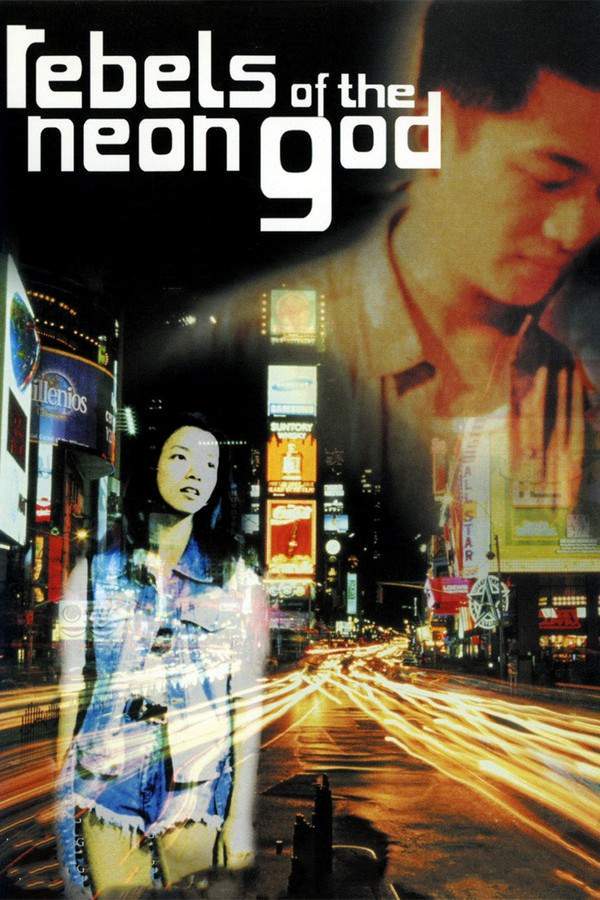
Rebels of the Neon God

Rebels of the Neon God

Year: 2015

Runtime: 106 min

Language: Chinese

Director: Ming-liang Tsai

Drama

A young man’s life takes a dramatic turn when his father, a taxi driver, is violently attacked by two petty criminals. Driven by a burning desire for justice, he leaves his studies behind to seek retribution. The intense and visceral story unfolds against the vibrant, neon-drenched streets of Taiwan, where he confronts his father's assailants in a quest for revenge and ultimately, a chance at redemption.

Where to Watch Rebels of the Neon God?

Find where to stream, rent, or buy Rebels of the Neon God (2015) in the US with current JustWatch availability, up-to-date pricing, and platform listings for subscription, rental, and digital purchase options.

Warning: spoilers below!

Haven’t seen Rebels of the Neon God yet? This summary contains major spoilers. Bookmark the page, watch the movie, and come back for the full breakdown. If you're ready, scroll on and relive the story!

Rebels of the Neon God (2015) – Full Plot Summary & Ending Explained

Read the complete plot breakdown of Rebels of the Neon God (2015), including all key story events, major twists, and the ending explained in detail. Discover what really happened, and what it all means.

A young man named Hsiao Kang (Chinese: 小康; lit. ‘Little Kang’, deriving his nickname from the actor Lee Kang-sheng) goes through the motions of life, attending cram school while living with his parents. In a distinct but intertwining storyline, petty thieves Tze and Ping navigate their chaotic lives. Following a night out, Tze returns to discover that his apartment has flooded. The following day, he encounters Kuei, a young woman disoriented after a one-night stand with Ah Tze’s brother, a car salesman, in the adjacent room. Oblivious to her whereabouts, Kuei accepts a ride from Tze on his motorcycle. Meanwhile, Hsiao Kang faces a setback when his motorcycle gets impounded. His father, who drives a taxi, spots him and provides a ride to school. An accident occurs during this journey when Tze purposefully breaks off the side mirror of Hsiao Kang’s father’s taxi.

As night falls, Tze, Ping, and Kuei gather for some fun, indulging in drinks until Kuei eventually passes out. The two men, instead of looking after her, leave her alone in a hotel room. The next morning, Kuei reaches out to Tze, wanting to meet him again. In another turn of events, Hsiao Kang decides to drop out of school and successfully claims a refund. Opting to stay out rather than return home, he subsequently encounters Tze and begins to follow him.

In a twist of fate, Hsiao Kang witnesses Tze and Ping committing theft at an arcade, as they dismantle machines for motherboards. Tze then meets with Kuei, who expresses her frustration about him standing her up. Their relationship escalates as they get a hotel room together and become intimate. Meanwhile, Hsiao Kang, fueled by frustration, finds Tze’s motorcycle and vandalizes it. When he finally attempts to return home after a few days away, he is rejected by his parents, who are upset over his school dropout status. Finding refuge in the same hotel where Tze and Kuei spent the night, Hsiao Kang revels in the irony of Tze discovering his damaged bike.

Later, Tze and Ping attempt to sell the stolen motherboards to an arcade owner, only to be confronted by angry men, leading to a violent altercation where Ping is beaten. That night, Tze fortuitously takes Hsiao Kang’s father’s taxi back home, bringing a wounded Ping along. Kuei unexpectedly arrives and expresses her desire to leave with Tze, prompting a tender embrace between the two. Meanwhile, Hsiao Kang’s father returns home, unwittingly leaving the apartment door slightly open. In a moment of indecisiveness, Hsiao Kang visits a phone dating service but ultimately does not engage with any callers, opting to leave after a few uneventful minutes.

Last updated: November 16, 2024 at 16:19

Was this helpful?

Rebels of the Neon God (2015) Plot Questions Answered – Summary FAQ

Explore frequently asked questions about Rebels of the Neon God (2015) with spoiler-rich answers covering the full plot summary, major story beats, character motivations, hidden details, and ending meaning. This movie summary FAQ helps explain confusing scenes, plot twists, and narrative decisions in clear, searchable detail.

Q1

Why does Hsiao Kang drop out of school?

A.

Hsiao Kang drops out of school after his motorcycle gets impounded, which represents a breaking point in his life. The impoundment symbolizes his inability to maintain even basic responsibilities, and combined with the pressure of cram school and his feeling of aimlessness, he decides to leave. He successfully claims a tuition refund and uses this as his opportunity to break free from the monotonous life his parents have planned for him.

His earlier scene of aimlessly going through the motions of daily life foreshadows his eventual decision to reject that path entirely.

hsiao kangdrop outschoolcram schoolimpounded motorcycle
Q2

Why does Tze break the side mirror of Hsiao Kang's father's taxi?

A.

Tze intentionally breaks the taxi's side mirror during the drive, though the exact motivation isn't explicitly stated. This act appears to be a random act of delinquency rather than a deliberate attack, Tze is shown acting impulsively throughout the film. The mirror-breaking represents the casual violence and chaos that defines Tze's character, and it inadvertently creates the connection between Hsiao Kang's family and the thieves that drives the later plot.

tzetaxi mirroraccidentbreaking mirrorimpulsive
Q3

Why does Hsiao Kang start following Tze?

A.

After dropping out of school and being rejected by his parents, Hsiao Kang becomes drawn to Tze's world of crime and freedom. He begins following Tze because he sees in him a version of himself that has broken all societal rules, no job, no school, living purely on his own terms. This obsession represents Hsiao Kang's attempt to find purpose and identity outside the life his parents forced upon him, though his following ultimately leads to destructive behavior.

Earlier, Hsiao Kang's father picks him up in the taxi after his motorcycle is impounded, establishing the taxi as Hsiao Kang's link to both his father and the criminal world.

hsiao kangfollowing tzeobsessionrebellionidentity
Q4

Why do Hsiao Kang's parents reject him when he returns home?

A.

Hsiao Kang's parents reject him because they are devastated and ashamed that he dropped out of school without consulting them. In the context of Taiwanese society where academic success is heavily emphasized, a son's sudden dropout represents a major failure in parenting and a threat to family honor. Their rejection is also driven by fear, his father works hard as a taxi driver to provide for Hsiao Kang's education, and his dropout feels like a betrayal of those sacrifices.

The film establishes early on that Hsiao Kang attends cram school, showing the pressure placed on him academically.

hsiao kang parentsrejectiondropoutfamily conflicttaiwanese culture
Q5

Why does Hsiao Kang vandalize Tze's motorcycle?

A.

Hsiao Kang vandalizes Tze's motorcycle as an act of frustrated retaliation after being rejected by his parents. Having dropped out of school and feeling lost, he channels his anger toward the first target he can find. More importantly, by damaging the motorcycle of the man he's been obsessing over, Hsiao Kang creates a twisted connection between himself and Tze, damaging what Tze values mirrors his own feeling of being damaged and discarded.

His decision to follow Tze earlier demonstrates his growing fixation, which builds toward this destructive act.

hsiao kangvandalismmotorcyclefrustrationrevenge
Q6

How do Hsiao Kang's and Tze's storylines connect?

A.

The two storylines connect through the taxi accident when Tze breaks the side mirror of Hsiao Kang's father's taxi, this incident establishes the physical link between the characters. Later, Hsiao Kang becomes obsessed with Tze after dropping out, deliberately following him and witnessing his crimes. The stories converge further when Tze unknowingly uses Hsiao Kang's father's taxi to escape with the wounded Ping, bringing both worlds into direct contact at the film's climax.

The mirror-breaking accident is the pivotal moment that intertwines the parallel narratives.

storylines connectionhsiao kangtzeparallel storiesconvergence
Q7

Why does Kuei want to meet Tze again after the hotel incident?

A.

Kuei wants to meet Tze again despite being left alone in the hotel room because she forms a genuine emotional connection with him during their brief encounter. After waking up disoriented from a one-night stand with Tze's brother, she accepts a ride from Tze and they spend time together. Even though Tze and Ping abandon her at the hotel, she reaches out wanting to reconnect, suggesting she's drawn to Tze's carefree, dangerous nature and perhaps seeking something meaningful in her own aimless life.

Her disoriented state after waking up in the adjacent room establishes her vulnerability and confusion about her own desires.

kueitzerelationshiphotelconnection
Q8

What happens to Ping after the arcade confrontation?

A.

Ping gets badly beaten during the violent altercation at the arcade when Tze and Ping attempt to sell the stolen motherboards. The angry men confront them and beat Ping severely, leaving him wounded. Later, Tze helps Ping escape by using Hsiao Kang's father's taxi to take them home, showing that despite their criminal lives, there is loyalty between the two thieves.

Their attempt to sell stolen goods to the same arcade owner they stole from was always going to lead to trouble.

pingbeatenarcadealtercationmotherboards
Q9

Why does Tze take Hsiao Kang's father's taxi at the end?

A.

Tze takes Hsiao Kang's father's taxi because he and Ping need a quick escape after the violent confrontation at the arcade. With Ping severely wounded and no other transportation available, Tze opportunistically takes the taxi, which happens to belong to Hsiao Kang's father. This coincidence highlights how the two worlds have now fully collided, though neither Tze nor the driver realizes the connection between them.

The earlier taxi mirror-breaking incident established the taxi as a recurring symbol linking both storylines.

tzetaxiescapepingwounded
Q10

Why doesn't Hsiao Kang call anyone at the dating service?

A.

Hsiao Kang visits a phone dating service but ultimately doesn't engage with any callers because he remains emotionally disconnected and uncertain about what he wants. After dropping out, being rejected by his parents, and pursuing his obsessive fixation on Tze, he finds himself at a complete loss about his own identity and future. Sitting at the dating service represents one more attempt to find connection or direction, but his inability to act demonstrates his fundamental paralysis in life.

His earlier aimless routine at cram school and his inability to hold onto his motorcycle foreshadow his general inability to commit to anything.

hsiao kangdating servicecalldisconnectionuncertainty
Q11

What does the open apartment door at the end signify?

A.

The open apartment door at the end, when Hsiao Kang's father returns home and leaves the door slightly open, represents the possibility of reconciliation despite the family's conflict. However, because Hsiao Kang never actually returns home and the door remains open but unused, it also symbolizes the missed opportunities and unresolved tensions between the characters. The ambiguity reflects the film's overall theme of disconnection and lives left incomplete.

open doorapartmentreconciliationambiguityfamily
Q12

Why is there no resolution to Hsiao Kang's revenge quest?

A.

The film deliberately avoids resolving Hsiao Kang's quest for revenge because it reflects the characters' aimless, stunted lives. Rather than a cathartic confrontation, the story ends with everyone in a state of stasis, Hsiao Kang never confronts Tze directly, his parents never reconcile with him, and the thieves escape but remain wounded. This lack of resolution is intentional, portraying how people in real life often fail to act on their desires for justice or change, remaining trapped in their own discontent.

revengeresolutionambiguityno resolutionopen ending
Mobile App Preview

Coming soon on iOS and Android

The Plot Explained Mobile App

From blockbusters to hidden gems - dive into movie stories anytime, anywhere. Save your favorites, discover plots faster, and never miss a twist again.

Sign up to be the first to know when we launch. Your email stays private, always.

Explore Movie Threads

Discover curated groups of movies connected by mood, themes, and story style. Browse collections built around emotion, atmosphere, and narrative focus to easily find films that match what you feel like watching right now.

Movies with urban alienation like Rebels of the Neon God

Atmospheric stories of disconnected youth wandering vibrant but lonely cityscapes.If you liked the atmospheric, neon-drenched portrayal of urban loneliness in Rebels of the Neon God, you'll find similar movies here. These films explore themes of youth disconnection, petty crime, and the search for meaning against the backdrop of a vibrant but indifferent city, focusing on mood and character over fast-paced plotting.

atmosphericalienatedurban lonelinessaimlessmelancholicdetachednocturnalstylized

Narrative Summary

These narratives often follow characters—typically young adults—who are emotionally or socially detached from the world around them. The plot is secondary to the atmosphere, unfolding as a series of mundane, sometimes frustrating encounters that highlight their lack of purpose. The city's aesthetics, often captured with a stylized, almost romanticized lens, are central to establishing the melancholic tone.

Why These Movies?

Movies are grouped here for their shared commitment to a specific urban aesthetic and a thematic focus on loneliness and disconnection. They prioritize mood and atmosphere, using slow pacing and a melancholic tone to immerse the viewer in the protagonist's experience of alienation within a bustling environment.


Movies with ambiguous revenge plots like Rebels of the Neon God

Stories where a quest for revenge leads not to closure, but to personal stasis.For viewers who appreciated the unresolved, character-driven revenge quest in Rebels of the Neon God, this section features similar films. These stories focus on the emotional toll of seeking justice, often ending ambiguously without traditional closure, leaving the characters in a state of reflection or stagnation.

frustratedcontemplativeunresolvedrevengestasismoral ambiguityinternal conflictcharacter study

Narrative Summary

The narrative pattern involves a triggering event—often a personal violation—that sets a protagonist on a path for revenge. However, the focus shifts from the act of vengeance itself to the protagonist's internal journey. The plot unfolds slowly, interweaving the quest with the character's daily life and frustrations, ultimately concluding without a decisive resolution, emphasizing the cyclical nature of their struggle.

Why These Movies?

These films are connected by their subversion of the classic revenge narrative. They share a moderate intensity driven by internal conflict rather than external action, a melancholic tone, and most importantly, an ambiguous ending that refuses to provide easy answers, focusing instead on the psychological state of the characters.

Unlock the Full Story of Rebels of the Neon God

Don't stop at just watching - explore Rebels of the Neon God in full detail. From the complete plot summary and scene-by-scene timeline to character breakdowns, thematic analysis, and a deep dive into the ending - every page helps you truly understand what Rebels of the Neon God is all about. Plus, discover what's next after the movie.

Rebels of the Neon God Timeline

Track the full timeline of Rebels of the Neon God with every major event arranged chronologically. Perfect for decoding non-linear storytelling, flashbacks, or parallel narratives with a clear scene-by-scene breakdown.

Rebels of the Neon God Timeline

Characters, Settings & Themes in Rebels of the Neon God

Discover the characters, locations, and core themes that shape Rebels of the Neon God. Get insights into symbolic elements, setting significance, and deeper narrative meaning - ideal for thematic analysis and movie breakdowns.

Characters, Settings & Themes in Rebels of the Neon God

Rebels of the Neon God Spoiler-Free Summary

Get a quick, spoiler-free overview of Rebels of the Neon God that covers the main plot points and key details without revealing any major twists or spoilers. Perfect for those who want to know what to expect before diving in.

Rebels of the Neon God Spoiler-Free Summary

More About Rebels of the Neon God

Visit What's After the Movie to explore more about Rebels of the Neon God: box office results, cast and crew info, production details, post-credit scenes, and external links - all in one place for movie fans and researchers.

More About Rebels of the Neon God