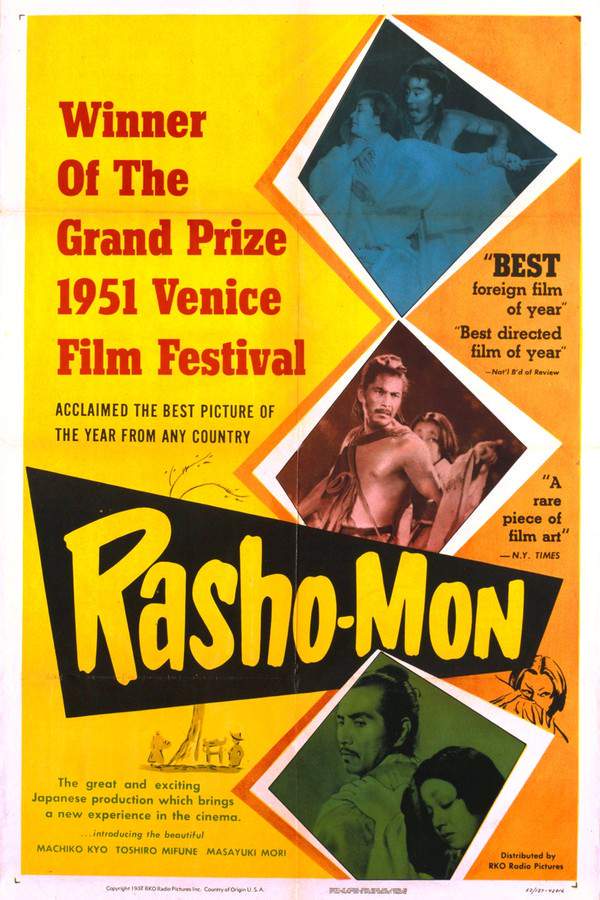
Rashomon

Rashomon

Year: 1951

Runtime: 88 min

Language: Japanese

Director: Akira Kurosawa

DramaMysteryCrime

A samurai's murder in feudal Japan is recounted through four conflicting accounts—the victim's ghost, the samurai's wife, a bandit, and the samurai himself. Each version of events offers a different motive and perspective, raising profound questions about the subjectivity of truth and the fallibility of human memory. The film explores the complexities of morality and the elusive nature of reality, challenging viewers to question what they believe.

Warning: spoilers below!

Haven’t seen Rashomon yet? This summary contains major spoilers. Bookmark the page, watch the movie, and come back for the full breakdown. If you're ready, scroll on and relive the story!

Timeline – Rashomon (1951)

Trace every key event in Rashomon (1951) with our detailed, chronological timeline. Perfect for unpacking nonlinear stories, spotting hidden connections, and understanding how each scene builds toward the film’s climax. Whether you're revisiting or decoding for the first time, this timeline gives you the full picture.

1

The Rainstorm

As a rainstorm begins to pour, a woodcutter and a priest take refuge in the ruins of the Rashomon gatehouse. Their desperate shelter sets the stage for a strange and horrifying story that will unfold about a recent murder.

Rashomon gatehouse
2

The Woodcutter's Discovery

Three days earlier, the woodcutter ventured into the mountains to gather firewood. While walking through the woods, he stumbles upon a corpse hidden among the leaves, which sends him running to report his disturbing find to the police.

Three days ago Mountain woods
3

The Testimony Begins

In the courthouse garden, the woodcutter testifies about his discovery of the body. He claims he found nothing but a few hats, ropes, and an amulet case, inadvertently revealing key details that will shape the investigation.

Courthouse garden
4

The Priest's Witness

The priest shares his account of seeing the samurai just days before his death, riding along the road with a woman. His testimony reflects on the nature of life and death, as he expresses sorrow for the tragedy.

Courthouse garden
5

The Bandit's Capture

The policeman reveals that he captured the notorious bandit, Tajomaru, two days prior. In a vivid recollection, he describes how the bandit was found writhing by a riverbank, emphasizing the chaotic nature of the events surrounding the murder.

Two days ago Riverbank
6

Tajomaru's Version

Tajomaru admits to killing the samurai, recounting the events with a bravado that diminishes as the details emerge. He explains how jealousy drove him to harm the samurai after tricking the wife into being emotionally vulnerable.

Grove
7

The Duel Proposal

In a shocking turn, the woman demands that the men duel to the death after the bandit has incapacitated her husband. This leads to a fierce and tense sword fight, highlighting the chaotic conflict among the characters.

Grove
8

The Woman's Despair

The woman recounts her own harrowing experience, revealing the emotional turmoil she faced amidst the violence. After her husband's death, she attempts suicide, expressing her deep remorse and despair over the tragic events.

Grove
9

The Samurai's Spirit

A medium performs a ritual, channeling the voice of the deceased samurai. His testimony is filled with sentiments that contradict the woman and the bandit's stories, painting a complex picture of love and betrayal.

Courthouse garden
10

The Woodcutter's Secret

The woodcutter reveals, with hesitance, that he witnessed the fatal encounter from a distance. He claims the truth of the murder doesn't align with either story presented, challenging the credibility of the testimonies he has heard.

Grove
11

The Commoner's Cynicism

As tensions rise, the commoner expresses his disillusionment about human nature, questioning the honesty of those involved. His remarks about morality resonate amidst the conflicting accounts of the murder.

Rashomon gatehouse
12

The Abandoned Baby

The group hears the cry of an abandoned baby, prompting a further discussion on morality and responsibility. The woodcutter finds himself confronted with his own shortcomings as he reflects on human decency.

Rashomon gatehouse
13

A Moment of Redemption

Despite their earlier doubts and conflicts, the woodcutter and the priest find a moment of understanding. The priest hands the baby to the woodcutter, marking a small but significant act of faith in humanity.

Rashomon gatehouse
14

A Journey into the Sunlight

As the rain finally stops, the woodcutter walks away from the Rashomon gatehouse, feeling a sense of resolution. His journey into the sunlight signifies a glimmer of hope in a world clouded by darkness and deceit.

Rashomon gatehouse

Last Updated: May 28, 2025 at 19:07

Mobile App Preview

Coming soon on iOS and Android

The Plot Explained Mobile App

From blockbusters to hidden gems — dive into movie stories anytime, anywhere. Save your favorites, discover plots faster, and never miss a twist again.

Sign up to be the first to know when we launch. Your email stays private — always.

Explore Movie Threads

Discover curated groups of movies connected by mood, themes, and story style. Browse collections built around emotion, atmosphere, and narrative focus to easily find films that match what you feel like watching right now.

Movies with Unreliable Narratives and Conflicting Truths like Rashomon

Stories where truth becomes elusive as conflicting accounts challenge reality.Discover movies like Rashomon that explore the subjectivity of truth. If you enjoyed piecing together the puzzle of contradictory accounts, you'll find similar complex narratives where multiple perspectives challenge what really happened.

unreliable narrationphilosophicalskepticaluncertainanxiouspsychologicalcerebral

Narrative Summary

The narrative is built around a central event, often a crime or trauma, which is revisited from several character viewpoints. Each retelling adds new information, contradicts previous details, and reveals the self-serving nature of memory. The plot structure is non-linear, forcing the audience to actively engage in interpreting the events.

Why These Movies?

These films are grouped by their shared structural and thematic focus on the unreliability of perception. They create a unique intellectual and emotional experience centered on doubt, moral ambiguity, and the unsettling realization that reality is constructed.

Dark Psychological Dramas Exploring Human Nature like Rashomon

A slow, heavy exploration of human nature's dark, self-serving instincts.Find movies similar to Rashomon that delve into the bleak and morally complex aspects of human nature. If you appreciated the heavy, philosophical weight and the unsettling examination of deceit and self-preservation, these films offer a comparable experience.

philosophicalunsettlingmelancholicanxiousclaustrophobicheavymoral ambiguity

Narrative Summary

Stories unfold at a deliberate pace, focusing on character psychology over action. The central conflict is often internal or interpersonal, exposing how characters lie, manipulate, and rationalize their actions to survive or protect their ego, leaving the audience in a state of cynical reflection.

Why These Movies?

They share a dark, heavy tone and a steady pacing that allows for deep psychological exploration. The intensity comes from the emotional and philosophical weight of confronting uncomfortable truths about human nature, rather than from conventional thrills.

Unlock the Full Story of Rashomon

Don't stop at just watching — explore Rashomon in full detail. From the complete plot summary and scene-by-scene timeline to character breakdowns, thematic analysis, and a deep dive into the ending — every page helps you truly understand what Rashomon is all about. Plus, discover what's next after the movie.

Rashomon Summary

Read a complete plot summary of Rashomon, including all key story points, character arcs, and turning points. This in-depth recap is ideal for understanding the narrative structure or reviewing what happened in the movie.

Rashomon Summary

Characters, Settings & Themes in Rashomon

Discover the characters, locations, and core themes that shape Rashomon. Get insights into symbolic elements, setting significance, and deeper narrative meaning — ideal for thematic analysis and movie breakdowns.

Characters, Settings & Themes in Rashomon

Rashomon Spoiler-Free Summary

Get a quick, spoiler-free overview of Rashomon that covers the main plot points and key details without revealing any major twists or spoilers. Perfect for those who want to know what to expect before diving in.

Rashomon Spoiler-Free Summary

More About Rashomon

Visit What's After the Movie to explore more about Rashomon: box office results, cast and crew info, production details, post-credit scenes, and external links — all in one place for movie fans and researchers.

More About Rashomon

Similar Movies to Rashomon

Discover movies like Rashomon that share similar genres, themes, and storytelling elements. Whether you’re drawn to the atmosphere, character arcs, or plot structure, these curated recommendations will help you explore more films you’ll love.